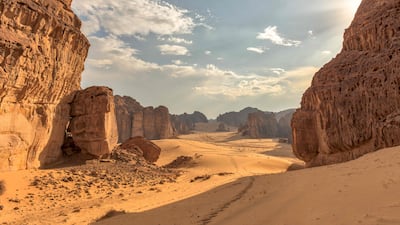
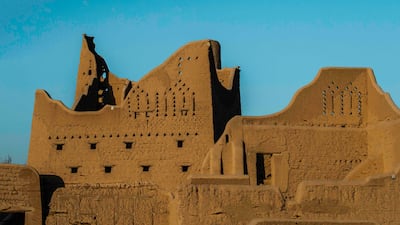
Tourists visiting the ancient archaeological site of Hegra in AlUla, Saudi Arabia. Bloomberg

PIF-owned AlUla Development Company launched to turn tourism site into global destination


Ian Oxborrow
  • English
  • Arabic

AlUla Development Company is launching operations with the aim of turning the city into a global tourism destination in Saudi Arabia.

The company, which is wholly owned by the Public Investment Fund (PIF), plans to deliver hospitality, residential, retail and infrastructure projects as part of the tourism push.

Planned developments include more than 7,500 hotel keys, 5,000 residential units, a staff village comprising more than 1,000 units, as well as infrastructure support, according to a statement on Monday.

"AlUla Development Company will create jobs and opportunities for local businesses and communities whilst preserving one of the world’s largest and oldest cultural sites," the statement said.

"The company’s mandate is in line with PIF’s strategy on unlocking the capabilities of promising sectors in Saudi Arabia that can help drive the diversification of the economy, increase private sector engagement and improve quality of life to support Saudi Arabia’s position regionally and internationally as a leading tourism and cultural destination in line with Vision 2030."

The company will work in collaboration with the Royal Commission of AlUla (RCU) and private sector entities.

AlUla is expected to contribute about 120 billion Saudi riyals ($32 billion) to Saudi Arabia’s economy.

Saudi megaprojects 2023: Neom, AlUla and more

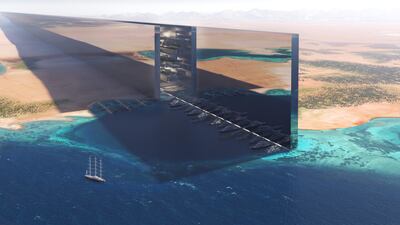
  • The Line is one of 10 districts in Saudi Arabia's $500 billion Neom megacity. Photo: Neom
    The Line is one of 10 districts in Saudi Arabia's $500 billion Neom megacity. Photo: Neom
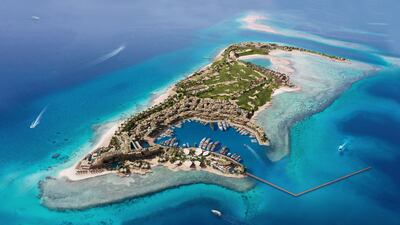
  • Sindalah Island is set to be the first destination open to the public within the Neom mega project. Photo: Neom
    Sindalah Island is set to be the first destination open to the public within the Neom mega project. Photo: Neom
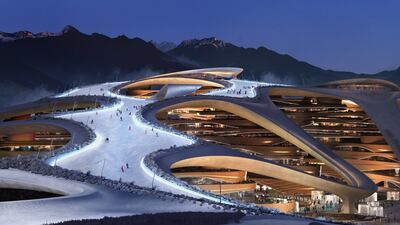
  • Trojena, a mountain tourism destination, will be the first major outdoor skiing site in the GCC. Photo: Neom
    Trojena, a mountain tourism destination, will be the first major outdoor skiing site in the GCC. Photo: Neom
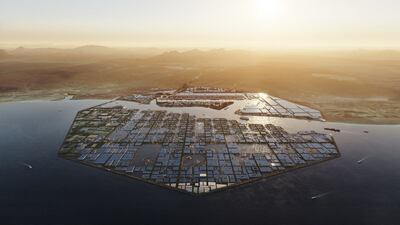
  • Oxagon, part of the Neom mega project, is a futuristic new industrial city in the sea. Photo: Neom
    Oxagon, part of the Neom mega project, is a futuristic new industrial city in the sea. Photo: Neom
  • AlUla is a budding tourist magnet in the north-western Madinah region. AFP
    AlUla is a budding tourist magnet in the north-western Madinah region. AFP
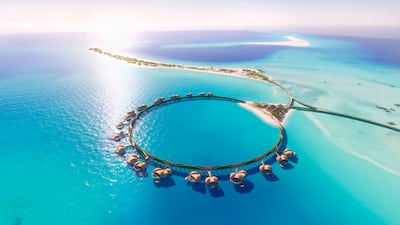
  • When it opens in 2023, Nujuma, a Ritz-Carlton Reserve, will form part of The Red Sea project. Photo: Marriott International
    When it opens in 2023, Nujuma, a Ritz-Carlton Reserve, will form part of The Red Sea project. Photo: Marriott International
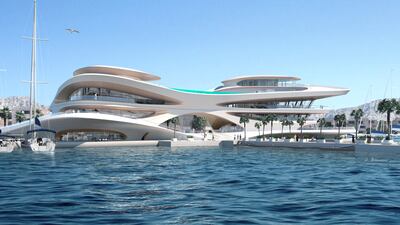
  • Amaala has unveiled the design for its Triple Bay Yacht Club. Photo: Amaala
    Amaala has unveiled the design for its Triple Bay Yacht Club. Photo: Amaala
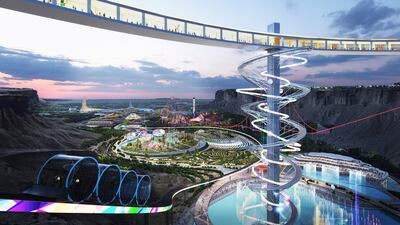
  • Qiddiya City is an entertainment development project to be established in Riyadh.
    Qiddiya City is an entertainment development project to be established in Riyadh.
  • Salwa Palace is the largest standing structure in the historic city of Diriyah. Photo: Diriyah Gate Development Authority
    Salwa Palace is the largest standing structure in the historic city of Diriyah. Photo: Diriyah Gate Development Authority
  • A screen grab of aerial footage of the King Salman Park in Riyadh. The project is set to become the world’s biggest urban park.
    A screen grab of aerial footage of the King Salman Park in Riyadh. The project is set to become the world’s biggest urban park.

The RCU forecasts that the population of the area will triple to 130,000 by 2035, generating about 38,000 new jobs.

The RCU was established in 2017 to preserve and develop AlUla, in line with the heritage and preservation priorities of Saudi Arabia’s Vision 2030 programme.

AlUla is among a number of projects in Saudi Arabia which form part of its diversification efforts.

Others include the $500 billion Neom smart city in the north-west of the kingdom, the Red Sea Project, which includes an archipelago of 92 islands, 50 dormant volcanoes, mountain ranges and sand dunes, and Ad Diriyah, the 300-year-old city considered to be the birthplace and capital of the first Saudi state.

Visitors to Saudi Arabia spent 27 billion riyals during the first six months of last year, making tourism one of the kingdom's most promising sectors.

The Ministry of Investment said 3.6 million foreign tourists visited the kingdom during the second quarter of the year, greatly contributing to a plan to diversify sources of income as part of Vision 2030.


Director: Laxman Utekar

Cast: Vicky Kaushal, Akshaye Khanna, Diana Penty, Vineet Kumar Singh, Rashmika Mandanna

Rating: 1/5

How to protect yourself when air quality drops

Install an air filter in your home.

Close your windows and turn on the AC.

Shower or bath after being outside.

Wear a face mask.

Stay indoors when conditions are particularly poor.

If driving, turn your engine off when stationary.

Benefits of first-time home buyers' scheme
  • Priority access to new homes from participating developers
  • Discounts on sales price of off-plan units
  • Flexible payment plans from developers
  • Mortgages with better interest rates, faster approval times and reduced fees
  • DLD registration fee can be paid through banks or credit cards at zero interest rates
The specs

Engine: 2.0-litre 4cyl turbo

Power: 261hp at 5,500rpm

Torque: 405Nm at 1,750-3,500rpm

Transmission: 9-speed auto

Fuel consumption: 6.9L/100km

On sale: Now

Price: From Dh117,059

RACE CARD

6.30pm Maiden (TB) Dh82.500 (Dirt) 1,400m

7.05pm Handicap (TB) Dh87,500 (D) 1,400m

7.40pm Handicap (TB) Dh92,500 (Turf) 2,410m

8.15pm Handicap (TB) Dh105,000 (D) 1,900m

8.50pm UAE 2000 Guineas Trial (TB) Conditions Dh183,650 (D) 1,600m

9.25pm Dubai Trophy (TB) Conditions Dh183,650 (T) 1,200m

10pm Handicap (TB) Dh102,500 (T) 1,400m

'HIJRAH%3A%20IN%20THE%20FOOTSTEPS%20OF%20THE%20PROPHET'
%3Cp%3E%3Cstrong%3EEdited%20by%3A%3C%2Fstrong%3E%20Idries%20Trevathan%3Cbr%3E%3Cstrong%3EPages%3A%3C%2Fstrong%3E%20240%3Cbr%3E%3Cstrong%3EPublisher%3A%3C%2Fstrong%3E%20Hirmer%20Publishers%3Cbr%3E%3Cstrong%3EAvailable%3A%3C%2Fstrong%3E%20Now%3C%2Fp%3E%0A
Mia Man’s tips for fermentation

- Start with a simple recipe such as yogurt or sauerkraut

- Keep your hands and kitchen tools clean. Sanitize knives, cutting boards, tongs and storage jars with boiling water before you start.

- Mold is bad: the colour pink is a sign of mold. If yogurt turns pink as it ferments, you need to discard it and start again. For kraut, if you remove the top leaves and see any sign of mold, you should discard the batch.

- Always use clean, closed, airtight lids and containers such as mason jars when fermenting yogurt and kraut. Keep the lid closed to prevent insects and contaminants from getting in.


It's up to you to go green

Nils El Accad, chief executive and owner of Organic Foods and Café, says going green is about “lifestyle and attitude” rather than a “money change”; people need to plan ahead to fill water bottles in advance and take their own bags to the supermarket, he says.

“People always want someone else to do the work; it doesn’t work like that,” he adds. “The first step: you have to consciously make that decision and change.”

When he gets a takeaway, says Mr El Accad, he takes his own glass jars instead of accepting disposable aluminium containers, paper napkins and plastic tubs, cutlery and bags from restaurants.

He also plants his own crops and herbs at home and at the Sheikh Zayed store, from basil and rosemary to beans, squashes and papayas. “If you’re going to water anything, better it be tomatoes and cucumbers, something edible, than grass,” he says.

“All this throwaway plastic - cups, bottles, forks - has to go first,” says Mr El Accad, who has banned all disposable straws, whether plastic or even paper, from the café chain.

One of the latest changes he has implemented at his stores is to offer refills of liquid laundry detergent, to save plastic. The two brands Organic Foods stocks, Organic Larder and Sonnett, are both “triple-certified - you could eat the product”.  

The Organic Larder detergent will soon be delivered in 200-litre metal oil drums before being decanted into 20-litre containers in-store.

Customers can refill their bottles at least 30 times before they start to degrade, he says. Organic Larder costs Dh35.75 for one litre and Dh62 for 2.75 litres and refills will cost 15 to 20 per cent less, Mr El Accad says.

But while there are savings to be had, going green tends to come with upfront costs and extra work and planning. Are we ready to refill bottles rather than throw them away? “You have to change,” says Mr El Accad. “I can only make it available.”

DEADPOOL & WOLVERINE

Starring: Ryan Reynolds, Hugh Jackman, Emma Corrin

Director: Shawn Levy

Rating: 3/5

Company Fact Box

Company name/date started: Abwaab Technologies / September 2019

Founders: Hamdi Tabbaa, co-founder and CEO. Hussein Alsarabi, co-founder and CTO

Based: Amman, Jordan

Sector: Education Technology

Size (employees/revenue): Total team size: 65. Full-time employees: 25. Revenue undisclosed

Stage: early-stage startup 

Investors: Adam Tech Ventures, Endure Capital, Equitrust, the World Bank-backed Innovative Startups SMEs Fund, a London investment fund, a number of former and current executives from Uber and Netflix, among others.

Mercer, the investment consulting arm of US services company Marsh & McLennan, expects its wealth division to at least double its assets under management (AUM) in the Middle East as wealth in the region continues to grow despite economic headwinds, a company official said.

Mercer Wealth, which globally has $160 billion in AUM, plans to boost its AUM in the region to $2-$3bn in the next 2-3 years from the present $1bn, said Yasir AbuShaban, a Dubai-based principal with Mercer Wealth.

Within the next two to three years, we are looking at reaching $2 to $3 billion as a conservative estimate and we do see an opportunity to do so,” said Mr AbuShaban.

Mercer does not directly make investments, but allocates clients’ money they have discretion to, to professional asset managers. They also provide advice to clients.

“We have buying power. We can negotiate on their (client’s) behalf with asset managers to provide them lower fees than they otherwise would have to get on their own,” he added.

Mercer Wealth’s clients include sovereign wealth funds, family offices, and insurance companies among others.

From its office in Dubai, Mercer also looks after Africa, India and Turkey, where they also see opportunity for growth.

Wealth creation in Middle East and Africa (MEA) grew 8.5 per cent to $8.1 trillion last year from $7.5tn in 2015, higher than last year’s global average of 6 per cent and the second-highest growth in a region after Asia-Pacific which grew 9.9 per cent, according to consultancy Boston Consulting Group (BCG). In the region, where wealth grew just 1.9 per cent in 2015 compared with 2014, a pickup in oil prices has helped in wealth generation.

BCG is forecasting MEA wealth will rise to $12tn by 2021, growing at an annual average of 8 per cent.

Drivers of wealth generation in the region will be split evenly between new wealth creation and growth of performance of existing assets, according to BCG.

Another general trend in the region is clients’ looking for a comprehensive approach to investing, according to Mr AbuShaban.

“Institutional investors or some of the families are seeing a slowdown in the available capital they have to invest and in that sense they are looking at optimizing the way they manage their portfolios and making sure they are not investing haphazardly and different parts of their investment are working together,” said Mr AbuShaban.

Some clients also have a higher appetite for risk, given the low interest-rate environment that does not provide enough yield for some institutional investors. These clients are keen to invest in illiquid assets, such as private equity and infrastructure.

“What we have seen is a desire for higher returns in what has been a low-return environment specifically in various fixed income or bonds,” he said.

“In this environment, we have seen a de facto increase in the risk that clients are taking in things like illiquid investments, private equity investments, infrastructure and private debt, those kind of investments were higher illiquidity results in incrementally higher returns.”

The Abu Dhabi Investment Authority, one of the largest sovereign wealth funds, said in its 2016 report that has gradually increased its exposure in direct private equity and private credit transactions, mainly in Asian markets and especially in China and India. The authority’s private equity department focused on structured equities owing to “their defensive characteristics.”

Updated: January 30, 2023, 1:44 PM