

Adnoc will use drone technology to plant 2.5 million mangrove seedlings in Abu Dhabi over the next three years as part of a contract signed with Distant Imagery, a UAE environmental technology company.
The contract, announced at Abu Dhabi Sustainability Week, is part of the Abu Dhabi Mangrove Initiative and Adnoc's existing partnership with the Environment Agency Abu Dhabi, the state energy company said in a statement on Wednesday.
Adnoc will use drones that can disperse more than 2,000 mangrove seeds in about eight minutes, as the company targets planting up to 10 million mangrove trees in Abu Dhabi by 2030.
“Mangroves can provide a living defence against the impact of climate change, by preventing erosion, stabilising Abu Dhabi’s coastlines and enhancing biodiversity, as well as significantly contributing to the quality of life in the area for future generations," said Ibrahim Al Zu’bi, senior vice president of sustainability and climate at Adnoc.

Last week, the agency said drones had dispersed one million mangrove seeds in Abu Dhabi as a part of the first phase of the emirate's drone mangrove plantation project.
The dispersal was carried out over several days at locations around Al Mirfa in Al Dhafra region.
The planting programme is part of the UAE’s initiative to add 100 million mangrove trees by 2030 — a pledge made at the Cop26 climate change conference in November 2021.
The UAE is home to more than a dozen mangrove sites and plans to expand and develop their presence across the country.
Abu Dhabi aims to establish the emirate as a hub for research and innovation to support the conservation of mangroves, and focus on their importance for carbon sequestration to combat climate change.
According to the agency's estimates, mangrove seeds dropped by drones will have a 48 per cent success rate — which means 48 per cent of the seeds are expected to take root and grow into trees.
Conserving mangroves in the UAE — in pictures
-
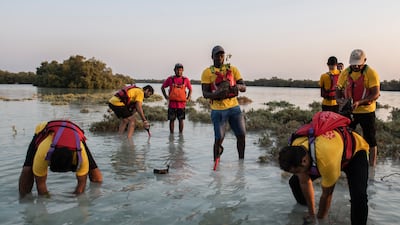
People plant mangroves during an event organised by Companies for Good on Jubail Island, Abu Dhabi. All photos: Vidhyaa Chandramohan -
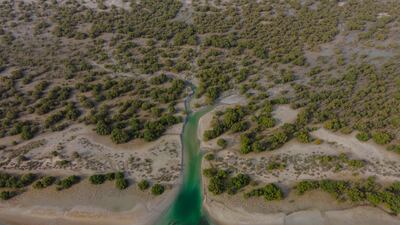
To fight climate change, the UAE is carrying out projects such as reducing emissions and planting mangroves. -
Mangroves, trees that survive in salty water, play an important part in the ecosystem. -
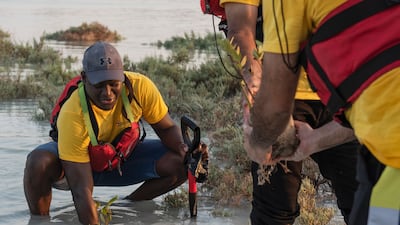
By 2030, the UAE intends to plant 100 million mangroves. -
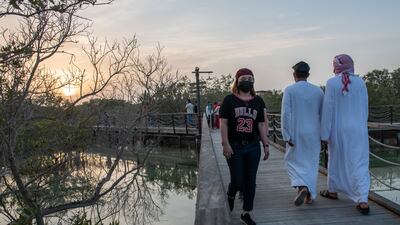
Visitors at Jubail Mangrove Park. Schools and businesses are planting saplings as part of the UAE's campaign. -
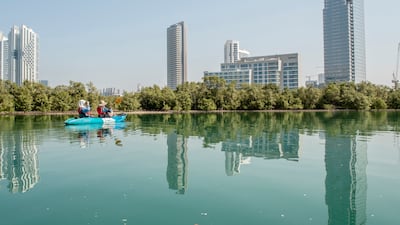
Volunteers during a mangrove clean-up organised by the World Wildlife Fund and Seahawk Abu Dhabi. -
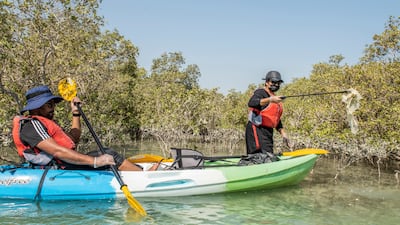
Young mangroves can be damaged by plastic and other waste dumped into the sea. -
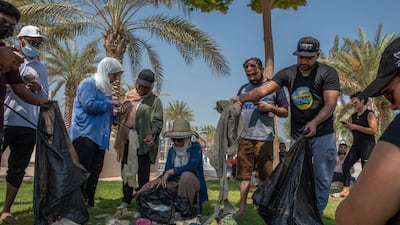
Volunteers sort rubbish gathered during a clean-up of mangroves in Abu Dhabi. -

After collecting debris from the mangroves, volunteers use an app to track their progress. -
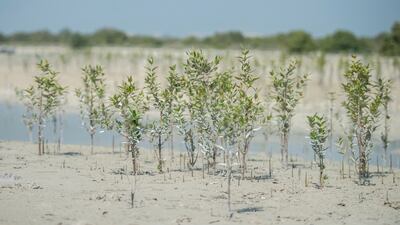
The grey mangrove is the species that grows extensively in UAE. -
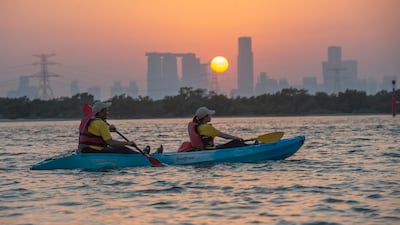
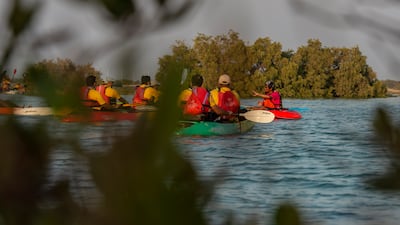
Visitors enjoy an evening paddle by the mangroves and a sunset view of Abu Dhabi.


As part of the first phase of Adnoc's programme, custom-built drones and rigging equipment built by Distant Imagery and supported by the agency were used to plant more than 200,000 mangrove seeds in Abu Dhabi’s Mirfa coastal lagoon.
The germination and growth of the mangroves will be monitored for the next year, the company said.
Adnoc's initiative to aerially plant 2.5 million mangroves will include a volunteer programme, with opportunities to participate in each stage of the planting process, from picking seeds to helping monitor the growth of the mangroves.
"We are looking forward to working with Adnoc on this mangrove project to ensure that we all achieve our objectives of combating climate change through nature-based solutions as mangroves are very resilient and are hugely important thanks to their qualities as effective carbon sinks," said Ahmed Alhashmi, executive director of terrestrial and marine biodiversity at the agency.
Adnoc said this month that it would invest $15 billion in decarbonisation projects by 2030, including clean power, carbon capture and storage, further electrification of operations, energy efficiency and new measures to build on its policy of zero routine gas flaring.
The company has been restoring mangrove ecosystems for more than a decade and has planted approximately two million mangrove seedlings at its operational sites and across Abu Dhabi, it said.
Adnoc is "committed to leveraging nature-based solutions as integral, ready and cost-effective offsets in support of climate change adaptation, mitigation and resilience, balancing energy systems and blue carbon ecosystems", the statement added.

