

TikTok has issued an apology to its users after being accused of racial inequality on the platform.
In this latest event in a string of controversies, the video-sharing network was accused of hiding a number of posts that included the George Floyd or Black Lives Matter hashtags.
Users creating content around these subjects were shown a message that indicated nobody had viewed the post, however, TikTok said the issue had been caused by a bug and the posts had, in fact, been viewed “billions of times”.
The bug comes at a time when the platform has already been facing claims that its black users are experiencing issues. TikTok has acknowledged it has “work to do”.
________________
Arab artists respond to George Floyd's death:
-
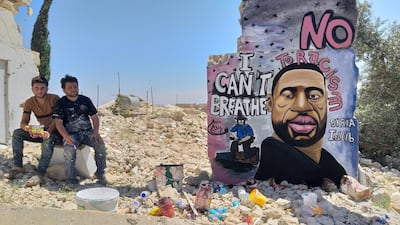
Aziz Asmar, right, and Anis Hamdoun, sitting in front of their mural of George Floyd in Idlib, Syria. 'When we draw on the walls of destroyed buildings, we are telling the world that underneath these buildings there are people who have died or who have left their homes... there was injustice here, just like there's injustice in America'. Aziz Asmar -
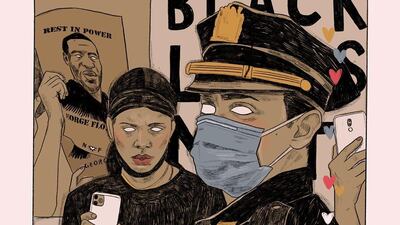
An illustration by Lebanese artist Nouri Flayhan: 'I created this illustration to stand in solidarity with black people, to say we are all watching across the world.' Nouri Flayhan -
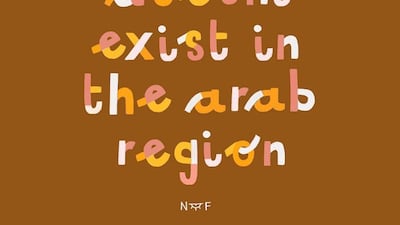
An illustration by Lebanese artist Nouri Flayhan reads: "Let's not pretend that racism doesn't exist in the Arab region." ... 'We need to acknowledge the racism issues we have in the Arab region, have uncomfortable conversations about them.' Nouri Flayhan -
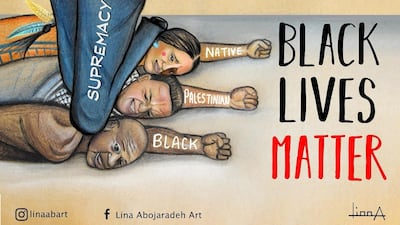
Artwork by Palestinian artist Lina Abojaradeh: 'Standing up for one type of injustice is also standing up for every type of injustice,' she says. Lina Aboujaradeh -
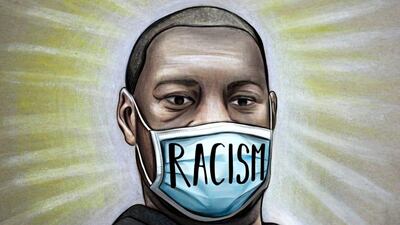
Palestinian artist Lina Abojaradeh depicts George Floyd in new artwork that compares racism to a virus. Lina Abojaradeh -
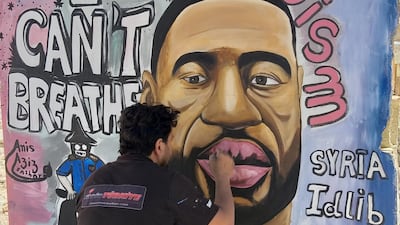
Aziz Asmar painting a mural of George Floyd on a destroyed building wall in Idlib, Syria, with the words 'I can't breathe' and 'No to racism'. Aziz Asmar -
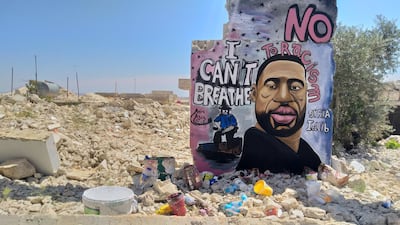
A mural of George Floyd in Idlib, Syria, by Syrian artists Aziz Asmar and Anis Hamdoun. Aziz Asmar


_________________
"First, to our Black community: We want you to know that we hear you and we care about your experiences on TikTok," the platform said, in a statement. "We acknowledge and apologise to our Black creators and community who have felt unsafe, unsupported or suppressed. We don't ever want anyone to feel that way. We welcome the voices of the Black community wholeheartedly."
Days earlier, thousands of users across the platform changed their profile pictures as a way to bring attention to claims that voices in the black community are being marginalised.
Following the bug, TikTok pledged to work to regain the trust of its users, acknowledging the questions being asked were “tough but fair”.
"We understand that many assumed this bug to be an intentional act to suppress the experiences and invalidate the emotions felt by the Black community," TikTok said. "And we know we have work to do to regain and repair that trust."
TikTok has pledged to donate $4 million (Dh14.6m) to groups fighting for racial justice, as well as launch a diversity council for its content creators.

