


Zayed University students gained hands on experience excavating remains at Hili Oasis. To read the full story, click here.
-
-
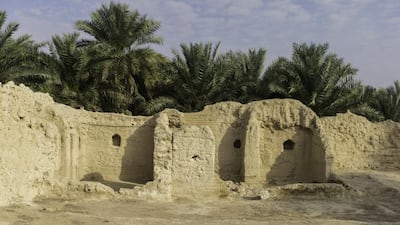
Dating from a period when fortified houses, rather than forts, would have been the dominant architectural features in the oasis landscapes surrounding what is now Buraimi and Al Ain, the Bait bin Hadi would have originally been surrounded by date plantations that were much more extensive than the oasis as it appears today. Christopher Pike / The National -
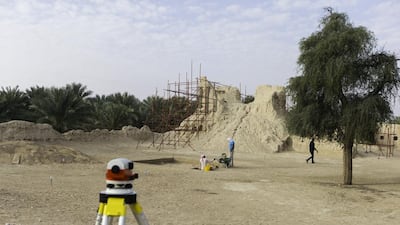
The ruined watchtower at the Bait bin Hadi, which at one time stood guard over the surrounding oasis. The oasis would have been watered by a system of underground tunnels or surface channels built to transport water over many kilometres from aquifers in hills and mountains to lower-lying cultivated areas. This system of aflaj (as falaj are referred to in the plural) was employed in Iran, Iraq and Afghanistan and throughout the Mediterranean, North Africa and in parts of Central Asia. Christopher Pike / The National -
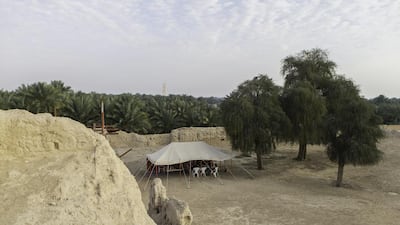
If the house and oasis are the of the same age then they date from a time when Buraimi’s population and prosperity peaked and when plantations such as Hili formed part of a wider Arab empire. Christopher Pike / The National -
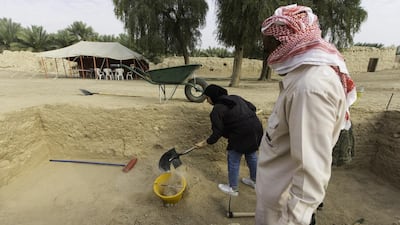
The excavation is designed to teach the students the basics of archaeological method – surveying, excavation and the systematic recording of their work and any finds – according to an internationally-recognised method originally devised by the Museum of London’s archaeological unit. Christopher Pike / The National -
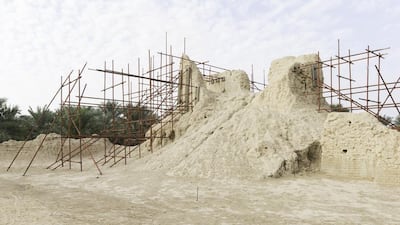
Although it is now largely a ruin, the Bait bin Hadi still rises above the Hili Oasis, which would have been watered using traditional falaj irrigation. The system is believed to have originated in the Arabian Peninsula about 3,000 years ago at a time when the system helped to transform the lives of communities living in areas with limited rainfall by making water easier to obtain. Christopher Pike / The National -
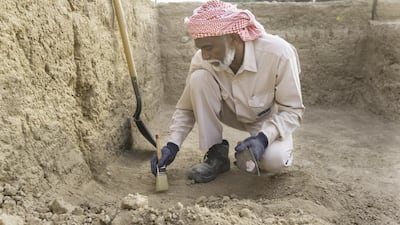
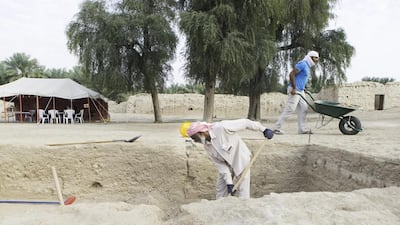
Abdal Azeez, a worker for the Abu Dhabi Tourism & Culture Authority, TCA, excavating the site which is believed to date from the late 17th century. Christopher Pike / The National -
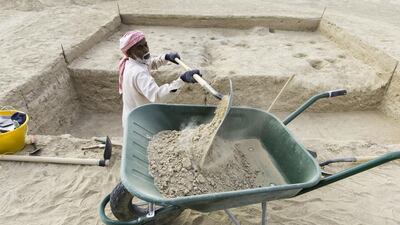
As well as spending four weeks excavating at Hili this Spring, the students spent time at Qasr Al Hosn and take part in a field walking survey of Hosn Al Sira in the Al Dhafra region, one of the oldest monuments associated with the Bani Yas tribal confederation. Christopher Pike / The National -
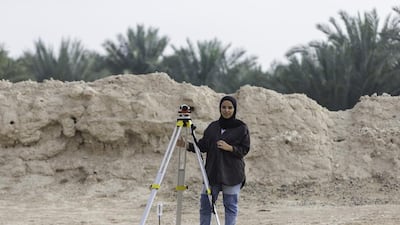
Ruled by the Omani Yarubid dynasty, this brief-lived empire had its headquarters in Rustaq but was centred on the Batina and Dhahira regions of the modern Sultanate of Oman. Spreading throughout the Gulf and across the Indian Ocean to include parts of East Africa and what is now Pakistan and Iran, it consisted of a network of colonies and trading posts that not only provided the Yarubids with markets for their cash crops, such as the dates that were grown in Hili, but also gave them access to the slave labour that was required for labour-intensive industries such as pearl fishing and the date cultivation that took place in oases such as Hili. Pictured: Mai Al Mansouri, a Zayed University student. Christopher Pike / The National -
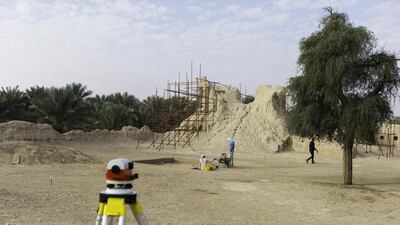
Bayt Bin Hadi archeological site in the Hili Oasis area of Al Ain. Christopher Pike / The National
The Bait bin Hadi Al Darmaki archaeological dig - in pictures
Most popular today

