


The Smithsonian National Museum of African American History and Culture's exhibition space offers a detailed and unvarnished view of African-American life, history and culture. An exhibition titled A Changing America: 1968 and Beyond has also opened to the public.
-
-

The Smithsonian National Museum of African American History and Culture on the National Mall in Washington DC, designed by the Ghanaian-British architect David Adjaye. Courtesy Alan Karchmer / NMAAHC -

A rescue basket constructed almost entirely of welded stainless steel and used by the United States Coast Guard in 2010 during Hurricane Katrina. Courtesy Collection of the Smithsonian National Museum of African American History and Culture -

The Smithsonian National Museum of African American History and Culture. Courtesy Alan Karchmer / NMAAHC -

Boxing headgear by Everlast Worldwide, Inc. worn by Muhammad Ali in 1973. Courtesy Collection of the Smithsonian National Museum of African American History and Culture -
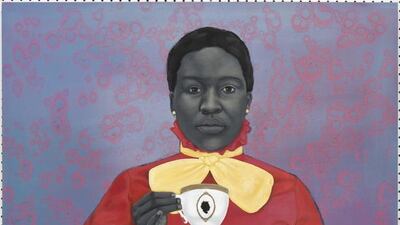
Grand Dame Queenie (2012) by Amy Sherald, oil painting of an African-American woman. Courtesy Collection of the Smithsonian National Museum of African American History and Culture -
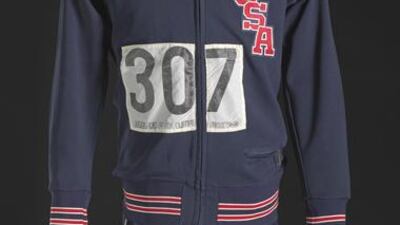
Warm-up tracksuit jacket and pants worn by 200m gold medallist Tommie Smith, who gave the Black Power salute with bronze medallist John Carlos on the podium at the 1968 Olympic Games in Mexico City. Courtesy Collection of the Smithsonian National Museum of African American History and Culture -

Handmade tin box with freedom papers issued by Loudoun County Court, Virginia, carried by Joseph Trammell to prove his free status (1852). Gift of Elaine E Thompson, in memory of Joseph Trammell, on behalf of his direct descendants. Courtesy Collection of the Smithsonian National Museum of African American History and Culture. -

Glass shards collected from the gutter outside the 16th Street Baptist Church in Birmingham, Alabama, on the day of the funeral of four girls killed in the bombing by racists on September 15, 1963. Courtesy Collection of the Smithsonian National Museum of African American History and Culture -

Slave cabin at the Point of Pines Plantation in Charleston County, South Carolina (1800-1850). Gift of the Edisto Island Historic Preservation Society. Courtesy Collection of the Smithsonian National Museum of African American History and Culture. -
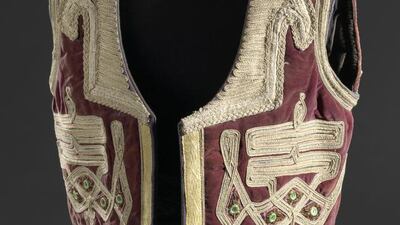
Velvet, braid, plastic, cotton and metal vest worn by Jimi Hendrix. Courtesy Collection of the Smithsonian National Museum of African American History and Culture. -

A miniature pair of bronze shackles used as a protective amulet by the Lobi tribe of West Africa. Courtesy Collection of the Smithsonian National Museum of African American History and Culture. -

Inside the Smithsonian National Museum of African American History and Culture. Courtesy Alan Karchmer / NMAAHC
Smithsonian National Museum of African American History and Culture’s exhibition
Most popular today

