


While hip-hop is one of the world's most dominant musical genres, commercially and culturally, its eminence hasn’t always been reflected in the Abu Dhabi Grand Prix after-race concert series.
Of the 48 artists who have performed as part of the festivities since the inaugural race, only nine can be classified as rappers — sorry, Post Malone, you don’t make the cut because you sing too much. From that handful, only one has headlined the prestigious race day concert, with Eminem putting on a barnstorming show in 2012.
To be fair, you really can’t blame promoters for this dearth because frankly — with the exception of a notable few — large scale hip-hop shows can be derivative.

Abu Dhabi F1 concert-goers would have experienced this in the 2019 double bill of Future and Gucci Mane, who basically performed a club show in a stadium. Other acts have shown the genre’s full potential, with thrilling sets by Jay-Z in 2013, J Cole in 2017 and last year’s blistering concert by UK grime star Stormzy.
And Kendrick Lamar has now raised the bar, with an explosive show at Etihad Park on Saturday. Simply put, this was the best performance by a hip-hop artist at the Abu Dhabi F1.
It was powerful and kinetic and had just the right amount of production values to keep the non-fan engrossed. But what was more impressive is how uncompromising it was.
Touring on the back of a new album, Mr Morale & The Big Steppers, I wondered how these songs — often dark explorations of childhood trauma — would translate on a festival stage. Lamar solved the challenge by dialling up the drama.
Each track was performed with the cold intensity of a supreme technician. His varied vocal delivery and use of rhymes, cadence and syntax created a rhythm of its own that made heart-wrenching tracks United In Grief and N95 almost operatic in their grandeur.
Die Hard was also a standout from the new album, with Lamar positioning his vocals between passionate spoken word and mournful croon. These bewitching excursions into tumultuous subjects made the arrival of the big anthems all the more impactful.

Nearly 30,000 people bounced along to the marauding piano line of Humble. and the horn-soaked funk of King Kunta. The faithful were also rewarded with a blistering take on m.A.A.d city, Lamar’s breakout track, which recently celebrated its 10th anniversary.
With all the performative fireworks on display, it is easy to forget how minimal the show actually was.
Lamar took and owned the stage solo. Backed by thematic visuals for each song, from the blue monochrome of DNA. to the fire and sun of King Kunta, each song was given its own moment. Wearing a baseball cap, shirt and boots, he kept his interaction with the crowd minimal, so when the rapper did address “the energy in Abu Dhabi”, the crowd roared.
Ending the set with the propulsive Saviour and a fireworks display, Lamar delivered a hip-hop spectacle worthy of the Abu Dhabi F1 Grand Prix.
After-race concerts continue with Def Leppard taking to the stage at Etihad Park on Sunday.
Access to after-race concerts is exclusive to Abu Dhabi Grand Prix ticket holders. Tickets are available online at www.yasmarinacircuit.com and through the Yas Marina Circuit Call Centre on 800 927 or 02 659 9800
Forty-five artists who have played at the Abu Dhabi F1 After-Race Concerts — in pictures
-
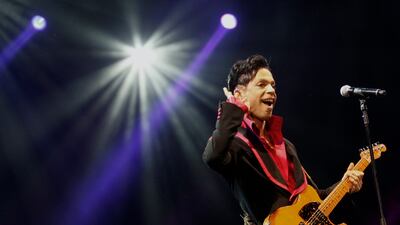
Prince kept it fun and funky during his Abu Dhabi Grand Prix performance in 2010. Reuters -
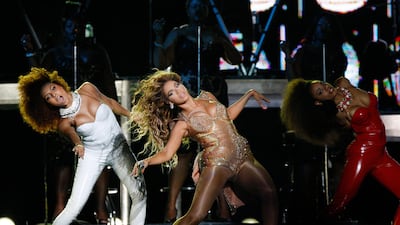
Beyonce performs at Ferrari World on the opening day of the Abu Dhabi Formula One Grand Prix on October 29, 2009. Philip Cheung / The National -
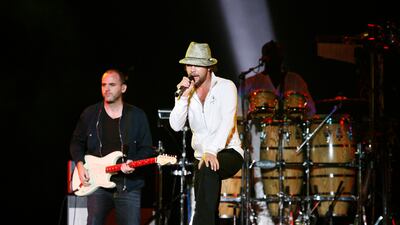
Jamiroquai performs at the Abu Dhabi Grand Prix on October 30, 2009. Philip Cheung / The National -

Kings of Leon performed in the UAE for the first time at the 2009 Abu Dhabi Formula Grand Prix. Reuters -
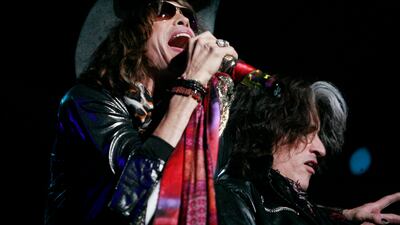
Aerosmith performs on the final race day on November 1, 2009. Philip Cheung / The National -

Kanye West performs at Yas Island on November 12, 2010. Rich-Joseph Facun / The National -
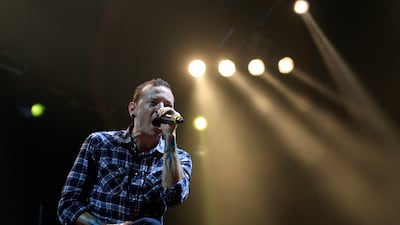
Linkin Park at the Formula One after-race concert on November 13, 2010. Rich-Joseph Facun / The National -
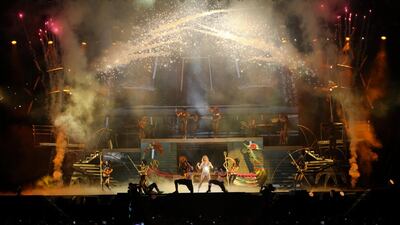
Britney Spears's 2011 show was high on choreography but low on energy. Lee Hoagland / The National -
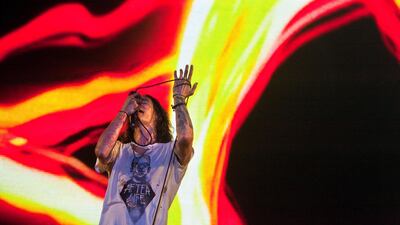
US rock band Incubus performs in 2011 in what was an odd double bill also featuring The Cult. Silvia Razgova / The National -
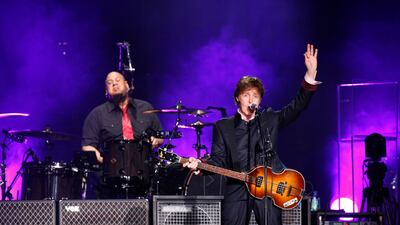
Paul McCartney played a hit-filled set in 2011. Antonie Robertson / The National -
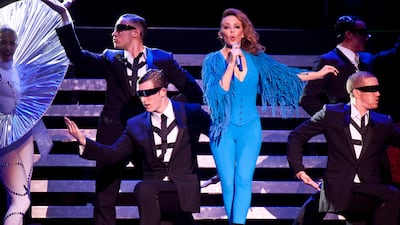
Aussie pop star Kylie Minogue kept it fun and breezy in her 2012 Abu Dhabi F1 concert. Antonie Robertson / The National -
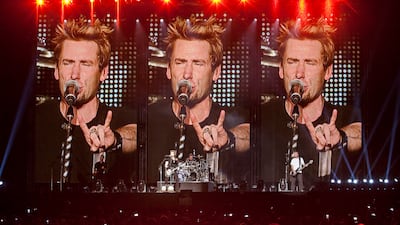
Nickelback played all their anthems in a 2012 concert. Antonie Robertson / The National -
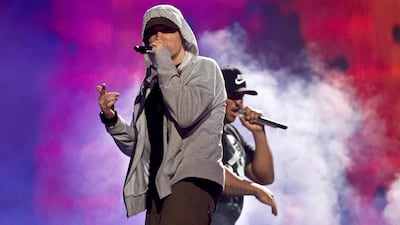
Eminem made his concert debut in the Middle East with a race day performance at the 2012 Abu Dhabi Grand Prix. Antonie Robertson / The National -

Emirati singer Hussain Al Jassmi was one of the first Arab artists to perform as part of the Abu Dhabi F1 after-race concerts -
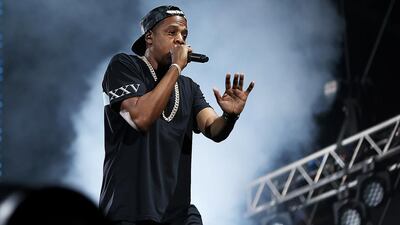
Hip-hop superstar Jay-Z wowed crowds with his 2013 Abu Dhabi Grand Prix show. Delores Johnson / The National -
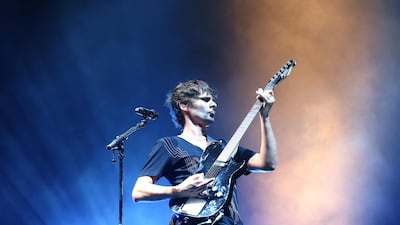
British rockers Muse brought their progressive rock sounds to Etihad Park in 2013. Delores Johnson / The National -
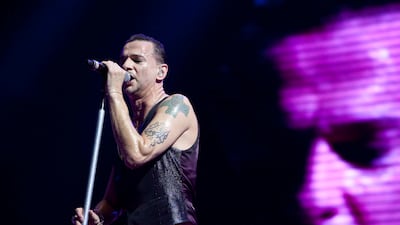
Dave Gahan, from Depeche Mode, owned the stage during the group's 2013 race-day concert. Antonie Robertson / The National -

Egyptian pop star Tamer Hosny at the 2014 Abu Dhabi Formula One Grand Prix after-race concert. Getty Images -
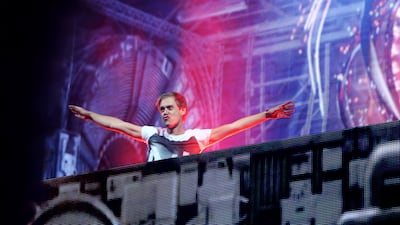
Dutch DJ Armin Van Buuren was the first EDM act to perform as part of the Abu Dhabi Grand Prix after-race concert series in 2014. Delores Johnson / The National -
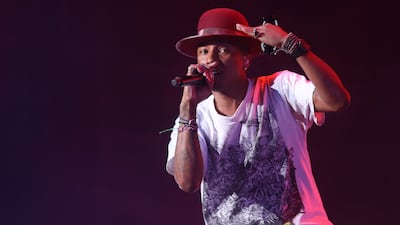
Pharrell William lost his voice during his 2014 Abu Dhabi F1 Grand Prix concert. Delores Johnson / The National -
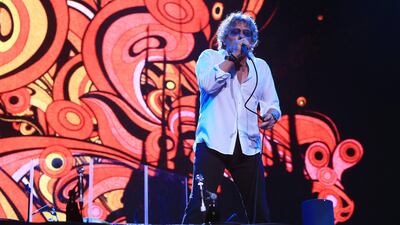
The Who rocked loud and proud during their 2014 Abu Dhabi Grand Prix race day concert. Ravindranath K / The National -
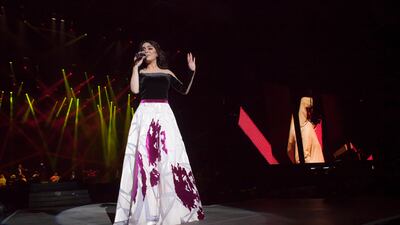
Emirati singer Aryam made her stage return during the 2015 Abu Dhabi Grand Prix. Antonie Robertson / The National -
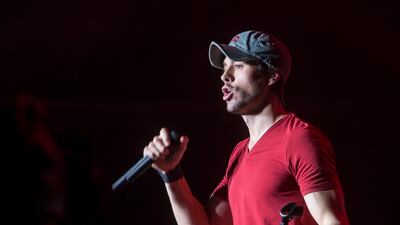
Enrique Iglesias was all charm during his 2015 performance at Etihad Park. Antonie Robertson / The National -
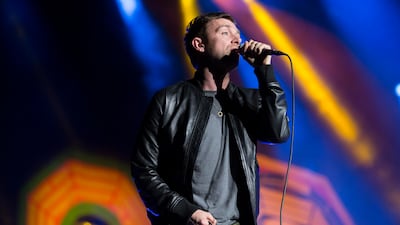
Brit-pop group Blur gave a rare live performance of 'Country House' for their 2015 Abu Dhabi Grand Prix concert. Antonie Robertson / The National -
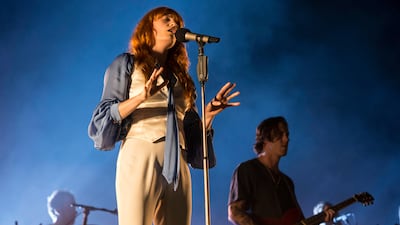
Florence + the Machine at the 2015 Abu Dhabi Grand Prix. Antonie Robertson / The National -
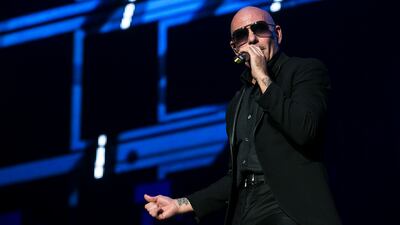
Cuban-American singer and rapper Pitbull was underwhelming in 2016. Mona Al Marzooqi / The National -
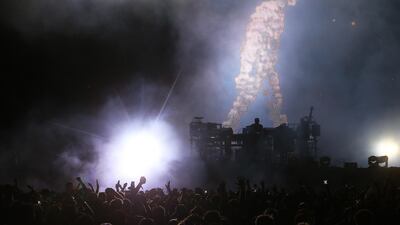
UK dance duo The Chemical Brothers were relentless at their 2016 Abu Dhabi Grand Prix concert. Pawan Singh / The National -
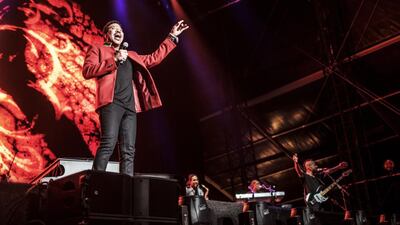
Lionel Richie didn't disappoint at his 2016 after-race concert. Waleed Shah for The National -
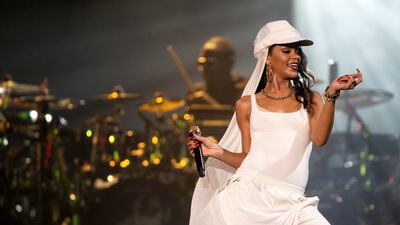
Rihanna rocked out at Etihad Park in 2016. Christopher Pike / The National -
UK DJ Calvin Harris was a shadowy presence at his Etihad Park concert in 2017. Reem Mohammed / The National -
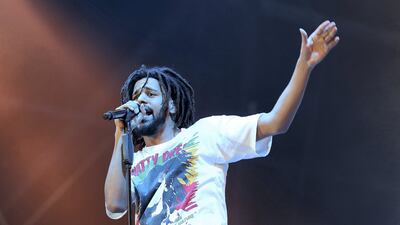
US rapper J Cole performed at the 2017 Abu Dhabi Grand Prix after hip-hop star Kendrick Lamar pulled out. Pawan Singh / The National -
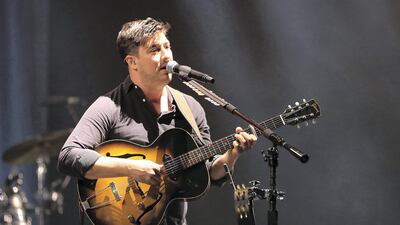
The 2017 concert by Mumford & Sons was largely a fans-only affair. Pawan Singh / The National -
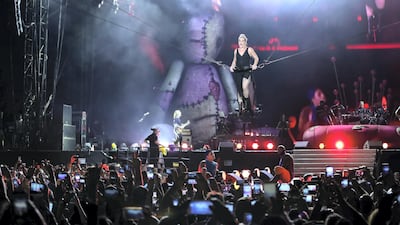
The Abu Dhabi Grand Prix race day concert in 2017 by Pink had its fair share of acrobatics. Photo: Flash Entertainment -
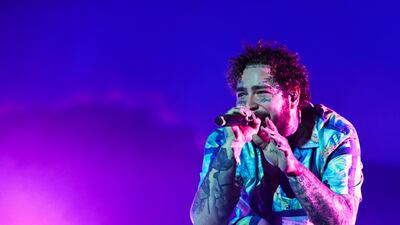
US rapper Post Malone brought new meaning to the term 'solo performance' with his 2018 Abu Dhabi F1 show. Victor Besa / The National -
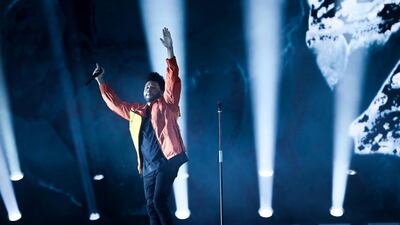
The Weeknd gave a typically brooding show in 2018. Victor Besa / The National -
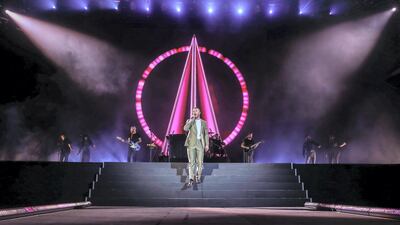
Sam Smith changed a few misconceptions at their 2018 Abu Dhabi F1 concert. Victor Besa / The National -
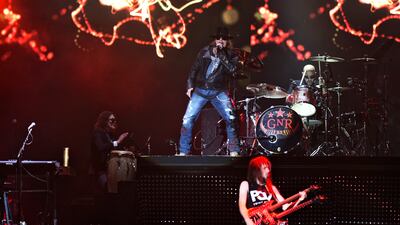
The Guns 'N' Roses concert at the 2018 Abu Dhabi F1 was cut short due to singer Axl Rose feeling unwell. Lee Hoagland / The National -
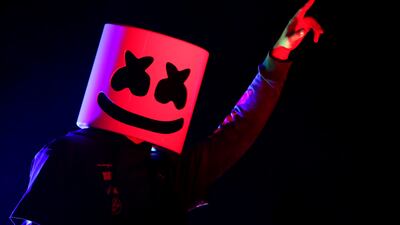
Marshmello was a hit with the younger crowd during his 2019 Abu Dhabi F1 concert. Chris Whiteoak / The National -
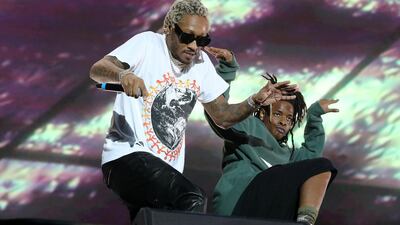
Rapper Future performing at the 2019 after-race concert at Etihad Park. Pawan Singh / The National -

Lana Del Rey was suitably dramatic during her 2019 Abu Dhabi Grand Prix concert. Chris Whiteoak / The National -
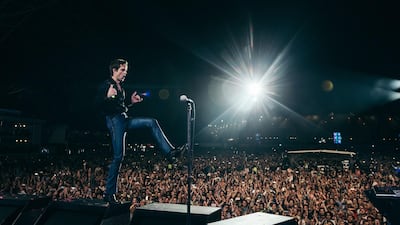
The Killers were the big act in 2019. Photo: Flash Entertainment -
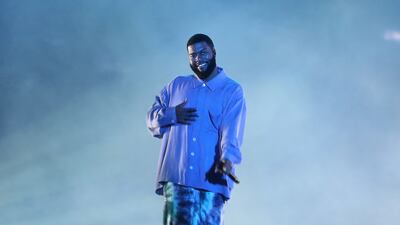
Khalid performed a sweet low-key set to kick of the 2021 Abu Dhabi F1 after-race concerts Pawan Singh / The National -
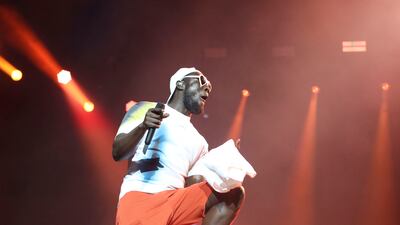
British rapper Stormzy was happy to be back on stage at the 2021 Abu Dhabi F1. Khushnum Bhandari / The National -
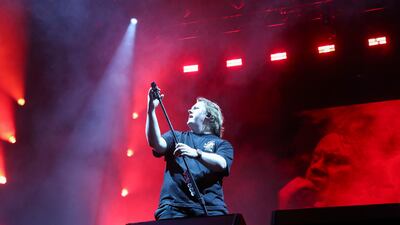
Lewis Capaldi performs in 2021. Khushnum Bhandari / The National -
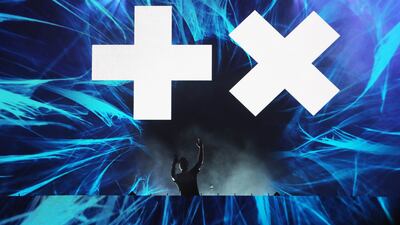
DJ Martin Garrix performing the Abu Dhabi F1 race-day concert in 2021. Pawan Singh / The National



