


British indie rock band Coldplay were trending on Sunday after the group invited Iranian actress Golshifteh Farahani to perform onstage with them in Buenos Aires.
They sang Baraye, a Farsi song by Iranian pop singer Shervin Hajipour that has become an anthem for young people across Iran, where the fiercest protests in decades have been taking place since Mahsa Amini, 22, died in police custody after she was arrested for breaching Iran's dress rules for women.
Rights groups say at least 141 people have been killed, including 29 children, in the nationwide demonstrations that have been ongoing for six weeks.
"We would like to do something to show that we support all the women and everyone fighting for freedom in Iran and everywhere in fact," frontman Chris Martin said during the concert after a fireworks display.
"This song is in Farsi so I can't really sing it, but we're going to sing it together and we send it with love from Buenos Aires."
Twitter user Moh Hosseinioun wrote on the platform: "It brought me to tears watching it live in a theater in Chicago," posting a video to the social media platform. "You folks are class!"
"This genuinely brought tears to my eyes," wrote another user. "This is huge. if you think only Iranians can support this movement then look at Coldplay as an example."
This is not the first time Coldplay, who are touring South America at the moment, have sent a message of support to Iran.
Earlier this month, they posted a message of solidarity on social media, saying: "We'd like to send particular love and respect to those of you standing up for the right to be free, peaceful and Yourself, in all of those places where that right is not yet afforded each and every person".
The members then went on to state that they "would like to send much love to the family of Mahsa Amini", before signing off their post with their initials.
A growing list of celebrities have spoken out on behalf of Amini and her family, including Bella Hadid, Ramy Youssef, Angelina Jolie.
Well-known names in French cinema including Juliette Binoche, Marion Cotillard, Isabelle Adjani and Isabelle Huppert, as well as Belgian singer Angele, have also cut their hair to show support for the protests.
Scroll through the gallery below to see the latest images from Iran of the protests
-

Iranians protest in Tehran after the death of 22-year-old Mahsa Amini after she was detained by the morality police in September. AP Photo -
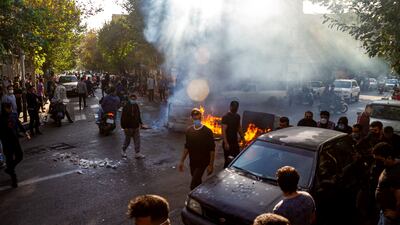
Protests have intensified despite a vicious government crackdown that has left as many as 200 people dead, although estimates of the toll by rights groups vary. AP Photo -
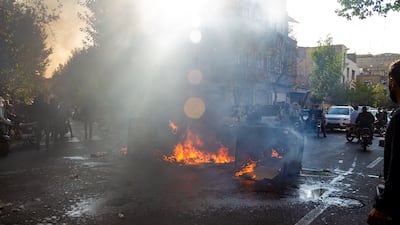
At least eight members of the security forces have also been killed or wounded during the unrest and there are signs that violent resistance could be intensifying. AP Photo -
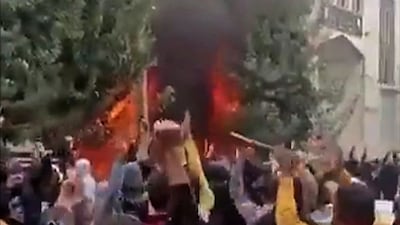
A fire burns at the office of the governor of Mahabad, in the West Azerbaijan province of Iran. AFP -
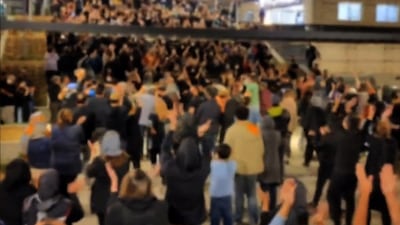
Protesters gather in the a courtyard of Chitgar complex in western Tehran. AFP -

Iranian protesters continue to defy a deadly crackdown by security forces. AFP -

A woman cuts her hair at the grave site of Nika Shahkarami in the city of Khorramabad, during a reported memorial held to mark 40 days since the death of the 16-year-old. AFP -
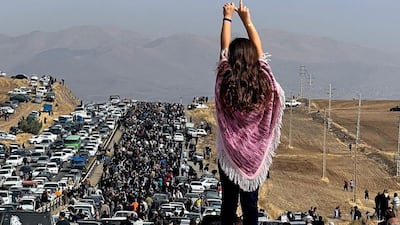
A woman not wearing a headscarf stands on top of a vehicle as thousands make their way towards Saqez, Mahsa Amini's home town, to mark 40 days since her death in police custody. AFP -
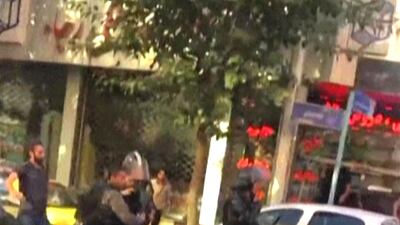
Iranian riot police prepare to confront protesters the capital, Tehran. AFP -

Iranian protesters surge forward amid clashes with riot police in Tehran. AFP -
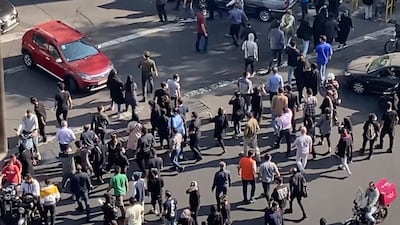
A crowd blocks an intersection during a protest to mark 40 days since Amini's death in custody. AP Photo -
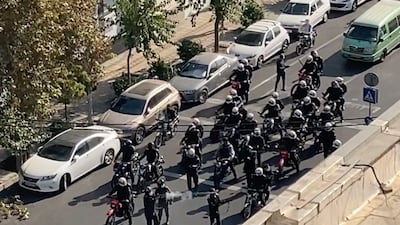
Iranian police arrive to disperse a protest in Tehran. AP Photo -
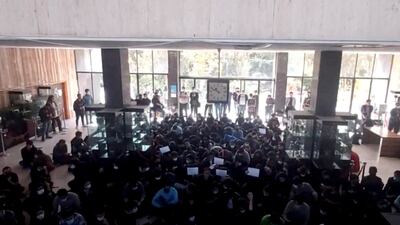
Protesters chant at a vigil for Amini at the Khajeh Nasir Toosi University of Technology in Tehran. Reuters -
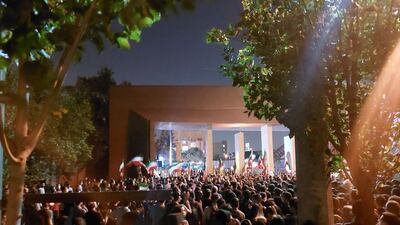
Students at Sharif University of Technology attend a protest. AP Photo -

Police outside Sharif University during a student protest. AP Photo -
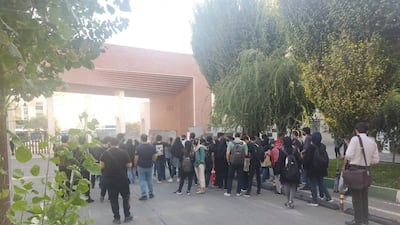
Students at the university protest over the death of Amini, who was in 'morality police' custody for allegedly breaking strict rules on head coverings for women. AP Photo -
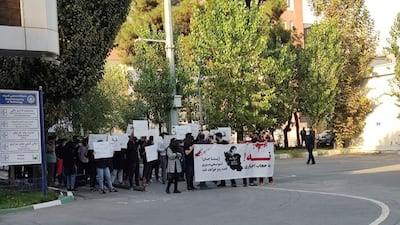
The students' banner says: 'No to mandatory hijab'. AP Photo



