


The Arabic language spread across West Africa primarily through faith, trade and education, according to some of the continent's leading linguists.
Appearing in a session on Friday as part of the Sharjah International Book Fair, academics from Mali and Nigeria to Senegal spoke about the various ways the Arabic language penetrated their respective societies and the challenges facing its viability today.
According to linguist Abdulqader Idris Mega, Arabic initially flourished in Mali due to trade.
"So we are talking about a time before the 9th century when Islam came to Mali," he explained.
"Writing and historical sources state that the language came primarily from groups from the Arabian Peninsula who initially mobilised from North Africa and went further west."
However, it was through the spread of Islam, Mega notes, that the Arabic language became a prevalent feature of everyday life in Mali.
"And this is not really surprising because when Islam came, the Arabic language automatically came with it," he said.
"People began paying attention because it was linked with faith. And through that notion the language spread through religious teachings and general education in the sciences.”
With Mali divided into tribes, each with their own dialects, Arabic served as a unifying language in the country's internal and external affairs.
"Diplomatic correspondence with kings and empires in North Africa, Tunisia, Algeria, Morocco and Mauritania were done in Arabic," Mega said. "While in the country it was also a language of official instructions and guidance.”
He is satisfied with the state of the Arabic language today in Mali.
"The language is still being taught in high schools," Mega said. "What is also encouraging is that it is the leading language students choose after French.”

Nigerian researcher and author Omar Adam Mohammed says it was through faith and education that Arabic came to his homeland.
"Islam is the main factor, because the language is encapsulated within the faith," he said.
"It was initially through traditional Islamic institutions where the language was primarily taught to understand the faith.
Such schools are now non-existent as modern day requirements require schools to also teach English, mathematics, geography and the sciences.”
Senegalese linguist Mohammed Niang also noted that Arabic language also spread to West Africa from the travels of non-Arabs.
"It is known that Africans came to Yemen during ancient times and then left to Egypt, Ethiopia and beyond," he said.
"So the relationship between Arabic and Africa is old and rich and it’s not a surprise that it also appeared in the west in places like Senegal.”
That said, Niang warns against taking the language’s prevalence for granted.
More needs to be done to ensure it plays a strong role in today's society to serve some of the modern needs of the continent.
“We have cases in Senegal where people study Arabic abroad and when they return home they can’t find the type of work opportunities they are looking for,” he says.
“So we do need more Arabic education institutions to come to Senegal and work within the existing educational systems in order to create more viable opportunities for students when they graduate.”
Mohammed agrees and points to similar experiences of Nigerian students.
"We need to strive and make the teaching of Arabic language relevant to today's needs," Mohammede said.
"Because if you study and graduate from university and have no job where you can use your Arabic skills, then it will discourage others.
“There is no point in graduating with an Arabic tongue, but [get] no job.”
The Sharjah International Book Fair continues at the Expo Centre Sharjah until November 13. More information is available at www.sibf.com
Scroll below for pictures from the 2022 Sharjah Book Fair
-
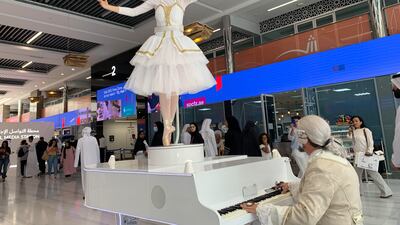
The first day of the Sharjah International Book Fair, at Expo Centre. Pawan Singh / The National -
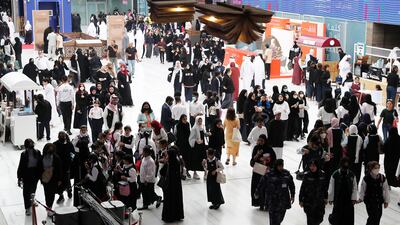
The first day of the Sharjah International Book Fair, at Expo Centre. Pawan Singh / The National -
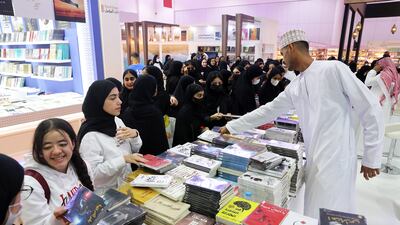
The first day of the Sharjah International Book Fair, at Expo Centre. Pawan Singh / The National -
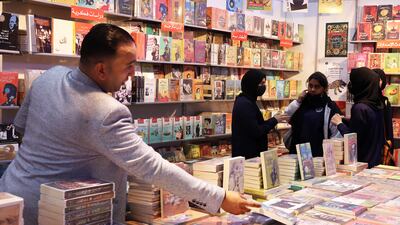
The first day of the Sharjah International Book Fair, at Expo Centre. Pawan Singh / The National -
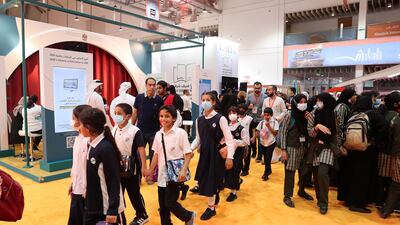
The first day of the Sharjah International Book Fair, at Expo Centre. Pawan Singh / The National -
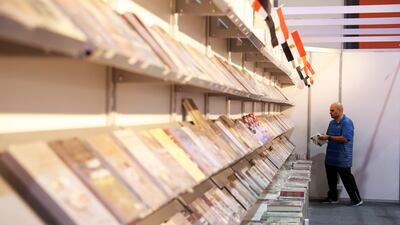
The first day of the Sharjah International Book Fair, at Expo Centre. Pawan Singh / The National -
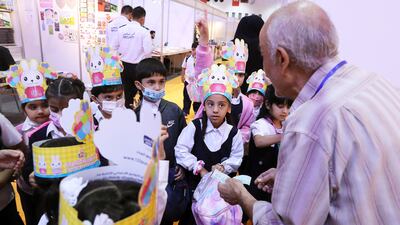
The first day of the Sharjah International Book Fair, at Expo Centre. Pawan Singh / The National -
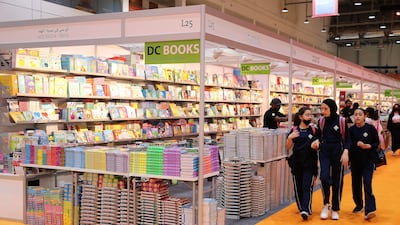
The first day of the Sharjah International Book Fair, at Expo Centre. Pawan Singh / The National -
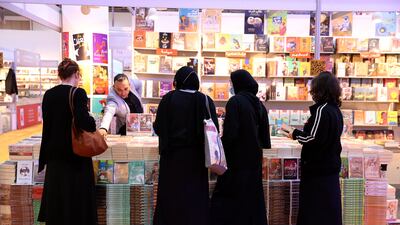
The first day of the Sharjah International Book Fair, at Expo Centre. Pawan Singh / The National -

The first day of the Sharjah International Book Fair, at Expo Centre. Pawan Singh / The National -
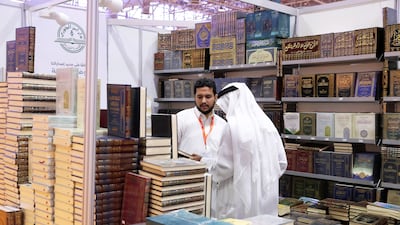
The first day of the Sharjah International Book Fair, at Expo Centre. Pawan Singh / The National -

The first day of the Sharjah International Book Fair, at Expo Centre. Pawan Singh / The National -
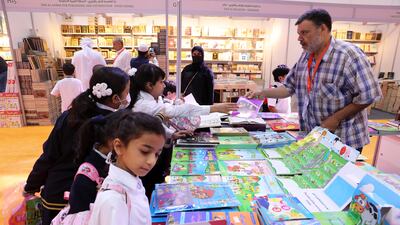
The first day of the Sharjah International Book Fair, at Expo Centre. Pawan Singh / The National -
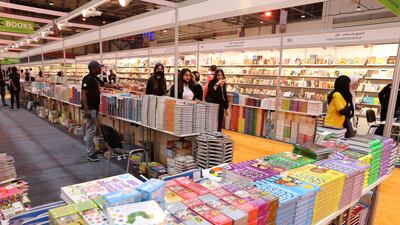
The first day of the Sharjah International Book Fair, at Expo Centre. Pawan Singh / The National -
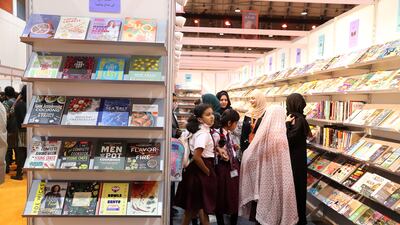
The first day of the Sharjah International Book Fair, at Expo Centre. Pawan Singh / The National -

The first day of the Sharjah International Book Fair, at Expo Centre. Pawan Singh / The National -
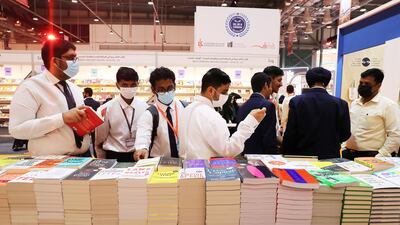
The first day of the Sharjah International Book Fair, at Expo Centre. Pawan Singh / The National



