Arabia has been a place of epic journeys since the dawn of humanity. Recent archaeological discoveries have shown that our distant ancestors entered Arabia from Africa repeatedly for at least 400,000 years.
Throughout antiquity, when Arabia was a source of rare and valuable aromatic resins such as frankincense and myrrh, a complex network of long-distance trade routes connected its ancient civilisations to those of ancient Greece, Rome, Mesopotamia, Egypt and the Levant.
But as Abdullah Al Rashid, director of the King Abdulaziz Center for World Culture (Ithra) writes in a new book, Hijrah: In the Footsteps of the Prophet, despite the historical importance of those journeys, one — the Hijrah — continues to resonate above all others.
“The Hijrah has literally defined time and the ages. For over a billion people, the Hijrah marks the calendar and the sequence of the centuries,” Al Rashid says. “It marks a pivotal moment in history when the perception of Islam and nature of the Muslim community changed forever."
Translated variously as the "migration" or "emigration", the Hijrah was a pre-planned but perilous flight from religious persecution made by the Prophet Mohammed and a select band of followers — the muhajirun — in 622.
The Prophet Mohammed’s migration from Makkah, his birthplace, to Medina began when he left his wife Khadijah's house. He headed past the Kaaba to the home of Abu Bakr, his close friend and trusted advisor. Both men then headed south to the foot of Mount Thawr, where they hid for three days in a cave before continuing their journey for eight days through an arid and unforgiving landscape to the safety of Medina, some 450 kilometres to the north.
Soon after their arrival, the Prophet Mohammed established agreements with the local Medinese clans that secured recognition and equity for his followers. In doing so, the Prophet Mohammed established the first Muslim community, or ummah, a community defined by faith rather than family, clan or tribe.
Central to Islam's establishment as both an organised religion and a socio-political institution, the Hijrah also became the official start date of the Hijri calendar in 639 when it was instituted by the second Caliph, Umar I.
For Dr Idries Trevathan, Ithra's curator of Islamic Art and Culture and editor of Hijrah: In the Footsteps of the Prophet, the Hijrah is not only an event of religious importance but also marks a historic step toward the foundation of a new collective identity, a moment, he says, when the "Muslim community went from being a small group of believers, surrounded by enemies who threatened their very existence, to that of an Islamic nation".
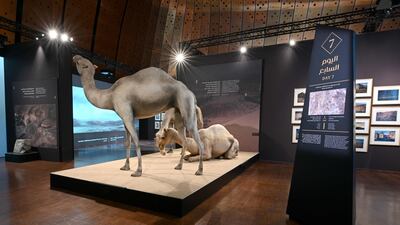
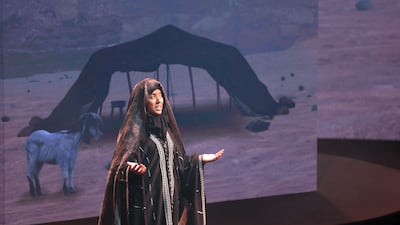
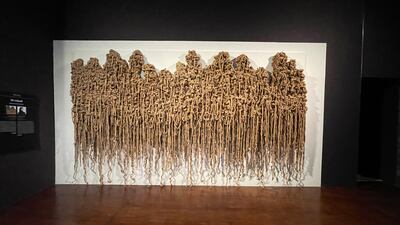
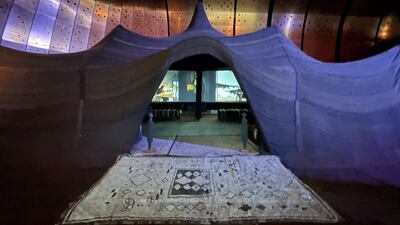
Trevathan's book has been published to coincide with the Hijrah’s 1400th anniversary and also accompanies an eponymous exhibition, which he has curated at Ithra in Dhahran, Saudi Arabia — both of which adopt a multi-disciplinary approach to analysing and contextualising the epochal event.
In print, the result is a lavishly illustrated text that features contributions by contemporary artists, photographers, filmmakers and artisans alongside chapters by historians and academics.
These include various attempts to visualise the Hijrah as both a geographical route and a spiritual journey in ways, Trevathan explains, that "go beyond the literal or the prosaic".
'HIJRAH%3A%20IN%20THE%20FOOTSTEPS%20OF%20THE%20PROPHET'
%3Cp%3E%3Cstrong%3EEdited%20by%3A%3C%2Fstrong%3E%20Idries%20Trevathan%3Cbr%3E%3Cstrong%3EPages%3A%3C%2Fstrong%3E%20240%3Cbr%3E%3Cstrong%3EPublisher%3A%3C%2Fstrong%3E%20Hirmer%20Publishers%3Cbr%3E%3Cstrong%3EAvailable%3A%3C%2Fstrong%3E%20Now%3C%2Fp%3E%0A
The artist Ayesha Amjad has attempted to do just this with her hand-painted Hijrah Memory Map (2021), which renders the Prophet Mohammed's flight in handmade pigments and gold leaf. Inspired by her love of medieval Islamic maps, Amjad, a recent graduate of The Prince's School of Traditional Arts in London, has used roses to symbolise the Prophet Mohammed's footsteps interspersed with miniature vignettes that illustrate each of the key episodes in his flight.
"These magical events colour our memories of this auspicious and historic journey," Amjad writes. "Today, the Hijrah remains an inspirational story of hope where we are reminded that even the gravest quest can end in triumph.”
If Amjad’s response is poetic and aesthetic, the renowned Saudi academic, Abdullah bin Hussein Alkadi, seeks geographical precision. Widely considered as the world’s authority on the Hijrah and among the greatest living biographers of the Prophet Mohammed, Alkadi has dedicated his career to retracing the route of the momentous journey.
For more than four decades Alkadi has pored over historical narratives, considered oral traditions, local stories and place names that refer to topographical features along the Hijrah route in order to discover the likely route taken by the Prophet Mohammed and Abu Bakr after their descent from Mount Thaw.
“This was not a migration that could follow the usual well-trodden caravan route. The Prophet’s life was in danger and in their attempt to avoid detection the very first stage of their journey was to head in a southerly direction to the cave,” Alkadi writes. “From here they needed to find a northward route towards Medina off the main caravan route to avoid detection.”
Since embarking on the first field trip in 2003, the academic has conducted more than 60 expeditions and clocked up more than 100,000 kilometres researching the route of the Hijrah, the equivalent of circumnavigating the globe two-and-a-half times.
“It has been a journey that has occupied me for some 40 years and is one that I hope will continue the rest of my life,” Alkadi writes. “Some refer to this as an obsession, but I prefer to say that I have fallen in love with my quest.”
Beyond its significance for Muslims, Trevathan sees the power of the Hijrah story in its capacity to address "universal human themes: courage, duty, loss, companionship, persecution, migration, community and freedom". He adds: "Indeed, the latter in particular is worth looking into further as Prophet Mohammed's quest for freedom — the freedom to worship — is an essential and core part of the story."
This idea is taken up by the academic Hamza Yusuf Hanson, who among his many posts serves under Shaykh Abdallah bin Bayyah as a member of the UAE’s highest Fatwa Council. In the book, Hanson considers the Hijrah as part of a long tradition of migratory journeys that recur in scripture from the time of Abraham, through Moses and the Virgin Mary to the Prophet Mohammed.
"As Muslims, we are taught that all wayfarers deserve food, safety, and refuge from harm. The Quran states: “Let them worship the Lord of this House who has satiated their hunger and freed them from fear.”
Like the exhibition the book accompanies, Hijrah: In the Footsteps of the Prophet sets out to rectify a 1400-year-old lacuna in our knowledge of a world-changing event, of which details have remained tantalisingly out of reach. Kaleidoscopic, learned and exquisitely illustrated, the book represents a major step in rectifying this imbalance while shedding new light on an event that continues to be of inspiration and relevance, regardless of one’s background or faith.
Hijrah: In the Footsteps of the Prophet is out now.
Scroll through images of the Ithra's Hijra exhibition below
Key facilities
- Olympic-size swimming pool with a split bulkhead for multi-use configurations, including water polo and 50m/25m training lanes
- Premier League-standard football pitch
- 400m Olympic running track
- NBA-spec basketball court with auditorium
- 600-seat auditorium
- Spaces for historical and cultural exploration
- An elevated football field that doubles as a helipad
- Specialist robotics and science laboratories
- AR and VR-enabled learning centres
- Disruption Lab and Research Centre for developing entrepreneurial skills
Living in...
This article is part of a guide on where to live in the UAE. Our reporters will profile some of the country’s most desirable districts, provide an estimate of rental prices and introduce you to some of the residents who call each area home.
How to apply for a drone permit
- Individuals must register on UAE Drone app or website using their UAE Pass
- Add all their personal details, including name, nationality, passport number, Emiratis ID, email and phone number
- Upload the training certificate from a centre accredited by the GCAA
- Submit their request
What are the regulations?
- Fly it within visual line of sight
- Never over populated areas
- Ensure maximum flying height of 400 feet (122 metres) above ground level is not crossed
- Users must avoid flying over restricted areas listed on the UAE Drone app
- Only fly the drone during the day, and never at night
- Should have a live feed of the drone flight
- Drones must weigh 5 kg or less
Ten tax points to be aware of in 2026
1. Domestic VAT refund amendments: request your refund within five years
If a business does not apply for the refund on time, they lose their credit.
2. E-invoicing in the UAE
Businesses should continue preparing for the implementation of e-invoicing in the UAE, with 2026 a preparation and transition period ahead of phased mandatory adoption.
3. More tax audits
Tax authorities are increasingly using data already available across multiple filings to identify audit risks.
4. More beneficial VAT and excise tax penalty regime
Tax disputes are expected to become more frequent and more structured, with clearer administrative objection and appeal processes. The UAE has adopted a new penalty regime for VAT and excise disputes, which now mirrors the penalty regime for corporate tax.
5. Greater emphasis on statutory audit
There is a greater need for the accuracy of financial statements. The International Financial Reporting Standards standards need to be strictly adhered to and, as a result, the quality of the audits will need to increase.
6. Further transfer pricing enforcement
Transfer pricing enforcement, which refers to the practice of establishing prices for internal transactions between related entities, is expected to broaden in scope. The UAE will shortly open the possibility to negotiate advance pricing agreements, or essentially rulings for transfer pricing purposes.
7. Limited time periods for audits
Recent amendments also introduce a default five-year limitation period for tax audits and assessments, subject to specific statutory exceptions. While the standard audit and assessment period is five years, this may be extended to up to 15 years in cases involving fraud or tax evasion.
8. Pillar 2 implementation
Many multinational groups will begin to feel the practical effect of the Domestic Minimum Top-Up Tax (DMTT), the UAE's implementation of the OECD’s global minimum tax under Pillar 2. While the rules apply for financial years starting on or after January 1, 2025, it is 2026 that marks the transition to an operational phase.
9. Reduced compliance obligations for imported goods and services
Businesses that apply the reverse-charge mechanism for VAT purposes in the UAE may benefit from reduced compliance obligations.
10. Substance and CbC reporting focus
Tax authorities are expected to continue strengthening the enforcement of economic substance and Country-by-Country (CbC) reporting frameworks. In the UAE, these regimes are increasingly being used as risk-assessment tools, providing tax authorities with a comprehensive view of multinational groups’ global footprints and enabling them to assess whether profits are aligned with real economic activity.
Contributed by Thomas Vanhee and Hend Rashwan, Aurifer
All%20The%20Light%20We%20Cannot%20See%20
%3Cp%3E%3Cstrong%3ECreator%3A%20%3C%2Fstrong%3ESteven%20Knight%3C%2Fp%3E%0A%3Cp%3E%3Cstrong%3EStars%3A%C2%A0%3C%2Fstrong%3EMark%20Ruffalo%2C%20Hugh%20Laurie%2C%20Aria%20Mia%20Loberti%3C%2Fp%3E%0A%3Cp%3E%3Cstrong%3ERating%3A%20%3C%2Fstrong%3E1%2F5%C2%A0%3C%2Fp%3E%0A
RACECARD
4.30pm Jebel Jais – Maiden (PA) Dh60,000 (Turf) 1,000m
5pm: Jabel Faya – Maiden (PA) Dh60,000 (T) 1,000m
5.30pm: Al Wathba Stallions Cup – Handicap (PA) Dh70,000 (T) 2,200m
6pm: The President’s Cup Prep – Conditions (PA) Dh100,000 (T) 2,200m
6.30pm: Abu Dhabi Equestrian Club – Prestige (PA) Dh125,000 (T) 1,600m
7pm: Al Ruwais – Group 3 (PA) Dh300,000 (T) 1,200m
7.30pm: Jebel Hafeet – Maiden (TB) Dh80,000 (T) 1,400m
Killing of Qassem Suleimani
Mercer, the investment consulting arm of US services company Marsh & McLennan, expects its wealth division to at least double its assets under management (AUM) in the Middle East as wealth in the region continues to grow despite economic headwinds, a company official said.
Mercer Wealth, which globally has $160 billion in AUM, plans to boost its AUM in the region to $2-$3bn in the next 2-3 years from the present $1bn, said Yasir AbuShaban, a Dubai-based principal with Mercer Wealth.
“Within the next two to three years, we are looking at reaching $2 to $3 billion as a conservative estimate and we do see an opportunity to do so,” said Mr AbuShaban.
Mercer does not directly make investments, but allocates clients’ money they have discretion to, to professional asset managers. They also provide advice to clients.
“We have buying power. We can negotiate on their (client’s) behalf with asset managers to provide them lower fees than they otherwise would have to get on their own,” he added.
Mercer Wealth’s clients include sovereign wealth funds, family offices, and insurance companies among others.
From its office in Dubai, Mercer also looks after Africa, India and Turkey, where they also see opportunity for growth.
Wealth creation in Middle East and Africa (MEA) grew 8.5 per cent to $8.1 trillion last year from $7.5tn in 2015, higher than last year’s global average of 6 per cent and the second-highest growth in a region after Asia-Pacific which grew 9.9 per cent, according to consultancy Boston Consulting Group (BCG). In the region, where wealth grew just 1.9 per cent in 2015 compared with 2014, a pickup in oil prices has helped in wealth generation.
BCG is forecasting MEA wealth will rise to $12tn by 2021, growing at an annual average of 8 per cent.
Drivers of wealth generation in the region will be split evenly between new wealth creation and growth of performance of existing assets, according to BCG.
Another general trend in the region is clients’ looking for a comprehensive approach to investing, according to Mr AbuShaban.
“Institutional investors or some of the families are seeing a slowdown in the available capital they have to invest and in that sense they are looking at optimizing the way they manage their portfolios and making sure they are not investing haphazardly and different parts of their investment are working together,” said Mr AbuShaban.
Some clients also have a higher appetite for risk, given the low interest-rate environment that does not provide enough yield for some institutional investors. These clients are keen to invest in illiquid assets, such as private equity and infrastructure.
“What we have seen is a desire for higher returns in what has been a low-return environment specifically in various fixed income or bonds,” he said.
“In this environment, we have seen a de facto increase in the risk that clients are taking in things like illiquid investments, private equity investments, infrastructure and private debt, those kind of investments were higher illiquidity results in incrementally higher returns.”
The Abu Dhabi Investment Authority, one of the largest sovereign wealth funds, said in its 2016 report that has gradually increased its exposure in direct private equity and private credit transactions, mainly in Asian markets and especially in China and India. The authority’s private equity department focused on structured equities owing to “their defensive characteristics.”
Labour dispute
The insured employee may still file an ILOE claim even if a labour dispute is ongoing post termination, but the insurer may suspend or reject payment, until the courts resolve the dispute, especially if the reason for termination is contested. The outcome of the labour court proceedings can directly affect eligibility.
- Abdullah Ishnaneh, Partner, BSA Law
Bert van Marwijk factfile
Born: May 19 1952
Place of birth: Deventer, Netherlands
Playing position: Midfielder
Teams managed:
1998-2000 Fortuna Sittard
2000-2004 Feyenoord
2004-2006 Borussia Dortmund
2007-2008 Feyenoord
2008-2012 Netherlands
2013-2014 Hamburg
2015-2017 Saudi Arabia
2018 Australia
Major honours (manager):
2001/02 Uefa Cup, Feyenoord
2007/08 KNVB Cup, Feyenoord
World Cup runner-up, Netherlands
FIRST TEST SCORES
England 458
South Africa 361 & 119 (36.4 overs)
England won by 211 runs and lead series 1-0
Player of the match: Moeen Ali (England)
LOS ANGELES GALAXY 2 MANCHESTER UNITED 5
Galaxy: Dos Santos (79', 88')
United: Rashford (2', 20'), Fellaini (26'), Mkhitaryan (67'), Martial (72')
Pharaoh's curse
British aristocrat Lord Carnarvon, who funded the expedition to find the Tutankhamun tomb, died in a Cairo hotel four months after the crypt was opened.
He had been in poor health for many years after a car crash, and a mosquito bite made worse by a shaving cut led to blood poisoning and pneumonia.
Reports at the time said Lord Carnarvon suffered from “pain as the inflammation affected the nasal passages and eyes”.
Decades later, scientists contended he had died of aspergillosis after inhaling spores of the fungus aspergillus in the tomb, which can lie dormant for months. The fact several others who entered were also found dead withiin a short time led to the myth of the curse.
'HIJRAH%3A%20IN%20THE%20FOOTSTEPS%20OF%20THE%20PROPHET'
%3Cp%3E%3Cstrong%3EEdited%20by%3A%3C%2Fstrong%3E%20Idries%20Trevathan%3Cbr%3E%3Cstrong%3EPages%3A%3C%2Fstrong%3E%20240%3Cbr%3E%3Cstrong%3EPublisher%3A%3C%2Fstrong%3E%20Hirmer%20Publishers%3Cbr%3E%3Cstrong%3EAvailable%3A%3C%2Fstrong%3E%20Now%3C%2Fp%3E%0A