Saeed Teebi's short stories collection will be released at the Toronto Palestine Film Festival. Photo: House of Anansi Press

Author Saeed Teebi explores Palestinian identity with his debut collection of stories


  • English
  • Arabic

The challenge of writing short stories about Palestinians, says Saeed Teebi, is doing it without being miserable.

“I had to find a way to explain what it’s like to be a Palestinian in the West without being didactic, without being miserable about it,” says the first-time published author. “And the solution I came up with is to explore it through the eyes of a western person being introduced to a Palestinian.”

Teebi is referring to Nadia, the non-Arab character in a relationship with a Palestinian immigrant living in Toronto, in Her First Palestinian — a story that explores Palestinian identity and how it is perceived by westerners.

It made the shortlist of last year's CBC Short Story Prize and became the titular tale in Teebi’s debut collection of nine shorts, released last month.

A collection of stories with as much variation between them as there is common ground, Her First Palestinian paints moments in the lives and experiences of Palestinian immigrants and refugees in their adopted country of Canada. The tales are not linked and are entirely fictional, but the emotions felt by the characters are “100 per cent real”, says Teebi.

He weaves his stories patiently, interspersing quiet moments of sharp wit and humour throughout in an almost sardonic look at the reality of what it is like existing as a Palestinian in the West. He averaged about a story a month over the period of a year, save for the last story, Enjoy Your Life, Capo, which took several months of writing.

Saeed Teebi's short story collection, 'Her First Palestinian'. Photo: House of Anansi Press

Following the Sheikh Jarrah evictions in May last year, Teebi wove the events into his story while personally processing how he felt about what he was seeing coming out of Palestine — trying to distance himself, compartmentalise and find perspective while simultaneously feeling a lot of traumatic emotions; just like the main Palestinian character in the story.

It is surprising that — save for a short story he wrote in his early twenties — Teebi is only, now, in his forties, sitting down to write rich and complex tales, humanising Palestinians and making them relatable in a way that’s rarely seen in fiction about the diaspora.

HER%20FIRST%20PALESTINIAN
%3Cp%3EAuthor%3A%20Saeed%20Teebi%3C%2Fp%3E%0A%3Cp%3EPages%3A%20256%3C%2Fp%3E%0A%3Cp%3EPublisher%3A%C2%A0House%20of%20Anansi%20Press%3C%2Fp%3E%0A

He spent the past two decades toying with the idea of writing, thinking about the characters he wanted to create and the emotions he wanted to articulate. As a lawyer and father of two, life didn’t leave much room for pursuing personal passions, but being stuck at home during the pandemic allowed him to carve out one to two hours a day he could dedicate to finally writing down the stories he wanted to tell.

And the stories he felt compelled to tell, he says, are stories about Palestinians.

“I don’t see how I would write about any other people,” he says. “There is not enough writing about Palestinians. It’s already a fertile field for fiction.”

Choosing to begin his foray into writing with a short story collection allowed him to share a different experience of what it’s like being Palestinian in the diaspora — something the author knows only too well.

Teebi was born to Palestinian parents in Kuwait; his late father himself was born a refugee in Lebanon to parents who were forced out of Palestine. After a period in the US following the Gulf War, Teebi moved to Canada at 16, where he has been living ever since.

“There were so many Palestinian experiences that were not portrayed anywhere and I wanted to be able to give voice to them,” explains Teebi.

“Short stories can hopefully have a greater chance of connecting with a greater number of people, and because there are just so many stories to tell when it comes to Palestinians, it just made sense to start with a short story collection.”

That’s not to say he shies away from the idea of a novel. Teebi is already writing again, properly entrenched in a novel that examines immigrant ambition, full of Palestinian main characters experiencing “Palestinian things”. He says he's not just writing it for himself, but because he has something to say to an audience that he hopes can better understand the Palestinian experience.

“Palestinians are a population that has been made invisible in many ways. I wanted to make them more visible; I wanted to inject humanity in what is otherwise a news story that lacks humanity.”

If humanising Palestinians without purposefully tugging on heartstrings is what Teebi set out to do, he has accomplished his goal with aplomb. His stories — original, intelligent and finely nuanced — present characters who, although vastly different, are united in a uniquely Palestinian form of loneliness, one that stems from feeling out of place in a world that sees them as a nuisance.

Each of the characters hold themselves back in some way or other, perhaps not as physically oppressed as the Palestinians who live in Palestine, but certainly oppressed in that they feel restricted in what they can say or do, because of the weight of the history they represent.

Her First Palestinian will be launched on September 21 at the Toronto Palestine Film Festival’s opening night, where Teebi will be doing readings and taking part in a conversation with writer and cultural critic Huda Hasan. More information is at www.tpff.ca

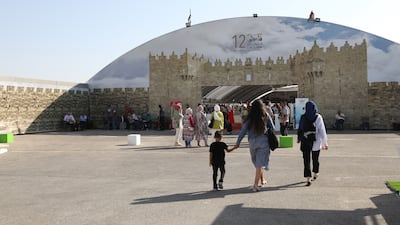
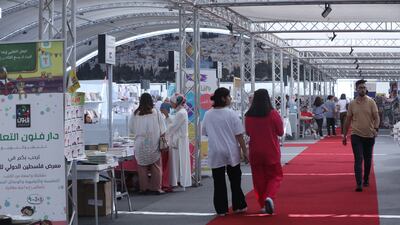
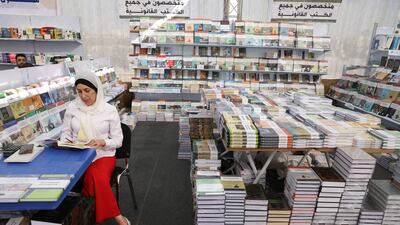
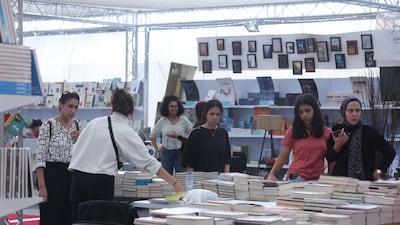
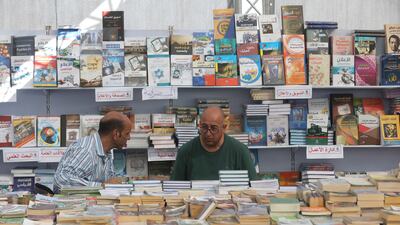
Scroll through images of the Palestine International Book Fair in Ramallah below

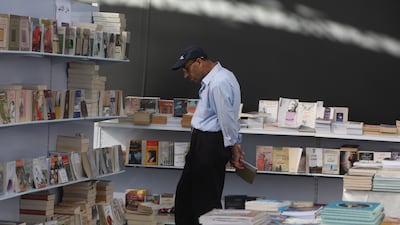
  • Literature enthusiasts at the Palestine International Book Fair in the West Bank city of Ramallah. All photos: EPA
    Literature enthusiasts at the Palestine International Book Fair in the West Bank city of Ramallah. All photos: EPA
  • The event ran from 15 to 24 September.
    The event ran from 15 to 24 September.
  • The fair will see 350 publishers take part.
    The fair will see 350 publishers take part.
  • It is being held under the slogan "Palestine, the homeland and Jerusalem, the capital".
    It is being held under the slogan "Palestine, the homeland and Jerusalem, the capital".
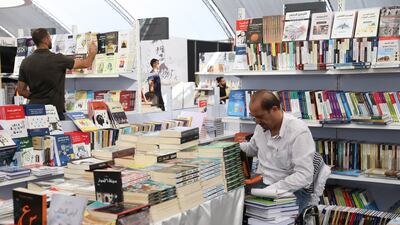
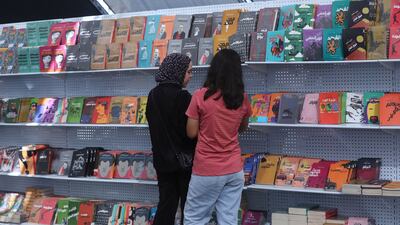
  • Bookworms peruse some of the titles on display.
    Bookworms peruse some of the titles on display.
  • The fair features works by more than 150 authors.
    The fair features works by more than 150 authors.
  • People on the red carpet at the Palestine International Book Fair.
    People on the red carpet at the Palestine International Book Fair.
  • A selection of the titles featured at the fair.
    A selection of the titles featured at the fair.
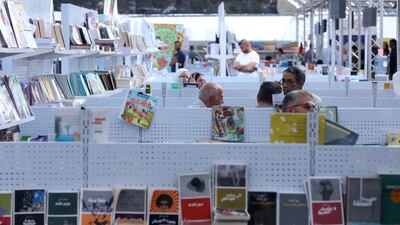
  • More of the crowds at the book fair.
    More of the crowds at the book fair.
  • Two men rummage through some of the books on display.
    Two men rummage through some of the books on display.
  • This is the 12th edition of the event.
    This is the 12th edition of the event.
UAE FIXTURES

October 18 – 7.30pm, UAE v Oman, Zayed Cricket Stadium, Abu Dhabi
October 19 – 7.30pm, UAE v Ireland, Zayed Cricket Stadium, Abu Dhabi
October 21 – 2.10pm, UAE v Hong Kong, Zayed Cricket Stadium, Abu Dhabi
October 22 – 2.10pm, UAE v Jersey, Zayed Cricket Stadium, Abu Dhabi
October 24 – 10am, UAE v Nigeria, Abu Dhabi Cricket Oval 1
October 27 – 7.30pm, UAE v Canada, Zayed Cricket Stadium, Abu Dhabi

October 29 – 2.10pm, Playoff 1 – A2 v B3; 7.30pm, Playoff 2 – A3 v B2, at Dubai International Stadium.
October 30 – 2.10pm, Playoff 3 – A4 v Loser of Play-off 1; 7.30pm, Playoff 4 – B4 v Loser of Play-off 2 at Dubai International Stadium

November 1 – 2.10pm, Semifinal 1 – B1 v Winner of Play-off 1; 7.30pm, Semifinal 2 – A1 v Winner of Play-off 2 at Dubai International Stadium
November 2 – 2.10pm, Third place Playoff – B1 v Winner of Play-off 1; 7.30pm, Final, at Dubai International Stadium

How they line up for Sunday's Australian Grand Prix

1 Lewis Hamilton, Mercedes

2 Kimi Raikkonen, Ferrari

3 Sebastian Vettel, Ferrari

4 Max Verstappen, Red Bull

5 Kevin Magnussen, Haas

6 Romain Grosjean, Haas

7 Nico Hulkenberg, Renault

*8 Daniel Ricciardo, Red Bull

9 Carlos Sainz, Renault

10 Valtteri Bottas, Mercedes

11 Fernando Alonso, McLaren

12 Stoffel Vandoorne, McLaren

13 Sergio Perez, Force India

14 Lance Stroll, Williams

15 Esteban Ocon, Force India

16 Brendon Hartley, Toro Rosso

17 Marcus Ericsson, Sauber

18 Charles Leclerc, Sauber

19 Sergey Sirotkin, Williams

20 Pierre Gasly, Toro Rosso

* Daniel Ricciardo qualified fifth but had a three-place grid penalty for speeding in red flag conditions during practice

The Programme

Saturday, October 26: ‘The Time That Remains’ (2009) by Elia Suleiman
Saturday, November 2: ‘Beginners’ (2010) by Mike Mills
Saturday, November 16: ‘Finding Vivian Maier’ (2013) by John Maloof and Charlie Siskel
Tuesday, November 26: ‘All the President’s Men’ (1976) by Alan J Pakula
Saturday, December 7: ‘Timbuktu’ (2014) by Abderrahmane Sissako
Saturday, December 21: ‘Rams’ (2015) by Grimur Hakonarson

THE%20SPECS
%3Cp%3EEngine%3A%203-litre%20V6%20turbo%20(standard%20model%2C%20E-hybrid)%3B%204-litre%20V8%20biturbo%20(S)%0D%3Cbr%3EPower%3A%20350hp%20(standard)%3B%20463hp%20(E-hybrid)%3B%20467hp%20(S)%0D%3Cbr%3ETorque%3A%20500Nm%20(standard)%3B%20650Nm%20(E-hybrid)%3B%20600Nm%20(S)%0D%0D%3Cbr%3EPrice%3A%20From%20Dh368%2C500%0D%3Cbr%3EOn%20sale%3A%20Now%3C%2Fp%3E%0A
The Lowdown

Kesari

Rating: 2.5/5 stars
Produced by: Dharma Productions, Azure Entertainment
Directed by: Anubhav Singh
Cast: Akshay Kumar, Parineeti Chopra


While you're here

Rainbow

Kesha

(Kemosabe)

Company%20Profile
%3Cp%3E%3Cstrong%3ECompany%20name%3A%3C%2Fstrong%3E%20Hoopla%3Cbr%3E%3Cstrong%3EDate%20started%3A%20%3C%2Fstrong%3EMarch%202023%3Cbr%3E%3Cstrong%3EFounder%3A%3C%2Fstrong%3E%20Jacqueline%20Perrottet%3Cbr%3E%3Cstrong%3EBased%3A%3C%2Fstrong%3E%20Dubai%3Cbr%3E%3Cstrong%3ENumber%20of%20staff%3A%3C%2Fstrong%3E%2010%3Cbr%3E%3Cstrong%3EInvestment%20stage%3A%20%3C%2Fstrong%3EPre-seed%3Cbr%3E%3Cstrong%3EInvestment%20required%3A%3C%2Fstrong%3E%20%24500%2C000%3C%2Fp%3E%0A
MATCH INFO

Who: UAE v USA
What: first T20 international
When: Friday, 2pm
Where: ICC Academy in Dubai

Mountain%20Boy
%3Cp%3E%3Cstrong%3EDirector%3A%3C%2Fstrong%3E%20Zainab%20Shaheen%3C%2Fp%3E%0A%3Cp%3E%3Cstrong%3EStarring%3A%3C%2Fstrong%3E%20Naser%20Al%20Messabi%3C%2Fp%3E%0A%3Cp%3E%3Cstrong%3ERating%3C%2Fstrong%3E%3A%203%2F5%3C%2Fp%3E%0A
Profile of Tarabut Gateway

Founder: Abdulla Almoayed

Based: UAE

Founded: 2017

Number of employees: 35

Sector: FinTech

Raised: $13 million

Backers: Berlin-based venture capital company Target Global, Kingsway, CE Ventures, Entrée Capital, Zamil Investment Group, Global Ventures, Almoayed Technologies and Mad’a Investment.

Straightforward ways to reduce sugar in your family's diet
  • Ban fruit juice and sodas
  • Eat a hearty breakfast that contains fats and wholegrains, such as peanut butter on multigrain toast or full-fat plain yoghurt with whole fruit and nuts, to avoid the need for a 10am snack
  • Give young children plain yoghurt with whole fruits mashed into it
  • Reduce the number of cakes, biscuits and sweets. Reserve them for a treat
  • Don’t eat dessert every day 
  • Make your own smoothies. Always use the whole fruit to maintain the benefit of its fibre content and don’t add any sweeteners
  • Always go for natural whole foods over processed, packaged foods. Ask yourself would your grandmother have eaten it?
  • Read food labels if you really do feel the need to buy processed food
  • Eat everything in moderation
Ten tax points to be aware of in 2026

1. Domestic VAT refund amendments: request your refund within five years

If a business does not apply for the refund on time, they lose their credit.

2. E-invoicing in the UAE

Businesses should continue preparing for the implementation of e-invoicing in the UAE, with 2026 a preparation and transition period ahead of phased mandatory adoption. 

3. More tax audits

Tax authorities are increasingly using data already available across multiple filings to identify audit risks. 

4. More beneficial VAT and excise tax penalty regime

Tax disputes are expected to become more frequent and more structured, with clearer administrative objection and appeal processes. The UAE has adopted a new penalty regime for VAT and excise disputes, which now mirrors the penalty regime for corporate tax.

5. Greater emphasis on statutory audit

There is a greater need for the accuracy of financial statements. The International Financial Reporting Standards standards need to be strictly adhered to and, as a result, the quality of the audits will need to increase.

6. Further transfer pricing enforcement

Transfer pricing enforcement, which refers to the practice of establishing prices for internal transactions between related entities, is expected to broaden in scope. The UAE will shortly open the possibility to negotiate advance pricing agreements, or essentially rulings for transfer pricing purposes. 

7. Limited time periods for audits

Recent amendments also introduce a default five-year limitation period for tax audits and assessments, subject to specific statutory exceptions. While the standard audit and assessment period is five years, this may be extended to up to 15 years in cases involving fraud or tax evasion. 

8. Pillar 2 implementation 

Many multinational groups will begin to feel the practical effect of the Domestic Minimum Top-Up Tax (DMTT), the UAE's implementation of the OECD’s global minimum tax under Pillar 2. While the rules apply for financial years starting on or after January 1, 2025, it is 2026 that marks the transition to an operational phase.

9. Reduced compliance obligations for imported goods and services

Businesses that apply the reverse-charge mechanism for VAT purposes in the UAE may benefit from reduced compliance obligations. 

10. Substance and CbC reporting focus

Tax authorities are expected to continue strengthening the enforcement of economic substance and Country-by-Country (CbC) reporting frameworks. In the UAE, these regimes are increasingly being used as risk-assessment tools, providing tax authorities with a comprehensive view of multinational groups’ global footprints and enabling them to assess whether profits are aligned with real economic activity. 

Contributed by Thomas Vanhee and Hend Rashwan, Aurifer

Mercer, the investment consulting arm of US services company Marsh & McLennan, expects its wealth division to at least double its assets under management (AUM) in the Middle East as wealth in the region continues to grow despite economic headwinds, a company official said.

Mercer Wealth, which globally has $160 billion in AUM, plans to boost its AUM in the region to $2-$3bn in the next 2-3 years from the present $1bn, said Yasir AbuShaban, a Dubai-based principal with Mercer Wealth.

Within the next two to three years, we are looking at reaching $2 to $3 billion as a conservative estimate and we do see an opportunity to do so,” said Mr AbuShaban.

Mercer does not directly make investments, but allocates clients’ money they have discretion to, to professional asset managers. They also provide advice to clients.

“We have buying power. We can negotiate on their (client’s) behalf with asset managers to provide them lower fees than they otherwise would have to get on their own,” he added.

Mercer Wealth’s clients include sovereign wealth funds, family offices, and insurance companies among others.

From its office in Dubai, Mercer also looks after Africa, India and Turkey, where they also see opportunity for growth.

Wealth creation in Middle East and Africa (MEA) grew 8.5 per cent to $8.1 trillion last year from $7.5tn in 2015, higher than last year’s global average of 6 per cent and the second-highest growth in a region after Asia-Pacific which grew 9.9 per cent, according to consultancy Boston Consulting Group (BCG). In the region, where wealth grew just 1.9 per cent in 2015 compared with 2014, a pickup in oil prices has helped in wealth generation.

BCG is forecasting MEA wealth will rise to $12tn by 2021, growing at an annual average of 8 per cent.

Drivers of wealth generation in the region will be split evenly between new wealth creation and growth of performance of existing assets, according to BCG.

Another general trend in the region is clients’ looking for a comprehensive approach to investing, according to Mr AbuShaban.

“Institutional investors or some of the families are seeing a slowdown in the available capital they have to invest and in that sense they are looking at optimizing the way they manage their portfolios and making sure they are not investing haphazardly and different parts of their investment are working together,” said Mr AbuShaban.

Some clients also have a higher appetite for risk, given the low interest-rate environment that does not provide enough yield for some institutional investors. These clients are keen to invest in illiquid assets, such as private equity and infrastructure.

“What we have seen is a desire for higher returns in what has been a low-return environment specifically in various fixed income or bonds,” he said.

“In this environment, we have seen a de facto increase in the risk that clients are taking in things like illiquid investments, private equity investments, infrastructure and private debt, those kind of investments were higher illiquidity results in incrementally higher returns.”

The Abu Dhabi Investment Authority, one of the largest sovereign wealth funds, said in its 2016 report that has gradually increased its exposure in direct private equity and private credit transactions, mainly in Asian markets and especially in China and India. The authority’s private equity department focused on structured equities owing to “their defensive characteristics.”

25%20Days%20to%20Aden
%3Cp%3EAuthor%3A%20Michael%20Knights%3C%2Fp%3E%0A%3Cp%3EPages%3A%20256%3C%2Fp%3E%0A%3Cp%3EAvailable%3A%20January%2026%3C%2Fp%3E%0A
The%C2%A0specs%20
%3Cp%3E%3Cstrong%3EEngine%3A%20%3C%2Fstrong%3E3.5-litre%2C%20twin-turbo%20V6%0D%3Cbr%3E%3Cstrong%3ETransmission%3A%20%3C%2Fstrong%3E10-speed%20auto%0D%3Cbr%3E%3Cstrong%3EPower%3A%20%3C%2Fstrong%3E410hp%0D%3Cbr%3E%3Cstrong%3ETorque%3A%20%3C%2Fstrong%3E495Nm%0D%3Cbr%3E%3Cstrong%3EPrice%3A%20%3C%2Fstrong%3Estarts%20from%20Dh495%2C000%20(Dh610%2C000%20for%20the%20F-Sport%20launch%20edition%20tested)%0D%3Cbr%3E%3Cstrong%3EOn%20sale%3A%20%3C%2Fstrong%3Enow%3C%2Fp%3E%0A
Mina Cup winners

Under 12 – Minerva Academy

Under 14 – Unam Pumas

Under 16 – Fursan Hispania

Under 18 – Madenat

HER%20FIRST%20PALESTINIAN
%3Cp%3EAuthor%3A%20Saeed%20Teebi%3C%2Fp%3E%0A%3Cp%3EPages%3A%20256%3C%2Fp%3E%0A%3Cp%3EPublisher%3A%C2%A0House%20of%20Anansi%20Press%3C%2Fp%3E%0A
Updated: September 21, 2022, 4:11 AM