• 'Poppy Flowers' by Vincent van Gogh. The 1887 painting was stolen from the Mohamed Mahmoud Khalil Museum, Cairo, in August, 2010. Photo: Commons
    'Poppy Flowers' by Vincent van Gogh. The 1887 painting was stolen from the Mohamed Mahmoud Khalil Museum, Cairo, in August, 2010. Photo: Commons
  • 'Le Pigeon aux Petits Pois' by Pablo Picasso. The painting was stolen in May, 2010, from the Musee d’Art Moderne de la Ville de Paris. Photo: Commons
    'Le Pigeon aux Petits Pois' by Pablo Picasso. The painting was stolen in May, 2010, from the Musee d’Art Moderne de la Ville de Paris. Photo: Commons
  • 'View of Auvers-sur-Oise' by Cezanne. On New Year’s Eve 1999, the artwork was stolen from the Ashmolean Museum at University of Oxford in a theft UK police believe was stolen-to-order. Photo: Commons
    'View of Auvers-sur-Oise' by Cezanne. On New Year’s Eve 1999, the artwork was stolen from the Ashmolean Museum at University of Oxford in a theft UK police believe was stolen-to-order. Photo: Commons
  • 'Portrait of a Young Man' by Raphael. The $100 million artwork was looted by the Nazis when they invaded Poland in 1939. It was last seen in 1945, but then disappeared. Photo: Commons
    'Portrait of a Young Man' by Raphael. The $100 million artwork was looted by the Nazis when they invaded Poland in 1939. It was last seen in 1945, but then disappeared. Photo: Commons
  • 'The Storm on the Sea of Galilee' by Rembrandt. The piece was one of 13 works stolen from a museum in Boston, US, in a $500 million heist. Photo: Commons
    'The Storm on the Sea of Galilee' by Rembrandt. The piece was one of 13 works stolen from a museum in Boston, US, in a $500 million heist. Photo: Commons
  • 'Nativity with St Francis and St Lawrence' by Caravaggio. This $20 million work was stolen from a church in Sicily, with a mafia informant claiming a mob boss used it as a floor mat. Photo: Commons
    'Nativity with St Francis and St Lawrence' by Caravaggio. This $20 million work was stolen from a church in Sicily, with a mafia informant claiming a mob boss used it as a floor mat. Photo: Commons
  • 'Francis Bacon' by Lucian Freud. The artwork was stolen from a Berlin gallery in a short half hour window during an exhibition. EPA
    'Francis Bacon' by Lucian Freud. The artwork was stolen from a Berlin gallery in a short half hour window during an exhibition. EPA
  • 'Charing Cross Bridge, London' by Claude Monet. After it was stolen from a Rotterdam museum, the mother of one of the alleged thieves claimed she burned the artwork in her fireplace to protect her son. Photo: Commons
    'Charing Cross Bridge, London' by Claude Monet. After it was stolen from a Rotterdam museum, the mother of one of the alleged thieves claimed she burned the artwork in her fireplace to protect her son. Photo: Commons

Eight stolen artworks that are still missing including Monet, Van Gogh and Picasso


  • English
  • Arabic

The world's most famous art theft happened in Paris on August 21, 1911.

Vincenzo Peruggia, an employee at Paris's Louvre Museum, hid in a broom cupboard and waited until the museum closed.

In the depth of the night, he crept out of his hiding place and snatched the Mona Lisa from the wall.

Peruggia, who was 29 at the time of the theft, kept Leonardo da Vinci's masterpiece in a trunk in his apartment in Florence, Italy, for the next two years.

He was caught after contacting a Florence art gallery owner to seek a reward for returning the piece to Italy, where he believed it should be kept.

The theft and recovery was reported around the world, propelling the Mona Lisa to the international level of fame it enjoys to this day.

More than one hundred years ago, the 'Mona Lisa' was stolen from the Louvre Museum, Paris, by an employee; it was missing for two years. The theft made global headlines and the artwork world famous. AP

While this story ended happily, many artworks by some of the most famous artists in the world are still missing, lost to the mists of time or to the sealed vaults of billionaire private collectors.

From Raphael and Vincent van Gogh, to Claude Monet and Paul Cezanne, here are eight of the world’s most famous stolen paintings that have never been recovered.

'Poppy Flowers' by Vincent van Gogh

The painting was stolen from the Mohamed Mahmoud Khalil Museum, Cairo, in August 2010.

Valued at $50 million, it was thought to have been painted in 1887, three years before Van Gogh’s death, and was heavily influenced by the work of Adolphe Monticelli.

After the theft was discovered, Egyptian officials believed they had found the culprits — two Italian men who were stopped boarding a plane to Italy from Cairo — but this proved a false lead.

The painting had previously been stolen from the same museum on June 4, 1977; it was recovered 10 years later in Kuwait.

It remains missing.

'Le Pigeon aux Petits Pois' by Pablo Picasso

Picasso's 'Le Pigeon aux Petits Pois' can be seen hanging over the bed in James Bond villain Ernst Stavro Blofeld's compound in the 2015 film 'Spectre'. Photo: Sony Pictures

Eagle-eyed movie buffs may have spotted this painting in the 2015 James Bond film Spectre, hanging over Bond’s bed when he is held prisoner in Blofeld’s compound.

This clever touch by the film’s production team highlights the fact that the piece has never been recovered.

Valued at $123 million, The Pigeon with Green Peas was painted in 1911 and stolen in from the Musee d’Art Moderne de la Ville de Paris in May, 2010, along with four other artworks including pieces by Henri Matisse and Amedeo Modigliani.

The burglar, Vjeran Tomic, entered through a removed window pane while the museum alarms were not working.

He was later caught and his accomplice, Yonathan Birn, insisted he threw the art in a rubbish bin, which police do not believe, leaving the case open.

'View of Auvers-sur-Oise' by Paul Cezanne

Believed to have been painted between 1879-80, the artwork depicts a landscape in Northern France, with Cezanne having previously lived in the small village of Auvers-sur-Oise.

On New Year’s Eve 1999, a thief broke into the Ashmolean Museum at the University of Oxford, England, and stole the painting, using the nearby fireworks and raucous Millennium celebrations as cover.

Climbing up scaffolding and breaking through a skylight, the burglar dropped a smoke bomb into the gallery, climbed down a rope ladder and cut the picture from the frame.

UK police believed the $4 million piece had been stolen to order, as works by Auguste Rodin, Pierre-Auguste Renoir and Henri de Toulouse-Lautrec were left untouched.

The case remains open with the FBI's website still urging those with information to come forward.

'Portrait of a Young Man' by Raphael

Portrait of a Young Man by Raphael. Photo: Commons

Believed to be a self-portrait of the artist, the piece, which is valued at more than $100 million, was taken from Poland by the Nazis and has not been seen since 1945.

When Germany invaded the country, Prince Augustyn Jozef Czartoryski rescued many works, including Portrait of a Young Man, from his family’s Czartoryski Museum and hid them at a residence in Sieniawa in south-eastern Poland.

Found by the Gestapo, the works were given to Hans Frank, who Adolf Hitler had appointed as the governor of Nazi-occupied Poland. The painting and others were later sent to become part of Hitler’s personal collection in Linz.

In January 1945, just before the Soviet offensive, Frank brought the paintings back from Germany to Krakow to display at his residence, Wawel Castle.

Following Frank’s execution in 1946, many plundered artworks were recovered, but along with 842 other artefacts, the Raphael piece was never seen again.

'The Storm on the Sea of Galilee' by Rembrandt van Rijn

Rembrandt van Rijn’s piece was stolen during a heist totalling more than $500 million, which also included Johannes Vermeer’s The Concert.

The artworks were snatched from the Isabella Stewart Gardner Museum in Boston, US, in the early hours of March 18, 1990.

Museum guards admitted entry to two men posing as police officers who claimed to be responding to a call about a disturbance.

The two thieves tied up the guards and set to work stealing 13 works, including pieces by Edgar Degas and Edouard Manet.

Rumours circled about who the perpetrators were, which included the mafia, criminals with links to the IRA, and a conman who had previously tried to rob an art museum.

None of the pieces have ever been found, and the empty frames remain hanging on the walls of the museum.

'Nativity with St Francis and St Lawrence' by Caravaggio

The enormous 'Nativity with St Francis and St Lawrence' by Caravaggio. Photo: Commons

Caravaggio’s work, which measures almost six square metres, was stolen from the Oratory of San Lorenzo in Palermo, Sicily, on October 16, 1969.

It was removed from its frame by the thieves — police suspected two — and taken from the church, which was then ransacked of other artworks and items, including benches inlaid with mother of pearl.

Valued at $20 million, the main suspects remain the local Sicilian mafia, and one informant told police that mob boss Salvatore Riina used it as a floor mat.

A replica commissioned in 2015 hangs in its place and art historians have theorised the original was destroyed during the Irpinia earthquake in southern Italy in 1980.

'Francis Bacon' by Lucian Freud

Lucian Freud's portrait of Francis Bacon, 1982, on display at Christie's auction house in London, UK, 14 October, 2008. EPA

The 1952 portrait British artist Lucian Freud drew of his close friend and fellow painter Francis Bacon was stolen from the Neue Nationalgalerie in Berlin on May 27, 1988, and has never been recovered.

A security guard reported the piece missing around 3pm. However, a photograph taken at the exhibition around 11.30am showed the portrait still on the wall, and a visitor said they had noticed it missing shortly after noon, narrowing the time of the theft down to half an hour.

Freud designed his own wanted poster for the portrait, but it has never been returned.

'Charing Cross Bridge, London' by Claude Monet

Impressionist painter Claude Monet’s piece Charing Cross Bridge, London, was stolen alongside his work Waterloo Bridge as part of the Kunsthal Museum theft on October 16, 2012.

The Rotterdam art museum was targeted by a gang of thieves, with the alleged gang arrested in Romania in July 2013.

Olga Dogaru, the mother of a man called Radu, who admitted to taking part in the heist, told police she burned all the artworks to protect her son.

She later denied her admission during a court hearing.

Among the other stolen works, which are also still missing, were Picasso’s Tete d'Arlequin, Paul Gauguin's Femme devant une fenêtre ouverte, Henri Matisse's La Liseuse en Blanc et Jaune, and Lucian Freud's Woman with Eyes Closed.

10 little-known facts about world-famous artworks, from 'Mona Lisa' to 'The Scream' — in pictures

  • The background of Leonardo da Vinci's 'Mona Lisa' is as highly debated by scholars as the subject's enigmatic smile. Reuters
    The background of Leonardo da Vinci's 'Mona Lisa' is as highly debated by scholars as the subject's enigmatic smile. Reuters
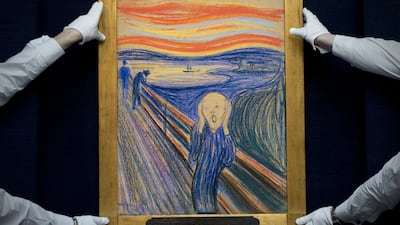
  • The red sky in Norwegian artist Edvard Munch's 1895 masterpiece 'The Scream' is, according to an astronomer in 2004, attributable to the effects of the Krakatoa volcano explosion in Indonesia in 1883 that lasted years. AFP
    The red sky in Norwegian artist Edvard Munch's 1895 masterpiece 'The Scream' is, according to an astronomer in 2004, attributable to the effects of the Krakatoa volcano explosion in Indonesia in 1883 that lasted years. AFP
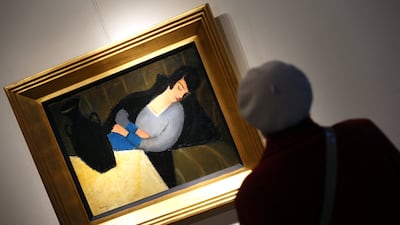
  • The survival of Hungarian artist Robert Bereny's lost 1928 painting 'Sleeping Woman with Black Vase' was confirmed after it appeared in the 1999 Hollywood film 'Stuart Little' and an art historian tracked it down. AFP
    The survival of Hungarian artist Robert Bereny's lost 1928 painting 'Sleeping Woman with Black Vase' was confirmed after it appeared in the 1999 Hollywood film 'Stuart Little' and an art historian tracked it down. AFP
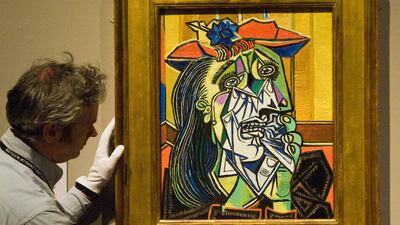
  • Pablo Picasso's 'Weeping Woman' was held to ransom in the mid-1980s by a group in Australia who demanded more funding for the arts. Getty
    Pablo Picasso's 'Weeping Woman' was held to ransom in the mid-1980s by a group in Australia who demanded more funding for the arts. Getty
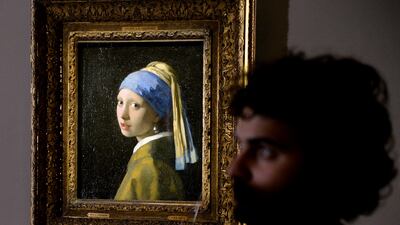
  • Debate continues in the art world as to whether the earring in Vermeer's 'Girl with a Pearl Earring' is really an earring. AFP
    Debate continues in the art world as to whether the earring in Vermeer's 'Girl with a Pearl Earring' is really an earring. AFP
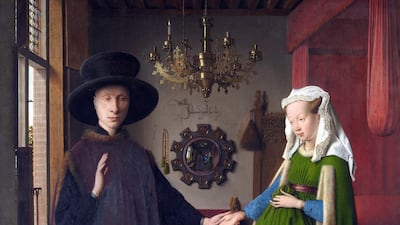
  • 'The Arnolfini Portrait' by Jan van Eyck features the artist's personal tag in the background on the wall. Getty Images
    'The Arnolfini Portrait' by Jan van Eyck features the artist's personal tag in the background on the wall. Getty Images
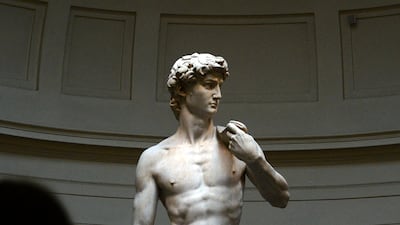
  • Michelangelo's 'David', created between 1501 and 1504, is more than a paean to youth and beauty — its stern gaze was interpreted as a warning against the ambitions of Rome from its native city state of Florence. AFP
    Michelangelo's 'David', created between 1501 and 1504, is more than a paean to youth and beauty — its stern gaze was interpreted as a warning against the ambitions of Rome from its native city state of Florence. AFP
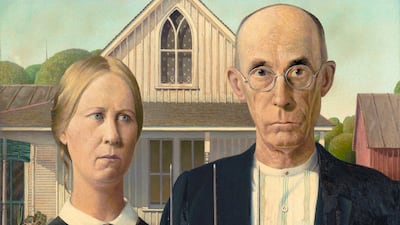
  • Artist Grant Wood asked his sister and his dentist to act as models for his masterpiece, 'American Gothic'. Getty
    Artist Grant Wood asked his sister and his dentist to act as models for his masterpiece, 'American Gothic'. Getty
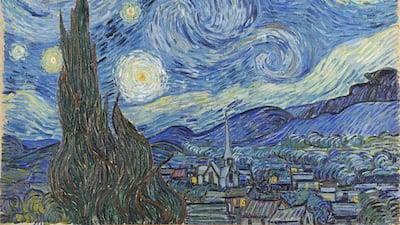
  • 'The Starry Night' was the view from the window of the asylum Vincent van Gogh had admitted himself to. Getty
    'The Starry Night' was the view from the window of the asylum Vincent van Gogh had admitted himself to. Getty
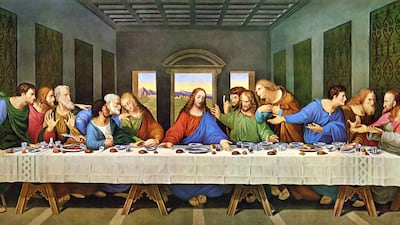
  • Leonardo da Vinci's 'The Last Supper' depicts the moment Jesus told his Disciples one of them would betray him. Photo: Wikimedia Commons
    Leonardo da Vinci's 'The Last Supper' depicts the moment Jesus told his Disciples one of them would betray him. Photo: Wikimedia Commons
The specs

Engine: 0.8-litre four cylinder

Power: 70bhp

Torque: 66Nm

Transmission: four-speed manual

Price: $1,075 new in 1967, now valued at $40,000

On sale: Models from 1966 to 1970

If%20you%20go
%3Cp%3EThere%20are%20regular%20flights%20from%20Dubai%20to%20Kathmandu.%20Fares%20with%20Air%20Arabia%20and%20flydubai%20start%20at%20Dh1%2C265.%3Cbr%3EIn%20Kathmandu%2C%20rooms%20at%20the%20Oasis%20Kathmandu%20Hotel%20start%20at%20Dh195%20and%20Dh120%20at%20Hotel%20Ganesh%20Himal.%3Cbr%3EThird%20Rock%20Adventures%20offers%20professionally%20run%20group%20and%20individual%20treks%20and%20tours%20using%20highly%20experienced%20guides%20throughout%20Nepal%2C%20Bhutan%20and%20other%20parts%20of%20the%20Himalayas.%3C%2Fp%3E%0A
UAE currency: the story behind the money in your pockets

Mercer, the investment consulting arm of US services company Marsh & McLennan, expects its wealth division to at least double its assets under management (AUM) in the Middle East as wealth in the region continues to grow despite economic headwinds, a company official said.

Mercer Wealth, which globally has $160 billion in AUM, plans to boost its AUM in the region to $2-$3bn in the next 2-3 years from the present $1bn, said Yasir AbuShaban, a Dubai-based principal with Mercer Wealth.

Within the next two to three years, we are looking at reaching $2 to $3 billion as a conservative estimate and we do see an opportunity to do so,” said Mr AbuShaban.

Mercer does not directly make investments, but allocates clients’ money they have discretion to, to professional asset managers. They also provide advice to clients.

“We have buying power. We can negotiate on their (client’s) behalf with asset managers to provide them lower fees than they otherwise would have to get on their own,” he added.

Mercer Wealth’s clients include sovereign wealth funds, family offices, and insurance companies among others.

From its office in Dubai, Mercer also looks after Africa, India and Turkey, where they also see opportunity for growth.

Wealth creation in Middle East and Africa (MEA) grew 8.5 per cent to $8.1 trillion last year from $7.5tn in 2015, higher than last year’s global average of 6 per cent and the second-highest growth in a region after Asia-Pacific which grew 9.9 per cent, according to consultancy Boston Consulting Group (BCG). In the region, where wealth grew just 1.9 per cent in 2015 compared with 2014, a pickup in oil prices has helped in wealth generation.

BCG is forecasting MEA wealth will rise to $12tn by 2021, growing at an annual average of 8 per cent.

Drivers of wealth generation in the region will be split evenly between new wealth creation and growth of performance of existing assets, according to BCG.

Another general trend in the region is clients’ looking for a comprehensive approach to investing, according to Mr AbuShaban.

“Institutional investors or some of the families are seeing a slowdown in the available capital they have to invest and in that sense they are looking at optimizing the way they manage their portfolios and making sure they are not investing haphazardly and different parts of their investment are working together,” said Mr AbuShaban.

Some clients also have a higher appetite for risk, given the low interest-rate environment that does not provide enough yield for some institutional investors. These clients are keen to invest in illiquid assets, such as private equity and infrastructure.

“What we have seen is a desire for higher returns in what has been a low-return environment specifically in various fixed income or bonds,” he said.

“In this environment, we have seen a de facto increase in the risk that clients are taking in things like illiquid investments, private equity investments, infrastructure and private debt, those kind of investments were higher illiquidity results in incrementally higher returns.”

The Abu Dhabi Investment Authority, one of the largest sovereign wealth funds, said in its 2016 report that has gradually increased its exposure in direct private equity and private credit transactions, mainly in Asian markets and especially in China and India. The authority’s private equity department focused on structured equities owing to “their defensive characteristics.”

Updated: June 09, 2022, 7:18 AM