• The most recent official portrait of Queen Elizabeth II, at Windsor Castle, was for her platinum jubilee. The image is part of the Platinum Jubilee: The Queen's Coronation exhibition, on view at Windsor Castle until September 26. Photo: Ranald Mackechnie
    The most recent official portrait of Queen Elizabeth II, at Windsor Castle, was for her platinum jubilee. The image is part of the Platinum Jubilee: The Queen's Coronation exhibition, on view at Windsor Castle until September 26. Photo: Ranald Mackechnie
  • This portrait, issued by the Royal Collection Trust, was taken by photographer Dorothy Wilding in 1952, and is featured in the Platinum Jubilee: The Queen's Accession exhibition, on view at Buckingham Palace until October 2. Photo: Royal Collection Trust
    This portrait, issued by the Royal Collection Trust, was taken by photographer Dorothy Wilding in 1952, and is featured in the Platinum Jubilee: The Queen's Accession exhibition, on view at Buckingham Palace until October 2. Photo: Royal Collection Trust
  • This portrait of Queen Elizabeth by British artist Lucian Freud was finished in 2001 and caused an outcry. The image is a part of the Platinum Jubilee: The Queen's Coronation exhibition. Reuters
    This portrait of Queen Elizabeth by British artist Lucian Freud was finished in 2001 and caused an outcry. The image is a part of the Platinum Jubilee: The Queen's Coronation exhibition. Reuters
  • The monarch was featured in Andy Warhol's 'Reigning Queens' series of portraits created in 1985. The pop art print, although not officially commissioned, was later brought into the Royal Collection. The image is a part of Platinum Jubilee: The Queen's Coronation exhibition. Photo: Royal Collection Trust
    The monarch was featured in Andy Warhol's 'Reigning Queens' series of portraits created in 1985. The pop art print, although not officially commissioned, was later brought into the Royal Collection. The image is a part of Platinum Jubilee: The Queen's Coronation exhibition. Photo: Royal Collection Trust
  • NO SALES, NO ARCHIVE. CAN ONLY BE USED IN CONNECTION WITH EXHIBITION CELEBRATING THE QUEEN'S PLATINUM JUBILEE Undated handout photo issued by Royal Collection Trust of Queen Elizabeth II on her Coronation Day by Cecil Beaton, part of the Platinum Jubliee: The Queen's Coronation exhibition at Windsor Castle. Three special exhibitions marking the Queen's accession, coronation and jubilees will celebrate the monarch's Platinum milestone next year. Issue date: Monday November 15, 2021.
    NO SALES, NO ARCHIVE. CAN ONLY BE USED IN CONNECTION WITH EXHIBITION CELEBRATING THE QUEEN'S PLATINUM JUBILEE Undated handout photo issued by Royal Collection Trust of Queen Elizabeth II on her Coronation Day by Cecil Beaton, part of the Platinum Jubliee: The Queen's Coronation exhibition at Windsor Castle. Three special exhibitions marking the Queen's accession, coronation and jubilees will celebrate the monarch's Platinum milestone next year. Issue date: Monday November 15, 2021.
  • The portrait of Queen Elizabeth II painted by Pietro Annigoni, was finished in 1956 and commissioned by the Fishmongers Company in the City of London. The image is a part of the Platinum Jubilee: The Queen's Coronation exhibition. PA
    The portrait of Queen Elizabeth II painted by Pietro Annigoni, was finished in 1956 and commissioned by the Fishmongers Company in the City of London. The image is a part of the Platinum Jubilee: The Queen's Coronation exhibition. PA
  • Michael Leonard's portrait of Queen Elizabeth II was painted for her 60th birthday, and commissioned by 'Reader's Digest'. The image is a part of the Platinum Jubilee: The Queen's Coronation exhibition. Photo: Reader's Digest / Shutterstock
    Michael Leonard's portrait of Queen Elizabeth II was painted for her 60th birthday, and commissioned by 'Reader's Digest'. The image is a part of the Platinum Jubilee: The Queen's Coronation exhibition. Photo: Reader's Digest / Shutterstock
  • Nigerian artist Chinwe Chukwuogo-Roy painted this portrait of Queen Elizabeth II, which was commissioned by the Commonwealth to mark her 2002 golden jubilee on March 10, 2002. The image is a part of the Platinum Jubilee: The Queen's Coronation exhibition. Photo: Royal Collection Trust
    Nigerian artist Chinwe Chukwuogo-Roy painted this portrait of Queen Elizabeth II, which was commissioned by the Commonwealth to mark her 2002 golden jubilee on March 10, 2002. The image is a part of the Platinum Jubilee: The Queen's Coronation exhibition. Photo: Royal Collection Trust
  • Artist Chris Levine made headlines with his controversial portrait titled 'Lightness of Being', which shows the queen with her eyes closed. The image is a part of the Platinum Jubilee: The Queen's Coronation exhibition. Photo: Royal Collection Trust
    Artist Chris Levine made headlines with his controversial portrait titled 'Lightness of Being', which shows the queen with her eyes closed. The image is a part of the Platinum Jubilee: The Queen's Coronation exhibition. Photo: Royal Collection Trust
  • The 1963 plaster cast known as the 'Dressed Head' by Arnold Machin, provided the portrait of Queen Elizabeth II to be used on British stamps from 1967. The image is a part of the Platinum Jubilee: The Queen's Coronation exhibition. Getty Images
    The 1963 plaster cast known as the 'Dressed Head' by Arnold Machin, provided the portrait of Queen Elizabeth II to be used on British stamps from 1967. The image is a part of the Platinum Jubilee: The Queen's Coronation exhibition. Getty Images
  • This recent portrait of the monarch titled 'Algorithm Queen', was painted by an ultra-realistic humanoid robot artist called Ai-Da Robot for the platinum jubilee.
    This recent portrait of the monarch titled 'Algorithm Queen', was painted by an ultra-realistic humanoid robot artist called Ai-Da Robot for the platinum jubilee.
  • Ralph Heimans's portrait of Queen Elizabeth II was commissioned to mark her 60 years on the throne and hung in the Chapter House of Westminster Abbey. The image is a part of the Platinum Jubilee: The Queen's Coronation exhibition. Photo: Dean and Chapter of Westminster / AFP
    Ralph Heimans's portrait of Queen Elizabeth II was commissioned to mark her 60 years on the throne and hung in the Chapter House of Westminster Abbey. The image is a part of the Platinum Jubilee: The Queen's Coronation exhibition. Photo: Dean and Chapter of Westminster / AFP

The significance of royal portraits in the UK, from Henry VII to Elizabeth II


  • English
  • Arabic

With more than 1,000 official portraits, and numerous unofficial ones, Queen Elizabeth II is one of the most depicted women in the world.

The monarch recently added another to her vast collection, her official portrait to mark her platinum jubilee.

While most portraits painted or photographed during her 70-year reign have followed protocol, or at the very least an expected etiquette, a few have raised eyebrows and caused heated debates along the way.

The Queen by Lucien Freud, unveiled in 2001, was deemed “extremely unflattering” by The Telegraph, because of its realistic portrayal, while an offering by Justin Mortimer in 1997, which was commissioned by the Royal Society of Artists, showed the queen’s head not attached to her body.

“I wanted to get away from the royal aspect and paint a picture of a person rather than the queen,” he said.

There was also an unofficial painting this year, by a humanoid robot, who created a piece using AI technology.

From favourite photographers to monarchs who used their portraits to send global messages, here’s an insight into why the official pictures are so important.

Who has painted the queen?

Cecil Beaton's Coronation Day photograph of the Queen is featured as part of the Platinum Jubliee: The Queen's Coronation exhibition at Windsor Castle. Photo: Royal Collection Trust

The queen has sat for many artists through the years, with Pietro Annigoni, Nicky Phipps and Chinwe Chukwuogo-Roy all having been called upon.

Freud’s sitting took 18 months to finish. It was completed in 2001, but immediately became divisive over how he had captured the monarch.

Queen Elizabeth has also posed for celebrated photographers, such as Cecil Beaton, who photographed her many times and was also called upon to capture the royal babies.

Celebrated American photographer Annie Leibovitz photographed the queen twice, first time in 2007, when she became the first American to be asked to create an official portrait.

“I felt that because I was an American I had an advantage over every other photographer or painter who had made a portrait of her,” she said. “It was OK for me to be reverent.”

Among the most famous unofficial portraits are the Andy Warhol screen prints of images of the monarch from her silver jubilee which, although unsanctioned, were later bought by the Royal Collection.

Why are portraits of the queen commissioned?

Portraits of the queen are used as templates for the images of her found on coins, banknotes and stamps. The new coinage portrait is designed by Jody Clark (pictured) who is the first Royal Mint engraver to hold this honour in 100 years. Getty Images

Portraits of the queen are commissioned for a number of official purposes.

They may be used as photographs during state visits, or to mark a particular anniversary. They are also often displayed in public and used on coins, banknotes and stamps.

The first portrait of Queen Elizabeth to appear on a coin was in 1953 — her coronation year — when sculptor and medallist Mary Gillick worked from a portrait that society photographer Dorothy Wilding had shot of the young queen in profile. Gillick’s work became known as The First Definitive Coinage Portrait, 1953.

When did royals first start having portraits done?

Portraiture in England grew in the mid-15th century during the Tudor period. Notable portrait artists of the time include Hans Holbein the Younger and Lucas Horenbout, already established names in Europe.

During Henry VII’s reign, from 1485 to 1509, there was a rise in realistic portraiture after the widowed monarch commissioned a piece with the hopes of securing a new wife. It was Henry VII’s son, Henry VIII, who heralded the popularity of the art bringing portraitists to England from Germany and the Netherlands.

By 1536, Henry VIII had employed Holbein the Younger as his court painter, and the artist would depict the king many times, along with his wives Jane Seymour, Anne of Cleves and Catherine Howard.

Elizabeth I – the world’s first influencer?

Crowned queen on January 15, 1559, Elizabeth I used her portraits not only to show her power, but also to promote her purity as “The Virgin Queen”. She also saw to it that her portraits evolved throughout her 45-year reign.

In one of the most famous, the Ditchley Portrait, in which she wears a vast bejewelled white gown, she stands on a globe with her feet firmly in England.

Each new piece included further symbolism to portray how she wanted to be seen, manipulating her image in a way that we similarly see social media influencers doing today.

The story behind Queen Elizabeth II's coronation dress — in pictures

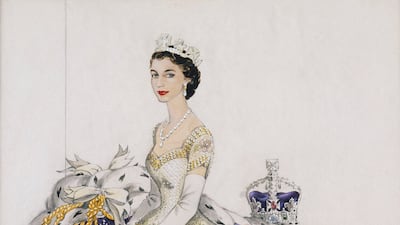
  • Norman Hartnell's sketch for the design chosen to be Queen Elizabeth II's coronation dress. Photo: The Royal Collections
    Norman Hartnell's sketch for the design chosen to be Queen Elizabeth II's coronation dress. Photo: The Royal Collections
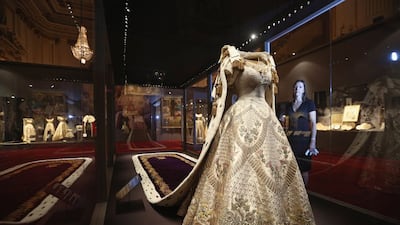
  • The queen's coronation gown and the Robe of the Estate, on display at Buckingham Palace in 2013. Photo: The Royal Collections
    The queen's coronation gown and the Robe of the Estate, on display at Buckingham Palace in 2013. Photo: The Royal Collections
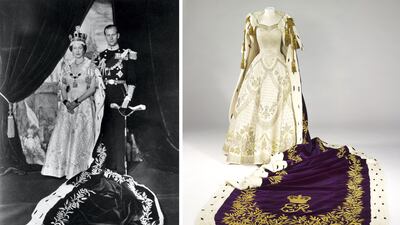
  • Left, Queen Elizabeth II and Prince Philip after the queen's coronation on June 2, 1953, in Buckingham Palace. Photo: Getty Images / Royal Collection Trust
    Left, Queen Elizabeth II and Prince Philip after the queen's coronation on June 2, 1953, in Buckingham Palace. Photo: Getty Images / Royal Collection Trust
  • Queen Elizabeth II's coronation dress, designed by Sir Norman Hartnell, is on show as part of the The Queen's Coronation exhibition at Windsor Castle in celebration of her platinum jubilee.
    Queen Elizabeth II's coronation dress, designed by Sir Norman Hartnell, is on show as part of the The Queen's Coronation exhibition at Windsor Castle in celebration of her platinum jubilee.
  • The Robe of the Estate by Ede & Ravenscroft with the dress.
    The Robe of the Estate by Ede & Ravenscroft with the dress.
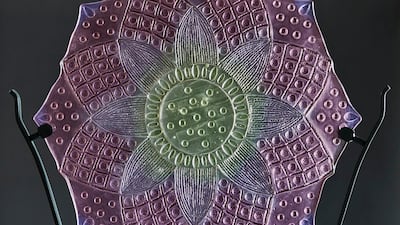
  • A Tudor rose, by glass artist Max Jacquard for the Superbloom exhibition at the Tower of London, as part of the platinum jubilee celebrations. Photo: Max Jacquard
    A Tudor rose, by glass artist Max Jacquard for the Superbloom exhibition at the Tower of London, as part of the platinum jubilee celebrations. Photo: Max Jacquard
  • Max Jaquard's reworking of the Irish shamrock from the gown. Photo: Max Jacquard
    Max Jaquard's reworking of the Irish shamrock from the gown. Photo: Max Jacquard
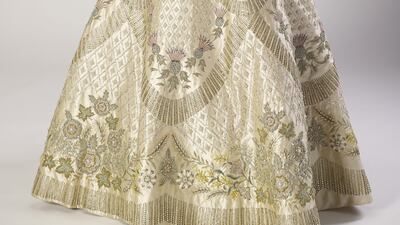
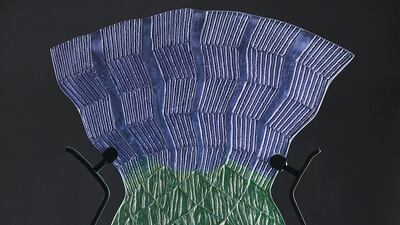
  • Max Jacquard's reworking of the Scottish thistle from the gown. Photo: Max Jacquard
    Max Jacquard's reworking of the Scottish thistle from the gown. Photo: Max Jacquard
Updated: June 07, 2022, 4:19 PM