Dragon and Phoenix at Louvre Abu Dhabi - in pictures
-

The interactive bestiary at the Dragon and Phoenix – Centuries of Exchange between Chinese and Islamic Worlds exhibition at the Louvre Abu Dhabi. Khushnum Bhandari / The National -
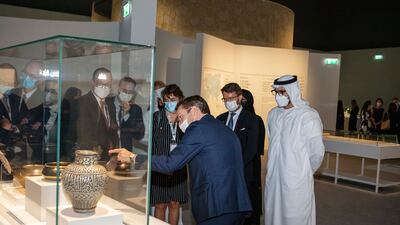
Mohamed Khalifa Al Mubarak, chairman of the Department of Culture and Tourism – Abu Dhabi, inaugurated the Dragon and Phoenix exhibition at Louvre Abu Dhabi. Photo: Louvre Abu Dhabi -
The new exhibition at Louvre Abu Dhabi features diverse artworks, including paintings, silverware, ceramic, glassware, manuscripts and luxury fabrics. Khushnum Bhandari / The National -
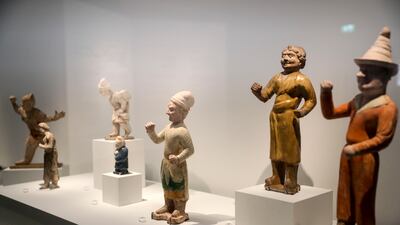
Terracotta figures based on characters one would meet along the Silk Road. Khushnum Bhandari / The National -
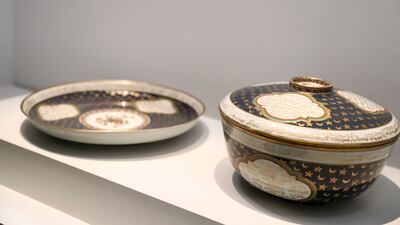
Bowl with lid and platter with Arabic inscriptions from China's Jiangxi Province dating back to the 18th century. Khushnum Bhandari / The National -

Guilhem Andre, chief curator at Louvre Abu Dhabi, explains the history behind the artefacts. Khushnum Bhandari / The National -
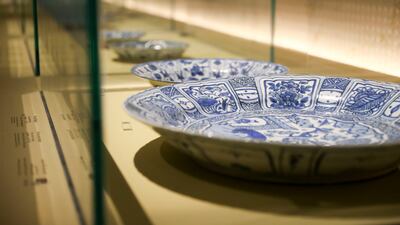
Dragon and Phoenix showcases several Chinese crafts that were specifically made for the Islamic traders. Khushnum Bhandari / The National -

The exhibition was organised with the Musee national des arts asiatiques – Guimet, popularly known as the Musee Guimet. Khushnum Bhandari / The National -
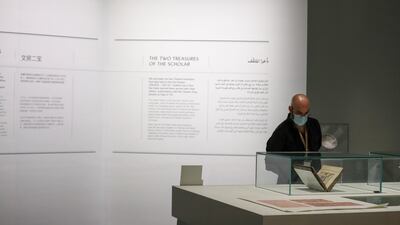
The exhibition, which opens to the public on October 6, showcases the cultural and artistic exchange between the Chinese and Islamic civilisations from the 8th to the 18th century. Khushnum Bhandari / The National -

Funerary figures from northern China. Khushnum Bhandari / The National -
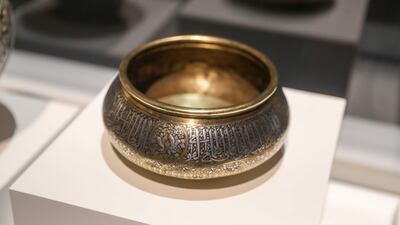
An alloy basin with the name of an officer of the sultan Al-Malik Al-Nasir Muhammad ibn Qalawun from Egypt or Syria, late 13th early 14th century. Khushnum Bhandari / The National -
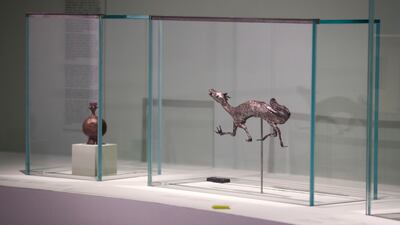
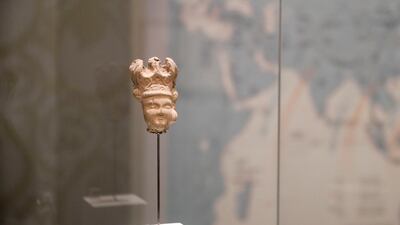
A sculpture of a fabulous animal from China - Liao dynasty (907/ 916-1125) - in chased and gilded silver. Khushnum Bhandari / The National -

Panel with poetic inscription by Hafez, a 14th-century Persian poet and writer, from Damascus dating to the 17th century. Khushnum Bhandari / The National -

A Quran by an anonymous Chinese copyist dating to the 17th century, ink and gold on paper. Khushnum Bhandari / The National -

'Ata Malik Djoveni, Tarikh-e djahan gusha' (History of the Conqueror of the World) copied by Rashid Khwafi from Baghdad 1290. Khushnum Bhandari / The National -

Ceramics embellished with intricate cobalt blue designs. Khushnum Bhandari / The National -
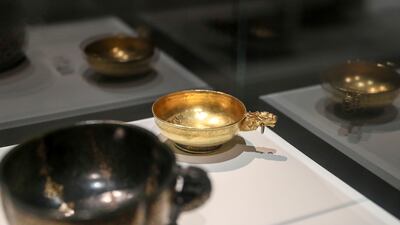
Right, a cup with dragon-shaped handle from China, Yuan dynasty (1279-1368) in hammered embossed gold with chasing. Left, a larger, more bulbous variation made of black jade. Khushnum Bhandari / The National -
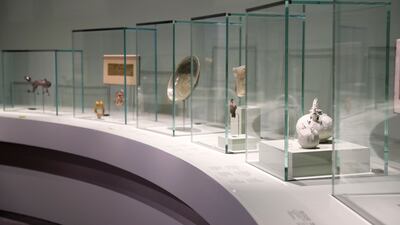
The Dragon and Phoenix exhibit embodies two cultures - China, the dragon, and Islamic world, the phoenix. Khushnum Bhandari / The National -
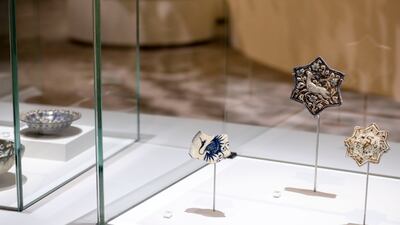
There are more than 200 artefacts spread across five sections. Khushnum Bhandari / The National


Most popular today

