
Frank Gehry – the architect behind the Guggenheim Museum in Bilbao and the Louis Vuitton Foundation in Paris – met key Abu Dhabi officials at the Guggenheim Abu Dhabi museum site on Saadiyat Island.
Gehry was welcomed by Sheikh Khaled bin Mohamed bin Zayed, member of Abu Dhabi Executive Council and chairman of the Abu Dhabi Executive Office, and Mohamed Khalifa Al Mubarak, chairman of the Department of Culture and Tourism – Abu Dhabi.
Also in attendance were William Mack and Wendy Fisher, chairman and president of the board of trustees of the Solomon R Guggenheim Foundation.
During the visit, Sheikh Khaled discussed the progress of the Guggenheim Abu Dhabi and reiterated the project’s goals of cultivating cultural exchange and transforming Abu Dhabi into a hub for culture and creativity.
The museum, designed by Gehry, was initially announced in 2006. Though its opening has faced delays along the way, the institution has been working on building its collection and, over the last year, has put together various virtual programmes.
Gehry’s design responds to the museum’s unique seafront location, with its three sides flanked by the Arabian Gulf. The building is planned at 30,000 square metres, which will be the largest facility for the Solomon R Guggenheim Foundation once completed. The gallery space will measure about 12,000 square metres.
Inspired by Middle Eastern design, including courtyards and wind towers, the various galleries will be linked by bridges around a central courtyard. Gehry has also envisioned various spaces for exhibition galleries, an education and research space, a conservation laboratory, a cultural centre and one for art and technology.
__________________
Frank Gehry's impressive structures
-
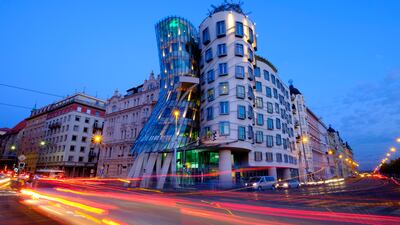
The Dancing House, also called 'Fred and Ginger', by architects Vlado Milunic and Frank Gehry, in Prague, Czech Republic. All Photos: Alamy Stock Photo -
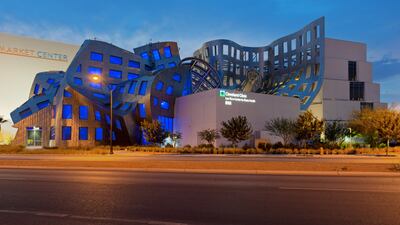
Frank Gehry's Cleveland Clinic Lou Ruvo Centre for Brain Health, in Las Vegas, Nevada, USA -
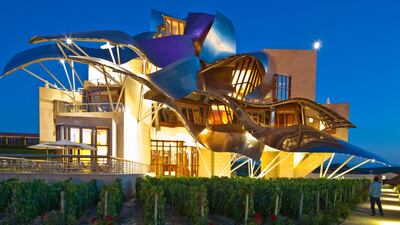
Hotel Marques de Riscal, designed by architects Frank Owen and Frank Gehry, in Elciego, Alava, Basque Country, Spain -
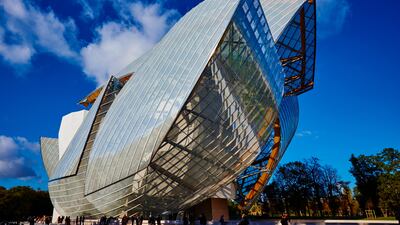
Louis Vuitton Foundation art museum and cultural centre, designed by Frank Gehry, in Paris, France -
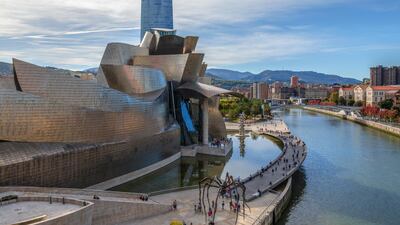
Guggenheim Museum in Bilbao, Basque Country, Spain -

Walt Disney Concert Hall in Los Angeles, California -
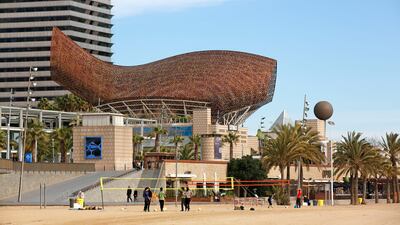
Sculpture Peix D'or, Hotel Arts Barcelona, Mapfre Tower, in Barcelona, Spain



