
Frieze Abu Dhabi is open to the public for the first time, bringing an international art fair to a city where artists and galleries have gathered each November for nearly two decades.
The fair at Manarat Al Saadiyat takes the place of Abu Dhabi Art, which ran for 17 years and helped build connections between artists, galleries and collectors across the region.
Now, artists taking part are seeing what has changed with the arrival of one of the art world’s best-known names.

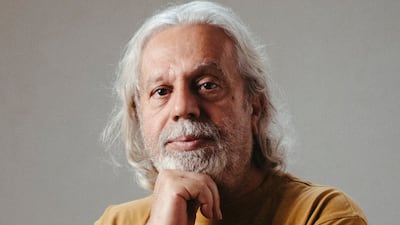
Emirati artist Rami Farook says the fair feels more spacious, with an improved set-up and a different approach to the way galleries have displayed their work. “It’s taken a major turn,” he tells The National.
Farook says it is important to respect the contribution Abu Dhabi Art made over the years. Fairs can reach a point, however, when they need “an update, an upgrade”, he says.
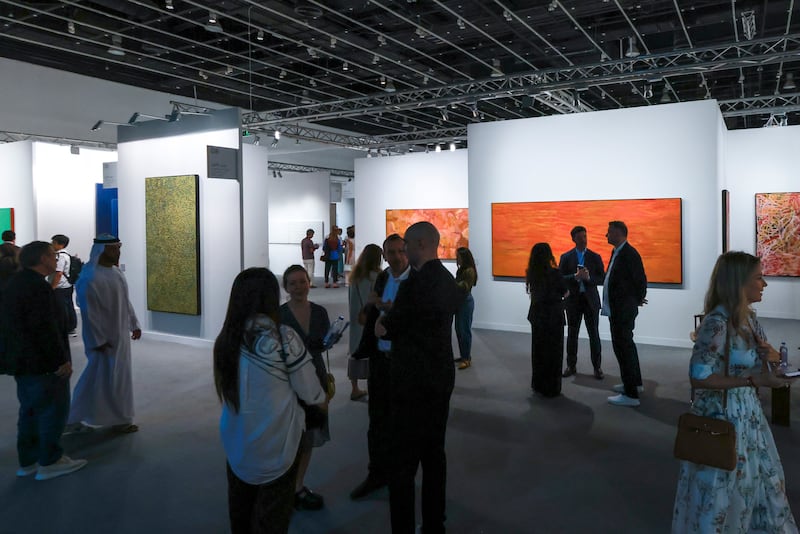
The fair brings together 89 exhibitors from 37 countries and regions, compared with 142 galleries at Abu Dhabi Art’s final outing last year. Director Dyala Nusseibeh, who also led Abu Dhabi Art, previously said the smaller scale was a deliberate choice, giving visitors more room to move and allowing a tighter curatorial focus.
Farook says he noticed visitors from further afield during Thursday’s invitation-only preview, including people from Japan and New York and art advisers from Italy. He believes the Frieze name has helped bring them to the city.
He had expected to see more major international galleries, he says, but has been impressed by the work on display. “It’s quite sophisticated. I think it’s very elegant, simple,” he says.

Farook is taking part in a joint presentation by Saudi Arabia’s Athr and Italy’s Galleria Franco Noero. His participatory installation, Public Viewing Room, occupies the space between the two galleries.
The artist says he came to the fair wanting to experiment and would have been happy even if none of his work had sold. By the time he spoke to The National during the preview, three of the works he had brought had found buyers.
Farook, whose work featured at Art Dubai this year, also showed five works at Frieze London last month. “It’s really when you do an experiment,” he says. “That’s when it’s fun.”
Mix of visitors
Jordanian artist Ala Younis also noticed a mix of international, regional and local visitors during the preview, from potential buyers to fellow artists moving between the stands.
“I see a great mix of people who are interested to buy, but also people who are coming to see the art,” she says. “So far, it looks very successful.”
Younis is presenting mosaics from her Climate Conditions series with Taymour Grahne Projects in Global Futures, a curated section devoted to solo presentations by artists whose work engages with the UAE and the wider region. Her panels depict Abu Dhabi’s modernist buildings, using stone to give the facades a more lasting presence.

She says it is too early to make a full assessment of the transition from Abu Dhabi Art. She had not yet seen the whole fair when she spoke to The National, although the variety of people who had come to speak with her had left an impression.
“I feel it’s a very rich mix,” she says, adding that she had noticed a growth in interest and exposure.
The international reach of Frieze was central to the decision to bring the fair to Abu Dhabi, its chief executive Simon Fox previously told The National. Fox said he hoped it would draw collectors to the UAE and help introduce more artists and galleries from the region to audiences abroad.
Opportunity for next generation
Emirati artist Mohamed Ahmed Ibrahim sees the fair’s arrival as part of a bigger moment for the country’s art scene.
Ibrahim is showing The Form as part of Frieze Sculpture Abu Dhabi, which brings works to Mamsha Beach on Saadiyat Island until December 16. Presented by Dubai gallery Lawrie Shabibi, the sculpture was previously shown at Frieze Sculpture in London in 2024.
At Manarat Al Saadiyat, he has noticed a difference in the way the fair is arranged. “You can feel the difference,” he says, adding that the presentation makes it more comfortable to engage with the artworks.
Ibrahim believes the international profile of Frieze offers an opportunity for artists in the UAE, particularly younger practitioners. He has witnessed the development of the scene over decades, having emerged in the late 1980s alongside artists including Hassan Sharif, Abdullah Al Saadi, Hussein Sharif and Mohammed Kazem.
Ibrahim says he and his contemporaries began breaking down barriers for artists in the UAE. Seeing how much has changed since then has left him hopeful about what lies ahead.
“I’m so optimistic for the future, for the new generation,” he says. “Even for my grandkids.”
Frieze Abu Dhabi is open to the public at Manarat Al Saadiyat until November 22. Frieze Sculpture Abu Dhabi continues at Mamsha Beach until December 16.

