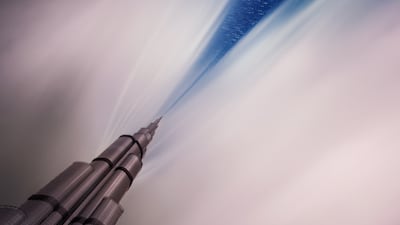
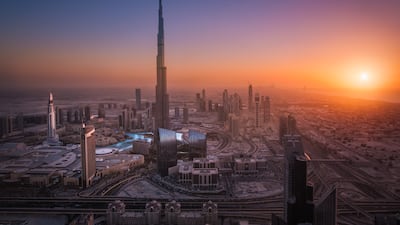
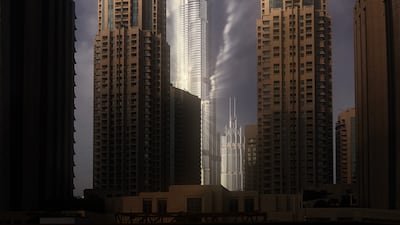
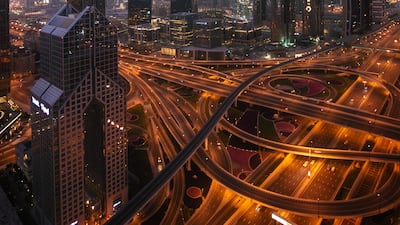
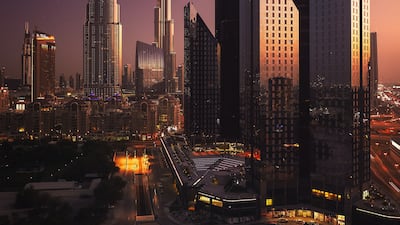
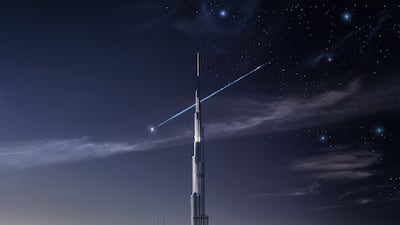
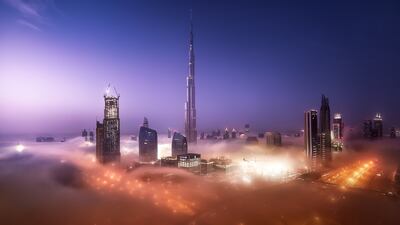
Building the world's tallest building is no mean feat — and retaining that crown is even harder. Yet, for 13 years, Burj Khalifa has remained the pinnacle of the world's architectural ambition; a testament to the scale of the project's, and the UAE's, vision and ambition.
Inaugurated as the world's tallest tower on January 4, 2010, and the centrepiece of Downtown Dubai, Burj Khalifa immediately imposed itself on the skyline as a beacon of human ingenuity and determination.
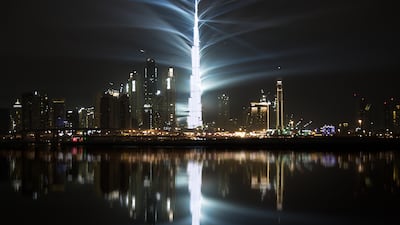
The tower has also become an international landmark, which has hosted millions of visitors keen to ascend the observation deck or gather at Burj Park and the Dubai Fountain to witness the record-breaking light show and fireworks displays.
Mirroring the awe inspired by Egypt’s Great Pyramids of Giza, Burj Khalifa captured the world's imagination as a modern architectural marvel, much in the same way as the UAE's Sheikh Zayed Grand Mosque. Instantly recognisable for its sleek, timeless and futuristic design, it has been repeatedly featured in pop culture and been part of numerous viral videos and campaigns.
Designed by American architect Adrian Smith of Skidmore, Owings and Merrill, Burj Khalifa’s aesthetic elements take inspiration from the geometry of the hymenocallis spider lily, a regional desert flower. It also combines the intricate patterning systems of Islamic architecture, marked by a dramatic upward spiral.
Much of its shimmering, sleek exterior is due to its use of aluminium and glass. Almost 24,350 cladding panels and 103,000 square metres of glass were used to give the Burj’s gleaming exterior and to minimise heat transmission and save energy.
Since its unveiling, the Burj has also become synonymous with its record-breaking feats, many of which remain undefeated. At 828 metres, Burj Khalifa, which took more than six years to build at a cost of $1.5 billion, is the tallest building in the world.
Merdeka 118 tower in Kuala Lumpur, Malaysia, completed in 2021, is the second-tallest at 678.9m and Shanghai Tower in Shanghai, completed in 2015, comes in third, at 632m. Not only is Burj Khalifa the tallest, but it is the oldest member of the top 10 group.
Although Jeddah tower in Saudi Arabia, also designed by Burj Khalifa’s architect Adrian Smith, is designed to be 1km tall, the project has been on hold since early 2019 owing to the pandemic, and the completion date remains unknown.
Burj Khalifa is also the tallest free-standing structure in the world — a category that includes buildings, whose purpose is to have occupied tenants, as well as towers built for other purposes, such as utilising the height of the tower.
Here, Burj Khalifa is followed again by Merdeka 118 tower in Kuala Lumpur which is also the tallest freestanding structure in South-East Asia. However, the third tallest free-standing structure is the 634m Tokyo Skytree, the broadcasting and observation tower in Sumida, Tokyo.
Burj Khalifa also holds the record for the largest number of storeys in one building. While there are 20 buildings around the world that have more than 100 storeys above ground, Burj Khalifa has the largest number, topping the list with 163 floors, 160 of which are habitable, the most of any building in the world.
Shanghai Tower and Goldin Finance 117 tower in Taijin, China, which both have 128 floors.
Burj Khalifa's highest usable floor is 585m above ground, at the 160th floor, another world record for the highest occupied floor.
Aside from these world records, Burj Khalifa also has the highest observation deck in the world at 555m high on the 148th floor. This surpassed Canton Tower in Guangzhou, China, which held the record for its observation deck at 488m high.
With these records set to remain unchallenged for the foreseeable future, Burj Khalifa remains not only a symbol of Dubai and the UAE but has in a relatively short period become a globally recognised landmark, a destination and a feat of our generation.
Scroll through photos of Burj Khalifa like you’ve never seen it below
'I Want You Back'
Director:Jason Orley
Stars:Jenny Slate, Charlie Day
Rating:4/5
Know before you go
- Jebel Akhdar is a two-hour drive from Muscat airport or a six-hour drive from Dubai. It’s impossible to visit by car unless you have a 4x4. Phone ahead to the hotel to arrange a transfer.
- If you’re driving, make sure your insurance covers Oman.
- By air: Budget airlines Air Arabia, Flydubai and SalamAir offer direct routes to Muscat from the UAE.
- Tourists from the Emirates (UAE nationals not included) must apply for an Omani visa online before arrival at evisa.rop.gov.om. The process typically takes several days.
- Flash floods are probable due to the terrain and a lack of drainage. Always check the weather before venturing into any canyons or other remote areas and identify a plan of escape that includes high ground, shelter and parking where your car won’t be overtaken by sudden downpours.
COMPANY%20PROFILE%20
%3Cp%3E%3Cstrong%3ECompany%20name%3A%20%3C%2Fstrong%3ETerra%3Cbr%3E%3Cstrong%3EStarted%3A%3C%2Fstrong%3E%202021%3Cbr%3E%3Cstrong%3EBased%3A%3C%2Fstrong%3E%20Dubai%3Cbr%3E%3Cstrong%3EFounder%3A%3C%2Fstrong%3E%20Hussam%20Zammar%3Cbr%3E%3Cstrong%3ESector%3A%3C%2Fstrong%3E%20Mobility%3Cbr%3E%3Cstrong%3EInvestment%20stage%3A%3C%2Fstrong%3E%20Pre-seed%20funding%20of%20%241%20million%3Cbr%3E%3C%2Fp%3E%0A
Quick%20facts
%3Cul%3E%0A%3Cli%3EStorstockholms%20Lokaltrafik%20(SL)%20offers%20free%20guided%20tours%20of%20art%20in%20the%20metro%20and%20at%20the%20stations%3C%2Fli%3E%0A%3Cli%3EThe%20tours%20are%20free%20of%20charge%3B%20all%20you%20need%20is%20a%20valid%20SL%20ticket%2C%20for%20which%20a%20single%20journey%20(valid%20for%2075%20minutes)%20costs%2039%20Swedish%20krone%20(%243.75)%3C%2Fli%3E%0A%3Cli%3ETravel%20cards%20for%20unlimited%20journeys%20are%20priced%20at%20165%20Swedish%20krone%20for%2024%20hours%3C%2Fli%3E%0A%3Cli%3EAvoid%20rush%20hour%20%E2%80%93%20between%209.30%20am%20and%204.30%20pm%20%E2%80%93%20to%20explore%20the%20artwork%20at%20leisure%3C%2Fli%3E%0A%3C%2Ful%3E%0A
Company profile
Date started: 2015
Founder: John Tsioris and Ioanna Angelidaki
Based: Dubai
Sector: Online grocery delivery
Staff: 200
Funding: Undisclosed, but investors include the Jabbar Internet Group and Venture Friends
The Case For Trump
By Victor Davis Hanson
Tips to keep your car cool
- Place a sun reflector in your windshield when not driving
- Park in shaded or covered areas
- Add tint to windows
- Wrap your car to change the exterior colour
- Pick light interiors - choose colours such as beige and cream for seats and dashboard furniture
- Avoid leather interiors as these absorb more heat
The specs: 2018 Jaguar E-Pace First Edition
Price, base / as tested: Dh186,480 / Dh252,735
Engine: 2.0-litre four-cylinder
Power: 246hp @ 5,500rpm
Torque: 365Nm @ 1,200rpm
Transmission: Nine-speed automatic
Fuel consumption, combined: 7.7L / 100km
The specs: 2018 Jeep Grand Cherokee Trackhawk
Price, base: Dh399,999
Engine: Supercharged 6.2-litre V8
Gearbox: Eight-speed automatic
Power: 707hp @ 6,000rpm
Torque: 875Nm @ 4,800rpm
Fuel economy, combined: 16.8L / 100km (estimate)
The Brutalist
Director: Brady Corbet
Stars: Adrien Brody, Felicity Jones, Guy Pearce, Joe Alwyn
Rating: 3.5/5
THE%20SPECS
%3Cp%3EBattery%3A%2060kW%20lithium-ion%20phosphate%3Cbr%3EPower%3A%20Up%20to%20201bhp%3Cbr%3E0%20to%20100kph%3A%207.3%20seconds%3Cbr%3ERange%3A%20418km%3Cbr%3EPrice%3A%20From%20Dh149%2C900%3Cbr%3EAvailable%3A%20Now%3C%2Fp%3E%0A
Skoda Superb Specs
Engine: 2-litre TSI petrol
Power: 190hp
Torque: 320Nm
Price: From Dh147,000
Available: Now
COMPANY PROFILE
Name: Kumulus Water
Started: 2021
Founders: Iheb Triki and Mohamed Ali Abid
Based: Tunisia
Sector: Water technology
Number of staff: 22
Investment raised: $4 million
Mercer, the investment consulting arm of US services company Marsh & McLennan, expects its wealth division to at least double its assets under management (AUM) in the Middle East as wealth in the region continues to grow despite economic headwinds, a company official said.
Mercer Wealth, which globally has $160 billion in AUM, plans to boost its AUM in the region to $2-$3bn in the next 2-3 years from the present $1bn, said Yasir AbuShaban, a Dubai-based principal with Mercer Wealth.
“Within the next two to three years, we are looking at reaching $2 to $3 billion as a conservative estimate and we do see an opportunity to do so,” said Mr AbuShaban.
Mercer does not directly make investments, but allocates clients’ money they have discretion to, to professional asset managers. They also provide advice to clients.
“We have buying power. We can negotiate on their (client’s) behalf with asset managers to provide them lower fees than they otherwise would have to get on their own,” he added.
Mercer Wealth’s clients include sovereign wealth funds, family offices, and insurance companies among others.
From its office in Dubai, Mercer also looks after Africa, India and Turkey, where they also see opportunity for growth.
Wealth creation in Middle East and Africa (MEA) grew 8.5 per cent to $8.1 trillion last year from $7.5tn in 2015, higher than last year’s global average of 6 per cent and the second-highest growth in a region after Asia-Pacific which grew 9.9 per cent, according to consultancy Boston Consulting Group (BCG). In the region, where wealth grew just 1.9 per cent in 2015 compared with 2014, a pickup in oil prices has helped in wealth generation.
BCG is forecasting MEA wealth will rise to $12tn by 2021, growing at an annual average of 8 per cent.
Drivers of wealth generation in the region will be split evenly between new wealth creation and growth of performance of existing assets, according to BCG.
Another general trend in the region is clients’ looking for a comprehensive approach to investing, according to Mr AbuShaban.
“Institutional investors or some of the families are seeing a slowdown in the available capital they have to invest and in that sense they are looking at optimizing the way they manage their portfolios and making sure they are not investing haphazardly and different parts of their investment are working together,” said Mr AbuShaban.
Some clients also have a higher appetite for risk, given the low interest-rate environment that does not provide enough yield for some institutional investors. These clients are keen to invest in illiquid assets, such as private equity and infrastructure.
“What we have seen is a desire for higher returns in what has been a low-return environment specifically in various fixed income or bonds,” he said.
“In this environment, we have seen a de facto increase in the risk that clients are taking in things like illiquid investments, private equity investments, infrastructure and private debt, those kind of investments were higher illiquidity results in incrementally higher returns.”
The Abu Dhabi Investment Authority, one of the largest sovereign wealth funds, said in its 2016 report that has gradually increased its exposure in direct private equity and private credit transactions, mainly in Asian markets and especially in China and India. The authority’s private equity department focused on structured equities owing to “their defensive characteristics.”