



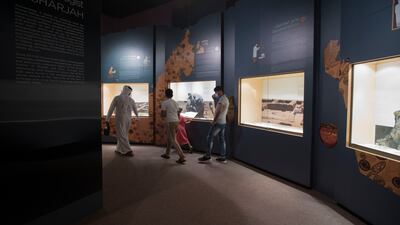
A collection of more than 100 artefacts, tracing the history of Omani civilisation from the Stone, Bronze and Iron Ages until the rise of Islam, are on display as part of a new exhibition at the Sharjah Archaeology Museum.
Titled Omani Civilisation: Origin and Development, the exhibition opens on Wednesday and will run until June. It marks the first time the artefacts are being displayed outside the sultanate.
The works include fishing gear, weapons, clay and stone pots, ornaments, stamps, farming equipment, as well as jewellery including a gold necklace from the period between 300 BC and 400 AD.

The exhibition is held in partnership with the National Museum of Oman and highlights similarities between archaeological finds in the sultanate and those at Sharjah Archaeology Museum.
It is divided into three sections — the first features artefacts from the Stone Age, from 125,000 to 4,000 BC; the second is dedicated to the Bronze Age, from 3100 to 1300 BC; and the third is devoted to the Iron Age and the centuries just preceding Islam, from 1200 BC to 600 AD.
Archaeological findings in Oman have been paramount to understanding the beginning of settled life in the Arabian Peninsula. The National Museum in Oman, which was inaugurated in 2013, showcases many of these rare, enlightening findings, housing more than 7,000 objects. The exhibition is the first collaboration between Sharjah Archaeology Museum and the National Museum in Oman.
“The collection reveals the historical ties between the two countries, while shedding light on the life of the original inhabitants and settlers in the Arabian Peninsula,” Manal Ataya, director general of Sharjah Museums Authority, said.
A number of events related to the topic will be accompanying the exhibition, including workshops, as well as interactive and educational activities.
More information about coming events and workshops is at sharjahmuseums.ae
-
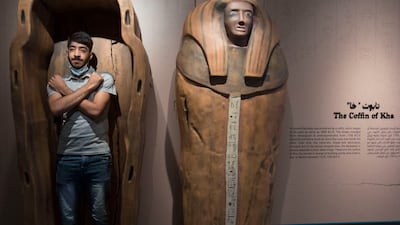
An interactive exhibition at the Sharjah Archeological Museum teaches children about an ancient Egyptian village where hundreds of craftsmen who worked on and decorated Valley of the Kings tombs lived. All Photos: Ruel Pableo/The National -
The focus of the exhibition is the discovery of the 3,400-year-old Deir El Medina village, home to the artisans and craftsmen who built and decorated the royal tombs. -
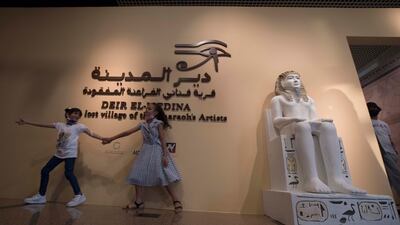
Children at the exhibition. -
The exhibition teaches children about royal tombs, pharaohs and life in ancient Egypt. -
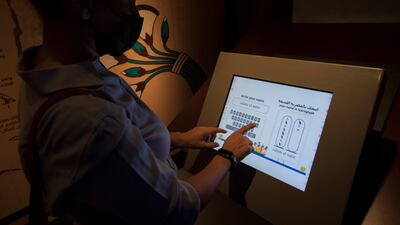
Visitors learn about major archaeological discoveries through workshops, hands-on activities and touchscreen games. -

The exhibition was organised by Sharjah Museums Authority in partnership with the Egyptian Museum in Turin, Italy. -
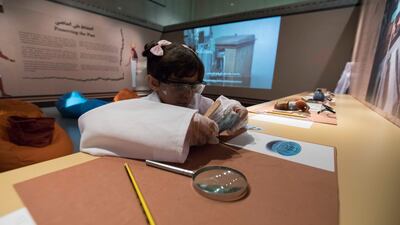
The exhibition tells the story of the builders, artists, and painters who worked on Egypt’s pharaohs’ tombs in 1,500 BC. -
"We are proud to organise this first-of-its-kind children's exhibition. It helps our young audience to explore the rich ancient Egyptian history and learn about archaeology,” said Manal Ataya, director general of SMA. -
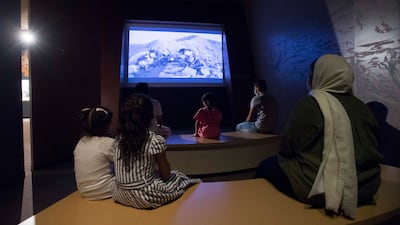
Short movies are played on large screens about the Deir El-Medina village, the excavation missions that led to its discovery, and methods of restoring and preserving artefacts. -

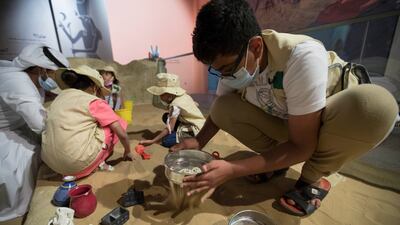
Children use mock-up excavation tools and are introduced to techniques used by archaeologists. -

Christian Greco, director of the Egyptian Museum in Italy, said: "The exhibition allows children and their families to remotely visit one of the most iconic sections of the Egyptian Museum’s collection." -
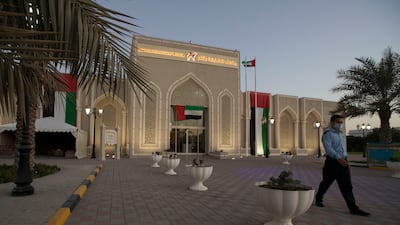
The Sharjah Archeological Museum. -

The exhibition runs until August 31, 2022. -
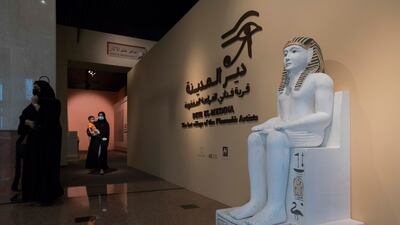
The Sharjah Archeological Museum. -
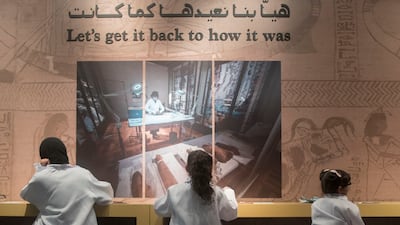
Children learn how to restore objects as part of the exhibition. -
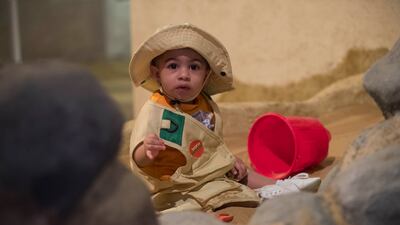
The exhibition helps its young visitors gain an insight into archeology. -
Ancient Egypt is brought to life at the exhibition. -

A child uses a touchscreen to learn about Ancient Egypt. -

Children can enjoy a variety of hands-on activities. -

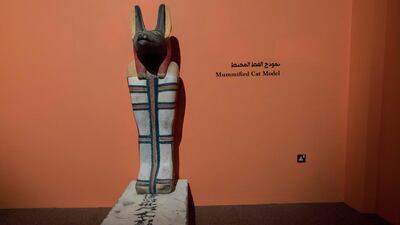
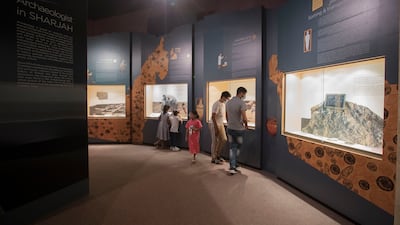
Displays help young viewers learn about Egyptian history. -
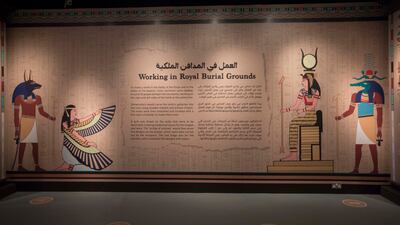
Children can also learn about the history of Ancient Egypt.



