


Over the years, the word sustainability has often felt overused.
Across fashion, architecture, manufacturing and design, the word has been so overworked as an idea, a lifestyle and a methodology, that it has transformed the fundamental need for sustainability into an inaccessible buzzword.
However, it’s refreshing to see that at the eighth edition of Dubai Design Week, the concept of sustainability feels tangible. Projected into physical spaces through a lens of regional and international designers the festival has found a way to showcase how sustainability can be part of our lives in concrete, relevant and aesthetically interesting ways.
This year, the title for Dubai Design Week, one of the Middle East’s largest fairs of its kind, is Design with Impact. Instead of interpreting what sustainability means in this region or internationally and how to make it functionally translate into the every day, the theme gets right to the point — how can design impact our daily lives and forge a path to a better future for all?
“The word sustainability can be very daunting to many,” director of Dubai Design Week Kate Barry tells The National. “Whereas when you look at 'impact', the idea is that these are design elements or expressions of design that have a positive impact on the environment. It doesn't have to be something so big, it can start off as something very small.”
Coinciding with Cop27 currently being held in Egypt, and one of the first public events in Dubai after the UAE lifted nearly all Covid-19 restrictions, Dubai Design District was buzzing with visitors interacting with installations and exploring how sustainable design can work regionally and internationally through various mediums.
An unmissable installation is US architecture firm OBMI’s sprawling pavilion piece in the main courtyard. Named Once Upon a Forest, OBMI has translated a fundamental aspect of the UAE’s natural heritage and ecology, the mangrove forests, into an expansive floating canopy, beautifully designed and handmade from natural materials.
Simultaneously a celebration of the UAE’s mangrove ecosystem and a thoughtful design, the protective cover is made from net mesh and bamboo bracing and offers shade and a communal space to meet. The pavilion also includes an integrated audio-visual immersive experience where visitors are taken on a journey about the importance of the mangrove forests ecosystem.
Another installation that uses aspects of heritage while also repurposing material is Al Gargoor by Bahraini architect Sara Alrayyes. The project explores the process of upcycling old fishing nets, made from a material known as gargoor, into furniture and lanterns. It’s astonishing how a material steeped in the region's fishing and pearling history can be transformed to look modern and timeless.
The furniture pieces were inspired by traditional majlis seats and seating compositions, low to the ground, facing each other, their silhouettes voluminous and inviting. However, the material has been designed to look airy, with its beach white colour and hollow interior, while also remaining surprisingly sturdy and comfortable.
The BMW i Vision Circular, a concept car also on show, is an exploration of the intersection of sustainability and luxury. A completely electric car made from recycled and renewable material, it presents the brand's vision to become “the most sustainable manufacturer for individual premium mobility".
Across the courtyard is the How Much Does Your Debris Weigh? installation by Quartz Architects. The impactful installation, questions the amount of waste from the construction industry produced through urbanisation and population growth. Demolished construction materials are physically suspended over visitors to the space, forcing us to rethink how we repurpose waste from construction sites.
Set outside of d3, in front of the car park is the d3 Design Market by FLTRD. For the first time in Design Week's eight-year history, the market presents a retail experience, showcasing home-grown pieces in fashion, accessories, art, homeware and more.
While much smaller in scale and impact than the installations, the d3 Design Market is just as exciting. It is a celebration of Dubai talent, where many newer, innovative UAE brands are connecting with the public from the region and abroad, showing the depth and variety of designs being produced in the country.
“Dubai is really growing their creative community and it's happening naturally,” Barry says.
“It's happening naturally because the world is really looking at Dubai, the world is coming to Dubai. The population is continuing to grow and evolve and this also helps a lot to bring in fresh air to the creative community.”
Dubai Design Week runs until Sunday at Dubai Design District. The event is open to the public and free to attend.
Scroll through images of the Noor Riyadh art festival taking place in Saudi Arabia below
-
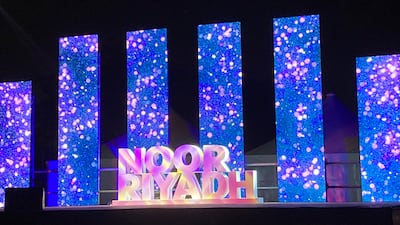
In 2022 Noor Riyadh ran across 40 locations in Saudi Arabia's capital. Razmig Bedirian / The National -
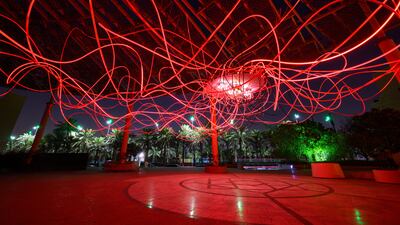
'Amplexus' by Grimanesa Amoros. Photo: Ammar Abd Rabbo -
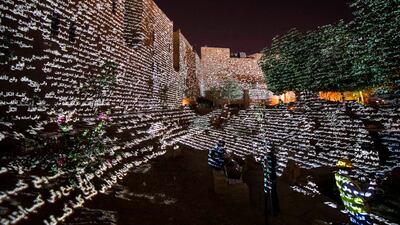
'The Garden of Light' by Charles Sandison. Photo: Noor Riyadh -

'Vanishing Point 3_1' by United Visual Artists. Photo: Noor Riyadh -
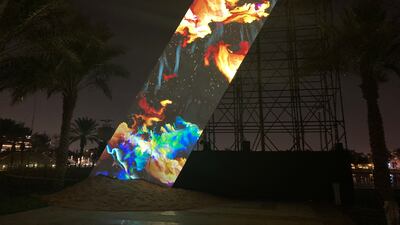
'Vertical Horizon' by Quiet Ensemble. Photo: Razmig Bedirian / The National -
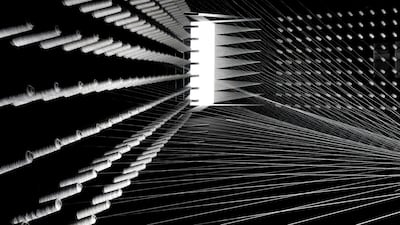
'Threads Of Light' by Muhannad Shono. Photo: Etienne Ruggeri -
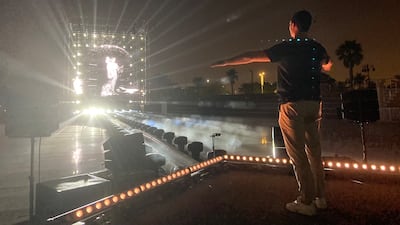
'Vibrance' by Bruno Ribeiro. Photo: Razmig Bedirian / The National -

'Light Horizon' by Sabine Marcelis. Photo: Manon Duclos -
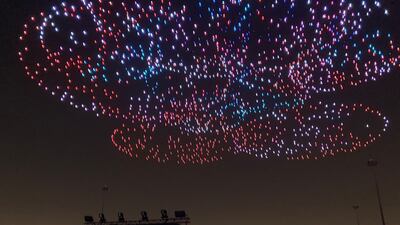
'The Order of Chaos: Chaos in Order' by Marc Brickman. Photo: Razmig Bedirian / The National -

'Impulse' by Roman Hill and Jonathan Fitas. Photo: Razmig Bedirian / The National



