
A drawing made by UAE Founding Father, the late Sheikh Zayed bin Sultan Al Nahyan, more than five decades ago offers a glimpse into his practical understanding of the engineering that has sustained Al Ain's oases for generations.
It was published by Al Ittihad newspaper on August 6, 1972, and illustrates the route of a falaj, tracing the underground channels that are still used to irrigate many of the city's famed date palm groves.
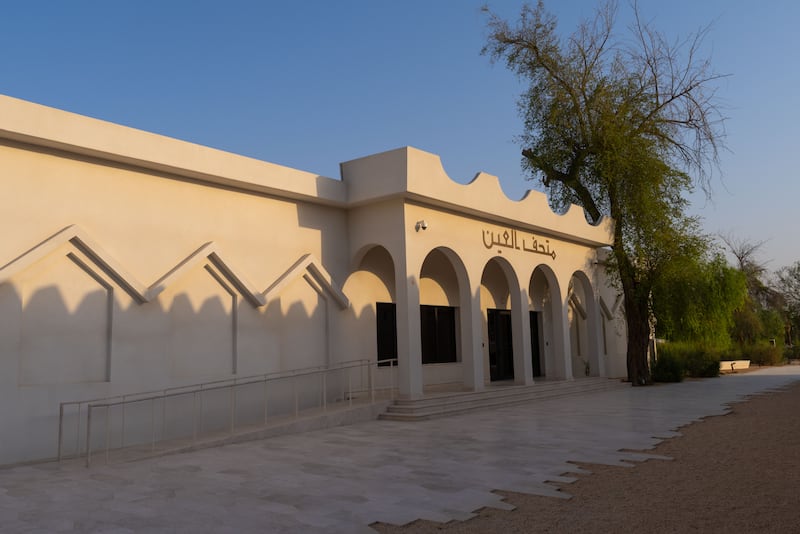
That edition of the newspaper is among the pieces comprising Al Ain Museum's new exhibition, Aflaj – the life-giving veins of the oasis.

The exhibition, which opens on November 27, explores nearly 3,000 years of water management and the communities that developed around it.
Shaikha Al Azeezi, exhibition designer at Al Ain Museum, tells The National that aflaj are such a familiar part of Al Ain’s landscape, "but much of the story behind them remains hidden beneath the ground”.
“We wanted to explore what lies beneath the surface and show how this remarkable system made it possible for communities to settle, cultivate the land and build a flourishing oasis,” she says.
The exhibition also has a connection to the museum's own archaeological context.
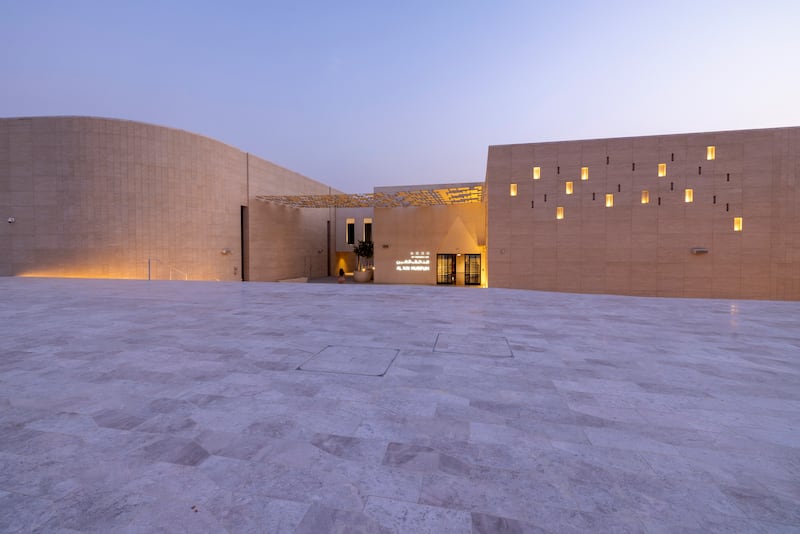
Excavations conducted during its redevelopment uncovered ancient irrigation systems and wells. These discoveries informed the redesign of the UAE's first museum, with some gallery designs integrating the ancient infrastructure to help preserve it.
Engineering beneath the desert
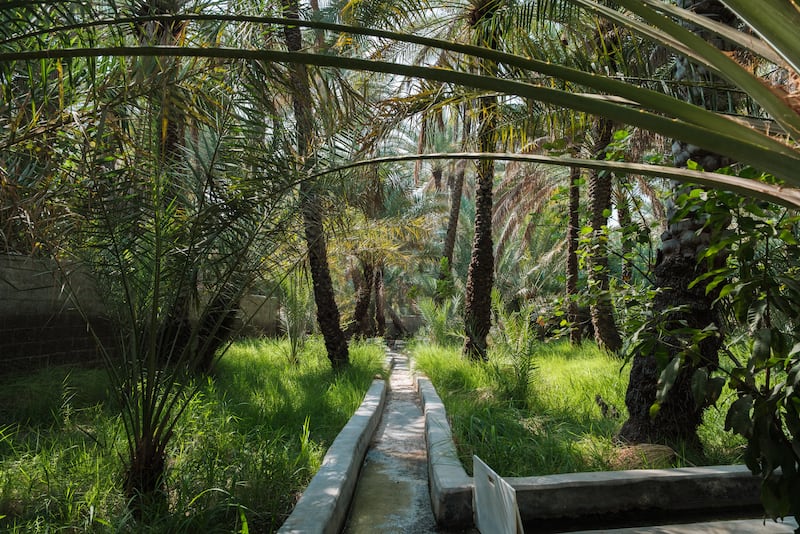
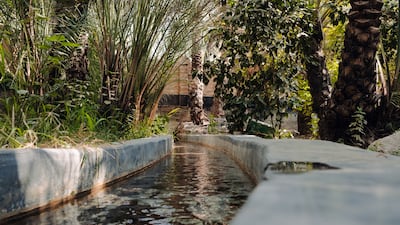
The exhibition follows the movement of water through underground channels, from mother wells to the shari'a, the point where water from a falaj first emerges above ground before flowing towards crops.
Visitors move through dark, earth-textured spaces, inspired by excavation shafts and tunnels, before entering brighter galleries evoking the oasis landscape.
Constructing aflaj required a sophisticated understanding of geology, groundwater and the natural gradient of the land.
Workers excavated long underground passages by hand, breaking through rock and maintaining precise slopes that allowed water to flow by gravity.
Vertical access shafts, known as thuqubah, enabled workers to reach the channels for construction and maintenance.
Traditional tools on display illustrate the scale and complexity of this undertaking.
Iron chisels and pickaxes were used to break through rock; scrapers were used to level channel floors; woven palm-frond containers and pulleys were used to bring excavated material to the surface.
“One of the challenges from a design perspective was how to communicate a system that is largely hidden underground,” Al Azeezi says.
“We wanted to make its engineering understandable to visitors while also showing the immense human effort and knowledge passed down through generations.”
Life around the water
The movement of water through the oasis also governed the rhythms of daily life.
Its distribution followed agreed shares and designated turns, with shadows measured during the day and stars observed at night to determine when users could access their allocations.
The exhibition introduces the specialist roles that kept this system functioning, including the areef al falaj, who managed water distribution, and people responsible for locating groundwater, tending crops, and protecting harvests.
The shari'a became an important social space. As women and families gathered to collect water, they exchanged news, maintained relationships and passed down traditions.
Locally made pottery jars, known as yihlah, were used to carry water home for drinking and cooking. Copper drinking vessels also feature in the exhibition, reflecting the agricultural communities' connections to wider networks of trade and cultural exchange.
“What I find particularly meaningful is how these systems connected people through shared responsibility,” Al Azeezi says.
Sheikh Zayed's enduring legacy
A dedicated section examines Sheikh Zayed's efforts to safeguard the irrigation systems and, by extension, Al Ain's agricultural landscape.
His involvement was often hands-on. He worked alongside local communities in digging and building wells, supported the restoration of aflaj and helped improve damaged channels and water sources.
Correspondence relating to Falaj Al Dawoodi and Falaj Al Ainy, alongside a letter dated August 26, 1964, offer visitors further insights into their involvement.
The exhibition also invites reflection on what these ancient practices can teach contemporary societies about managing finite natural resources.
Centuries before modern water management technologies, the communities of Al Ain had established systems in which access to water was regulated, distribution was carefully timed and infrastructure was collectively maintained.
“The aflaj depended on shared responsibility, agreed methods of distribution and a recognition that water was a resource that had to be managed for the benefit of the wider community,” Al Azeezi says. “These are principles that remain relevant today.”
Aflaj – The Life-giving Veins of the Oasis opens at Al Ain Museum on November 27.