

Hollywood actors on Thursday announced the start of a strike, joining writers in the first industrywide shutdown in 63 years after last-ditch talks failed, with nearly all film and television productions set to grind to a halt.
The Screen Actors Guild, or SAG-AFTRA, which represents 160,000 performers including A-list stars, said negotiations had ended without a deal on their demands over dwindling pay and the threat posed by artificial intelligence.
“SAG-AFTRA's national board unanimously voted to issue a strike order against the studios and streamers,” said the union's chief negotiator Duncan Crabtree-Ireland.
The strike will begin at midnight on Thursday, meaning actors will join writers on picket lines from Friday morning in the first Hollywood “double strike” since 1960.
Writers have already spent 11 weeks on the picket line, after their similar demands for better pay and protections against the future use of AI in television and films were not met.
Popular series set to return to television this year now face lengthy delays. And, if strikes continue, major films could be postponed too.
A strike immediately prevents actors from promoting some of the year's biggest releases at the peak of the film industry's summer blockbuster season.
Director Christopher Nolan told the London premiere of his new film Oppenheimer that his cast had walked out of the glitzy event in solidarity with the strike, Variety reported.
SAG-AFTRA represents everyone from A-list stars such as Meryl Streep, Jennifer Lawrence and Glenn Close to day players who do small roles on television series.
The vast majority of members had already voted to pre-approve a strike if a deal was not reached.
“Compensation has been severely eroded by the rise of the streaming ecosystem. Furthermore, artificial intelligence poses an existential threat to creative professions,” a SAG-AFTRA statement said after the talks fell through.
Executives have “refused to acknowledge that enormous shifts in the industry and economy have had a detrimental impact on those who perform labour for the studios”, it continued.
The Alliance of Motion Picture and Television Producers, which represents the studios, said it was “deeply disappointed that SAG-AFTRA has decided to walk away from negotiations”.
“This is the union's choice, not ours,” said a statement.
Disney chief executive Bob Iger on Thursday told CNBC the actors' and writers' expectations were “not realistic”, calling the decision to strike “very disturbing”.
The last time the actors' union went on strike, in 1980, it lasted more than three months.
While the writers' strike has already drastically reduced the number of films and shows in production, an actors' walkout shutters almost everything. Some reality TV, animation and talk shows could continue.
-
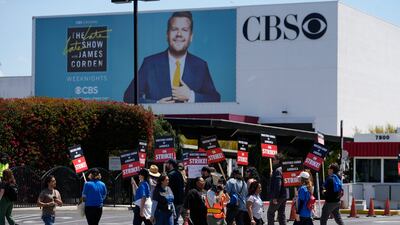
Members of the Writers Guild of America outside the CBS Television City in the Fairfax District of Los Angeles. For the first time in 15 years, Hollywood’s film and TV writers have gone on strike. AP Photo -

Writers of some of the most popular shows on television are striking for higher pay amid rapid changes in the way people watch their programmes and films. Bloomberg -
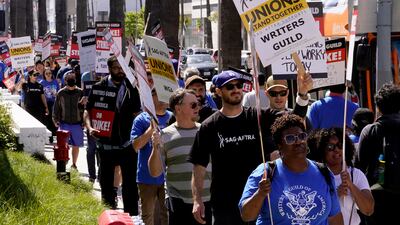
Members of the Screen Actors Guild - American Federation of Television and Radio Artists join a picket line in support of the Writers Guild of America outside the Netflix office on Sunset Boulevard. AP Photo -

Zoe Marshall, a board member of the Writers Guild of America, left, outside CBS Television City. AP Photo -
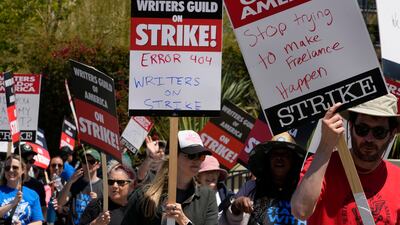
The union is seeking higher minimum pay, more writers per show and shorter exclusive contracts, among other demands, all conditions it says have been diminished in the content boom driven by streaming. AP Photo -

Placards at the close of a picket by members of The Writers Guild of America outside Walt Disney Studios. AP Photo -

Striking Writers Guild of America workers picket outside the Disney Studios. AFP -
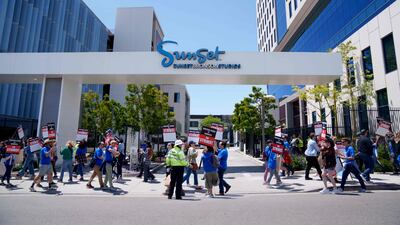
Striking Writers Guild of America workers picket outside the Sunset Bronson Studios building. AFP -

Set dresser Norma Smithee shows her support for striking writers at a rally outside Warner Bros. AP Photo -
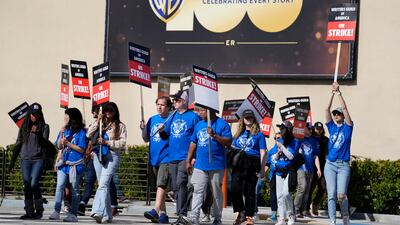
Members of the Writers Guild of America picket outside Warner Bros. Late-night shows are expected to stop production immediately, while television series and movies scheduled for release later this year and beyond could face major delays. AP Photo


Actors and writers are demanding higher pay to counteract inflation and guarantees for their future livelihoods.
In addition to salaries when they are actively working, actors earn payments called “residuals” every time a film or show they starred in is aired on network or cable – helpful when performers are between projects.
But streamers such as Netflix and Disney+ do not disclose viewing figures for their shows, and offer the same flat rate for everything on their platforms, regardless of its popularity.
Muddying the waters further is the issue of AI since both actors and writers want guarantees to regulate its use, but studios have refused to budge.

