

The women who will support Queen Consort Camilla as she carries out her key official and state duties have been announced by Buckingham Palace.
Camilla, 75, is to have six queen's companions, not traditional ladies-in-waiting, in addition to her private secretary and deputy private secretary, Buckingham Palace said.
They are the queen consort's trusted friends Sarah Troughton; Jane von Westenholz; Fiona, the Marchioness of Lansdowne, who is a professional interior designer; Lady Katharine Brooke and Baroness Carlyn Chisholm, who is now a non-affiliated peer.
The sixth is Camilla's close friend Lady Sarah Keswick, whose husband, Sir Chips Keswick, retired as Arsenal chairman in 2020 after spending 15 years on the board at the North London football club, according to Tatler.
Major Ollie Plunket, of The Rifles, has been appointed Camilla's equerry. It is believed his role is to look after her diary and accompany her at official events.
Some of the queen's companions will appear publicly with her for the first time at a reception she will host to raise awareness of violence against women and girls, at Buckingham Palace on Tuesday.
What is a lady-in-waiting?

In Britain, ladies-in-waiting are titled noblewomen who serve not only the queen, but also high-ranking women in the royal household.
Queen Elizabeth II had nine, before the Duchess of Grafton and Lady Farnham died.
Although they have not historically lived at Buckingham Palace, they have sometimes stayed there or in royal apartments in London should their duties require it.
What did ladies-in-waiting do?
Ladies-in-waiting were close, often childhood friends of the monarch, and come from titled families whose lineages stretch back alongside royalty.
They acted as personal assistants to the queen, assisting in day-to-day activities such as running errands, delivering messages and organising correspondence, as well as attending to personal matters, and accompanying her on royal tours and visits.
What is a queen's companion?
It is believed the work of the queen's companions will be similar to, but not as extensive as, that carried out by ladies-in-waiting.
It is thought they are likely to be in attendance less regularly than the queen's ladies-in-waiting were and, on certain occasions, may attend an engagement instead of a private secretary or a deputy private secretary.
There is still a role for the ladies-in-waiting who worked for the queen.
Lady Susan Hussey, Mary Morrison and Dame Annabel Whitehead will now be known as ladies of the household.
They continue to assist the king in hosting formal occasions at Buckingham Palace, as they have done recently.
— Press Association contributed to this report
Queen Consort Camilla donates Paddington Bear toys to Barnardo's nursery — in pictures
-
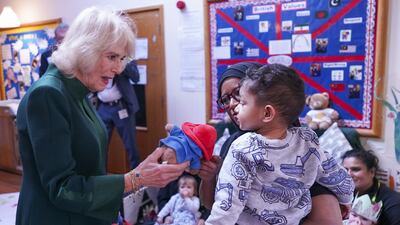
Camilla, Queen Consort hands a Paddington Bear toy to a child during a teddy bears' picnic at a Barnardo's Nursery in Bow, east London. PA -
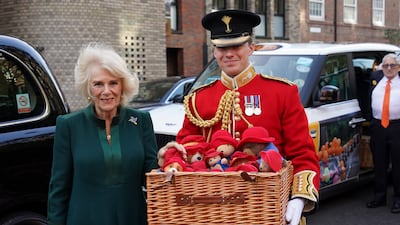
The queen consort Camilla, accompanied by a member of the Welsh Guards, arrives with the bears and other cuddly toys. Getty Images -
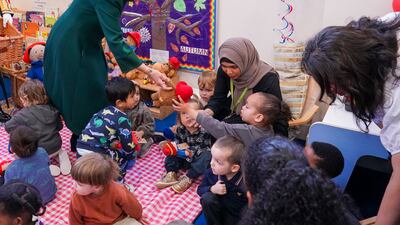
The toys had been left outside royal palaces as tributes to Queen Elizabeth II, after her death in September. The queen had appeared in a video with Paddington to mark her platinum jubilee in June. Getty Images -
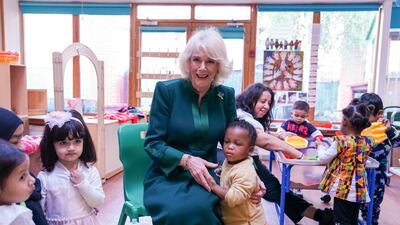
The royal family has donated more than 1,000 bears to Barnardo’s. Each was professionally cleaned before being delivered to the charity. Getty Images -
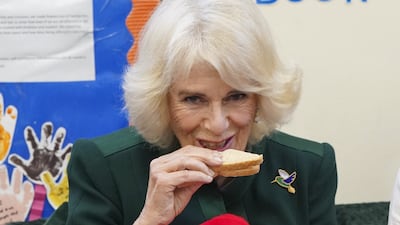
The queen consort eats a marmalade sandwich, with Paddington on her lap. Marmalade sandwiches are the fictional bear's favourite food. PA -
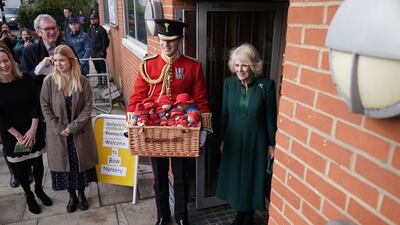
In 2016, Queen Elizabeth passed the patronage of Barnardo's, which supports hundreds of thousands of children, young people, parents and carers, to Camilla. PA -
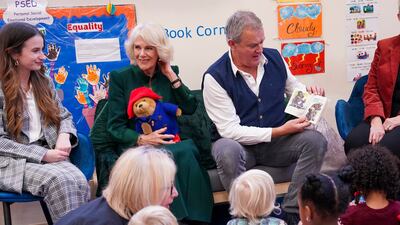
The queen consort and actor Hugh Bonneville, a star of the Paddington films, at the teddy bears' picnic. Getty Images



