Games such as 'Call of Duty' might be held back by Microsoft for Sony PlayStation and other consoles. Bloomberg

What does Microsoft buying Activision mean for PlayStation owners?


  • English
  • Arabic

Microsoft’s $68 billion purchase of developer and publisher Activision Blizzard has sent shock waves through the entire video game industry. It’s a flex of financial muscle that’s so outlandish, that it’s almost unbelievable. But here we are, staring at the possibility of one of the highest-selling game franchises of all-time – Call of Duty – becoming an exclusive title for Xbox and PC.

A cynic would say this less-than-subtle approach from Microsoft is about gaining a monopoly over its rivals by simply purchasing the best game developers around. Whereas Sony has a track record of nurturing smaller studios and bringing them under the PlayStation umbrella at a later date – like they did with Marvel’s Spider-Man creators, Insomniac Games – Microsoft has opted for the quick fix that comes with a huge financial buyout. It also bought Minecraft developer Mojang ($2.5bn) in 2014 and Doom-makers Bethesda Softworks ($7.5bn) in 2021.

Microsoft wants to position Xbox as either the only place to play these top games in the future, or the console where you can play them first. Bloomberg

With so much money involved, it’s clear that Microsoft wants to position Xbox as either the only place to play these top games in the future, or the console where you can play them first. It also means the developers will now focus on the Xbox version of their games first, and rival consoles second – if at all – which almost guarantees the best experience will be on Microsoft machines.

It’s a savvy move and one that Microsoft will hope can sway more people to buy their console. Sony doesn’t have the financial clout to compete with them on this front, so don’t expect the PlayStation creators to make a similar acquisition any time soon.

But while it’s a gut punch to PlayStation owners, there are reasons to be optimistic.

Sony is on the verge of announcing its rival to the Xbox Game Pass, a monthly subscription service that gives access to hundreds of games for one price. As part of the rumoured three-tiered approach, with different price points, Sony will open up its diverse back-catalogue of games from the early 1990s PS One to now. There is also said to be an upgrade of PlayStation Now, Sony’s Netflix-style gaming service, on the horizon, which again will reach back in time to unearth its retro classics.

PlayStation is doubling down on its virtual reality, too. While Xbox is yet to venture into the realms of VR, Sony is set to launch PSVR 2 around the 2022 festive season. It promises to be a complete upgrade on the current tech, with much sharper visuals and immersive features that could potentially fulfil the promise of a complete VR experience that’s needed to push it into the mainstream.

It’s a fairly obvious point, but PlayStation has also been putting out the more ambitious first-party titles since the console war with Xbox began. It’s one of the main reasons why PS4 outstripped the Xbox One in terms of sales, and why PS5 is currently ahead of Xbox Series X, and, according to industry analysts Ampere, it’s currently outselling the latest Xbox at a ratio of two to one.

History of PlayStation consoles – in pictures:

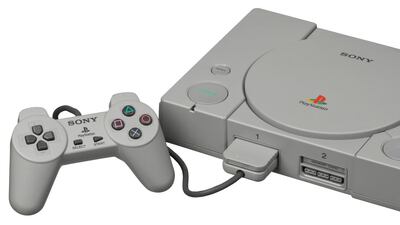
  • The Sony PlayStation video game console was first released in 1994. This is a Japanese SCPH-1000, which was the very first model of PlayStation commercially released. Wikipedia Commons
    The Sony PlayStation video game console was first released in 1994. This is a Japanese SCPH-1000, which was the very first model of PlayStation commercially released. Wikipedia Commons
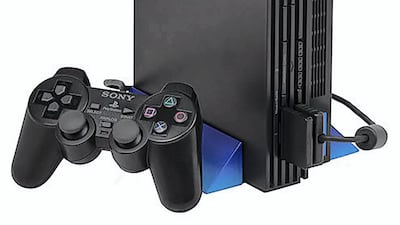
  • A Sony PlayStation 2, released in the year 2000. It is here shown with 8MB memory card and DualShock 2 controller. Wikipedia Commons
    A Sony PlayStation 2, released in the year 2000. It is here shown with 8MB memory card and DualShock 2 controller. Wikipedia Commons
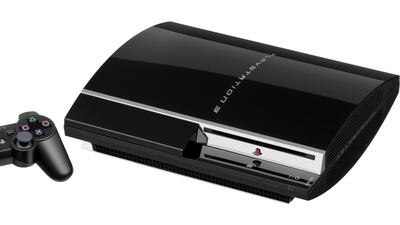
  • The Sony PlayStation 3 (PS3) video game console, first released in 2006 as the successor to the PlayStation 2. This model is the CECHA01, one of the first two models released. It features a 60GB hard drive, hardware-based backwards compatibility with PS2 games and flash memory card readers. Wikipedia Commons
    The Sony PlayStation 3 (PS3) video game console, first released in 2006 as the successor to the PlayStation 2. This model is the CECHA01, one of the first two models released. It features a 60GB hard drive, hardware-based backwards compatibility with PS2 games and flash memory card readers. Wikipedia Commons
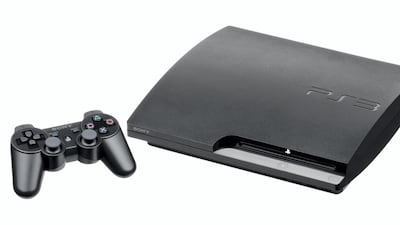
  • The Sony PlayStation 3 (PS3) video game console, shown with DualShock 3 controller. This is a seventh generation console first released in 2006 as the successor to the PlayStation 2. This model is the 'Slim', model 2001A, the first revision of the PlayStation 3 hardware that was made much lighter and smaller than the previous version. Wikipedia Commons
    The Sony PlayStation 3 (PS3) video game console, shown with DualShock 3 controller. This is a seventh generation console first released in 2006 as the successor to the PlayStation 2. This model is the 'Slim', model 2001A, the first revision of the PlayStation 3 hardware that was made much lighter and smaller than the previous version. Wikipedia Commons
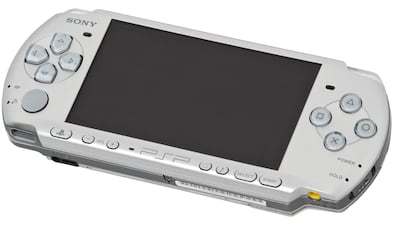
  • A silver PSP-3000, the third-generation model of the PlayStation Portable portable game console, released in 2008. Wikipedia Commons
    A silver PSP-3000, the third-generation model of the PlayStation Portable portable game console, released in 2008. Wikipedia Commons
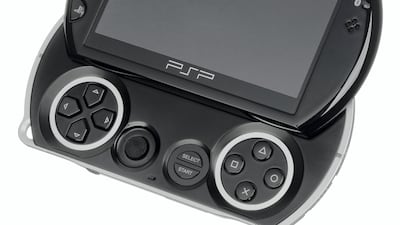
  • The PSP Go, an alternate model of the PlayStation Portable system from Sony. Released in 2009, it was a UMD-less version of the PSP, relying on digital-only versions of games. It has 16GB of internal storage and can be expanded with a proprietary memory card. Wikipedia Commons
    The PSP Go, an alternate model of the PlayStation Portable system from Sony. Released in 2009, it was a UMD-less version of the PSP, relying on digital-only versions of games. It has 16GB of internal storage and can be expanded with a proprietary memory card. Wikipedia Commons
  • The PSP Go, an alternate model of the PlayStation Portable system from Sony. Released in 2009, it was a UMD-less version of the PSP, relying on digital-only versions of games. It has 16GB of internal storage and can be expanded with a proprietary memory card. Wikipedia Commons
    The PSP Go, an alternate model of the PlayStation Portable system from Sony. Released in 2009, it was a UMD-less version of the PSP, relying on digital-only versions of games. It has 16GB of internal storage and can be expanded with a proprietary memory card. Wikipedia Commons
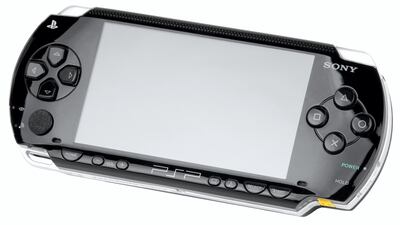
  • A North American Sony PSP-1000 handheld video game console. This was released in 2009.
    A North American Sony PSP-1000 handheld video game console. This was released in 2009.
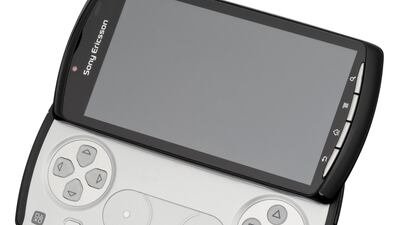
  • The Sony Xperia Play phone, shown close. Released in 2011, this Android phone featured a slide-out section with traditional game controls, similar to a Sony PSP Go. It was able to play PlayStation Mobile games, which includes ports of original PlayStation games, PSP games and some original titles. Wikipedia Commons
    The Sony Xperia Play phone, shown close. Released in 2011, this Android phone featured a slide-out section with traditional game controls, similar to a Sony PSP Go. It was able to play PlayStation Mobile games, which includes ports of original PlayStation games, PSP games and some original titles. Wikipedia Commons
  • The Sony Xperia Play phone, shown opened. Released in 2011, this Android phone featured a slide-out section with traditional game controls, similar to a Sony PSP Go. It was able to play PlayStation Mobile games, which includes ports of original PlayStation games, PSP games and some original titles. Wikipedia Commons
    The Sony Xperia Play phone, shown opened. Released in 2011, this Android phone featured a slide-out section with traditional game controls, similar to a Sony PSP Go. It was able to play PlayStation Mobile games, which includes ports of original PlayStation games, PSP games and some original titles. Wikipedia Commons
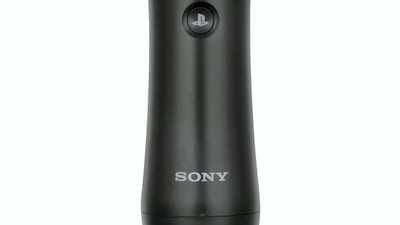
  • The PlayStation Move controller. A motion-sensing controller for the PlayStation 3 and PlayStation 4, needs to be used in conjunction with the PS Eye or PS4 Camera. Wikipedia Commons
    The PlayStation Move controller. A motion-sensing controller for the PlayStation 3 and PlayStation 4, needs to be used in conjunction with the PS Eye or PS4 Camera. Wikipedia Commons
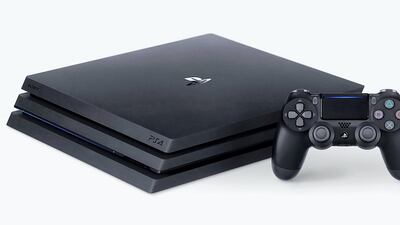
  • The PlayStation 4 Pro video game console. Produced by Sony and launched worldwide in November 2016, the Pro is an enhanced model of the original PlayStation 4 that offers extra capabilities through an upgraded GPU, faster RAM and a CPU with a higher clock speed. Wikipedia Commons
    The PlayStation 4 Pro video game console. Produced by Sony and launched worldwide in November 2016, the Pro is an enhanced model of the original PlayStation 4 that offers extra capabilities through an upgraded GPU, faster RAM and a CPU with a higher clock speed. Wikipedia Commons
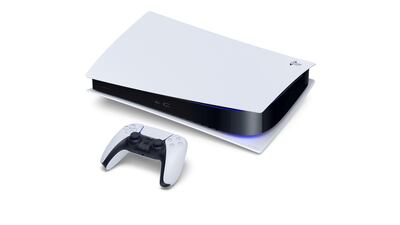
  • The Sony PlayStation 5 Digital Edition console and DualSense controller. The PS5 came out in November 2020. Photo: Sony Interactive Entertainment
    The Sony PlayStation 5 Digital Edition console and DualSense controller. The PS5 came out in November 2020. Photo: Sony Interactive Entertainment

There’s a glut of exclusive new games lined up for 2022 with God of War Ragnorok, Horizon Forbidden West and Gran Turismo 7 all scheduled to launch on PS5 in the next 12 months.

To circle back on a point above, it’s unlikely that Microsoft will withhold games such as Call of Duty from PlayStation consoles. There’s too much money to be left on the table for Microsoft to pull such a move – especially in the short term. Releasing first on Xbox is the most likely scenario, with other consoles set to wait a few months before getting their hands on it.

However, this now opens the door for Sony to create their own all-conquering first-person shooter in a genre that has stagnated of late. The lack of innovation in Call of Duty has seen fans turned off by the game, and if there’s a genuine alternative that offers something new, PlayStation might be on to a winner.

The only real danger to Sony is if Microsoft suddenly decides to purchase every big-selling developer over the next decade or simply buy Sony and PlayStation too. If you can’t beat them, join them, right?


The%C2%A0specs%20
%3Cp%3E%3Cstrong%3EEngine%3A%20%3C%2Fstrong%3E3.5-litre%2C%20twin-turbo%20V6%0D%3Cbr%3E%3Cstrong%3ETransmission%3A%20%3C%2Fstrong%3E10-speed%20auto%0D%3Cbr%3E%3Cstrong%3EPower%3A%20%3C%2Fstrong%3E410hp%0D%3Cbr%3E%3Cstrong%3ETorque%3A%20%3C%2Fstrong%3E495Nm%0D%3Cbr%3E%3Cstrong%3EPrice%3A%20%3C%2Fstrong%3Estarts%20from%20Dh495%2C000%20(Dh610%2C000%20for%20the%20F-Sport%20launch%20edition%20tested)%0D%3Cbr%3E%3Cstrong%3EOn%20sale%3A%20%3C%2Fstrong%3Enow%3C%2Fp%3E%0A
Bullet%20Train
%3Cp%3E%3Cstrong%3EDirector%3A%3C%2Fstrong%3E%20David%20Leitch%3Cbr%3E%3Cstrong%3EStars%3A%3C%2Fstrong%3E%20Brad%20Pitt%2C%20Aaron%20Taylor-Johnson%2C%20Brian%20Tyree%20Henry%2C%20Sandra%20Bullock%3Cbr%3E%3Cstrong%3ERating%3A%3C%2Fstrong%3E%203%2F5%3C%2Fp%3E%0A
One in nine do not have enough to eat

Created in 1961, the World Food Programme is pledged to fight hunger worldwide as well as providing emergency food assistance in a crisis.

One of the organisation’s goals is the Zero Hunger Pledge, adopted by the international community in 2015 as one of the 17 Sustainable Goals for Sustainable Development, to end world hunger by 2030.

The WFP, a branch of the United Nations, is funded by voluntary donations from governments, businesses and private donations.

Almost two thirds of its operations currently take place in conflict zones, where it is calculated that people are more than three times likely to suffer from malnutrition than in peaceful countries.

It is currently estimated that one in nine people globally do not have enough to eat.

On any one day, the WFP estimates that it has 5,000 lorries, 20 ships and 70 aircraft on the move.

Outside emergencies, the WFP provides school meals to up to 25 million children in 63 countries, while working with communities to improve nutrition. Where possible, it buys supplies from developing countries to cut down transport cost and boost local economies.


Mercer, the investment consulting arm of US services company Marsh & McLennan, expects its wealth division to at least double its assets under management (AUM) in the Middle East as wealth in the region continues to grow despite economic headwinds, a company official said.

Mercer Wealth, which globally has $160 billion in AUM, plans to boost its AUM in the region to $2-$3bn in the next 2-3 years from the present $1bn, said Yasir AbuShaban, a Dubai-based principal with Mercer Wealth.

Within the next two to three years, we are looking at reaching $2 to $3 billion as a conservative estimate and we do see an opportunity to do so,” said Mr AbuShaban.

Mercer does not directly make investments, but allocates clients’ money they have discretion to, to professional asset managers. They also provide advice to clients.

“We have buying power. We can negotiate on their (client’s) behalf with asset managers to provide them lower fees than they otherwise would have to get on their own,” he added.

Mercer Wealth’s clients include sovereign wealth funds, family offices, and insurance companies among others.

From its office in Dubai, Mercer also looks after Africa, India and Turkey, where they also see opportunity for growth.

Wealth creation in Middle East and Africa (MEA) grew 8.5 per cent to $8.1 trillion last year from $7.5tn in 2015, higher than last year’s global average of 6 per cent and the second-highest growth in a region after Asia-Pacific which grew 9.9 per cent, according to consultancy Boston Consulting Group (BCG). In the region, where wealth grew just 1.9 per cent in 2015 compared with 2014, a pickup in oil prices has helped in wealth generation.

BCG is forecasting MEA wealth will rise to $12tn by 2021, growing at an annual average of 8 per cent.

Drivers of wealth generation in the region will be split evenly between new wealth creation and growth of performance of existing assets, according to BCG.

Another general trend in the region is clients’ looking for a comprehensive approach to investing, according to Mr AbuShaban.

“Institutional investors or some of the families are seeing a slowdown in the available capital they have to invest and in that sense they are looking at optimizing the way they manage their portfolios and making sure they are not investing haphazardly and different parts of their investment are working together,” said Mr AbuShaban.

Some clients also have a higher appetite for risk, given the low interest-rate environment that does not provide enough yield for some institutional investors. These clients are keen to invest in illiquid assets, such as private equity and infrastructure.

“What we have seen is a desire for higher returns in what has been a low-return environment specifically in various fixed income or bonds,” he said.

“In this environment, we have seen a de facto increase in the risk that clients are taking in things like illiquid investments, private equity investments, infrastructure and private debt, those kind of investments were higher illiquidity results in incrementally higher returns.”

The Abu Dhabi Investment Authority, one of the largest sovereign wealth funds, said in its 2016 report that has gradually increased its exposure in direct private equity and private credit transactions, mainly in Asian markets and especially in China and India. The authority’s private equity department focused on structured equities owing to “their defensive characteristics.”

The burning issue

The internal combustion engine is facing a watershed moment – major manufacturer Volvo is to stop producing petroleum-powered vehicles by 2021 and countries in Europe, including the UK, have vowed to ban their sale before 2040. The National takes a look at the story of one of the most successful technologies of the last 100 years and how it has impacted life in the UAE.

Read part three: the age of the electric vehicle begins

Read part two: how climate change drove the race for an alternative 

Read part one: how cars came to the UAE

PSA DUBAI WORLD SERIES FINALS LINE-UP

Men’s:
Mohamed El Shorbagy (EGY)
Ali Farag (EGY)
Simon Rosner (GER)
Tarek Momen (EGY)
Miguel Angel Rodriguez (COL)
Gregory Gaultier (FRA)
Karim Abdel Gawad (EGY)
Nick Matthew (ENG)

Women's:
Nour El Sherbini (EGY)
Raneem El Welily (EGY)
Nour El Tayeb (EGY)
Laura Massaro (ENG)
Joelle King (NZE)
Camille Serme (FRA)
Nouran Gohar (EGY)
Sarah-Jane Perry (ENG)

The specs

Engine: 2.0-litre 4-cyl turbo

Power: 247hp at 6,500rpm

Torque: 370Nm from 1,500-3,500rpm

Transmission: 10-speed auto

Fuel consumption: 7.8L/100km

Price: from Dh94,900

On sale: now

Updated: January 20, 2022, 8:14 AM