


Raytheon is to establish the first Advanced Laser Integration Centre in Livingston, Scotland, the company announced at this year's Farnborough International Airshow.
Raytheon’s new base in Scotland will host its European centre for the testing, fielding and maintenance of defensive high-energy weapons, which counter unmanned systems such as drones.
The company has set up the regional centre as it has licences to export configurations of its high-energy laser technology in the UK and throughout Europe.
It expects the demand for high-energy weapons is likely to increase, providing a significant boost to local employment.
“Notwithstanding the war in Ukraine, many conflict zones in the world today are seeing asymmetric threats, most notably from unmanned aerial vehicles such as drones,” said Harry Boneham, aerospace analyst at GlobalData.
“For example, Houthi forces in Yemen have frequently used drones to target critical infrastructure such as airports and energy facilities.
“There is a distinct tactical imperative for effective methods of countering unmanned systems.
"Lasers are a cost-effective counter-measure, and the technology needed to create these directed-energy weapons is no longer a pipedream. It is here now."
-
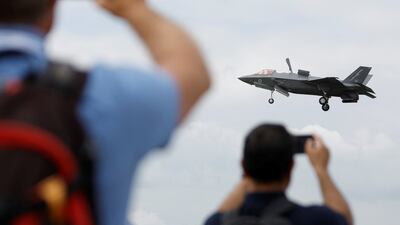
Visitors watch a RAF F-35 aircraft at the Farnborough International Airshow in Hampshire, southern England. Reuters -
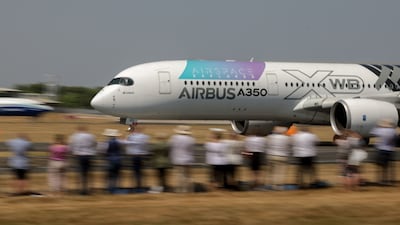
An Airbus SE A350 aircraft lands after an aerial display. Bloomberg -
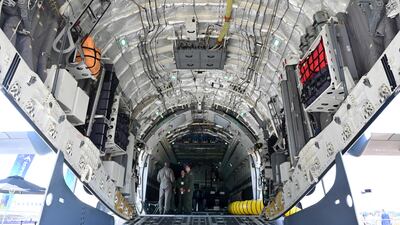
An Embraer C-390 Millennium military transport aircraft, used by Brazil's Airforce, on display. AFP -

A detailed view of a Pratt & Whitney PW123 engine. Reuters -
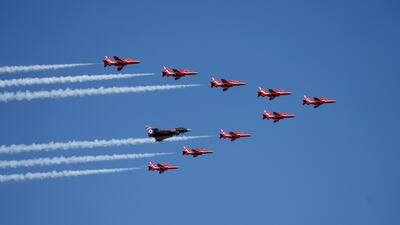
The RAF's Red Arrows aerobatics team perform. AP -
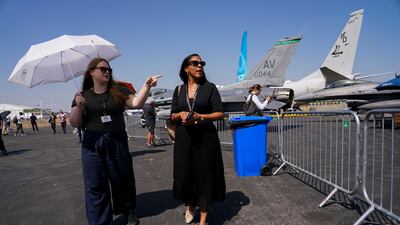
Visitors shelter from the sun as they look around the show. AP -
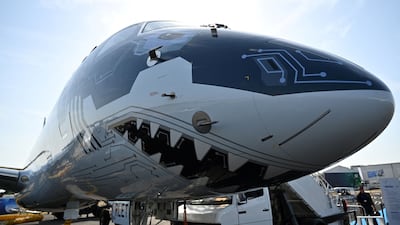
An Embraer E190-E2 aircraft. AFP -
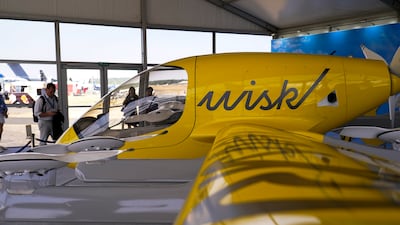
Visitors look at a model of the Wisk Aero autonomous aircraft. AP -
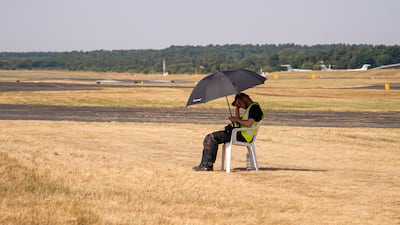
A member of staff shelters from the sun. AP -

Attendees walk past a poster of a Boom Supersonic concept Overture aircraft. AFP -
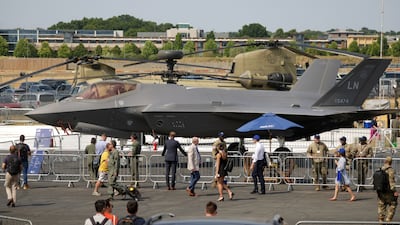
A US Air Force F-35A fighter jet on display. Bloomberg -
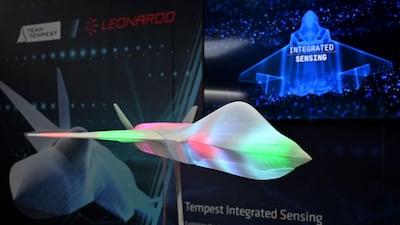
A model of proposed jet fighter aircraft Tempest, a joint programme by a consortium known as 'Team Tempest', which includes Britain's Ministry of Defence, BAE Systems, Rolls-Royce, Leonardo SPA, MBDA and Saab. AFP -

Visitors watch the Embraer E2 Profit Hunter plane taking off. AFP -
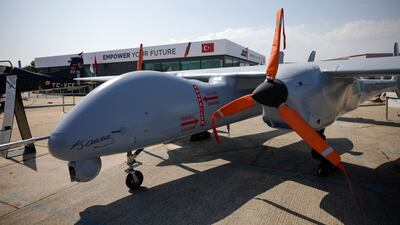
An Aksungur drone, manufactured by Turkish Aerospace Industries, on display. Bloomberg -
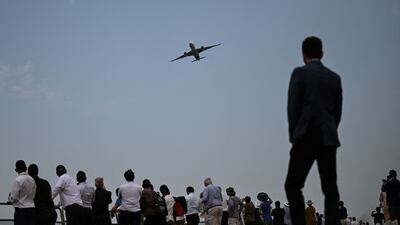
An Airbus A350 plane flying over the crowds at Farnborough. AFP -
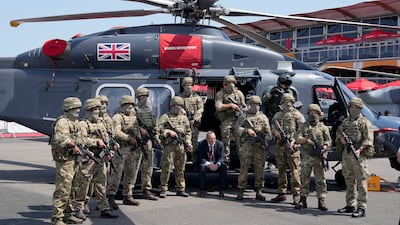
Soldiers pose beside a Leonardo helicopter. AP -
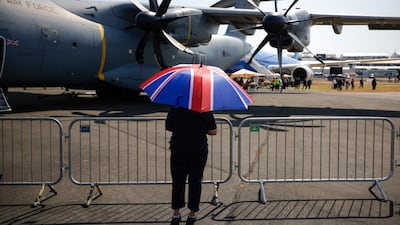
An aviation enthusiast shelters from the sun at the show. Temperatures were forecast to reach 40°C in parts of England. Bloomberg -
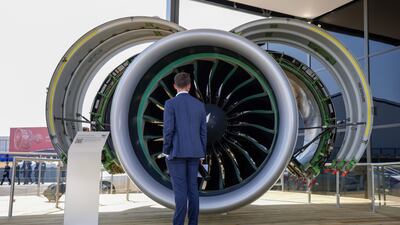
A model of a Pratt & Whitney GTF engine. This is the first Farnborough in four years, due to the pandemic. Bloomberg -
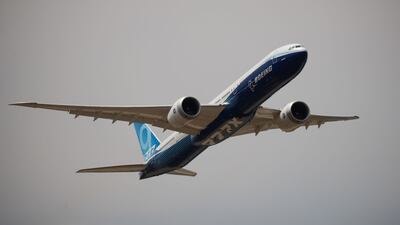
A Boeing 737-9 puts on a display at Farnborough. Bloomberg -
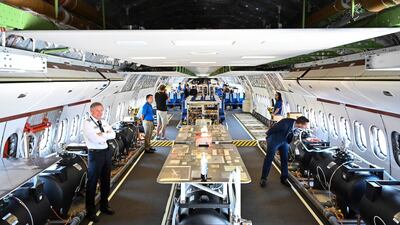
Visitors examine water barrels in a Boeing 777X, in an experiment on weight distribution. AFP -

An aviation fan uses a fan to keep cool amid soaring temperatures. Bloomberg -

A worker keeps a GulfStream Aerospace Corp G650 business jet gleaming. Bloomberg -

Britain's Prime Minister Boris Johnson tours Farnborough, a vital marketplace for the country's aviation industry. AP -
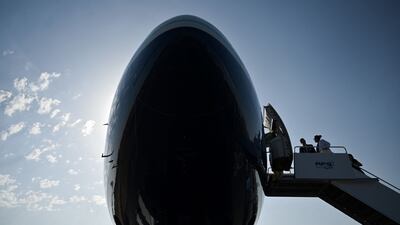
Visitors board a Boeing 777X. Deals worth £161 billion ($192bn) were agreed the last time Farnborough was held, organisers said. AFP -

Boris Johnson views the display by SaxaVord, the UK Spaceport. PA -

More than 80,000 visitors from 96 countries are expected to attend this week's five-day event. Bloomberg


The centre in Scotland will support the UK Ministry of Defence’s directed-energy weapons systems to counter unmanned aircraft.
In 2021, Raytheon UK was awarded a demonstrator contract to provide a high-energy laser weapon system to the UK, intended to be installed on the British Wolfhound land vehicle.
As part of the UK’s Integrated Review, Raytheon expects to gain further procurements from the Ministry for the capabilities and the plant in Scotland makes the company a strong candidate for further contracts.

