A warning sign is seen attached to Hammersmith Bridge which has been partially reopened after safety tests. Reuters.

Hammersmith Bridge fiasco speaks volumes about how Britain is governed


Chris Blackhurst
  • English
  • Arabic

Not so long ago my wife and I attended as guests a local Conservative fund-raising dinner.

On our table was Charlotte Vere. She arrived late and showed little interest in us or the other folk around her. She was looking across the hall, seeing who was there, nodding at those she knew.

We can’t recall anything she said, such was her disinterest. We came away with the firm impression that here was a woman in a hurry, who oozed ambition. The Kingston & Surbiton Conservative Association appeared to be of little importance to her.

I say not that long ago for a reason, because soon afterwards Vere went on to try, and fail, to become an MP. First, in Brighton Pavilion, where she gained the Tory nomination before coming third at the ballot box in the 2010 general election. Then, in Kensington, where she fell at the party’s final selection round.

No worries. She subsequently became Baroness Vere of Norbiton, part of the borough of Kingston, and today is a member of the government as a junior minister in the Department of Transport.

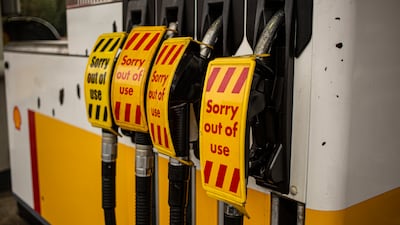
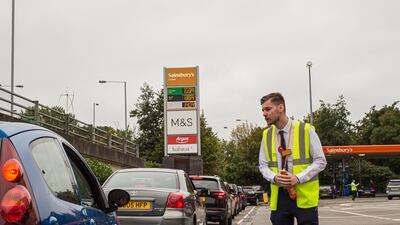
Charlotte Vere, 52, now has a considerable bearing on my life. I live in south-west London, close to Hammersmith Bridge, a 19th Century suspension bridge which was fully closed to all traffic in August 2020 for safety reasons and has just partially reopened. The Baroness heads the Hammersmith Bridge task force. And, not to mention her other jobs as minister for roads, buses and places, she is also charged with resolving the national shortage of HGV drivers that has forced me to scout around and queue for fuel and is threatening to empty supermarket shelves.

Remarkable, to think that the person who bustled so ungraciously into that dinner should be such a power in the land. What qualifies Vere, and how has she propelled herself so far?

Vere, though, is an example of someone who knows how to choose well. She is a consummate payer of the political game.

Her rise speaks volumes for how Britain is governed. In theory we’re a democracy - at least that is what we tell the world - but Vere is entirely unelected.

She was educated at the fee-paying Stover School in Devon and at University College London. Later she went to Kellogg management school in the US. She worked in banking for seven years, at CountyNatWest, DLJ and Barings. She married and had two children.

So far, there is little indication of what was to follow and in such short order. Vere, though, is an example of someone who knows how to choose well. She is a consummate player of the political game.

She did a job that few would wish to do but possibly she could see where it might lead. Do it well and you will get noticed. She became finance director of the Tories’ campaign against the alternative voting system. “Say No to AV” was a resounding success, and Vere duly found herself moving in senior Conservative Central Office circles.

Baroness Vere of Norbiton has climbed up the political ladder, despite not having been elected by the British public. Photo: UK Parliament

That was followed by another unpromising post, executive director of “Conservatives In” before the EU referendum. The drive was not successful but it was enough to get her noticed by David Cameron, who made her a life peer in his 2016 resignation honours. Vere had divorced and remarried, also in 2016. Her new husband was Mike Chattey, Tory head of fund-raising since 2001.

For the previous four years, her day job was running the Girls’ Schools Association, the body that represents some of the leading girls’ private schools, among them Roedean, Cheltenham Ladies’ College and Wycombe Abbey. That ended abruptly when she was made a baroness.

While that left a nasty taste it did not matter: Vere’s star has continued to climb, in spite of her campaigning to stay in the EU, under Boris Johnson.

Those who have been in work meetings with her, say she is direct, no-nonsense. Officials are said to be nervous around her, unsure as to what she might say and do next.

Those are qualities that will endear her to the prime minister and to the transport secretary, Grant Shapps. Crucially, she has none of the baggage of the politician who is anxious to seek election — she is chasing approval from her superiors, not votes as well. She is not courting popularity and perhaps that explains why she is given, and accepts, briefs that others may be reluctant to tackle.

It may also lie behind a refusal to give ground. On Hammersmith Bridge, her role appears to be to heap blame upon the Labour council in Hammersmith, saying it is their bridge and their responsibility. The government put up some funding but will not buy the argument that this is a major piece of infrastructure and as such, requires financing from the national coffers.

Likewise, on lorries, she is spearheading attempts to persuade retired HGV drivers to return to work, while at the same time the government is attaching blame to the road haulage industry for not having a contingency in place. Claims that the lorry driver shortfall is down to Brexit and that ministers should also carry responsibility are brushed aside.

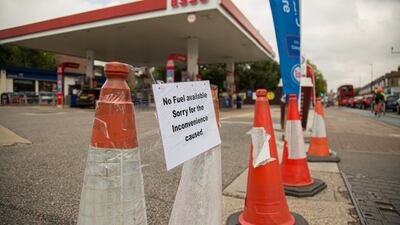
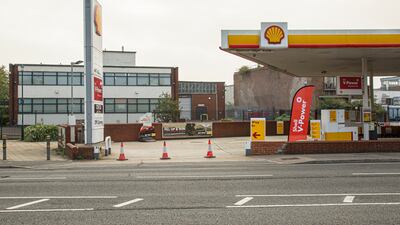
UK's fuel crisis - in pictures

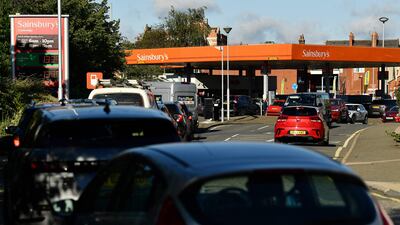
  • A petrol station at Colliers Woods, in London. Fuel delivery problems in the UK have led to panic buying and shortages at the pumps. Rob Greig for The National
    A petrol station at Colliers Woods, in London. Fuel delivery problems in the UK have led to panic buying and shortages at the pumps. Rob Greig for The National
  • The UK is suffering supply chain problems with some empty shelves in supermarkets, exacerbated by a shortage of HGV drivers, sparking fears that a petrol shortage is around the corner. Rob Greig for The National
    The UK is suffering supply chain problems with some empty shelves in supermarkets, exacerbated by a shortage of HGV drivers, sparking fears that a petrol shortage is around the corner. Rob Greig for The National
  • Some people spent have hours queuing for petrol. Rob Greig for The National
    Some people spent have hours queuing for petrol. Rob Greig for The National
  • UK Transport Secretary Grant Shapps said there was enough petrol if drivers filled up as normal. Rob Greig for The National
    UK Transport Secretary Grant Shapps said there was enough petrol if drivers filled up as normal. Rob Greig for The National
  • Plans to offer 5,000 three-month visas for lorry drivers were “insufficient” to address supply issues in the lead up to Christmas, retail and haulage industry leaders said. Rob Greig for The National
    Plans to offer 5,000 three-month visas for lorry drivers were “insufficient” to address supply issues in the lead up to Christmas, retail and haulage industry leaders said. Rob Greig for The National
  • Mr Shapps has accused haulage industry leaders of “manufacturing the crisis” so that they can employ cheaper drivers from Europe. Rob Greig for The National
    Mr Shapps has accused haulage industry leaders of “manufacturing the crisis” so that they can employ cheaper drivers from Europe. Rob Greig for The National
  • The coronavirus pandemic has exacerbated a global shortage of lorry drivers. Rob Greig for The National
    The coronavirus pandemic has exacerbated a global shortage of lorry drivers. Rob Greig for The National
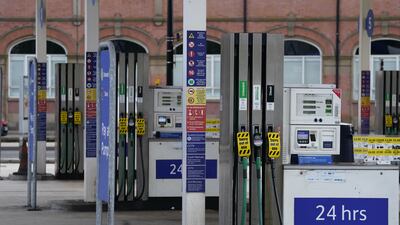
  • A petrol station in Sheffield, England. UK motorists are being advised to keep a quarter of a tank of fuel in their vehicles after a shortage of lorry drivers disrupted deliveries. Photo: PA
    A petrol station in Sheffield, England. UK motorists are being advised to keep a quarter of a tank of fuel in their vehicles after a shortage of lorry drivers disrupted deliveries. Photo: PA
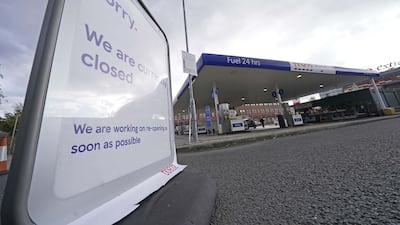
  • A petrol station in Sheffield, England is closed after running out of fuel. Photo: PA
    A petrol station in Sheffield, England is closed after running out of fuel. Photo: PA
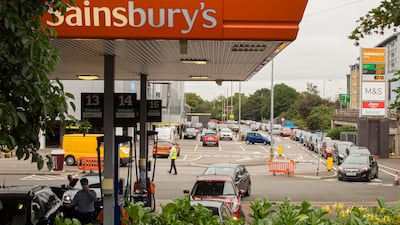
  • People queue for petrol and diesel at a supermarket in the UK. Photo: Getty
    People queue for petrol and diesel at a supermarket in the UK. Photo: Getty
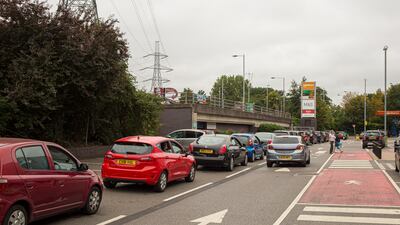
  • Motorists queue for fuel at a supermarket filling station in Manchester, England. Photo: Reuters
    Motorists queue for fuel at a supermarket filling station in Manchester, England. Photo: Reuters
  • Motorists queue for petrol at a supermarket service station in Tonbridge, south-east England. Photo: AFP
    Motorists queue for petrol at a supermarket service station in Tonbridge, south-east England. Photo: AFP
  • A tanker delivers fuel to a petrol station in Liverpool, England. Photo: PA
    A tanker delivers fuel to a petrol station in Liverpool, England. Photo: PA

Vere is not the conciliatory sort. One person who knows her well said that displaying empathy was not always her strong point, that she will relish confrontation - especially if it sends her higher still, so is unlikely to back down.

That is certainly the experience with Hammersmith, where those who are close to local efforts to secure the complete reopening of the bridge, to vehicles and pedestrians, accuse the Vere Task Force of having achieved little. They report seeing no sense of urgency, no banging of heads together, that you would normally associate with such a body. The government’s tactic all along, they maintain, seems to be to play a waiting game, to increase pressure on Hammersmith council.

Vere has defended the government’s position robustly, ensuring the buck is passed elsewhere, as she is doing again with the lorry drivers.

The remarkable rise of Charlotte Vere has yet to show any sign of abating.

Gothia Cup 2025

4,872 matches 

1,942 teams

116 pitches

76 nations

26 UAE teams

15 Lebanese teams

2 Kuwaiti teams

Company%C2%A0profile
%3Cp%3E%3Cstrong%3ECompany%20name%3A%20%3C%2Fstrong%3Eamana%3Cbr%3E%3Cstrong%3EStarted%3A%20%3C%2Fstrong%3E2010%3Cbr%3E%3Cstrong%3EFounders%3A%3C%2Fstrong%3E%20Karim%20Farra%20and%20Ziad%20Aboujeb%3Cbr%3E%3Cstrong%3EBased%3A%20%3C%2Fstrong%3EUAE%3Cbr%3E%3Cstrong%3ERegulator%3A%20%3C%2Fstrong%3EDFSA%3Cbr%3E%3Cstrong%3ESector%3A%20%3C%2Fstrong%3EFinancial%20services%3Cbr%3E%3Cstrong%3ECurrent%20number%20of%20staff%3A%20%3C%2Fstrong%3E85%3Cbr%3E%3Cstrong%3EInvestment%20stage%3A%20%3C%2Fstrong%3ESelf-funded%3Cbr%3E%3C%2Fp%3E%0A
Living in...

This article is part of a guide on where to live in the UAE. Our reporters will profile some of the country’s most desirable districts, provide an estimate of rental prices and introduce you to some of the residents who call each area home.

The specs: 2018 Audi R8 V10 RWS

Price: base / as tested: From Dh632,225

Engine: 5.2-litre V10

Gearbox: Seven-speed automatic

Power: 540hp @ 8,250rpm

Torque: 540Nm @ 6,500rpm

Fuel economy, combined: 12.4L / 100km

The specs
Engine: 2.7-litre 4-cylinder Turbomax
Power: 310hp
Torque: 583Nm
Transmission: 8-speed automatic
Price: From Dh192,500
On sale: Now
Leaderboard

63 - Mike Lorenzo-Vera (FRA)

64 - Rory McIlroy (NIR)

66 - Jon Rahm (ESP)

67 - Tom Lewis (ENG), Tommy Fleetwood (ENG)

68 - Rafael Cabrera-Bello (ESP), Marcus Kinhult (SWE)

69 - Justin Rose (ENG), Thomas Detry (BEL), Francesco Molinari (ITA), Danny Willett (ENG), Li Haotong (CHN), Matthias Schwab (AUT)

Mercer, the investment consulting arm of US services company Marsh & McLennan, expects its wealth division to at least double its assets under management (AUM) in the Middle East as wealth in the region continues to grow despite economic headwinds, a company official said.

Mercer Wealth, which globally has $160 billion in AUM, plans to boost its AUM in the region to $2-$3bn in the next 2-3 years from the present $1bn, said Yasir AbuShaban, a Dubai-based principal with Mercer Wealth.

Within the next two to three years, we are looking at reaching $2 to $3 billion as a conservative estimate and we do see an opportunity to do so,” said Mr AbuShaban.

Mercer does not directly make investments, but allocates clients’ money they have discretion to, to professional asset managers. They also provide advice to clients.

“We have buying power. We can negotiate on their (client’s) behalf with asset managers to provide them lower fees than they otherwise would have to get on their own,” he added.

Mercer Wealth’s clients include sovereign wealth funds, family offices, and insurance companies among others.

From its office in Dubai, Mercer also looks after Africa, India and Turkey, where they also see opportunity for growth.

Wealth creation in Middle East and Africa (MEA) grew 8.5 per cent to $8.1 trillion last year from $7.5tn in 2015, higher than last year’s global average of 6 per cent and the second-highest growth in a region after Asia-Pacific which grew 9.9 per cent, according to consultancy Boston Consulting Group (BCG). In the region, where wealth grew just 1.9 per cent in 2015 compared with 2014, a pickup in oil prices has helped in wealth generation.

BCG is forecasting MEA wealth will rise to $12tn by 2021, growing at an annual average of 8 per cent.

Drivers of wealth generation in the region will be split evenly between new wealth creation and growth of performance of existing assets, according to BCG.

Another general trend in the region is clients’ looking for a comprehensive approach to investing, according to Mr AbuShaban.

“Institutional investors or some of the families are seeing a slowdown in the available capital they have to invest and in that sense they are looking at optimizing the way they manage their portfolios and making sure they are not investing haphazardly and different parts of their investment are working together,” said Mr AbuShaban.

Some clients also have a higher appetite for risk, given the low interest-rate environment that does not provide enough yield for some institutional investors. These clients are keen to invest in illiquid assets, such as private equity and infrastructure.

“What we have seen is a desire for higher returns in what has been a low-return environment specifically in various fixed income or bonds,” he said.

“In this environment, we have seen a de facto increase in the risk that clients are taking in things like illiquid investments, private equity investments, infrastructure and private debt, those kind of investments were higher illiquidity results in incrementally higher returns.”

The Abu Dhabi Investment Authority, one of the largest sovereign wealth funds, said in its 2016 report that has gradually increased its exposure in direct private equity and private credit transactions, mainly in Asian markets and especially in China and India. The authority’s private equity department focused on structured equities owing to “their defensive characteristics.”

Updated: October 06, 2021, 2:02 PM