How Polaroid’s deep faith in research helped lead to its downfall
-

-

Gary DiCamillo, left, the chief executive of Polaroid from 1995 through 2002, guided the company through its first restructuring. He took over from I MacAllister Booth, right. CJ Gunther / AP Photo -
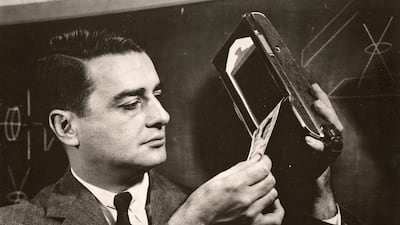
Polaroid’s Edwin Land demonstrates the one-step development process in 1947. Courtesy Baker Library, Harvard Business School -

Peter Buse. Courtesy The University of Chicago Press -

The Camera Does the Rest – How Polaroid Changed Photography, by Peter Buse. Courtesy The University of Chicago Press -
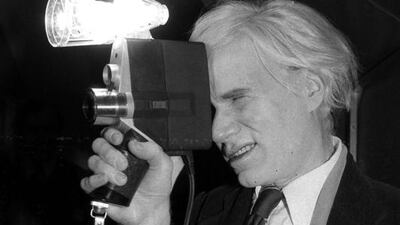
The filmmaker Andy Warhol poses with one of Polaroid’s film cameras, the Polavision camera, which featured instant replay on television screens, in 1978. Dave Pickoff / AP Photo -

Polaroid’s broad, and ultimately misguided, approach to imaging is shown in a 1985 company flow chart. Everything converges on a single grey box containing the words “Instant Hard Copy”. Courtesy of Baker Library, Harvard Business School


Most popular today

