


Egypt’s textile industry is one of the country’s biggest employers, providing a quarter of all industrial jobs. But one of Egypt’s vital industries is at risk because of rising costs, causing more than 600 textile factories to shutter operations.
-
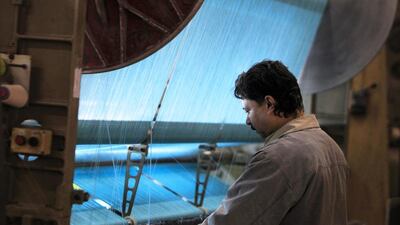
-
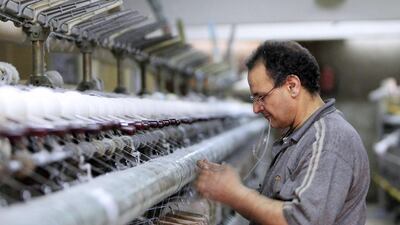
There are about 7,200 textile-related companies operating in Egypt, according to the General Authority for Investment. Mohamed Abd El Ghany / Reuters -
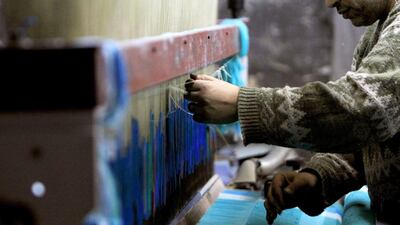
Egypt’s textile exports have slid more than 8 per cent since the ouster of Hosni Mubarak, to $2.2 billion in 2012 from from $2.4bn in 2011. Mohamed Abd El Ghany / Reuters -
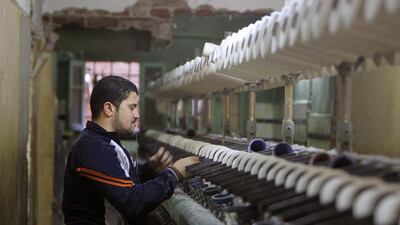
Tens of thousands of textile workers went on strike in February to demand for higher wages and better working conditions in Egypt. Mohamed Abd El Ghany / Reuters -
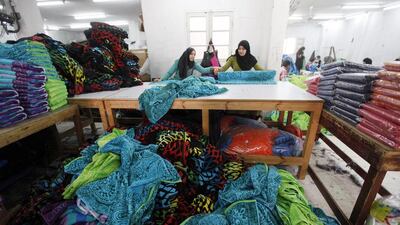
Striking workers suspended their labour action for 60 days after the Egyptian government promised to meet their demands. Mohamed Abd El Ghany / Reuters -
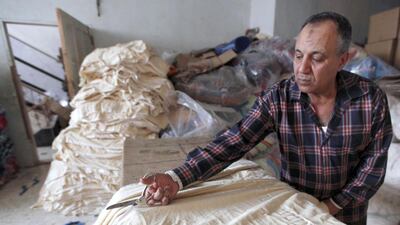
Egypt’s new prime minister Ibrahim Mahlab urged an end to labour strikes and protests, which are straining the economy. Above, a worker at a textile mill in Mahalla El Kubra, north of Cairo. Mohamed Abd El Ghany / Reuters -
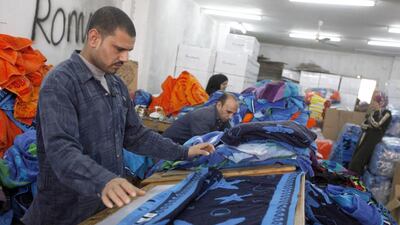
Manufacturers fear competition from low-cost exporters such as Bangladesh will destroy their industries if they have to increase workers’ salaries. Mohamed Abd El Ghany / Reuters -
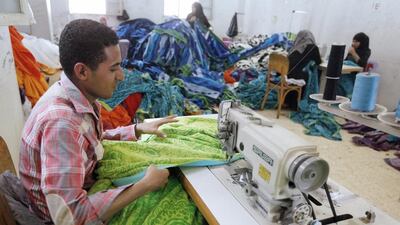
There are about 7,200 textile-related companies, according to Egyptian government data. Mohamed Abd El Ghany / Reuters -

Although some of the Egypt’s textile industry’s skilled workers earn more than the minimum wage already, the bulk of the labour force earns less. Mohamed Abd El Ghany / Reuters -
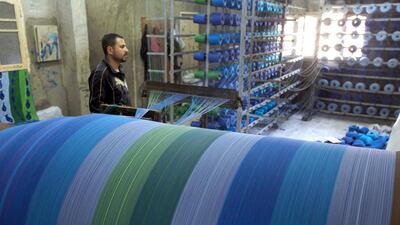
Workers who joined the February strike say the 1,200 Egyptian pounds minimum wage introduced in January would not suffice. Mohamed Abd El Ghany / Reuters -
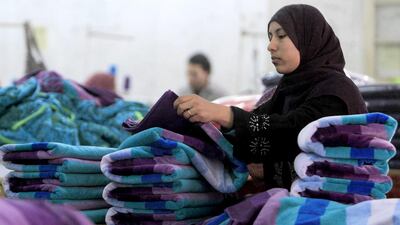
Manufacturers fear competition from low-cost exporters such as Bangladesh will destroy their industries if they have to increase workers’ salaries. Mohamed Abd El Ghany / Reuters -
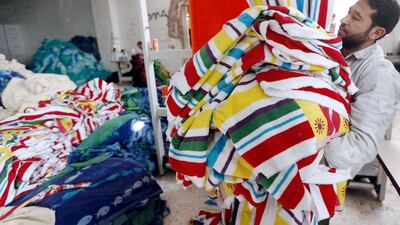
Egypt’s new prime minister Ibrahim Mahlab urged an end to labour strikes and protests, which are straining the economy. Mohamed Abd El Ghany / Reuters
In pictures: Weaving the future for Egypt
Most popular today

