
When it comes to weather, it's hard to sound scarier than "bomb cyclone".
It's a version of a real weather term that applies to a massive winter storm that pulled together Wednesday off the US Southeast coast. But as fearsome as the storm is with high winds and some snow, it may not be quite as explosive as the term sounds.
Meteorologists have used the term "bomb" for storms for decades, based on a strict definition, said University of Oklahoma meteorology professor Jason Furtado.
After it showed it showed up in a Washington Post story on Tuesday, the weather geek term took on a life of its own on social media. The same thing happened four years ago with "polar vortex", another long-used weather term that was little known to the public until then.
-

Emme Hillman, visiting from Florida, take a photo of a frozen water fountain in Atlanta, Georgia. David Goldman / AP Photo -
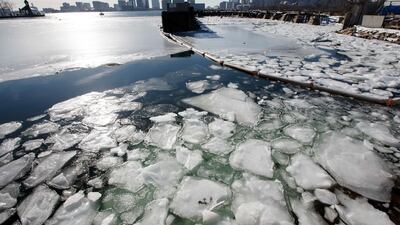
Sea ice floats in Boston Harbour. Michael Dwyer / AP Photo -
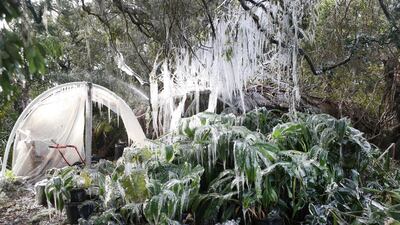
Icicles dangle from a tree at a plant nursery in Panama City, Florida. Patti Blake / News Herald via AP -
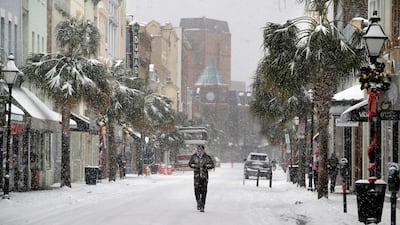
A person walks in the snow on King Street in Charleston, South Carolina. Matthew Fortner / The Post And Courier via AP -
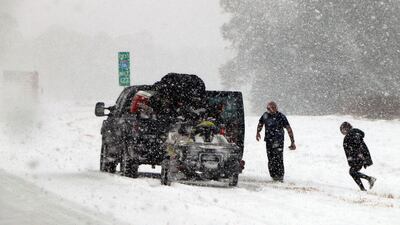
Motorists in America's southern states are not used to snowy driving conditions. Robert Ray / AP Photo -

A check-in area of Terminal A stands empty at Logan International Airport in Boston, Massachusetts. The worst storm of the winter season has knocked out power to thousands and cancelled almost 3,000 flights. Scott Eisen / Bloomberg -
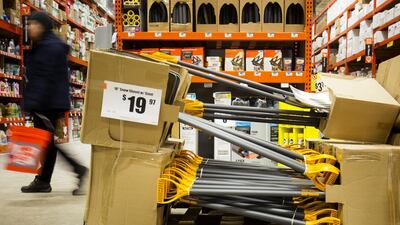
Snow shovels on sale at a Home Depot Inc. store in Boston. Adam Glanzman / Bloomberg -
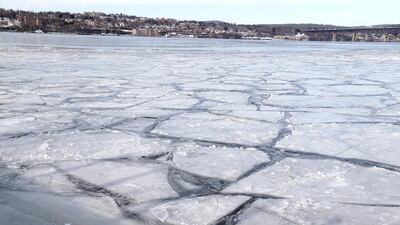
Ice covers large portions of the Hudson River near Beacon, New York. Seth Wenig / AP Photo -
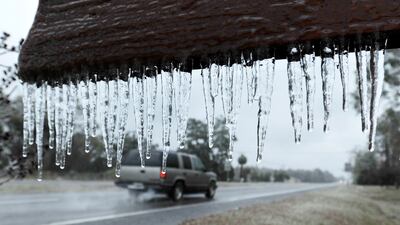
Icicles hang from the "Welcome to Hilliard sign" in Hilliard, Florida. Bob Self / The Florida Times-Union via AP -
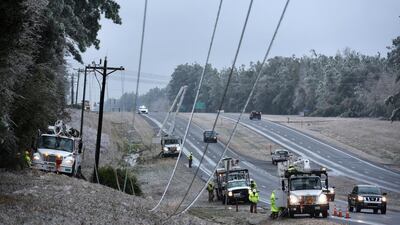
Crews work to repair downed power lines near Hilliard. Bob Self / The Florida Times-Union via AP


"Bombogenesis is the technical term. Bomb cyclone is a shortened version of it, better for social media," said US meteorologist Ryan Maue, who helped popularise polar vortex in 2014.
"The actual impacts aren't going to be a bomb at all," Maue said. "There's nothing exploding or detonating."
____________
Read more:
US braces for 'winter bomb' cyclone
America's big freeze - in pictures
The state of the climate in 2018
Three dead as Storm Eleanor lashes UK and Europe
____________
Storm intensity is measured by central pressure - the lower the pressure, the stronger. A storm is considered a "bomb" when the pressure drops rapidly - at least 24 millibars in 24 hours.
This storm looks like it will intensify at twice that rate, said Bob Oravec, lead forecaster at the National Weather Service's Weather Prediction Center.
So far, the storm has dumped freak snow on the Southeast. It's aiming for the Northeast, where the snow forecast for Thursday isn't that big a deal, Furtado and others said. The worst of this storm will stay out to sea. What is going to be bigger is the high winds - gusts exceeding 60mph - and the bitter cold that follows, they said.
-
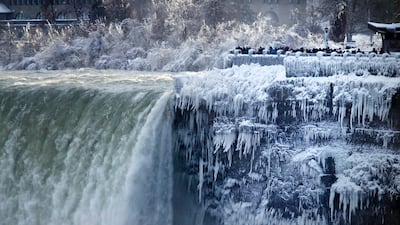
The banks around the Horseshoe Falls at Niagara Falls in Canada Ont are frozen. Aaron Lynett / The Canadian Press via AP -
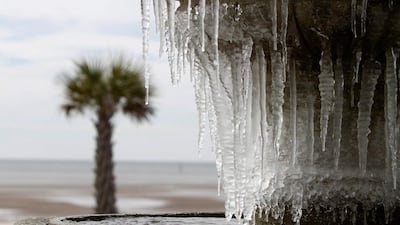
Icicles hang from the fountain in Biloxi, Mississippi. John Fitzhugh / The Sun Herald via AP -
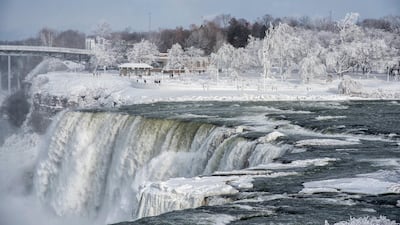
A frozen Niagara Falls seen from Stedman's Bluff on Goat Island of the American Falls. James Neiss / The Niagara Gazette via AP -
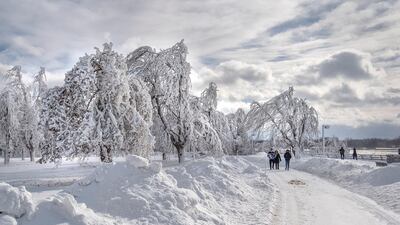
A winter wonderland around Niagara Falls. James Neiss / The Niagara Gazette via AP -
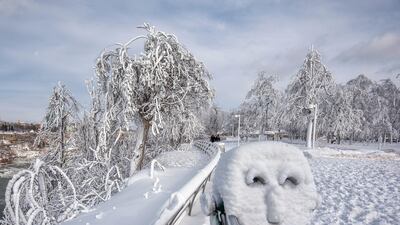
A coin operated binocular is covered in snow. James Neiss / The Niagara Gazette via AP -
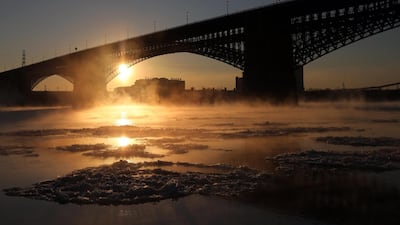
Mist rises above the waters of the Mississippi River underneath the Eads Bridge in St. Louis. Laurie Skrivan / St Louis Post-Dispatch via AP -
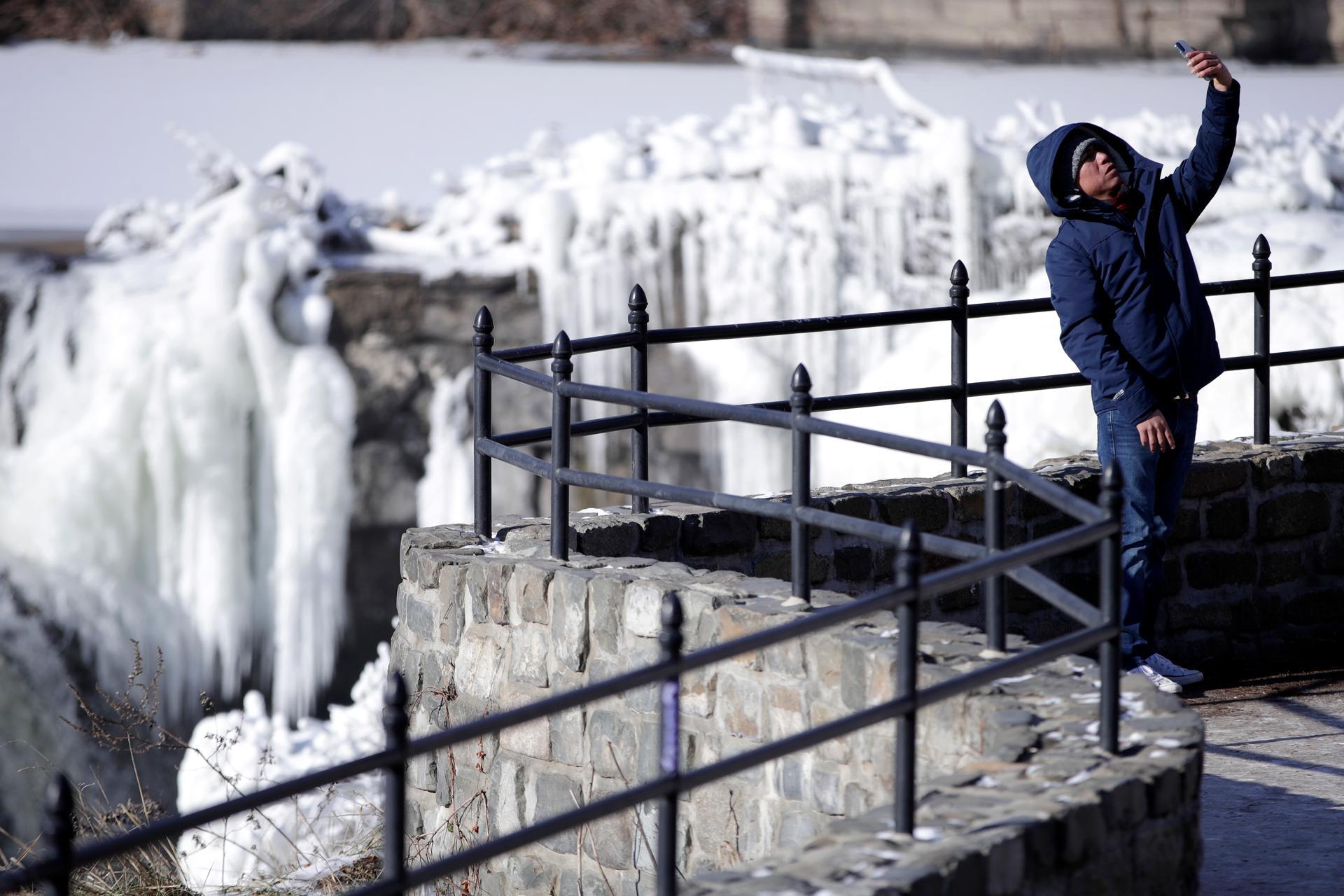
A visitor takes a selfie in front of the Paterson Great Falls National Historical Park in New Jersey. Julio Cortez / AP Photo -
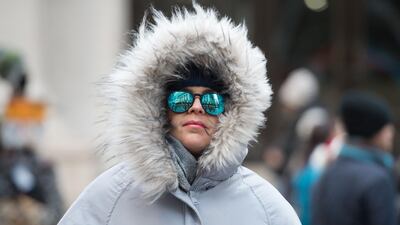
A cold day in New York City. Bryan R Smith / AFP Photo -
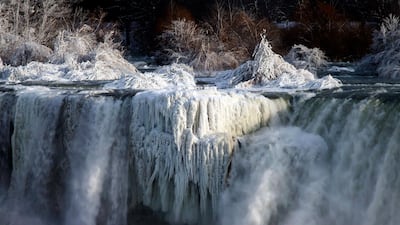
Water flows over the American Falls as viewed from the Canadian side in Niagara Falls, Ont. Aaron Lynett / The Canadian Press via AP -
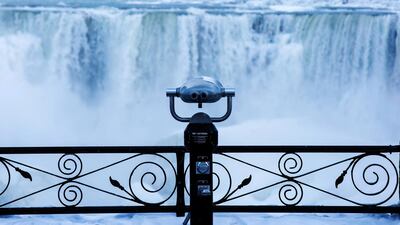
A pair of binoculars looks over ice forming at the base of the American Falls. Aaron Lynett / The Canadian Press via AP -
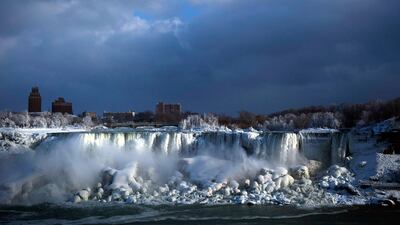
Water flows over the American Falls. Aaron Lynett / The Canadian Press via AP


Bomb cyclones draw air from polar regions after they leave. In this case, it means extra cold Arctic air because of where the polar vortex is, Furtado said.
Worldwide, about 40 to 50 "bomb cyclones" brew each year, but most are over open ocean and nobody but weather geeks notice, Maue said.
"We use the term bomb," Furtado said. "We know what it means, but I do think it gets a little hyped up."

