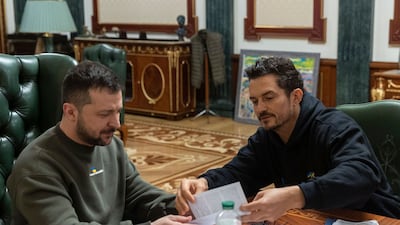
Actor and Unicef Goodwill Ambassador Orlando Bloom has praised the courage and resilience of the Ukrainian people after meeting President Volodymyr Zelenskyy in Kyiv.
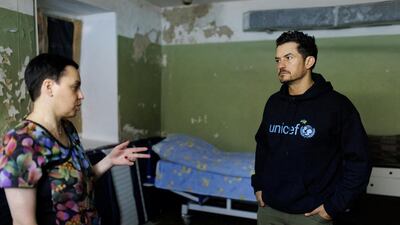
The Pirates of the Caribbean star travelled over the weekend to the Ukrainian capital to experience first-hand how children are being affected by the war with Russia, now in its second year.
“To see the children, to see in their eyes, it’s palpable the anxiety and yet, the strength of the Ukrainian people is something that is really awe-inspiring in truth and, of course, your messaging is the reason for that,” Bloom told Mr Zelenskyy.
"So encouraging in so many ways to see just the remarkably stoic nature of the people of Ukraine.
"And of course, your messaging that I think is reflected in their courage, and in their determination and in their perseverance and resilience.”
Mr Zelenskyy in response said: "We have a good country, we hold each other.
“Your coming sends a big message."
This month, the International Criminal Court issued an arrest warrant for Russian President Vladimir Putin and Russian official Maria Lvova-Belova for an alleged scheme to deport Ukrainian children to Russia.
Bloom, who played the elf Legolas in Lord of the Rings, told Mr Zelenskyy that the missing Ukrainian children are a priority for Unicef and that he thinks they are taking it “incredibly seriously”.
Mr Zelenskyy said his priority was to first ensure there is an "infrastructure" for the children when they return, which includes an "educational network”.
He thanked the ICC for their actions in his weekly address to the Ukrainian people.
“In the criminal proceedings being investigated by our law enforcement officers, more than 16,000 forced deportations of Ukrainian children by the occupier have already been recorded,” Mr Zelenskyy said.
"But the real, full number of deportees may be much higher."
Russia described the ICC’s actions as “outrageous and unacceptable”.
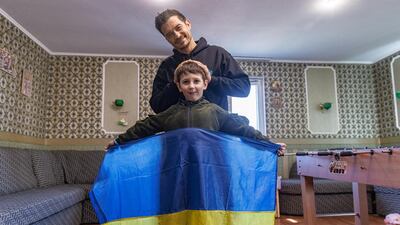
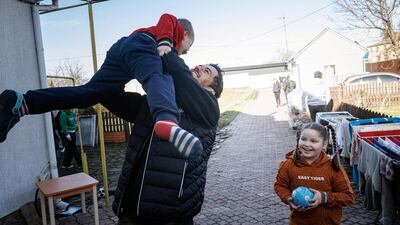
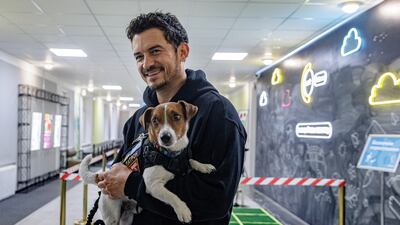
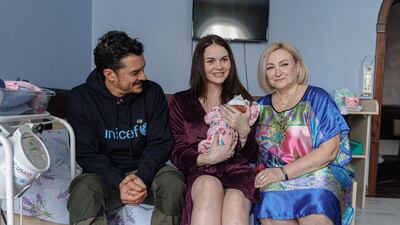
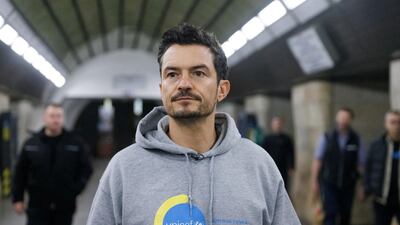
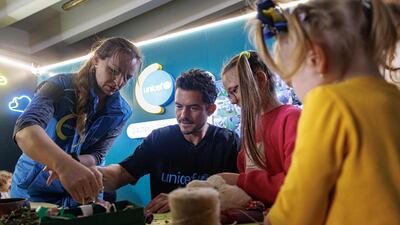
Bloom also visited two bomb shelters and shared photos from his visit to a family home, as well as of a visit to a Unicef-supported Spilno centre for children.
"Children in Ukraine need their childhoods back," Bloom wrote on Instagram.
At the end of the meeting, Bloom described a video of his mother singing the Ukrainian national anthem and she said if he met Mr Zelenskyy to tell him to win. “Go win” he said, “Slava Ukraine”.
Last year, Bloom wrote an essay for People magazine describing a trip he took to Moldova where he described at least 1,000 refugees a day crossing over from Ukraine’s southern border.
Agencies contributed to this report
Our legal consultant
Name: Hassan Mohsen Elhais
Position: legal consultant with Al Rowaad Advocates and Legal Consultants.
Mercer, the investment consulting arm of US services company Marsh & McLennan, expects its wealth division to at least double its assets under management (AUM) in the Middle East as wealth in the region continues to grow despite economic headwinds, a company official said.
Mercer Wealth, which globally has $160 billion in AUM, plans to boost its AUM in the region to $2-$3bn in the next 2-3 years from the present $1bn, said Yasir AbuShaban, a Dubai-based principal with Mercer Wealth.
“Within the next two to three years, we are looking at reaching $2 to $3 billion as a conservative estimate and we do see an opportunity to do so,” said Mr AbuShaban.
Mercer does not directly make investments, but allocates clients’ money they have discretion to, to professional asset managers. They also provide advice to clients.
“We have buying power. We can negotiate on their (client’s) behalf with asset managers to provide them lower fees than they otherwise would have to get on their own,” he added.
Mercer Wealth’s clients include sovereign wealth funds, family offices, and insurance companies among others.
From its office in Dubai, Mercer also looks after Africa, India and Turkey, where they also see opportunity for growth.
Wealth creation in Middle East and Africa (MEA) grew 8.5 per cent to $8.1 trillion last year from $7.5tn in 2015, higher than last year’s global average of 6 per cent and the second-highest growth in a region after Asia-Pacific which grew 9.9 per cent, according to consultancy Boston Consulting Group (BCG). In the region, where wealth grew just 1.9 per cent in 2015 compared with 2014, a pickup in oil prices has helped in wealth generation.
BCG is forecasting MEA wealth will rise to $12tn by 2021, growing at an annual average of 8 per cent.
Drivers of wealth generation in the region will be split evenly between new wealth creation and growth of performance of existing assets, according to BCG.
Another general trend in the region is clients’ looking for a comprehensive approach to investing, according to Mr AbuShaban.
“Institutional investors or some of the families are seeing a slowdown in the available capital they have to invest and in that sense they are looking at optimizing the way they manage their portfolios and making sure they are not investing haphazardly and different parts of their investment are working together,” said Mr AbuShaban.
Some clients also have a higher appetite for risk, given the low interest-rate environment that does not provide enough yield for some institutional investors. These clients are keen to invest in illiquid assets, such as private equity and infrastructure.
“What we have seen is a desire for higher returns in what has been a low-return environment specifically in various fixed income or bonds,” he said.
“In this environment, we have seen a de facto increase in the risk that clients are taking in things like illiquid investments, private equity investments, infrastructure and private debt, those kind of investments were higher illiquidity results in incrementally higher returns.”
The Abu Dhabi Investment Authority, one of the largest sovereign wealth funds, said in its 2016 report that has gradually increased its exposure in direct private equity and private credit transactions, mainly in Asian markets and especially in China and India. The authority’s private equity department focused on structured equities owing to “their defensive characteristics.”
RESULTS
6.30pm: Maiden (TB) Dh 82,500 (Dirt) 1.600m
Winner: Miller’s House, Richard Mullen (jockey), Satish Seemar (trainer).
7.05pm: Maiden (TB) Dh 82,500 (D) 2,000m
Winner: Kanood, Adrie de Vries, Fawzi Nass.
7.50pm: Handicap (TB) Dh 82,500 (D) 1,600m
Winner: Gervais, Sandro Paiva, Ali Rashid Al Raihe.
8.15pm: The Garhoud Sprint Listed (TB) Dh 132,500 (D) 1,200m
Winner: Important Mission, Royston Ffrench, Salem bin Ghadayer.
8.50pm: The Entisar Listed (TB) Dh 132,500 (D) 2,000m
Winner: Firnas, Xavier Ziani, Salem bin Ghadayer.
9.25pm: Conditions (TB) Dh 120,000 (D) 1,400m
Winner: Zhou Storm, Connor Beasley, Ali Rashid Al Raihe.
BABYLON
%3Cp%3EDirector%3A%20Damien%20Chazelle%3C%2Fp%3E%0A%3Cp%3EStars%3A%20Brad%20Pitt%2C%20Margot%20Robbie%2C%20Jean%20Smart%3C%2Fp%3E%0A%3Cp%3ERating%3A%204%2F5%3C%2Fp%3E%0A
Education reform in Abu Dhabi
The emirate’s public education system has been in a constant state of change since the New School Model was launched in 2010 by the Abu Dhabi Education Council. The NSM, which is also known as the Abu Dhabi School Model, transformed the public school curriculum by introducing bilingual education starting with students from grades one to five. Under this new curriculum, the children spend half the day learning in Arabic and half in English – being taught maths, science and English language by mostly Western educated, native English speakers. The NSM curriculum also moved away from rote learning and required teachers to develop a “child-centered learning environment” that promoted critical thinking and independent learning. The NSM expanded by one grade each year and by the 2017-2018 academic year, it will have reached the high school level. Major reforms to the high school curriculum were announced in 2015. The two-stream curriculum, which allowed pupils to elect to follow a science or humanities course of study, was eliminated. In its place was a singular curriculum in which stem -- science, technology, engineering and maths – accounted for at least 50 per cent of all subjects. In 2016, Adec announced additional changes, including the introduction of two levels of maths and physics – advanced or general – to pupils in Grade 10, and a new core subject, career guidance, for grades 10 to 12; and a digital technology and innovation course for Grade 9. Next year, the focus will be on launching a new moral education subject to teach pupils from grades 1 to 9 character and morality, civic studies, cultural studies and the individual and the community.