



The US has now collected 510 reports of unidentified flying objects, many of which are flying in sensitive military airspace, the government said in a declassified report.
While there is no evidence of extraterrestrials, they still pose a threat, said the report, which was released on Thursday.
Last year, the Pentagon opened an office called the All-domain Anomaly Resolution Office, solely focused on receiving and analysing all reports of unidentified phenomena, many of which have been reported by military pilots.
It works with the intelligence agencies to further assess those incidents.
The events “continue to occur in restricted or sensitive airspace, highlighting possible concerns for safety of flight or adversary collection activity”, the Office of the Director of National Intelligence (ODNI) said in its 2022 report.
The classified version of the report addresses how many of those objects were found near locations where nuclear power plants operate or nuclear weapons are stored.
The 510 objects include 144 objects previously reported and 366 new reports. In both the old and new cases, after analysis, the majority have been determined to exhibit “unremarkable characteristics,” and could be characterised as unmanned aircraft systems, or balloon-like objects, the report said.
But the office is also tasked with reporting any movements or reports of objects that may indicate that a potential adversary has a new technology or capability.
The Pentagon's anomaly office is also to include any unidentified objects moving under water, in the air or in space, or something that moves between those domains, which could pose a new threat.
The ODNI said in its report that efforts to destigmatise reporting and emphasise that the objects may pose a threat probably contributed to the additional reports.
Five strange space mysteries from ‘UFOs’ to a ‘door on Mars’ — in pictures
-

Last year, an unidentified object flew dangerously close to a SpaceX Crew capsule. Some experts said it must have been ice from liquid oxygen in the rocket, but SpaceX or Nasa never gave a confirmation. Photo: SpaceX -

Earlier this week, China said its enormous Sky Eye telescope may have received signals from “alien civilisations”, but then later deleted the report. Photo: China news service Qu Honglun -

Last month, social media was abuzz with news that a Nasa rover had found an “alien door” on Mars. But, experts said the formation was a narrow, naturally-occurring crevice in the rocky, barren terrain. Photo: Nasa / Curiosity rover -
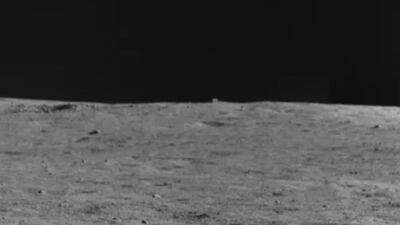
Earlier this year, images of a “mystery hut” on the Moon’s far side went viral. Photo: CNSA -
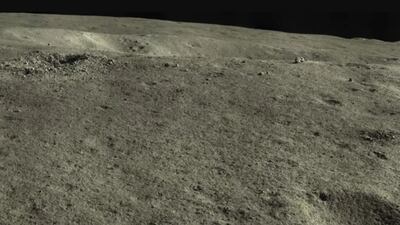
They were taken by China’s Yutu 2, a robotic lunar rover that landed on the Moon in early 2019. The structure certainly had a strange shape and baffled many social media users. Photo: CNSA -
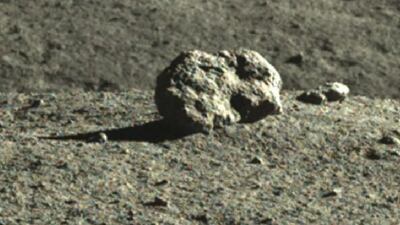
But, after driving for two weeks, the rover got close enough to the mystery object to take clearer images of it. Turns out, it was just a rabbit-shaped rock. Photo: CNSA



