



A communications line created between the militaries of the US and Russia at the start of Moscow's war against Ukraine has been used only once so far, an American official told Reuters.
The official, who spoke on condition of anonymity, said that the US initiated a call through the “deconfliction” line to communicate its concerns about Russian military operations near critical infrastructure in Ukraine.
Few details are known about the specific incident that led to the call on the line, which connects the US military's European Command and Russia's National Defence Management Centre.
The official declined to elaborate but said it was not used when an errant missile landed in Nato-member Poland on November 15, killing two people. The blast was probably caused by a Ukrainian air defence missile but Nato has blamed Russia for the incident due to its invasion of Ukraine in late February.
Although the US official declined to specify which Russia's activity had raised the US alarm, there have been publicly acknowledged incidents involving Russian fighting around critical Ukrainian infrastructure.
These include Russian operations around Ukraine's Zaporizhzhia nuclear power plant, Europe's biggest, which is under Moscow's control.
Ukraine has also voiced concerns Russia might blow up the Nova Kakhovka dam, which holds back an enormous reservoir in southern Ukraine.
Bursting the dam would send a wall of water flooding settlements below, including towards the strategic regional capital Kherson, which Ukrainian forces recaptured on November 11.
US-Russia communications have been in the spotlight since the start of Russia's invasion of its neighbour, given the grave risk that a miscalculation by either side could cause a direct conflict between the nuclear-armed nations.
-
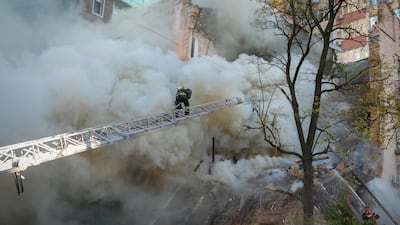
Firefighters in action after a drone fired on buildings in Kyiv, Ukraine. AP -

A drone approaches for an attack in the Ukraine capital. AFP -
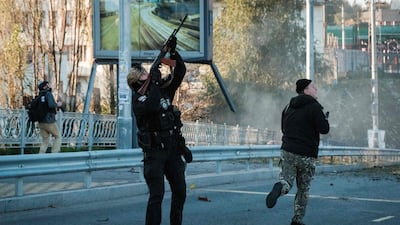
A police officer fires at a drone flying overhead. AFP -
Smoke rises from a building after a drone attack. AFP -
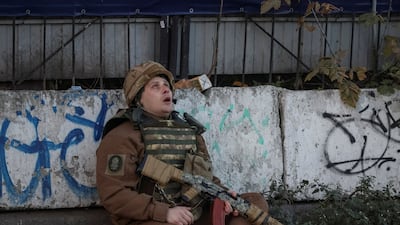
A Ukrainian serviceman takes cover as an air-raid siren sounds. Reuters -

Debris near the site of a drone attack. AFP -
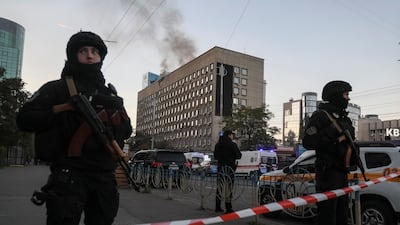
Police stand guard as smoke rises from buildings. Reuters -
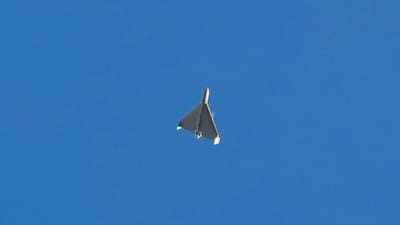
A drone in the sky seconds before it fired on buildings. AP -
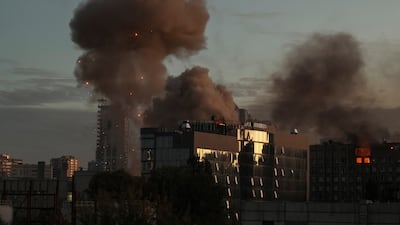
Plumes of smoke rise after a Russian drone strike. Reuters


The deconfliction line is only one of several ways the US and Russian militaries have to communicate.
Other military channels include rare high-level talks between US Defence Secretary Lloyd Austin and Russian Defence Minister Sergey Shoigu.
The top US and Russian generals, Gen Mark Milley and Gen Valery Gerasimov, have also spoken on two occasions since the war started.
White House National Security Adviser Jake Sullivan and CIA Director Bill Burns have also had contact with Russian officials.
-

Smoke rises in the village of Przewodow, near Poland's border with Ukraine, where two people were killed by an explosion apparently caused by a missile. Reuters -
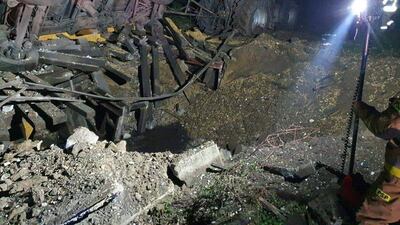
Damage caused by the explosion in Przewodow. Reuters -

Damage caused by the explosion in Przewodow. Reuters -
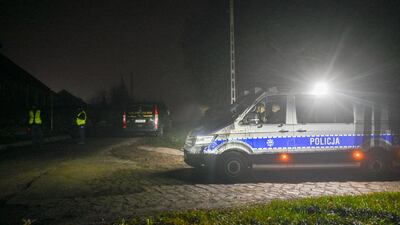
Police vehicles at a checkpoint after a security cordon was set up around the village. Getty -

The police blockade around Przewodow. Reuters -

Polish President Andrzej Duda said Polish defence chiefs had met in Warsaw. EPA -
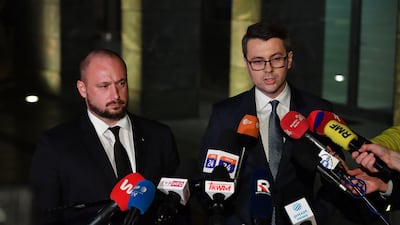
Polish government spokesman Piotr Mueller and security chief Jacek Siewiera at the meeting in Warsaw. EPA -

US President Joe Biden talks on the phone with Polish President Andrzej Duda as White House national security adviser Jake Sullivan, center, and Secretary of State Antony Blinken listen, in Bali, Indonesia. AP -
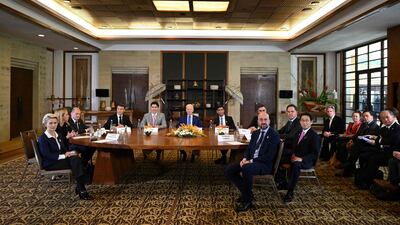
Nato and G7 leaders at the G20 leaders' summit in Bali, Indonesia, hold a meeting to discuss the explosions. AFP


Still, US-Russia relations are at their lowest point since the Cold War and the State Department said on Monday that Moscow had postponed talks in Cairo aimed at resuming nuclear weapons inspections.
The Russian foreign ministry confirmed the talks were postponed. Neither side provided a reason.
Asked for comment on the deconfliction line, the Pentagon said only that it retained several channels to “discuss critical security issues with the Russians during a contingency or emergency for the purposes of preventing miscalculation, military incidents and escalation”.
“We are encouraged by recent senior DoD calls with Russian counterparts and believe continued dialogue is critical,” a Department of Defence representative said.
Neither Russia's embassy in Washington nor its defence ministry in Moscow responded to requests for comment.
The deconfliction line is tested twice daily with calls conducted in Russian, the US official told Reuters. A Russian speaker from the US European Command initiates those calls out of Wiesbaden, Germany, the official said.
Wiesbaden is also the location of the Pentagon's new Security Assistance Group-Ukraine, or Sag-U, which remotely supports Kyiv's defence against Russian troops.
US officials, speaking on condition of anonymity, have previously said that early in the conflict, planners believed the deconfliction line could be useful if there was a need to evacuate Americans from Russian-occupied territory in Ukraine.
When the war began, the US thought Russia might be able to quickly capture Ukrainian territory, trapping American citizens before they had a chance to leave.
Ukraine becomes dark patch in night satellite images — in pictures
-

A satellite image showing the night radiance of Europe from space on November 23 shows Ukraine in almost total darkness. Photo: Nasa -

People walking in the dark city centre of Kyiv which lost electrical power after Russian rocket attacks. AP -

A man using a head torch to make his way around Kyiv. AP -

An unlit street following missile strikes in Kyiv. Getty Images -
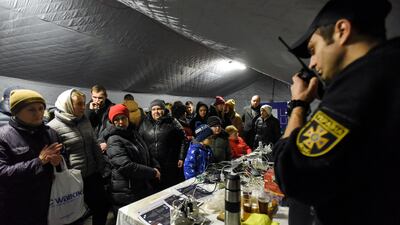
People charge their devices using a power generator in Kyiv. EPA -

Since October, Russia has launched regular strikes on the Ukrainian power grid. AP -

People sit in candlelight in Lviv. Reuters



