


A year after the last US soldier left Afghanistan, Republicans and Democrats are seeking to capitalise on the end of America's longest war to suit party interests before the midterm elections.
Mr Biden's decision to pull US forces from Afghanistan after 20 years of western intervention sparked an indelible series of events that came to define his early presidency.
They included the Taliban takeover of Kabul, the ensuing chaos at the capital's airport, and an ISIS attack that killed 13 US troops and scores of Afghans.
Republicans have used such scenes to depict the Biden administration as reckless, and as a rallying point for campaign fundraising in November's midterms that will serve as a Litmus test for White House popularity.

Marking the anniversary of the US withdrawal on August 31, 2021, House Republicans said Mr Biden's "catastrophic failure in leadership is to blame for the Taliban’s takeover of Afghanistan".
"In a new Republican House majority, we will leave no stone unturned in our effort to provide oversight on this deadly withdrawal and honour the 13 brave service members who lost their lives serving our country," they said.
Republicans increased pressure on the administration when the House foreign affairs committee released a minority report detailing how the government misled the American public as the security situation in Afghanistan deteriorated.
The report said the administration rebuffed offers of help from Pakistan and made “minimal effort” to quickly help thousands of Afghans.
Republicans have invested heavily in social media campaigns to push their message.
Since August 2021, thousands of Facebook "issues, elections or politics" advertisements have highlighted the Afghanistan withdrawal, data from Facebook's parent company Meta showed.
That includes an ad from House minority leader Kevin McCarthy's page on “Biden’s Afghanistan lies”, which encouraged users to “rate” Mr Biden.
The ad's link leads to WinRed, the Republicans’ online fundraising platform.

One of the ads with the most engagement is from the National Republican Congressional Committee demanding that Mr Biden "resign in disgrace" over the withdrawal.
Meta analytics showed the ad's estimated audience size is between 500,000 and one million viewers — most of them in key swing-states Ohio, Florida and Pennsylvania.
Republican candidates are also using the Afghanistan issue in more direct political contacts.
JD Vance, a Trump-backed Senate candidate in Ohio, sent emails to supporters with a poll question: “Do you think Joe Biden handled the situation in Afghanistan horribly?”
Democrats, meanwhile, are pushing their own message, saying Mr Biden did what had to be done.
VoteVets, a Democratic-aligned political action group of US veterans, said ending the war was the right call after former president Donald Trump's 2020 deal with the Taliban.
"Republicans have no credibility on this," Jon Soltz, Iraq war veteran and chairman of VoteVets, told The National.
"It was their president who ceded to the Taliban with a deal that shut out the democratically elected government in Afghanistan. A smarter, more competent administration would never have done that
"We’d be better off if they stopped creating huge messes that Democratic presidents were left to clean up."
In an August 2021 Pew Research poll, 54 per cent of US adults surveyed said the decision to withdraw was the right one, while 42 per cent said it was wrong.
"Voters are still very supportive of us ending the war," Mr Soltz said. "The ones who are out of tune with voters are the ones who said we should have just stayed there and kept fighting the war."
-

A member of the Afghan security personnel looks distraught as he stands guard at the site of a car bomb explosion near the defence minister's home in Kabul, on August 4, 2021. AFP -
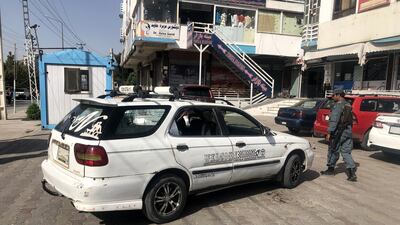
Security officials inspect the scene of an attack on Dawa Khan Menapal, the head of the Afghan government's information centre, in Kabul on August 6, 2021. Taliban militants shot him dead. EPA -

People are stranded at the Pakistani-Afghan border which has been closed by the Taliban, who have taken control of the Afghan side, on August 9, 2021. EPA -
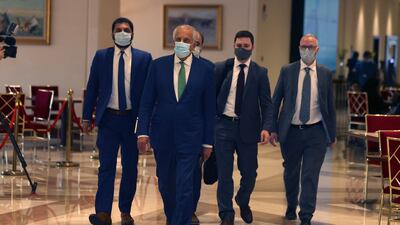
US special envoy for Afghanistan Zalmay Khalilzad (2nd L) arrives at a hotel in Qatar's capital Doha for a meeting on the escalating conflict in Afghanistan, on August 10, 2021. AFP -
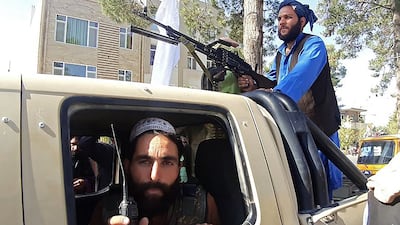
Taliban fighters driving through Herat, Afghanistan's third-biggest city, on August 13, 2021 after under-siege government forces had pulled out the previous day. AFP -
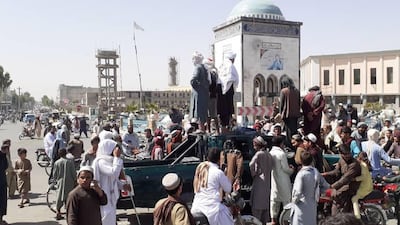
Taliban militants gather in the main square after taking control of Kandahar, Afghanistan, on August 13, 2021. The fall of Kandahar came hours after the Taliban had captured Herat. EPA -

Afghanistan's president Ashraf Ghani and acting defence minister Bismillah Khan Mohammadi visit military corps in Kabul on August 14, 2021. Reuters -
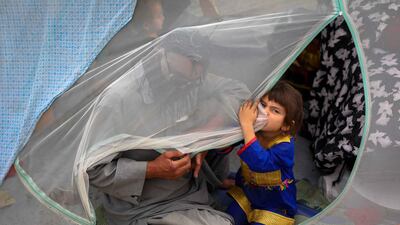
Internally displaced families from northern provinces, who fled from their homes due to the fighting between Taliban and Afghan security forces, take shelter in a public park in Kabul, Afghanistan, on August 14, 2021. EPA -
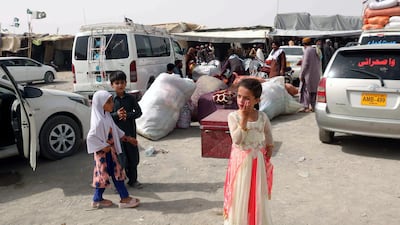
People at the border checkpoint at Chaman, Pakistan on August 15, 2021. Pakistani authorities had reopened the frontier with Afghanistan on August 13 after several days of closure. EPA -
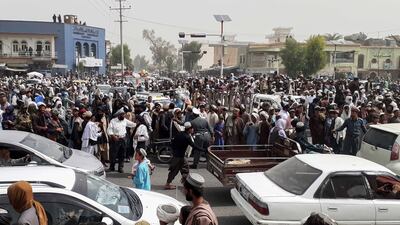
Afghan police on duty on August 15, 2021 after the Taliban had taken over Kandahar. The militants have by this stage reached the outskirts of Kabul, the capital of Afghanistan. EPA -
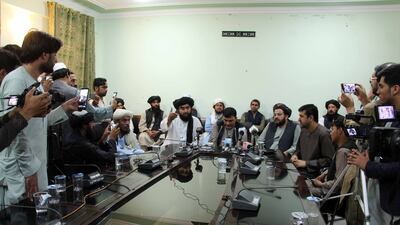
Ahmadullah Muttaqi, the Taliban's director for information and culture, talks to journalists after the government in Kandahar had surrendered to the militants. EPA -
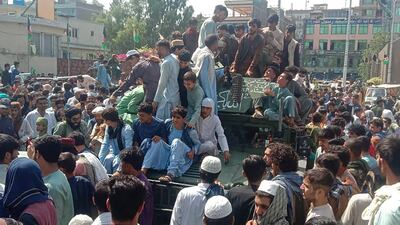
Taliban fighters and local people sit on an Afghan National Army armoured vehicle on a street in Jalalabad province on August 15, 2021. AFP -
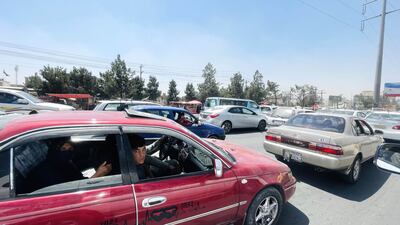
Afghan families flee Kabul on August 15, 2021. The Taliban said they do not intend to enter Kabul 'by force or war, but to negotiate with the other side to enter peacefully". Getty Images -
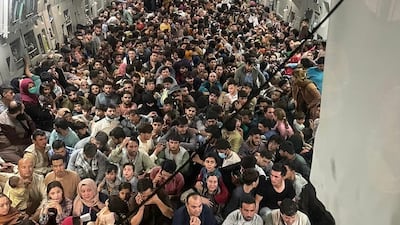
Tens of thousands of people attempt to flee Afghanistan to escape the hardline rule expected under the Taliban, on August 15, 2021. AFP -
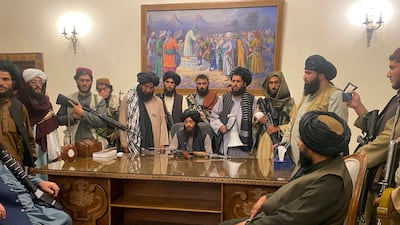
Taliban fighters take control of the Afghan presidential palace in Kabul, after the president Ashraf Ghani had fled the country, on August 15, 2021. AP -
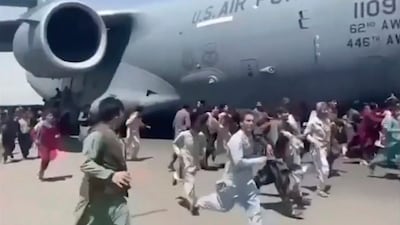
Hundreds of people run alongside a US Air Force transport plane on the runway of the international airport in Kabul on August 16, 2021, desperate to escape the Taliban capture of their country. Some held on to the jet as it took off and fell to their death. AP -
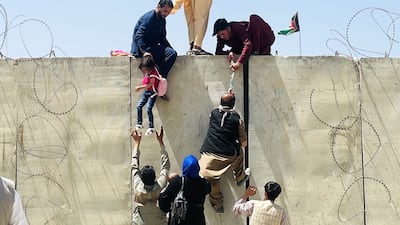
Thousands of Afghans rush to the Hamid Karzai International Airport as they try to flee the Afghan capital of Kabul, on August 16, 2021. Getty Images -
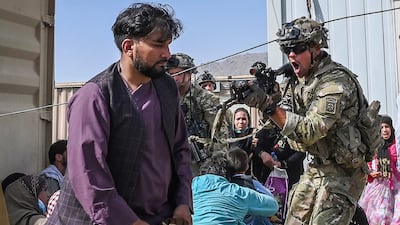
A US soldier points his gun at a man at Kabul airport on August 16, 2021, after a swift end to Afghanistan's 20-year war. Thousands of people mobbed the airport in a bid to flee. AFP -
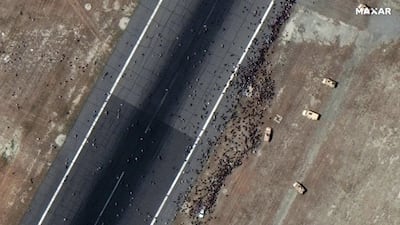
Crowds on the tarmac of Kabul International Airport, Afghanistan, on August 16, 2021. EPA -
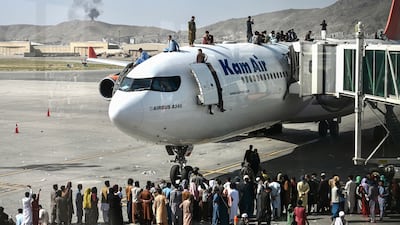
People clamber on top a plane at the Kabul airport on August 16, 2021. AFP -
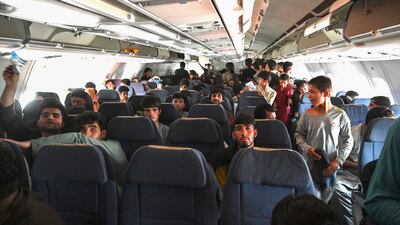
These Afghan passengers made it. They sit inside a plane and wait to leave Kabul. AFP -
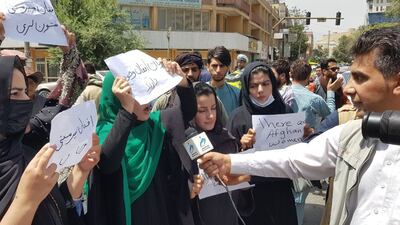
Afghan women, holding placards, gather to demand the protection of women's rights in front of the Presidential Palace in Kabul, on August 17, 2021. Getty Images -
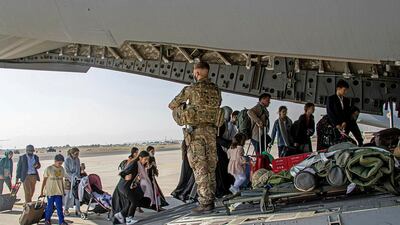
British citizens living in Afghanistan board a military plane to leave Kabul Airport, on August 16, 2021. Reuters -
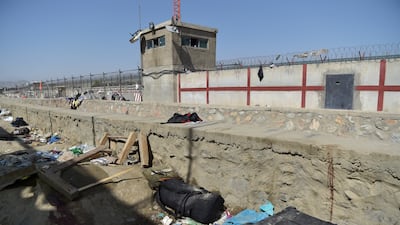
Luggage belonging to Afghan people, who were waiting to be evacuated. at the site of two suicide bombs, which killed scores of people including 13 US troops, at Kabul airport on August 27, 2021. AFP -
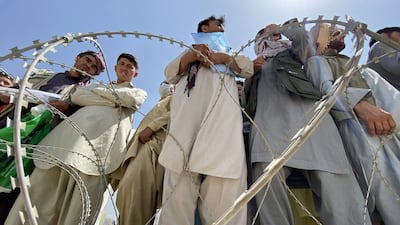
Afghans, including those who worked for the US, Nato, the European Union and the United Nations, wait outside Hamid Karzai International Airport to flee the country, after Taliban took control of Kabul, on August 17, 2021. EPA -
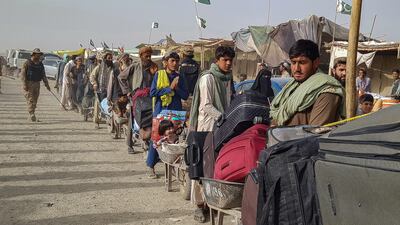
People queue at the Pakistan-Afghanistan border point in Chaman on August 17, 2021 to cross back to Afghanistan. AFP -
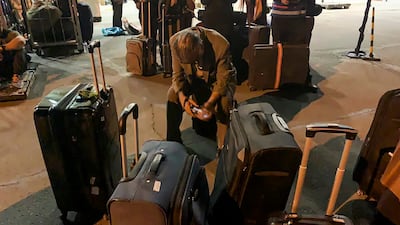
People wait to board a French military transport plane on August 17, 2021 to escape Kabul and Taliban rule. AFP -
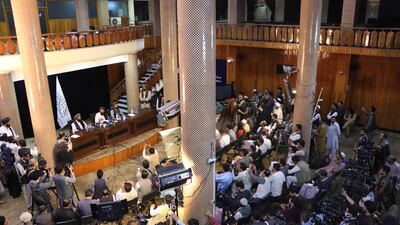
Zabihullah Mujahid, Taliban spokesman, gives his first press conference in Kabul on August 17, 2021. The new leadership said it would not seek revenge on those who had fought against them and would protect the rights of Afghan women within the rules of Sharia. EPA -

Young men who say they deserted the Afghan military trudge through the countryside in Tatvan, eastern Turkey, on August 17, 2021. Turkey was concerned about increased migration across the Iranian border as Afghans fled from the Taliban. AP -
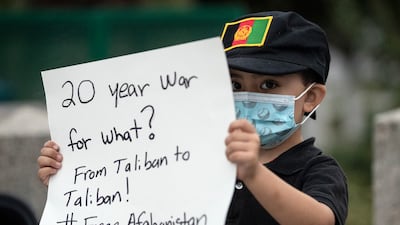
A young demonstrator at a vigil in support of Afghanistan at the West Los Angeles Federal Building, California on August 17, 2021. EPA -
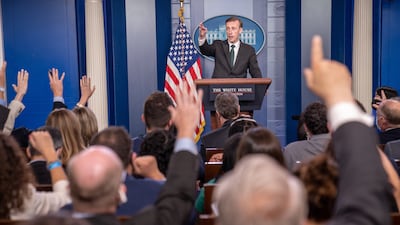
US National Security Adviser Jake Sullivan holds a press briefing to talk about the recent events in Afghanistan, at the White House on August 17,2021. EPA -
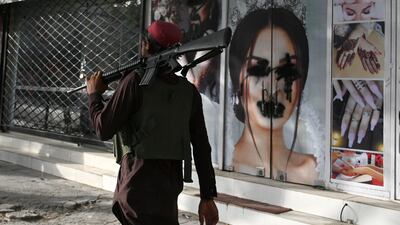
A Taliban fighter walks past a beauty salon with images of women defaced using spray paint in Shar-e-Naw in Kabul on August 18, 2021. AFP -
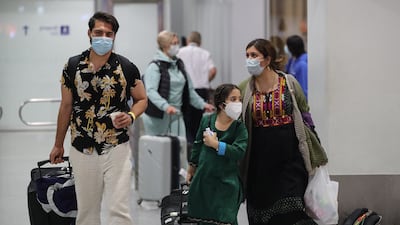
People among the first evacuees from Kabul, arrive at Frankfurt International Airport in western Germany in the early hours of August 18, 2021. AFP -
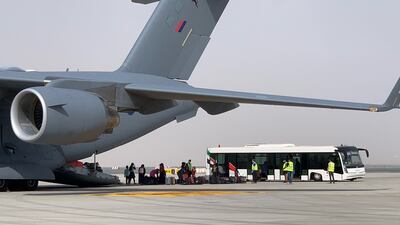
A transport plane evacuating refugees out of Afghanistan lands at Al Maktoum International Airport in Dubai, August 19, 2021. Pawan Singh / The National -

Afghanistan's former president Ashraf Ghani talks in video message, somewhere in the UAE, on August 18, 2021, in his first media appearance since the fall of Kabul only days earlier. Reuters -
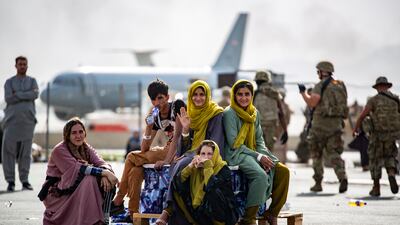
Displaced children wait for the next flight at Hamid Karzai International Airport, Kabul on August 19, 2021. AFP -
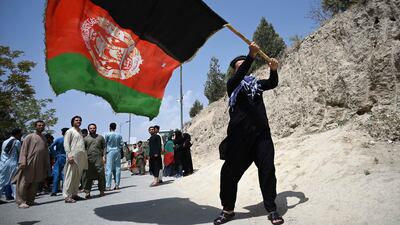
An Afghan man waves a national flag to celebrate the 102nd Independence Day of Afghanistan in Kabul on August 19, 2021, days after the Taliban's military takeover of the country. AFP -
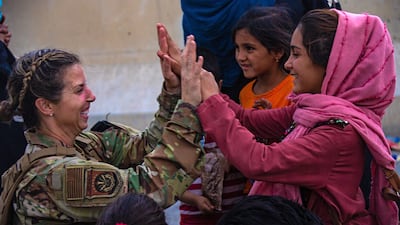
The US military helps to reunite families at Hamid Karzai International Airport on August 20, 2021. AFP -
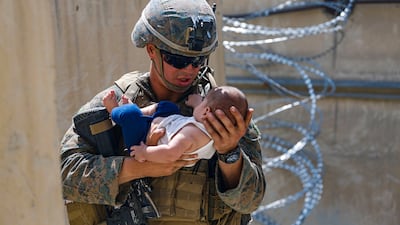
A US Marine comforts an infant while they wait for the mother during an evacuation at Hamid Karzai International Airport on August 21, 2021. Reuters -
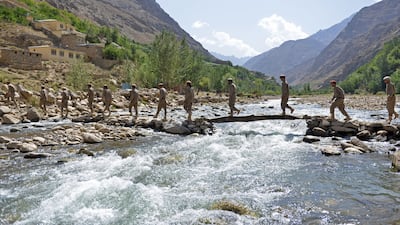
New personnel in the Afghan security forces take part in military training in Panjshir province on August 21, 2021. AFP -
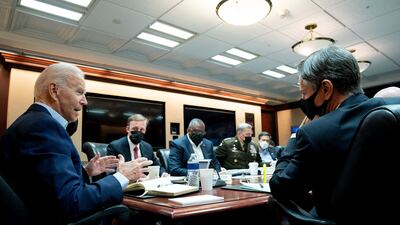
US President Joe Biden speaks to his national security team during a briefing on the situation in Afghanistan, on August 22, 2021, in Washington. AFP -
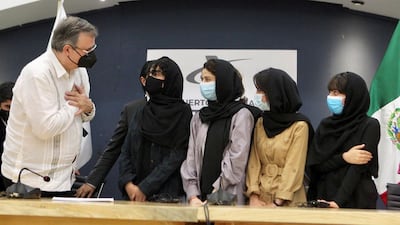
Mexico's Foreign Minister Marcelo Ebrard welcomes members of Afghanistan's robotics team after arriving in Mexico to apply for humanitarian status on August 24, 2021. Reuters -
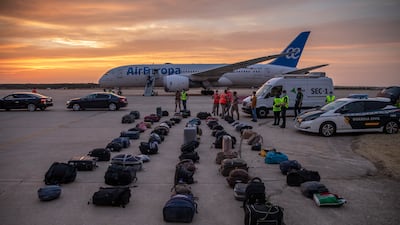
Belongings of Afghan people, who were evacuated from Kabul, are laid on the ground at Torrejon Military Air Base on August 24, 2021 in Madrid. Getty Images -
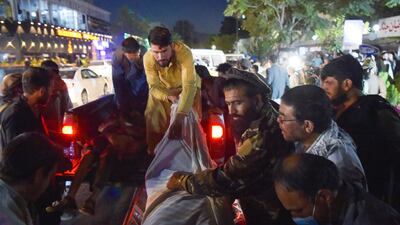
Volunteers and medical staff unload bodies from a pickup truck outside a hospital after two powerful explosions, which killed at least six people, outside the airport in Kabul on August 26, 2021. AFP -
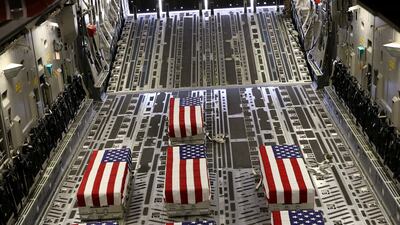
Flag-draped coffins of service members killed in action are loaded on to a transport aircraft during a ramp ceremony at Hamid Karzai International Airport in Kabul on August 27, 2021. Reuters -
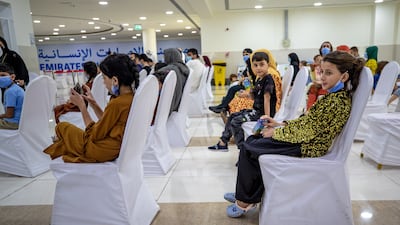
Afghan evacuees at the Emirates Humanitarian City, Abu Dhabi, on August 28, 2021. Victor Besa / The National -
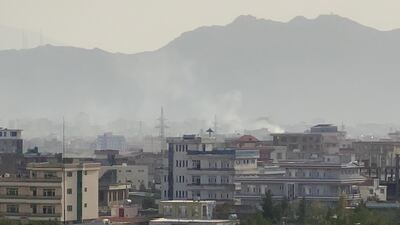
Smoke billows after an explosion near the Hamid Karzai International Airport, in Kabul on August 29, 2021. EPA -
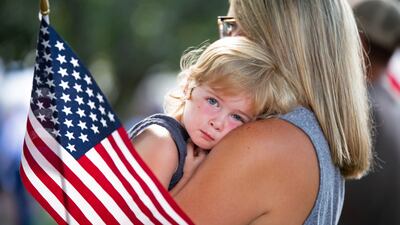
A vigil for Max Soviak, one of 13 US service members killed in the airport suicide bombing in Afghanistan's capital Kabul, in Berlin Heights, Ohio on August 29, 2021. Reuters -

A Taliban member stands guard near a vehicle which was used to fire rockets at the Hamid Karzai International Airport in Kabul on August 30, 2021. EPA -
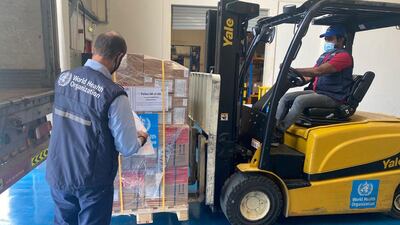
World Health Organisation supplies land in Afghanistan. Photo: WHO -
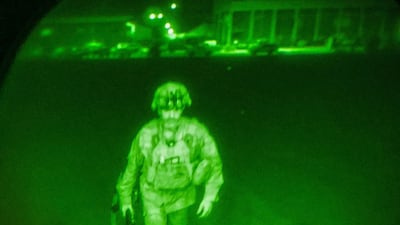
Major Gen Chris Donahue, commander of the US Army 82nd Airborne Division, XVIII Airborne Corps, boards a C-17 cargo plane at the Hamid Karzai International Airport in Kabul on August 30, 2021. His departure closes the US mission to evacuate US citizens, Afghan Special Immigrant Visa applicants and vulnerable Afghans. AFP -
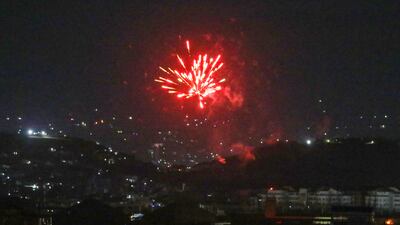
Fireworks after the last US aircraft took off from the airport in Kabul early on August 31, 2021, signalling its complete withdrawal after 20 years in the country. AFP -

Afghans wait for the banks to open in Kabul on August 31, 2021. AFP -
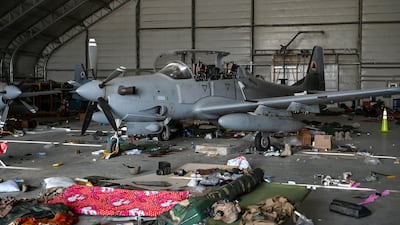
An Afghan Air Force A-29 attack aircraft inside a hangar at the airport in Kabul on August 31, 2021, after the US pulled all its troops out of the country. AFP -
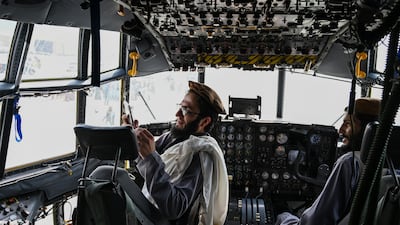
Taliban fighters sit in the cockpit of an Afghan Air Force aircraft at the airport in Kabul on August 31, 2021. AFP -
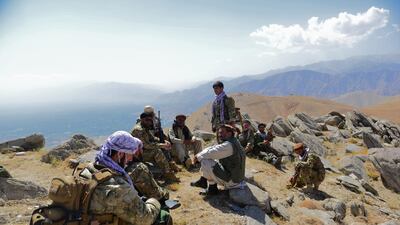
An Afghan resistance movement and anti-Taliban uprising forces rest as they patrol on a hilltop in Panjshir province on September 1,2021. Panjshir remains the last major holdout of anti-Taliban forces led by Ahmad Massoud, son of the famed mujahideen leader Ahmed Shah Massoud. AFP -

The UAE sends a plane carrying urgent medical and food aid to Afghanistan, as part of its contribution to provide the basic and necessary needs of thousands of Afghan families, especially the most vulnerable groups such as women, children and the elderly, September 3, 2021. Wam -
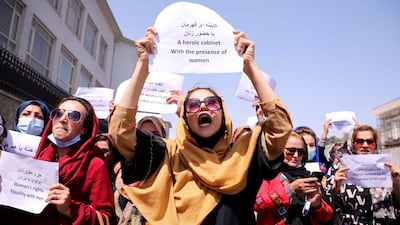
Afghan women's rights defenders and civil activists protest to call on the Taliban for the preservation of their achievements and education, in front of the presidential palace in Kabul on September 3, 2021. Reuters -
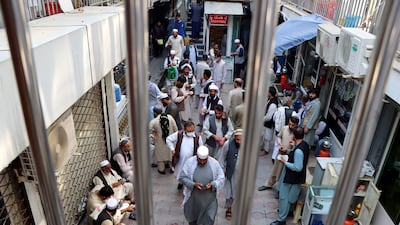
The main money exchange market in Kabul reopens on September 4, 10 days after the Taliban takeover. Currency dealers have been hit hard by the fall in value of the Afghani currency. EPA -
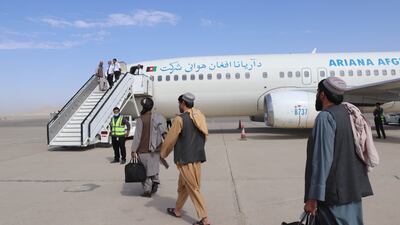
Passengers board a plane as domestic flights resume across Afghanistan, at Ahmad Shah Baba International Airport in Kandahar on September 5, 2021. EPA -
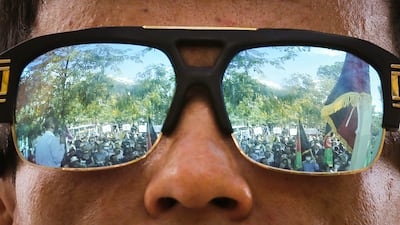
Protesters reflected in the sunglasses of a demonstrator during a rally in support of Afghanistan's people after the takeover of the country by the Taliban, at the Place de la Republique, in Paris on September 5, 2021. AFP -
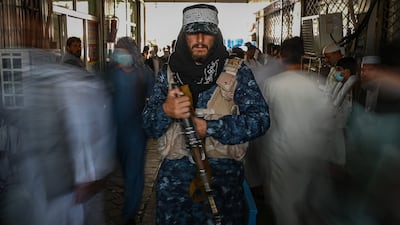
A Taliban fighter stands guard at a market in Kabul on September 5, 2021. AFP -
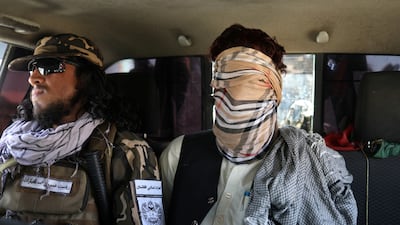
A suspected ISIS member sits blindfolded in a Taliban Special Forces' car in Kabul on September 5, 2021. Reuters -
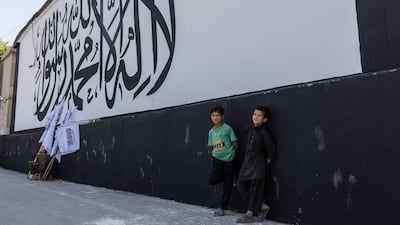
Children stand outside the former US embassy in Kabul where the banner of the 'Islamic Emirate' has replaced previous murals, on September 8, 2021. Stefanie Glinski for The National -
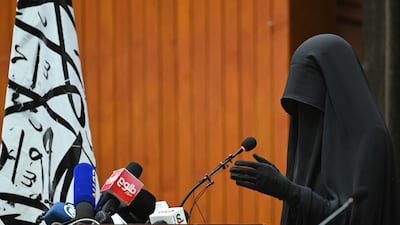
A veiled student speaks to a gathering of female students before a pro-Taliban rally at the Shaheed Rabbani Education University in Kabul on September 11, 2021. AFP -
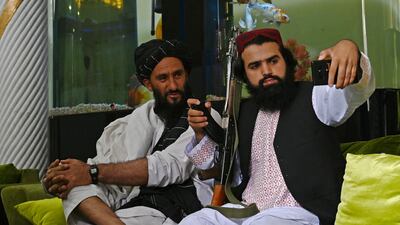
Taliban fighters take a selfie after they stormed and overran the home of the Afghan warlord Abdul Rashid Dostum in the Sherpur neighborhood of Kabul. on September 11, 2021. AFP -
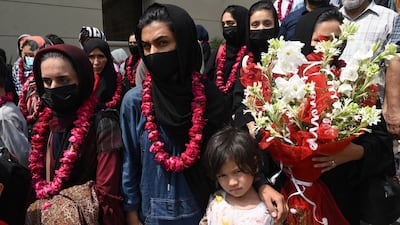
Members of Afghanistan's national girls football team arrive at the Pakistan Football Federation in Lahore on September 15, 2021, a month after the hardline Taliban swept back into power. AFP -

Afghan students separated by a partition attend a class at Mirwais Neeka University in Kandahar on September 20, 2021. The Taliban had officially announced the segregation of male and female students in all government and private universities. EPA -
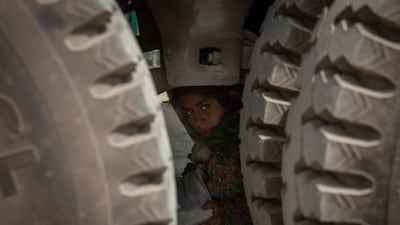
A young girl from Afghanistan hides under a truck carrying fruit and vegetables as she attempts to smuggle herself over the border from Afghanistan into Pakistan on September 12, 2021. Everyday dozens of children from Afghanistan smuggle themselves over the border into Pakistan to sell Paan and other goods before smuggling themselves back again. At least one child is injured each day trying to cross the border like this. Oliver Marsden for The National -

Afghan girls at a school in Kandahar on September 26, 2021. AFP -

Afghans gather outside the passport office after Taliban officials announced they will start issuing passports to its citizens again, in Kabul, October 6, 2021. Reuters -
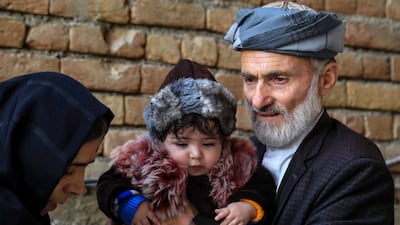
Sohail Ahmadi, an Afghan baby boy who went missing during the disordered evacuation process in Kabul after the takeover by the Taliban in August 2021, is reunited with his grandfather and aunt on January 10, 2022. EPA -
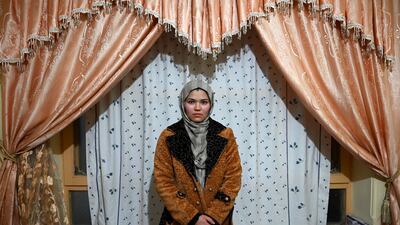
Zakia, an economics student who dropped out of university after the Taliban took power, at her home on the outskirts of Kabul on January 24, 2022. AFP -
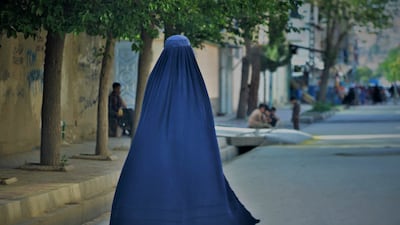
A burqa-clad woman walks along a street in Kabul on May 7, 2022. The Taliban had just imposed some of the harshest restrictions on Afghanistan's women since they seized power, ordering them to cover fully in public, ideally with the traditional burqa. AFP -
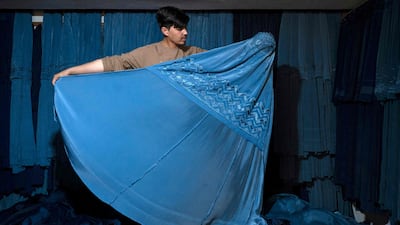
An Afghan vendor displays a burqa at his shop at Mandawi market in Kabul on May 8, 2022. AFP -
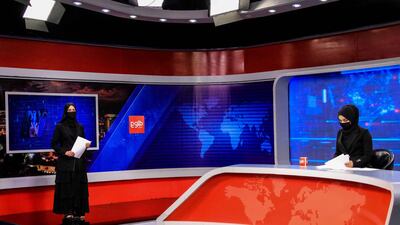
Khatira Ahmadi (L) and Tehmina (R), Afghan presenters at Tolo TV, read news at the studio in Kabul on May 23. Female television presenters and reporters in Afghanistan appeared with their faces covered to comply with a mandate issued by the Taliban. EPA -
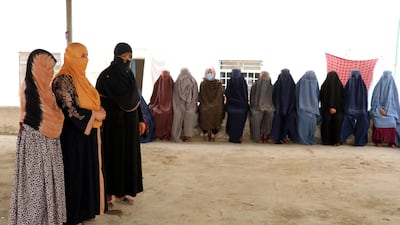
Afghan women prisoners in Kandahar on July 26. EPA


When Mr Biden announced his decision last year, he pitched that ending the war in Afghanistan would save American lives and tax dollars.
"I will not send another generation of Americans to war in Afghanistan with no reasonable expectation of achieving a different outcome," he said.
Democrats are pushing hard on that messaging.
Democratic chairman of the House armed services committee, Adam Smith, took to right-wing Fox News this week to plead the administration's case.
"Twenty years of effort by four different presidents and more generals and diplomats than most of us can now remember make it clear that this is not the case," Mr Smith wrote in an opinion piece for Fox.
"If we had stayed, we would have simply lost more American lives and spent more money — only to wind up in the same place five, 10 or 20 years from now."

Foreign policy has rarely affected US elections, but the consistently high polling numbers for citizens with an opinion on Afghanistan are a stand-out against other international issues.
Although most Americans agreed with the withdrawal, Pew Research polling suggested a large majority also thought the Biden administration handled it poorly.
In August and September 2021, about 70 per cent or more said that the administration had done only a fair or poor job ending the war.
-
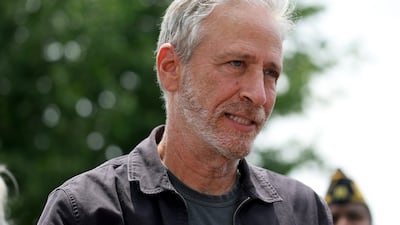
Jon Stewart speaks during a press conference about the Sergeant First Class Heath Robinson Honoring Our Promise to Address Comprehensive Toxics Act of 2022 in Washington. Getty Images / AFP -
Stewart has long advocated for causes he believes in. Getty Images / AFP -
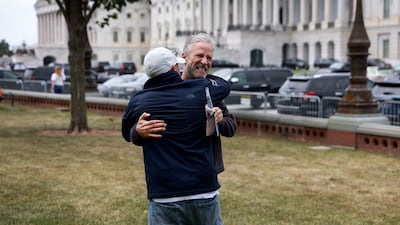
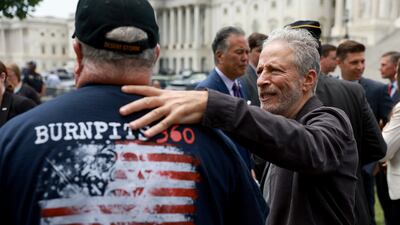
Stewart hugs 9/11 advocate John Feal. Getty Images / AFP -
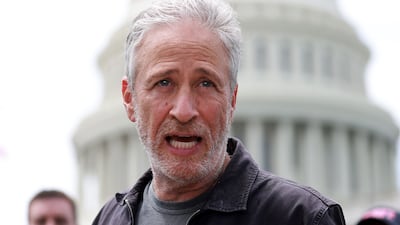
Stewart has been championing causes for veterans for many years. Getty Images / AFP -
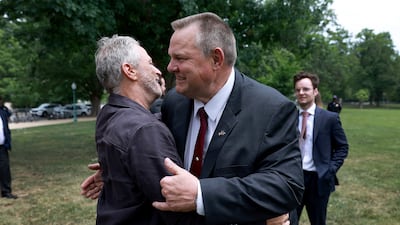
Senator John Tester and Stewart embrace. Getty Images / AFP -
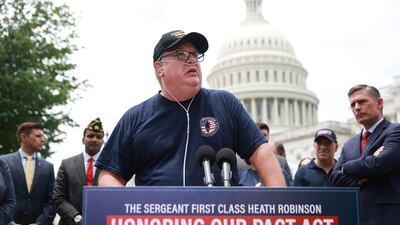
Air Force veteran Tim Hauser speaks during Thursday's press conference. Getty Images / AFP -
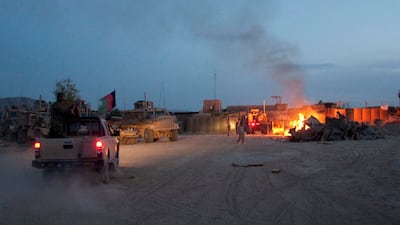
An Afghan National Army pickup truck passes a fire in a trash burn pit south of Kabul, Afghanistan. AP -
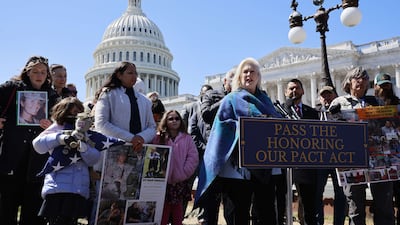
Senator Kirsten Gillibrand addresses a news conference about military burn pits legislation outside the US Capitol in March. Getty Images / AFP -
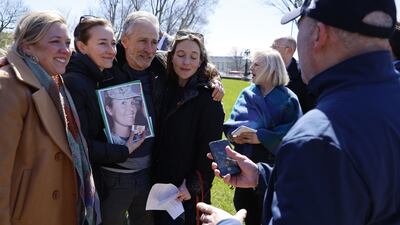
Stewart poses for a photograph with Lauren Grigsby, Charlotte Brock and Melinda Beyer whose friend, Marine Corps veteran Kate Hendricks, died after being exposed to burn pits. AFP -
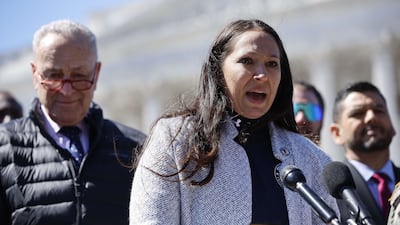
Danielle Robinson, widow of Ohio Army National Guard veteran Health Robinson, who died in 2020 due to lung cancer caused by burn pits, addresses the crowds. Getty Images / AFP -

Stewart talks with Ms Robinson outside the US Capitol in March. Getty Images / AFP -
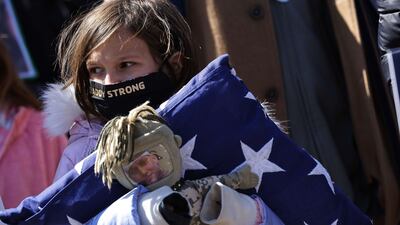
Brielle Robinson, daughter of the late Army Sgt First Class Heath Robinson outside the US Capitol in March. Getty Images / AFP -
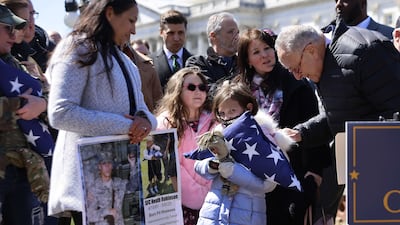
Mr Schumer greets Brielle Robinson. Getty Images / AFP -
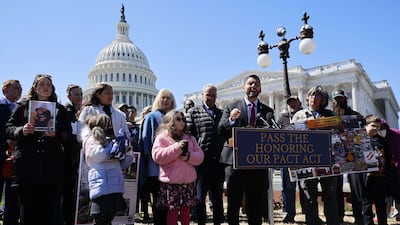
Congressman Raul Ruiz joins veterans, advocacy groups, activists, victims' families and fellow Democrats for a news conference about military burn pits legislation. Getty Images / AFP -

Stewart, a long-time New Yorker, also advocated for 9/11 victims. Getty Images / AFP -
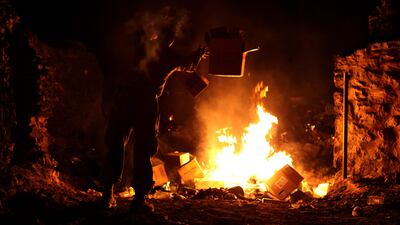
Trash at a burn pit in Forward Operating Base Zeebrudge, Helmand province, Afghanistan. US Marines / AFP -
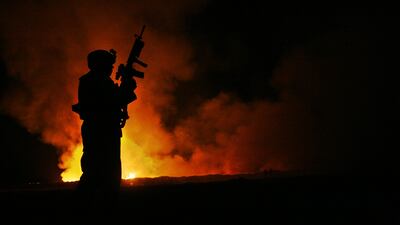
Burn pits are commonly used by the US military to get rid of everything from plastic bottles to human waste to old tyres – all incinerated with the aid of jet fuel. US Marines / AFP -
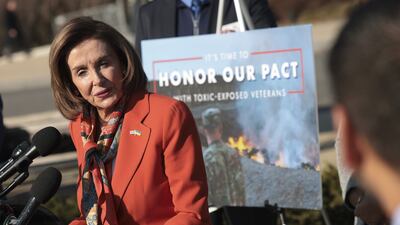
Speaker of the House Nancy Pelosi at a news conference at the US Capitol in March. Getty Images / AFP



