


Israel’s Defence Minister Benny Gantz concluded a 36-hour-visit to Washington on Friday, where he met senior US officials and sought assurances on countering Iran ahead of a possible revival of the nuclear deal.
Mr Gantz was received by US National Security Adviser Jake Sullivan, following a trip to Tampa Florida on Thursday, where was hosted at the Central Command headquarters by its commander General Michael Kurilla and other military leaders.

Israel opposes a return to the JCPOA
Following the meeting with Mr Sullivan, Israel released a statement making public its opposition to a return to the 2015 Joint Comprehensive Plan of Action nuclear deal.
“The State of Israel opposes the nuclear agreement as was presented to relevant [US] parties and emphasised several elements that are critical to the purpose of preventing Iran from obtaining a nuclear weapon,” the statement said.
Mr Gantz stressed to Mr Sullivan, however, the “importance of maintaining and advancing operational capabilities for both defensive and offensive purposes in face of Iran’s nuclear progamme, as well as its regional aggression”.
“This is regardless of the discussion surrounding the agreement,” he said.
The US statement after the meeting slightly differed, expressing Washington’s “unwavering commitment to Israel’s security” and that Mr Gantz and Mr Sullivan “discussed US commitment to ensure Iran never obtains a nuclear weapon, and the need to counter threats from Iran and Iran-based proxies”.
Mr Gantz’s visit is the second this week made by a senior Israeli official. Israeli National Security Adviser Eyal Hulata held meetings with members of President Joe Biden's administration earlier in the week.
Meir Javedanfar, a senior analyst and lecturer at Reichman University, in the Israeli city of Herzliya said Israel's opposition to a return to the nuclear is deal is based on three perceived flaws in the proposal.
“The first stems from concerns that a return to the deal would lift sanctions on Iran that would fund its regional militant proxies such as Hezbollah that threaten Israel,” he said.
“Then there is the sunset clause where critical restrictions in the deal are set to expire in 2031, as well as Israel’s fear that the deal legitimises Tehran’s enrichment programme.”
-
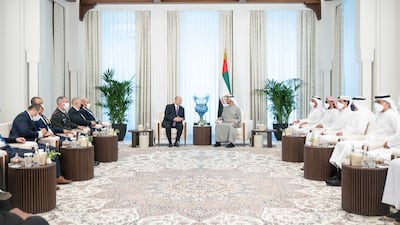
President Sheikh Mohamed bin Zayed meets with Naftali Bennett at Al Shati Palace. Rashed Al Mansoori / Ministry of Presidential Affairs -
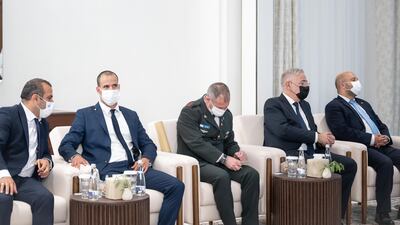
Members of the delegation accompanying Naftali Bennett at Al Shati Palace. Rashed Al Mansoori / Ministry of Presidential Affairs -

R-L, Sheikh Abdullah bin Zayed, Sheikh Mansour bin Zayed , Sheikh Tahnoun bin Zayed and Lt Gen Sheikh Saif bin Zayed at Al Shati Palace. Rashed Al Mansoori / Ministry of Presidential Affairs


At the same time, Mr Javedanfar said that Israel does not want to lock horns with Washington over a return to the deal and is instead trying to find a working arrangement if the JCPOA is restored.
“Mr Gantz is there because he realises that Israel that America is going to go back to the nuclear deal if it wants to. He [Gantz] is there to strengthen Israel-US military and intelligence cooperation for the day after the return to the deal,” Mr Javedanfar said.
For Israel, there is a realisation in Prime Minister Yair Lapid's government that Mr Biden will not change his mind if a decision to return to the deal is made by the administration.
“It doesn't seem that Israel is adamant and going all out to change America's opinion. Israel is expressing its concerns without launching a major campaign,” the expert said.
JCPOA revival ‘closer than ever’
But from the Biden administration side, there has been a consistent push since resuming the indirect negotiations with Iran last year, in closely consulting with Israel and providing security assurances.
Ellie Geranmayeh, a senior policy fellow at the European Council on Foreign Relations think tank, sees a different US approach compared with the administration of former president Barack Obama's administration in 2015, when the JCPOA was agreed.

“The Biden White House has deliberately tried to handle relations with Israel differently from when Obama negotiated the nuclear deal,” Ms Geranmayeh said.
“This round, they are going far in keeping Israel in the loop and consulting them on progress with Iran. It's not clear yet where the Israeli system will come out on a possible restored deal.”
Some of Israel’s public opposition is designed for a domestic audience, she argued, as the country heads for another election on November 1.
Asked about the prospects of the deal, Ms Geranmayeh said the negotiators “are closer than ever [were] to restoring the nuclear deal”.
Following the US response to the European proposal and Iran’s amendments this week, the parties are setting the stage for another round of negotiations in Vienna. Progress has been made on issues related to Islamic Revolutionary Guard Corps designation — Washington considers it a terrorist organisation — inspections and levels of enrichment.
But Ms Geranmayeh warned that if the negotiations drag on, they would be more vulnerable to failure.
“Iran and the US still need to iron out a few outstanding issues. And the longer this takes the more susceptible the process becomes to spoilers (including Israel),” she said.
“The road ahead for re-implanting the deal will also have many obstacles,” Ms Geranmayeh assessed despite Mr Biden being in a strong position to sell it internally.
“It will take a few months for Iran and the US to come fulfil their commitments. During this time, Congress will need to review the deal — and no doubt Israel will seek to derail the deal at this stage,” she said.
The Biden administration is also insisting that its crackdown on Iran’s illicit activities will remain in place after the deal.
Sanctions on Iran proxies will continue
Richard Nephew, the State Department’s co-ordinator on global anti-corruption told The National during a briefing at The Foreign Press Center, that sanctions related to Iran’s regional proxies will continue.
The US government, Mr Nephew said on Thursday, has “long-standing sanctions authorities that they had utilised in response to various different Iranian proxy activities”.
“I’m not going to comment further on kind of current planning, current activity against all those things, but I’ll just say that they demonstrate that this administration intends to continue to utilise those authorities to deal with that particular challenge,” he said.
Iran continues drone exercises - in pictures
-
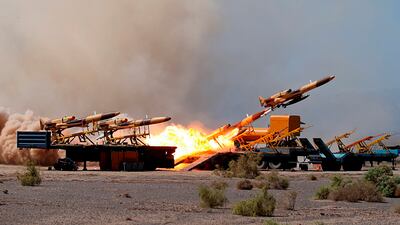
A drone is launched during a military drill in Iran. AP -

Taking off from a warship. AP -
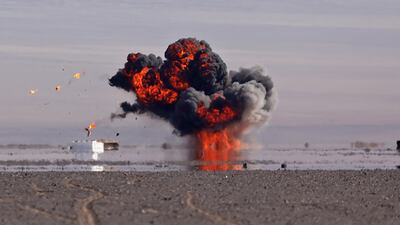
An explosion after a strike by a military drone during drills at an undisclosed location in Iran. AFP -
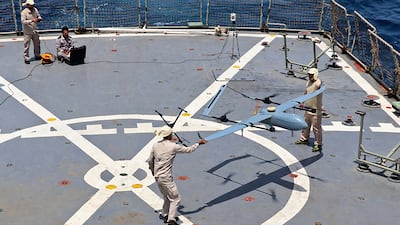
Iran is carrying out large-scale drone drills across the country, to show off the country's military strength, reports say. AFP -
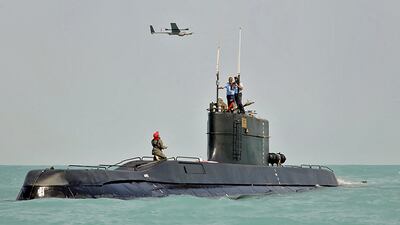
Troops on a submarine take part in the exercise. AFP -
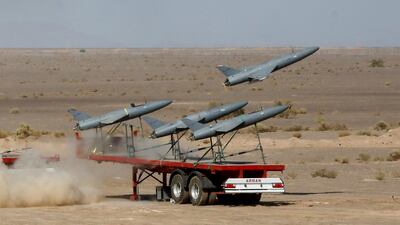
At least 150 drones are to be used in the drills, Iranian state media reports. Reuters -

It is the first time that a joint drone exercise has been conducted at the level of the four forces of the Islamic Republic's army, authorities say. AFP -
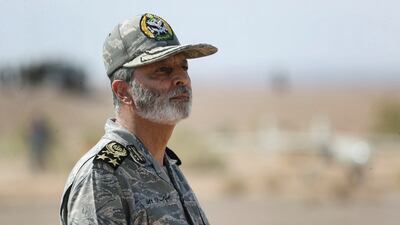
Iran's Army Commander-in-Chief Maj Gen Abdolrahim Mousavi looks on during the military exercises. Reuters -

Iran started developing drones in the 1980s during its eight-year war with Iraq. AP -

Its army unveiled its first division of ships and submarines capable of carrying armed drones in July. AFP



