



About 86,000 wild horses roam the western US, grazing on public lands across 10 states, but a surging horse population and a multi-decade mega-drought has left the US Bureau of Land Management in a difficult position.
The bureau has been given the task of drastically thinning the herd.
Advocates for wild horses are accusing the federal land managers of illegally approving plans for the largest US holding facility for thousands of mustangs captured on public rangeland.
Friends of Animals said in a lawsuit filed on Tuesday that up to 4,000 horses would be held captive inhumanely for months or years at a time in dusty, manure-filled pens without shade or windbreaks in the state of Nevada’s high desert.

The lawsuit claims that, at a cost of millions of dollars annually to US taxpayers, the plan is part of the government's misguided effort to appease ranchers by accelerating round-ups of mustangs competing with their livestock for public forage across much of the drought-stricken area.
Filed in US district court in Reno, the lawsuit says the bureau broke several environmental and animal protection laws when it “rushed through the approval process without considering the impacts of the unprecedented facility on wild horses and burros or the local community”.
Interior Department spokesman Tyler Cherry said in an email that neither the department nor the bureau had any comment.
The bureau said in announcing solicitations for bids for the corral in late 2020 that more space was needed to enable round-ups of what it says is an overpopulation of wild horses that is causing ecological damage to the range.
Turkey's first Paralympic horse rider — in pictures
-

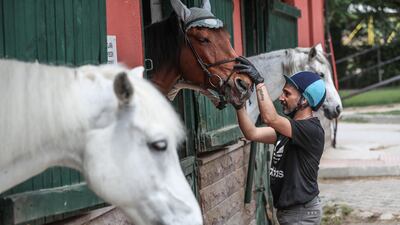
Turkey's first Paralympic rider, Tolga Dokuyucu, stands next to horse Balfi after training at the Equestrian Sports Club in Ankara. All photos: EPA -
Dokuyucu started riding at the age of seven and joined a prestigious riding school. -
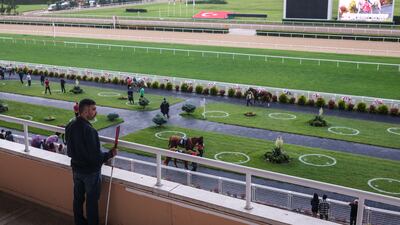
But at 30, he was seriously injured after falling off his horse during a race in Ankara, losing his sight. -
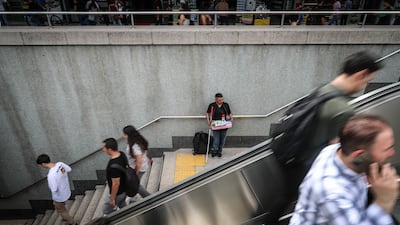
After three expensive medical treatments, Dokuyucu started working in the streets of the capital, selling lighters, wet wipes and pens at subway exits. -
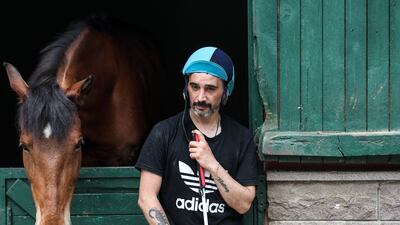
He eventually returned to horse riding, becoming a member of the Equestrian Sports Club in Ankara. -
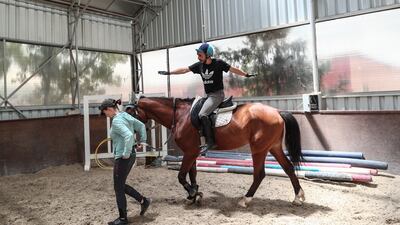
A married father of two, Dokuyucu is training for the 2024 France Paralympics in the dressage category. -
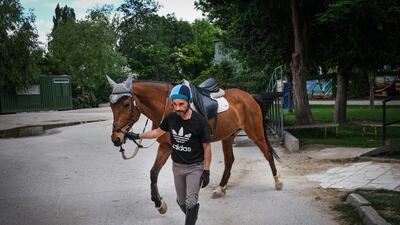
"After the accident, I thought I would not be able to ride a horse again. Now I am preparing for the Paralympic Games. My goal is to return home with a medal." -

Dokuyucu (C) chats with his trainer, Irina Shishigina, at the Equestrian Sports Club in Ankara. "Horses are a light for me," he said.


The bureau wrongly concluded that a full-blown, year-long environmental impact review was not necessary for the JS Livestock Inc holding pens sitting on 40 hectares of private land near Winnemucca, about 273 kilometres north-east of Reno, the lawsuit said.
Jennifer Best, director of Friends of Animals Wildlife Law Programme, said agency officials who approved the project in November failed to adequately respond to concerns raised about disease transmission, animal waste, disposal of dead animals, groundwater contamination and “air quality in terms of odour and dust”.
The less-rigorous environmental assessment the agency completed improperly relies on state permits and other documents in an attempt to satisfy the reviews required under the National Environmental Policy Act, the lawsuit said.
Among other things, the suit says the agency will require JS Livestock to clean the 40 pens that can hold up to 100 cattle as few as two times a year.
Every six months, 100 horses will produce 421 metric tonnes of waste in a 70 square-metre pen and 4,000 animals would produce 16,329 metric tonnes, it said.
“BLM’s decision stinks,” said Priscilla Feral, president of Friends of Animals. “If the BLM based its decisions on science and not placating the meat industry that wants wild horses to go extinct, the agency would keep its hands off wild horses.”
Catching wild horses in Germany — in pictures
-

A catcher holds a young stallion while wild horses are driven together in Duelmen, Germany, so that young men can separate the young stallions from one of Europe's last herds of wild horses. All photos: AP -

Thousands of spectators watch as wild horses are driven together in Duelmen. -

A wild horse looks between trees in a forest in Duelmen. -

Wild horses are driven together in Duelmen. -

Catchers hold a young stallion. -

Wild horses graze in Duelmen. -

Wild horses raise dust in Duelmen.


The lawsuit says the bureau gave short shrift to numerous potential impacts, including noise the agency’s review concluded wouldn't significantly differ from the existing land use — an alfalfa field.
“BLM did not explain how a facility with 4,000 wild horses and burros will have the same level of noise as alfalfa,” it said.
JS Livestock didn't immediately respond to an email requesting comment. Jennifer Erickson, a woman listed as a company officer, declined immediate comment when reached by phone.
The National Cattlemen's Beef Association and its Public Lands Council are among those who back the administration of US President Joe Biden's efforts to reduce what it says is an overpopulation of wild horses on federal lands.
“This isn’t the first time a litigious activist group has thrown themselves in the way of meaningful progress on this crisis, and it won’t be the last,” said Sigrid Johannes, an associate director of the groups.
“Off-range corrals are a legitimate — and badly needed — tool in the toolbox for managing critically overpopulated areas,” she said in an email Wednesday.
Nevada is home to about half of the horses roaming federal lands in 10 states, including Arizona, California, Colorado, Idaho, North Dakota, New Mexico, Oregon, Utah and Wyoming.
The bureau announced in January it planned to permanently remove 19,000 wild horses and burros in 2022, the most ever in a single year.
As of last month, more than 58,000 wild horses and burros were being housed in holding pens and off-range pastures at a cost to taxpayers of $50 million annually, the lawsuit said.

The lawsuit said the 2022 round-up schedule relied on the opening of the holding facility in Winnemucca, the largest holding facility currently in operation at Palomino Valley that has a capacity of 1,800.
Mr Biden's budget proposal passed earlier this year prohibits horse slaughter in the US by defunding an inspection programme that is legally necessary for its operation — something that was applauded by the American Society for the Prevention of Cruelty to Animals.
“We are pleased that this year’s budget request offers continued protections against lethal population management, an idea nearly approved in Congress a few years ago,” the organisation said in a statement.
“This language ensures that the government cannot kill healthy horses and burros for population control or sell them to slaughter. Additionally, it requests that Congress allocates more than $153 million to the US Bureau of Land Management’s Wild Horse and Burro Programme — a $16m increase from current funding levels”
However, a New York Times investigation found that wild horses made available for adoption are not tracked, their adopters not vetted and many are sold to slaughter.
The Associated Press contributed to this report

