

A Navy nuclear engineer and his wife withdrew their guilty pleas on Tuesday in a case involving accusations of a plot to sell secrets about US nuclear-powered warships.
Jonathan and Diana Toebbe of Annapolis, Maryland, withdrew the pleas after a federal judge rejected an agreement that called for specific sentencing guidelines.
The couple pleaded guilty in February in federal court in Martinsburg, West Virginia, to one count each of conspiracy to communicate restricted data.
The sentencing range agreed to by lawyers for Mr Toebbe had called for a punishment of between 12 years and 17 years in prison.
US District Judge Gina Groh said that while she generally honoured plea agreements, in this case the sentencing options were “strikingly deficient” considering the seriousness of the charges.
Ms Groh said the act to which the couple pleaded guilty was done “for selfish and greedy reasons, but could have caused great harm” to the US Navy and others.
“I don’t find any justifiable reasons for accepting either one of these plea agreements,” she said.
-
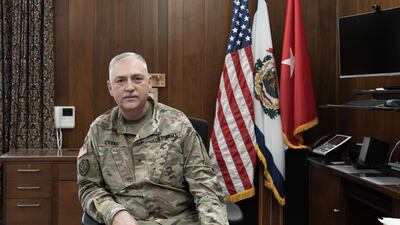
Brig Gen Bill Crane, head of the West Virginia National Guard, at his desk. Willy Lowry / The National -
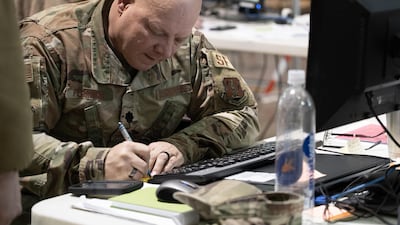
A West Virginia National Guardsman takes notes inside the state's joint inter-agency task force for the Covid-19 Vaccine. Willy Lowry / The National -

West Virginia National Guardsmen pass notes inside the state's joint interagency task force for the Covid-19 vaccine. Willy Lowry / The National -
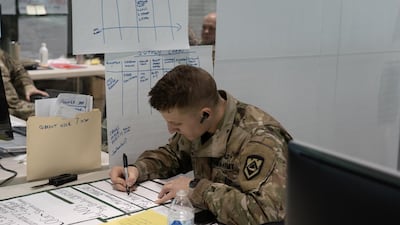
A West Virginia National Guardsman writes on a poster board inside the state's joint interagency task force for the Covid-19 Vaccine. Willy Lowry / The National -
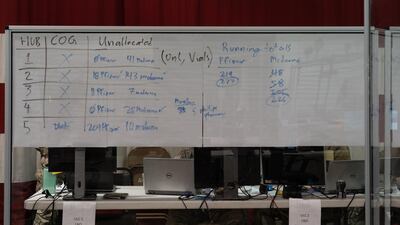
A white board inside the joint interagency task force shows unallocated vaccine numbers at the state's five hubs. Willy Lowry / The National -
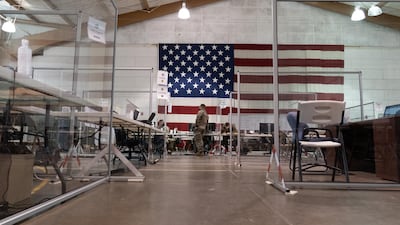
The West Virginia National Guard have transformed their armoury building's gymnasium into a joint interagency task force for the Covid-19 vaccine. Willy Lowry / The National -
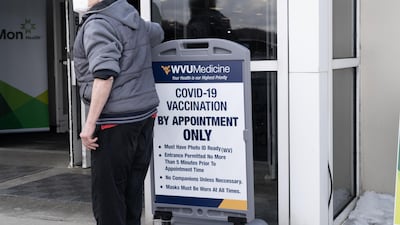
A West Virginian waits outside Covid-19 vaccine clinic near Morgantown, West Virginia. Willy Lowry / The National -

A sign saying "Vaccines by appointments only" outside a strip mall near Morgantown, West Virginia. Willy Lowry / The National -
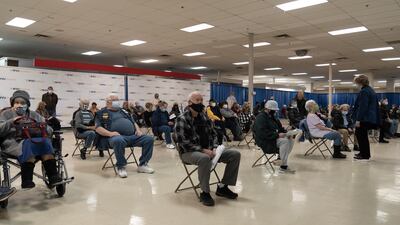
People wait inside a former Sears department store outside of Morgantown after receiving a dose of the Covid-19 vaccine. Willy Lowry / The National -
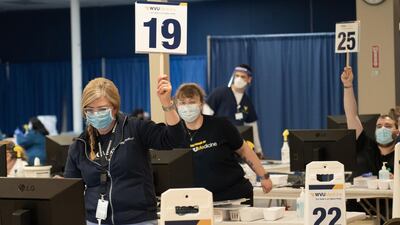
Healthcare workers hold up numbers showing they are ready administer more doses of the Covid-19 vaccine at a clinic outside of Morgantown, West Virginia. Willy Lowry / The National -

West Virginia University has transformed an old Sears department store into a major Covid-19 vaccine clinic. Willy Lowry / The National -

A healthcare worker injects a West Virginian with a dose of the Covid-19 vaccine. Willy Lowry / The National -
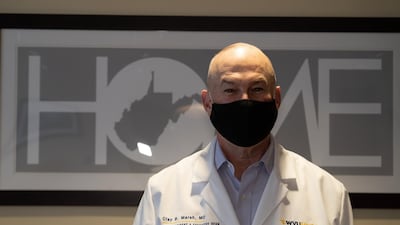
Dr Clay Marsh, West Virginia's Covid-19 chief, in front of a map of West Virginia inside his Morgantown office. Willy Lowry / The National -

Dr Clay Marsh, West Virginia's Covid-19 chief, works at his office at West Virginia University in Morgantown. Willy Lowry / The National -

A healthcare worker at a vaccine side inspects a dose of the Covid-19 vaccine. Willy Lowry / The National -
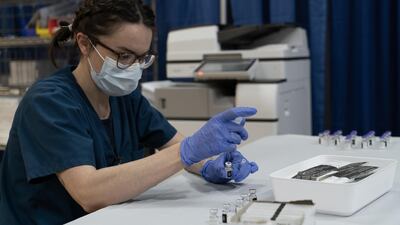
A healthcare worker prepares a dose of the Covid-19 vaccine. Willy Lowry / The National -
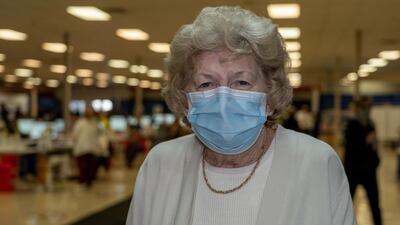
Alice Dean, 80, received her second dose of the Covid-19 vaccine at clinic outside of Morgantown, West Virginia. Willy Lowry / The National -
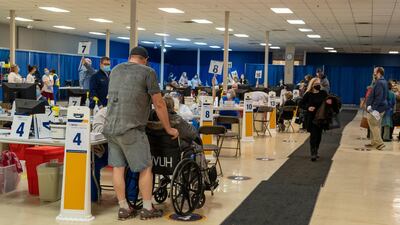
West Virginia University has transformed an old Sears department store into a major Covid-19 vaccine clinic. Willy Lowry / The National -
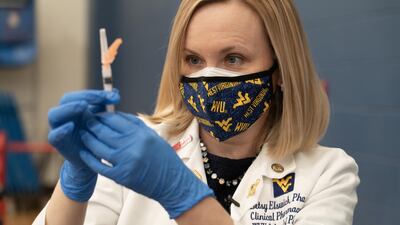
Betsy Elswick, a pharmacist at West Virginia University in Morgantown inspects a vial of vaccine. Willy Lowry / The National


Wearing orange jail jumpsuits and sitting at separate tables, the couple then separately withdrew their guilty pleas, after which Ms Groh to set a trial date for January 17.
Prosecutors said Mr Toebbe abused his access to top-secret government information.
They said he repeatedly sold details about the design elements and performance characteristics of Virginia-class submarines to someone he believed was a representative of a foreign government, but who was really an undercover FBI agent.
Ms Toebbe, who was teaching at a private school in Maryland at the time of the couple's arrest last October, was accused of acting as a lookout at several “dead-drop” locations at which memory cards containing the secret information were left behind.
The memory cards were concealed in objects including a chewing gum wrapper and a peanut butter sandwich.
The couple were arrested after he placed a memory card at a dead drop location in Jefferson County, West Virginia.
The FBI has said the scheme began in April 2020, when Mr Toebbe sent a package of Navy documents to a foreign government and wrote that he was interested in selling operations manuals, performance reports and other sensitive information.
That package was obtained by the FBI in December 2020 through its legal attache office in the unspecified foreign country.
That set off a months-long undercover operation in which an agent posing as a representative of a foreign country made contact with Mr Toebbe, ultimately paying $100,000 in cryptocurrency for the information he was offering.
Mr Toebbe, who held a top-secret security clearance through the Defence Department, had agreed as part of the plea deal to help federal officials with finding and retrieving all classified information in his possession, and the cryptocurrency paid to him.
The country to which he was looking to sell the information has not been identified in court documents and was not disclosed in court.
FBI agents who searched the couple’s home found a rubbish bag of shredded documents, thousands of dollars in cash, valid children’s passports and a “go-bag” containing a USB flash drive and Latex gloves, according to court testimony last year.



