• This specimen at the American Museum of Natural History in New York is believed to be a hybrid between Columbian and woolly mammoths. Photo: Ryan Somma
    This specimen at the American Museum of Natural History in New York is believed to be a hybrid between Columbian and woolly mammoths. Photo: Ryan Somma
  • Ivory from woolly mammoth tusks has been used for various creations for centuries. Getty Images
    Ivory from woolly mammoth tusks has been used for various creations for centuries. Getty Images
  • A skull of a woolly mammoth discovered by fishermen in May 1999 in the Netherlands. Photo: Celtic and Prehistoric Museum
    A skull of a woolly mammoth discovered by fishermen in May 1999 in the Netherlands. Photo: Celtic and Prehistoric Museum
  • A woolly calf displayed at the Royal British Columbia Museum. Photo: Ruth Hartnup
    A woolly calf displayed at the Royal British Columbia Museum. Photo: Ruth Hartnup
  • This artefact made from woolly mammoth ivory called the Lion-Man was found in the Hohlenstein-Stadel Cave, Germany. Photo: Dagmar Hollmann
    This artefact made from woolly mammoth ivory called the Lion-Man was found in the Hohlenstein-Stadel Cave, Germany. Photo: Dagmar Hollmann
  • A mammoth tusk with carvings made in the 19th century in Yukon, Alaska, on display at the De Young Museum in San Francisco, California. Photo: BrokenSphere
    A mammoth tusk with carvings made in the 19th century in Yukon, Alaska, on display at the De Young Museum in San Francisco, California. Photo: BrokenSphere
  • Venus of Brassempouy, a carving from mammoth ivory, on display at the Musee d'Archeologie Nationale in Saint-Germain-en-Laye, France. Photo: Dagmar Hollman
    Venus of Brassempouy, a carving from mammoth ivory, on display at the Musee d'Archeologie Nationale in Saint-Germain-en-Laye, France. Photo: Dagmar Hollman
  • A frozen calf named Yuka. Photo: Cyclonaut
    A frozen calf named Yuka. Photo: Cyclonaut
  • The Berezovka mammoth during excavation in 1901. Photo: Museum of Zoology in St Petersburg
    The Berezovka mammoth during excavation in 1901. Photo: Museum of Zoology in St Petersburg
  • A model of the Berezovka mammoth partially covered by its skin at the Museum of Zoology in St Petersburg, Russia. Photo: Andrew Butko
    A model of the Berezovka mammoth partially covered by its skin at the Museum of Zoology in St Petersburg, Russia. Photo: Andrew Butko
  • A leg with the skin and fur of a mammoth on display at the Museum of Natural History in Paris, France. Photo: Matt Mechtley
    A leg with the skin and fur of a mammoth on display at the Museum of Natural History in Paris, France. Photo: Matt Mechtley
  • A close-up of preserved woolly mammoth fur on display at the Natural History Museum in Vienna, Austria. Photo: Tommy Arad
    A close-up of preserved woolly mammoth fur on display at the Natural History Museum in Vienna, Austria. Photo: Tommy Arad
  • A recreation of a woolly mammoth at the Royal Victoria Museum, Victoria, British Columbia, Canada. Photo: Thomas Quine
    A recreation of a woolly mammoth at the Royal Victoria Museum, Victoria, British Columbia, Canada. Photo: Thomas Quine
  • Mammoth remains on display at the Siegsdorf Natural History and Mammoth Museum in Siegsdorf, Germany. Photo: Lou Gruber
    Mammoth remains on display at the Siegsdorf Natural History and Mammoth Museum in Siegsdorf, Germany. Photo: Lou Gruber
  • A cast of remains at the State Museum of Natural History in Stuttgart, Germany. Photo: Ghedoghedo
    A cast of remains at the State Museum of Natural History in Stuttgart, Germany. Photo: Ghedoghedo
  • The image depicts a late Pleistocene landscape in northern Spain with woolly mammoths, equids, a woolly rhinoceros and European cave lions with a reindeer carcass. Photo: Mauricio Anton
    The image depicts a late Pleistocene landscape in northern Spain with woolly mammoths, equids, a woolly rhinoceros and European cave lions with a reindeer carcass. Photo: Mauricio Anton
  • A woolly mammoth skull from Bzianka, Poland, with one downward spiralling tusk. Photo: Henryk Ferdynand Hoyer
    A woolly mammoth skull from Bzianka, Poland, with one downward spiralling tusk. Photo: Henryk Ferdynand Hoyer
  • A mammoth molar featured in a display of artefacts at the Georges-Garret Museum in Vesoul, France. Photo: Remi Mathis
    A mammoth molar featured in a display of artefacts at the Georges-Garret Museum in Vesoul, France. Photo: Remi Mathis
  • In 2015, a 15,000-year-old woolly mammoth was unveiled at Marina Mall in Abu Dhabi. Delores Johnson / The National
    In 2015, a 15,000-year-old woolly mammoth was unveiled at Marina Mall in Abu Dhabi. Delores Johnson / The National
  • The woolly mammoth was roughly the same size as modern African elephants. Delores Johnson / The National
    The woolly mammoth was roughly the same size as modern African elephants. Delores Johnson / The National
  • The woolly mammoth coexisted alongside early humans. This one lives in a mall. Delores Johnson / The National
    The woolly mammoth coexisted alongside early humans. This one lives in a mall. Delores Johnson / The National
  • Miners in the Klondike gold fields of Canada's far north discovered the mummified remains of a baby woolly mammoth. Government of Yukon / AFP
    Miners in the Klondike gold fields of Canada's far north discovered the mummified remains of a baby woolly mammoth. Government of Yukon / AFP
  • While some scientists are trying to bring the woolly mammoth back, others have studied how using gene editing can resurrect extinct animals such as the Christmas Island rat. Getty Images / AFP
    While some scientists are trying to bring the woolly mammoth back, others have studied how using gene editing can resurrect extinct animals such as the Christmas Island rat. Getty Images / AFP
  • The team found they could reconstruct 95 per cent of the Christmas Island rat genome. Getty Images / AFP
    The team found they could reconstruct 95 per cent of the Christmas Island rat genome. Getty Images / AFP
  • Climate change, not humans, caused the extinction of woolly mammoths. PA
    Climate change, not humans, caused the extinction of woolly mammoths. PA
  • When icebergs melted, it became too wet for the mammoths to survive because their food source was wiped out. PA
    When icebergs melted, it became too wet for the mammoths to survive because their food source was wiped out. PA
  • Giant bronze sculptures of mammoths on display during the World Biathlon Championships in the Siberian city of Khanty-Mansiysk. AFP
    Giant bronze sculptures of mammoths on display during the World Biathlon Championships in the Siberian city of Khanty-Mansiysk. AFP
  • An imagined woolly mammoth on display at the University of Alaska Museum of the North in Fairbanks, Alaska. The Havens Studio / Reuters
    An imagined woolly mammoth on display at the University of Alaska Museum of the North in Fairbanks, Alaska. The Havens Studio / Reuters
  • Mat Wooller, director of the Alaska Stable Isotope Facility, kneels among a collection of mammoth tusks at the University of Alaska Museum of the North. University of Alaska Fairbanks / AFP
    Mat Wooller, director of the Alaska Stable Isotope Facility, kneels among a collection of mammoth tusks at the University of Alaska Museum of the North. University of Alaska Fairbanks / AFP
  • These woolly mammoth remains are a huge attraction at the Marina Mall in Abu Dhabi. Delores Johnson / The National
    These woolly mammoth remains are a huge attraction at the Marina Mall in Abu Dhabi. Delores Johnson / The National
  • A gilded woolly mammoth skeleton was created to benefit the amfAR Cinema Against Aids in Cap d’Antibes, southern France. Prudence Cuming Associates / Damien Hirst / AP
    A gilded woolly mammoth skeleton was created to benefit the amfAR Cinema Against Aids in Cap d’Antibes, southern France. Prudence Cuming Associates / Damien Hirst / AP

How cloning woolly mammoths could save the world


  • English
  • Arabic

Before the end of the decade, ponderous woolly mammoths could be traipsing across the tundra once again.

Driven to extinction about 10,000 years ago, the 15-tonne animals could soon be kicking up the permafrost — if a company called Colossal has its way.

Under the aegis of George Church, considered by many to be the godfather of genetic engineering, Colossal is using state-of-the-art genomic sequencing and Crispr gene-editing technologies to splice together recovered genetic material from the long-lost mammoths and DNA from Asian elephants.

It is a process known as “de-extinction”, and researchers have been working on it for several years.

Mammoth tusks and rare rifle on display at Adihex- in pictures

  • The CAR 817 DMR rifle on display at the Caracal stand at Adihex.
    The CAR 817 DMR rifle on display at the Caracal stand at Adihex.
  • The CSR 308 rifle on display at the Caracal stand.
    The CSR 308 rifle on display at the Caracal stand.
  • The Abu Dhabi International Hunting and Equestrian Exhibition’s 14th year is also its largest and expected to attract more than 100,000 visitors to the event, where companies from 40 countries are spread over an area of 40,000 square metres.
    The Abu Dhabi International Hunting and Equestrian Exhibition’s 14th year is also its largest and expected to attract more than 100,000 visitors to the event, where companies from 40 countries are spread over an area of 40,000 square metres.
  • Rifles on display at the Purdey stand.
    Rifles on display at the Purdey stand.
  • Adihex opened on Monday and runs until Saturday at the Abu Dhabi National Exhibition Centre.
    Adihex opened on Monday and runs until Saturday at the Abu Dhabi National Exhibition Centre.
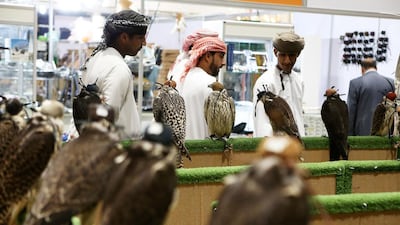
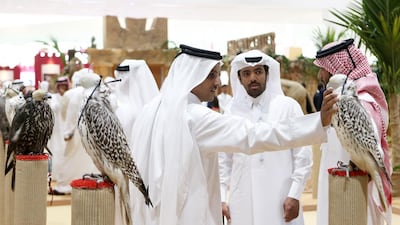
  • The falcons proved to be a popular attraction for visitors at Adihex last year.
    The falcons proved to be a popular attraction for visitors at Adihex last year.
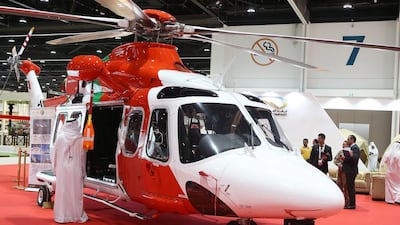
  • A rescue helicopter on display at Adihex.
    A rescue helicopter on display at Adihex.
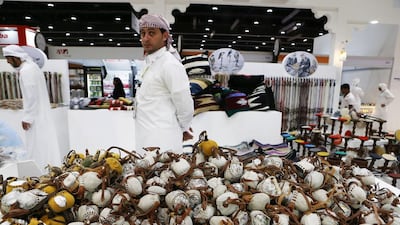
  • Falcon head caps on display at the Alhashimia Falconry stand at Adihex.
    Falcon head caps on display at the Alhashimia Falconry stand at Adihex.
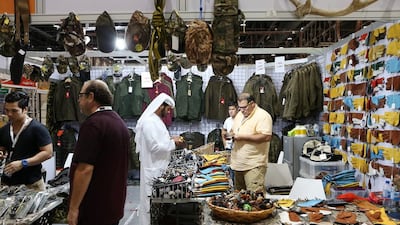
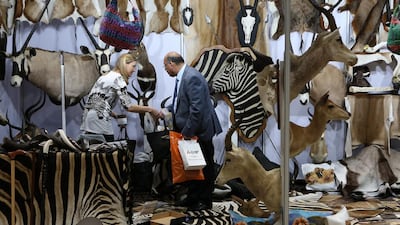
  • Animal skins on display at the Highveld Taxidermists stand.
    Animal skins on display at the Highveld Taxidermists stand.
  • Visitors check out the rifles at the BRNO Rifles stand at Adihex.
    Visitors check out the rifles at the BRNO Rifles stand at Adihex.
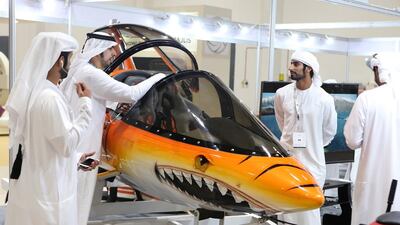
  • Visitors looking at the Seabreacher during the Adihex at Abu Dhabi National Exhibition Centre.
    Visitors looking at the Seabreacher during the Adihex at Abu Dhabi National Exhibition Centre.

But why the woolly mammoth? Why not the Dodo or other extinct animals such as the Christmas Island rat or the Tasmanian tiger — all of which other research teams are working on?

One reason is similar to why wildlife conservation groups focus on animals such as the panda: woolly mammoths have a much bigger public appeal.

“It's a pretty loveable creature,” said Colossal cofounder and chief executive Ben Lamm, who has put $15 million into supporting the project's research.

“There aren't woolly mammoth hate groups online.”

To clone a woolly mammoth, however, well-preserved carcasses that can yield a substantial amount of ancient DNA are needed.

Their cousins, the Asian and African elephant, have usable base genomes that Mr Church's team can edit so that the new species develops characteristics such as resistance to cold and shaggy coats.

Mr Church describes the hoped-for result as an “arctic elephant or cold-resistant elephant”.

Critter karma

Mammoths are giant herbivores and, while on the hunt for food during the Ice Age, they would trample moss and shrubs, which made an indelible mark on the landscape while also helping the permafrost maintain its natural carbon-capturing abilities.

Climate change led to the extinction of the woolly mammoth, but reintroducing them to the wild could re-establish balance and biodiversity in certain biomes.

And as global temperatures rise, the melting permafrost could unleash even more greenhouse gases, exacerbating global warming. Herds of woolly mammoths could help tamp down the tundra and prevent that from happening.

“But it's really about conservation,” Mr Church said.

Scientists identified milk in the stomach and faecal matter in the intestines of this mammoth calf. Photo: Ruth Hartnup

In developing the technology and conducting the genomic sequencing, Colossal has funded the complete sequencing of the Asian elephant genome, a project that could help save endangered elephants from extinction.

“We've been working with the Vertebrate Genomes Project and funding fully annotated reference genomes for existing elephants,” said Mr Lamm.

With the biological clock ticking, the project is trying to create a Noah's Ark of DNA, generating reference genome assemblies of all 66,000 existing vertebrate species.

“The extinction rate is just going up so fast,” said Erich Jarvis, project chairman and neuroscience researcher at Rockefeller University. “So, you have capture the genetic code now before you lose it forever.”

Price tag

Mr Jarvis estimates it costs between $15,000 and $20,000 to genetically catalogue each species, representing a total price tag of a billion dollars or more.

Preserving such genetic information may prove critical to saving a species, and Mr Jarvis suggested we may have an obligation to de-extinct animals.

“If we're responsible for the animal's extinction, then we should be responsible for turning it around,” he said.

That responsibility extends to ensuring the creatures don’t end up in zoos.

“We have a responsibility that they are taken care of, including that they have a flourishing life,” said S Matthew Liao, director of the Centre for Bioethics at New York University, who is also on Colossal's scientific advisory board.

And a flourishing life is one not spent behind bars, activists say. In a recent court case, animal rights campaigners sought to free Happy, an Asian elephant residing at the Bronx Zoo in New York, arguing that she was being illegally detained and should be allowed to roam free.

The group lost the case, but at least one dissenting judge agreed that the elephant deserved to live out her life as she was meant to — in the wild.

Mr Church and Mr Lamm said they will only raise free-range woolly mammoths in the tundra, far from human interference and with no natural predators. Still, there are concerns about unintended consequences, such as mutations and diseases that could affect the animals.

“We've still got time to work through that,” said Mr Lamm, noting that the first mammoth calves are at least five to six years away.

“And we're creating several thousand-pound animals, so rolling that back is much easier” than, say, containing genetically altered mosquitoes, he said.

“I love dystopian science fiction,” Mr Church said. “So Jurassic Park? We're not going to do that.”


Why it pays to compare

A comparison of sending Dh20,000 from the UAE using two different routes at the same time - the first direct from a UAE bank to a bank in Germany, and the second from the same UAE bank via an online platform to Germany - found key differences in cost and speed. The transfers were both initiated on January 30.

Route 1: bank transfer

The UAE bank charged Dh152.25 for the Dh20,000 transfer. On top of that, their exchange rate margin added a difference of around Dh415, compared with the mid-market rate.

Total cost: Dh567.25 - around 2.9 per cent of the total amount

Total received: €4,670.30 

Route 2: online platform

The UAE bank’s charge for sending Dh20,000 to a UK dirham-denominated account was Dh2.10. The exchange rate margin cost was Dh60, plus a Dh12 fee.

Total cost: Dh74.10, around 0.4 per cent of the transaction

Total received: €4,756

The UAE bank transfer was far quicker – around two to three working days, while the online platform took around four to five days, but was considerably cheaper. In the online platform transfer, the funds were also exposed to currency risk during the period it took for them to arrive.

A timeline of the Historical Dictionary of the Arabic Language
  • 2018: Formal work begins
  • November 2021: First 17 volumes launched 
  • November 2022: Additional 19 volumes released
  • October 2023: Another 31 volumes released
  • November 2024: All 127 volumes completed
The lowdown

Rating: 4/5

Kanguva
Director: Siva
Stars: Suriya, Bobby Deol, Disha Patani, Yogi Babu, Redin Kingsley
Rating: 2/5
 
COMPANY%20PROFILE
%3Cp%3E%3Cstrong%3ECompany%3A%20%3C%2Fstrong%3EGrowdash%0D%3Cbr%3E%3Cstrong%3EStarted%3A%20%3C%2Fstrong%3EJuly%202022%0D%3Cbr%3E%3Cstrong%3EFounders%3A%20%3C%2Fstrong%3ESean%20Trevaskis%20and%20Enver%20Sorkun%0D%3Cbr%3E%3Cstrong%3EBased%3A%20%3C%2Fstrong%3EDubai%2C%20UAE%0D%3Cbr%3E%3Cstrong%3EIndustry%3A%20%3C%2Fstrong%3ERestaurant%20technology%0D%3Cbr%3E%3Cstrong%3EFunding%20so%20far%3A%3C%2Fstrong%3E%20%24750%2C000%0D%3Cbr%3E%3Cstrong%3EInvestors%3A%20%3C%2Fstrong%3EFlat6Labs%2C%20Plus%20VC%2C%20Judah%20VC%2C%20TPN%20Investments%20and%20angel%20investors%2C%20including%20former%20Talabat%20chief%20executive%20Abdulhamid%20Alomar%2C%20and%20entrepreneur%20Zeid%20Husban%3C%2Fp%3E%0A
WITHIN%20SAND
%3Cp%3EDirector%3A%20Moe%20Alatawi%3C%2Fp%3E%0A%3Cp%3EStarring%3A%20Ra%E2%80%99ed%20Alshammari%2C%20Adwa%20Fahd%2C%20Muhand%20Alsaleh%3C%2Fp%3E%0A%3Cp%3ERating%3A%203%2F5%3C%2Fp%3E%0A
SPEC%20SHEET%3A%20SAMSUNG%20GALAXY%20Z%20FOLD%204
%3Cp%3E%3Cstrong%3EMain%20display%3A%3C%2Fstrong%3E%207.6%22%20QXGA%2B%20Dynamic%20Amoled%202X%2C%202176%20x%201812%2C%2021.6%3A18%2C%20374ppi%2C%20HDR10%2B%2C%20up%20to%20120Hz%3C%2Fp%3E%0A%3Cp%3E%3Cstrong%3ECover%20display%3A%3C%2Fstrong%3E%206.2%22%20HD%2B%20Dynamic%20Amoled%202X%2C%202316%20x%20904%2C%2023.1%3A9%2C%20402ppi%2C%20up%20to%20120Hz%3C%2Fp%3E%0A%3Cp%3E%3Cstrong%3EProcessor%3A%3C%2Fstrong%3E%20Qualcomm%20Snapdragon%208%2B%20Gen%201%2C%204nm%2C%20octa-core%3B%20Adreno%20730%20GPU%3C%2Fp%3E%0A%3Cp%3E%3Cstrong%3EMemory%3A%3C%2Fstrong%3E%2012GB%3C%2Fp%3E%0A%3Cp%3E%3Cstrong%3ECapacity%3A%3C%2Fstrong%3E%C2%A0256%2F512GB%20%2F%201TB%3C%2Fp%3E%0A%3Cp%3E%3Cstrong%3EPlatform%3A%3C%2Fstrong%3E%20Android%2012%2C%20One%20UI%204.1.1%3C%2Fp%3E%0A%3Cp%3E%3Cstrong%3EMain%20camera%3A%3C%2Fstrong%3E%20Triple%2012MP%20ultra-wide%20(f%2F2.2)%20%2B%2050MP%20wide%20(f%2F1.8)%20%2B%2010MP%20telephoto%20(f%2F2.4)%2C%20dual%20OIS%2C%203x%20optical%20zoom%2C%2030x%20Space%20Zoom%2C%20portrait%2C%20super%20slo-mo%3C%2Fp%3E%0A%3Cp%3E%3Cstrong%3EVideo%3A%3C%2Fstrong%3E%208K%4024fps%2C%204K%4030%2F60fps%2C%20full-HD%4030%2F60fps%2C%20HD%4030fps%3B%20slo-mo%4060%2F240%2F960fps%3B%20HDR10%2B%3C%2Fp%3E%0A%3Cp%3E%3Cstrong%3ECover%20camera%3A%3C%2Fstrong%3E%2010MP%20(f%2F2.2)%3C%2Fp%3E%0A%3Cp%3E%3Cstrong%3EInner%20front%20camera%3A%3C%2Fstrong%3E%20Under-display%204MP%20(f%2F1.8)%3C%2Fp%3E%0A%3Cp%3E%3Cstrong%3EBattery%3A%3C%2Fstrong%3E%204400mAh%2C%2025W%20fast%20charging%2C%2015W%20wireless%20charging%2C%20reverse%20wireless%20charging%2C%20'all-day'%20life%3C%2Fp%3E%0A%3Cp%3E%3Cstrong%3EConnectivity%3A%3C%2Fstrong%3E%205G%3B%20Wi-Fi%2C%20Bluetooth%205.2%2C%20NFC%20(Samsung%20Pay)%3C%2Fp%3E%0A%3Cp%3E%3Cstrong%3EI%2FO%3A%3C%2Fstrong%3E%20USB-C%3C%2Fp%3E%0A%3Cp%3E%3Cstrong%3ECards%3A%3C%2Fstrong%3E%20Nano-SIM%20%2B%20eSIM%3B%202%20nano-SIMs%20%2B%20eSIM%3B%202%20nano-SIMs%3C%2Fp%3E%0A%3Cp%3E%3Cstrong%3EColours%3A%3C%2Fstrong%3E%20Graygreen%2C%20phantom%20black%2C%20beige%2C%20burgundy%20(online%20exclusive)%3C%2Fp%3E%0A%3Cp%3E%3Cstrong%3EIn%20the%20box%3A%3C%2Fstrong%3E%20Fold%204%2C%20USB-C-to-USB-C%20cable%3C%2Fp%3E%0A%3Cp%3E%3Cstrong%3EPrice%3A%3C%2Fstrong%3E%20Dh6%2C799%20%2F%20Dh7%2C249%20%2F%20Dh8%2C149%3C%2Fp%3E%0A
The specs: 2018 BMW R nineT Scrambler

Price, base / as tested Dh57,000

Engine 1,170cc air/oil-cooled flat twin four-stroke engine

Transmission Six-speed gearbox

Power 110hp) @ 7,750rpm

Torque 116Nm @ 6,000rpm

Fuel economy, combined 5.3L / 100km

How to apply for a drone permit
  • Individuals must register on UAE Drone app or website using their UAE Pass
  • Add all their personal details, including name, nationality, passport number, Emiratis ID, email and phone number
  • Upload the training certificate from a centre accredited by the GCAA
  • Submit their request
What are the regulations?
  • Fly it within visual line of sight
  • Never over populated areas
  • Ensure maximum flying height of 400 feet (122 metres) above ground level is not crossed
  • Users must avoid flying over restricted areas listed on the UAE Drone app
  • Only fly the drone during the day, and never at night
  • Should have a live feed of the drone flight
  • Drones must weigh 5 kg or less
The burning issue

The internal combustion engine is facing a watershed moment – major manufacturer Volvo is to stop producing petroleum-powered vehicles by 2021 and countries in Europe, including the UK, have vowed to ban their sale before 2040. The National takes a look at the story of one of the most successful technologies of the last 100 years and how it has impacted life in the UAE.

Read part three: the age of the electric vehicle begins

Read part two: how climate change drove the race for an alternative 

Read part one: how cars came to the UAE

Updated: August 16, 2022, 3:51 PM