



Facing possible prison time and dire personal consequences for storming the US Capitol, some of those accused of engaging in the January 6 riot are trying to profit from their participation, using it as a platform to drum up cash, promote business endeavours and boost social media profiles.
A Nevada man jailed on riot charges asked his mother to contact publishers for a book he was writing about “the Capitol incident”.
A rioter from Washington state helped his father sell clothes and other merchandise bearing slogans such as “Our House” and images of the Capitol building.
A Virginia man released a rap album with riot-themed songs and a cover photograph of him sitting on a police vehicle outside the Capitol on January 6, 2021.
Those actions are sometimes complicating matters for the accused when they face judges at sentencing as prosecutors point to the profit-chasing activities in seeking tougher punishments. The Justice Department, in some instances, is trying to claw back money that rioters have made off the insurrection.
Many rioters have paid a steep personal price for their actions on January 6. At sentencing, rioters often ask for leniency on the grounds that they already have experienced severe consequences for their crimes.
They lost jobs or entire careers, marriages fell apart, friends and relatives shunned them or even reported them to the FBI, strangers have sent them hate mail and online threats, and they have racked up expensive legal bills to defend themselves against federal charges.
Websites and crowdfunding platforms set up to collect donations for suspected Capitol rioters try to portray them as mistreated patriots or even political prisoners.
An anti-vaccine medical doctor who pleaded guilty to illegally entering the Capitol founded a non-profit that raised more than $430,000 for her legal expenses. The fund-raising appeal by Simone Gold’s group, America’s Frontline Doctors, didn’t mention her guilty plea, prosecutors noted.
Another rioter, New Jersey gym owner Scott Fairlamb, who allegedly punched a police officer during the siege, raised more than $30,000 in online donations for a “Patriot Relief Fund” to cover his mortgage payments and other monthly bills.
A group calling itself the Patriot Freedom Project says it has raised more than $1 million in contributions and paid more than $665,000 in grants and legal fees for families of suspected Capitol rioters.
In April, a New Jersey-based foundation associated with the group filed an IRS application for tax-exempt status.
-
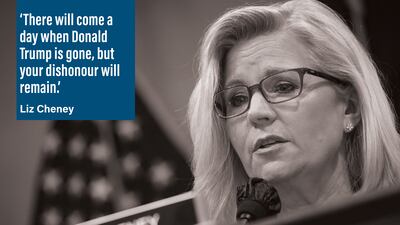
'There will come a day when Donald Trump is gone, but your dishonour will remain.' Congresswoman and January 6 committee vice chairwoman Liz Cheney to Republican colleagues who have defended Mr Trump's claims of election fraud. AFP -
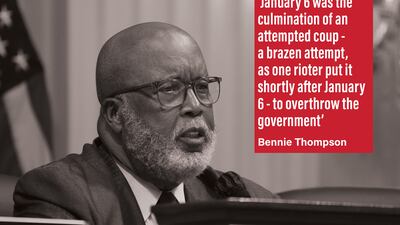
'January 6 was the culmination of an attempted coup - a brazen attempt, as one rioter put it shortly after January 6 - to overthrow the government.' Committee chairman Bennie Thompson. EPA -
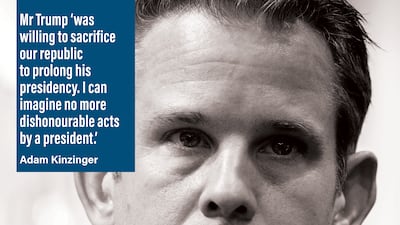
Mr Trump 'was willing to sacrifice our republic to prolong his presidency. I can imagine no more dishonourable acts by a president.' Republican Congressman Adam Kinzinger. AFP -
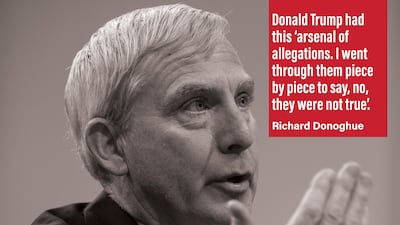
Donald Trump had this 'arsenal of allegations. I went through them piece by piece to say, no, they were not true'. Former acting deputy attorney general Richard Donoghue. EPA -

'There were no votes to find.' Georgia Secretary of State Brad Raffensperger after Donald Trump asked him and his deputy, Gabriel Sterling, to 'find 11,780' votes that could flip Georgia in the president's favour. AFP -

Competing against Donald Trump’s lies was like a 'shovel trying to empty the ocean'. Gabriel Sterling, Georgia Secretary of State chief operating officer. AFP -
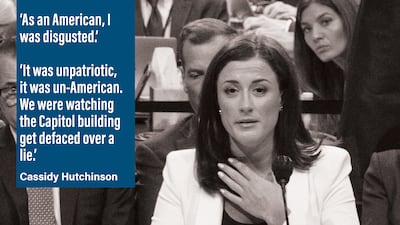
'As an American, I was disgusted. It was unpatriotic, it was un-American. We were watching the Capitol building get defaced over a lie.' Cassidy Hutchinson, an aide to then White House chief of staff Mark Meadows, speaking about the insurrection. AFP -
!['I told him [Donald Trump] that the stuff his people were shovelling out to the public was bull***t.' Former attorney general William Barr. AP](https://www.thenationalnews.com/resizer/v2/RLINK2AWKRFONAWRZ7TNQF6VI4.jpg?smart=true&auth=898bee20e87c352f4801c4275eab58720719d25c3b0343a94bb0b4d88c1d38f4&width=400&height=225)
'I told him [Donald Trump] that the stuff his people were shovelling out to the public was bull***t.' Former attorney general William Barr. AP -

'I respect attorney general Barr. So, I accepted what he was saying.' Ivanka Trump, former White House senior adviser. AP -
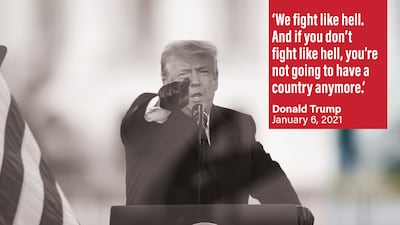
'We fight like hell. And if you don't fight like hell, you're not going to have a country any more.' Donald Trump on January 6, 2021. Reuters -

A Confederate battle flag that reads 'Come and Take It' and shows a military-style rifle flies as rioters storm the Capitol on January 6, 2001. Reuters -
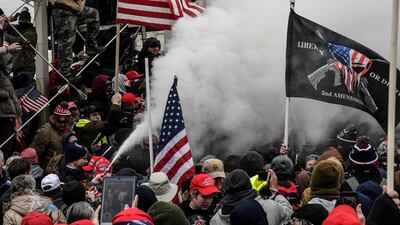
A Trump supporter sprays smoke. Reuters -
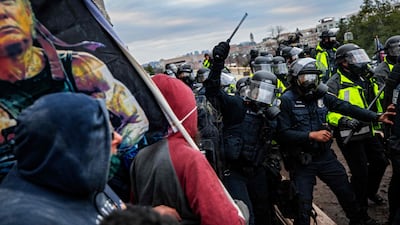
Police attempt to push the mob back. AFP -
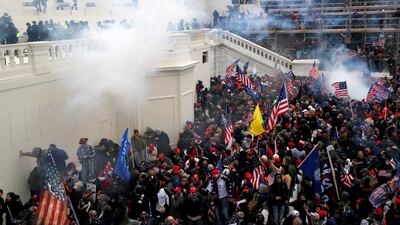
The pro-Trump mob swarms the Capitol as police release tear gas. Reuters -
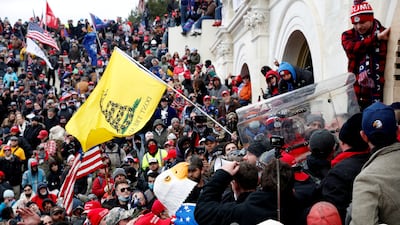
Protesters clash with police. Reuters -
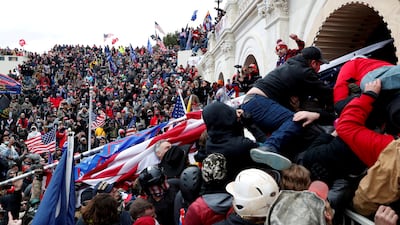
Pro-Trump protesters storm into the US Capitol. Reuters -
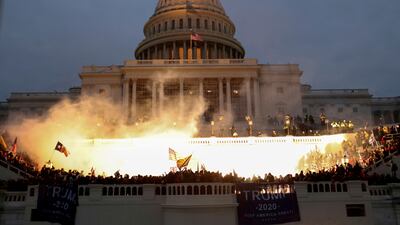
A police flash-bang blast lights up the Capitol. Reuters -
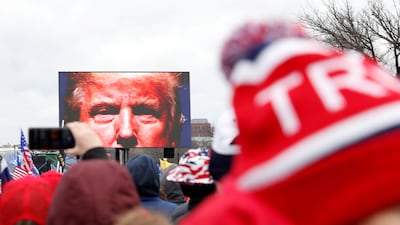
Before the insurrection, Mr Trump is seen on a screen speaking to supporters during a rally to contest the certification of the 2020 US presidential election results. Reuters -
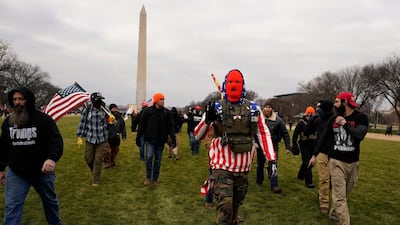
People march with those who say they are members of the Proud Boys as they attend a rally in Washington in support of former president Donald Trump. AP


!['I told him [Donald Trump] that the stuff his people were shovelling out to the public was bull***t.' Former attorney general William Barr. AP](https://www.thenationalnews.com/resizer/v2/RLINK2AWKRFONAWRZ7TNQF6VI4.jpg?smart=true&auth=898bee20e87c352f4801c4275eab58720719d25c3b0343a94bb0b4d88c1d38f4&width=800&height=450)


Rioters have found other ways to enrich or promote themselves.
Jeremy Grace, who was sentenced to three weeks in jail for entering the Capitol, tried to profit from his participation by helping his father sell T-shirts, baseball caps, water bottles, decals and other items with phrases such as “Our House” and “Back the Blue” and images of the Capitol, prosecutors said.
Federal authorities have seized more than $62,000 from a bank account belonging to John Earle Sullivan, a Utah man who earned more than $90,000 from selling his January 6 video footage to at least six companies.
And Richard “Bigo” Barnett, an Arkansas man photographed propping his feet up on a desk in the office of House Speaker Nancy Pelosi, has charged donors $100 for photos of him with his feet on a desk while under house arrest.
A few rioters are writing books about the mob’s attack or have marketed videos that they shot during the riot.
Ronald Sandlin, a Nevada man charged with assaulting officers near doors to the Senate gallery, posted on Facebook that he was “working out a Netflix deal” to sell riot video footage. He also asked his mother from prison to contact publishers for the book he was writing about the “Capitol incident”, prosecutors said.
“I hope to turn it into movie,” Mr Sandlin wrote in a March 2021 text message. “I plan on having Leonardo DiCaprio play me,” he wrote, adding a smiley face emoji.

