

The US Supreme Court on Thursday imposed limits on the federal government's authority to issue sweeping regulations to reduce carbon emissions from power plants in a ruling that will undermine President Joe Biden's plans to tackle climate change.
The court's 6-3 ruling restricted the Environmental Protection Agency's (EPA) authority to regulate greenhouse gas emissions from existing coal- and gas-fired power plants under the Clean Air Act anti-pollution law. The Biden administration is currently working on new regulations.
“This is another devastating decision from the Court that aims to take our country backwards,” a spokesman for Mr Biden said in a statement.
“While the Court's decision risks damaging our ability to keep our air clean and combat climate change, President Biden will not relent in using the authorities that he has under law to protect public health and tackle the climate change crisis. Our lawyers will study the ruling carefully.”
The ruling is likely to have implications beyond the EPA as it raises new legal questions about any big decisions made by federal agencies.
US Department of Health and Human Services Secretary Xavier Becerra said the Supreme Court's decision is a “public health disaster” that will be detrimental to Americans.
“A failure to regulate power plant emissions will lead to increases in asthma, lung cancer, and other diseases associated with poor air quality, and in many places, those impacts are likely to fall hardest in already heavily polluted neighbourhoods,” Mr Becerra said in a press release.
The Supreme Court's conservative majority has signalled continuing scepticism towards expansive federal regulatory authority.
The justices overturned a 2021 decision by the US Court of Appeals for the District of Columbia Circuit that had struck down former Republican president Donald Trump's Affordable Clean Energy rule.
That regulation, which the Biden administration has said it has no intention to retain, would impose limits on a Clean Air Act provision called Section 111, which provides the EPA with the authority to regulate emissions from existing power plants.
Climate change around the world — in pictures
-

Engineers carry solar panels on to the roof of a property in Barcelona in September 2022. Spain and other Mediterranean countries have generated record amounts of power from wind and solar farms. Bloomberg -
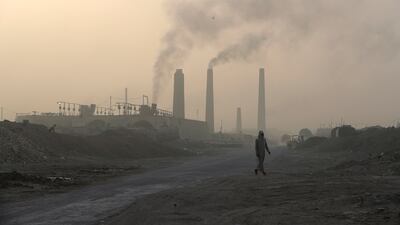
Smoke rises from brick factory stacks in Nahrawan, Baghdad. Tackling emissions from heavy industry is crucial to tackling global warming. Reuters -

A boy stands near a flock of sheep as a sandstorm approaches in the Syrian countryside of Tabqa. Syria is among the countries most vulnerable and poorly prepared for climate change, which is expected to worsen. AFP -
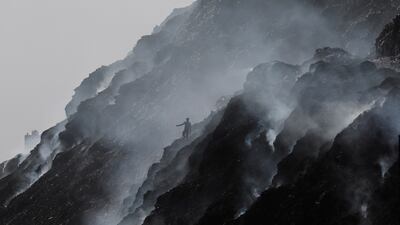
Mountains of smouldering rubbish at the Bhalswa landfill in New Delhi, India. Reuters -
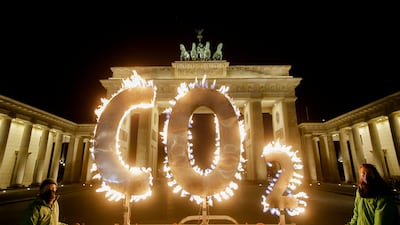
Greenpeace activists take part in a climate change protest in front of the Brandenburg Gate in Berlin in May. AP -
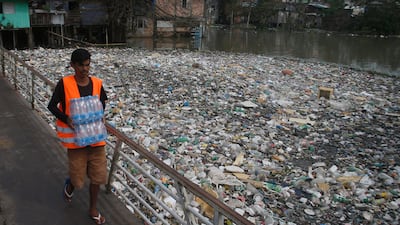
A man carries water bottles across the heavily polluted Negro River in Manaus, Brazil. About 35 tonnes of rubbish are removed daily from the river. AP -
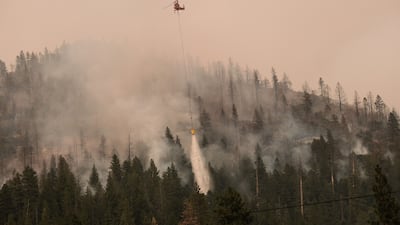
A helicopter drops water on a brush fire in California. Bloomberg -
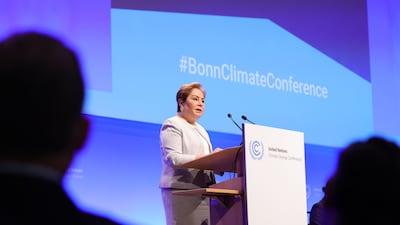
UN climate chief Patricia Espinosa speaks on the opening day of the Bonn climate change conference in Germany. Getty -

Activists take part in a demonstration to raise awareness of global warming, during an event to mark World Environment Day in Kolkata. AFP -
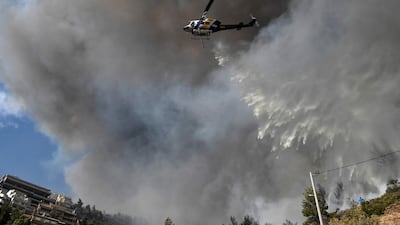
A helicopter drops water on a bushfire near a residential district in Athens. The fire forced residents to flee. AFP -
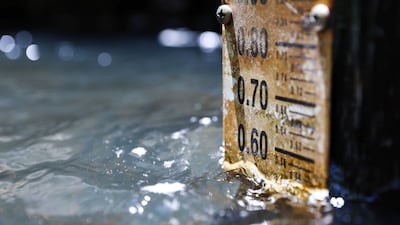
A gauge measures water levels in the Rio Nambe river, in New Mexico. Ninety per cent of the state is experiencing extreme drought. Getty -

Afghan refugees search for recyclable material from heaps of rubbish in Karachi, Pakistan. AP -

A climate activist ties herself to the net during the semi-final tennis match between Croatia's Marin Cilic and Norway's Casper Ruud at the French Open in Roland Garros in Paris. AP -

A dance group performs at a climate summit in Stockholm, Sweden. Getty -

US climate envoy John Kerry talks to a delegate at the Stockholm 50 climate summit. Getty -
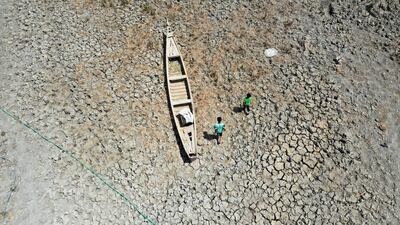
A boat is stranded during low tide at the Chebayesh marsh in Dhi Qar province, Iraq. Reuters -
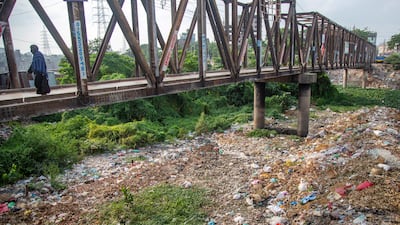
A woman crosses a polluted river in Dhaka, Bangladesh. EPA -
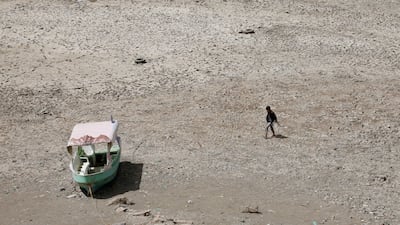
A man walks past an abandoned boat in the bed of a drought-affected reservoir on the outskirts of Sana'a, Yemen. EPA


The ruling was based on what is called the “major questions” legal doctrine that requires explicit congressional authorisation for action on issues of broad importance and societal impact.
The justices in January embraced that theory when it blocked the Biden administration's vaccine-or-test policy for larger businesses, a key element of its plan to combat the Covid-19 pandemic.
The decision will constrain the EPA's ability to issue any regulations on power plants that push for an ambitious a national shift in energy policy towards renewable sources.
As such, the ruling will hamstring the Biden administration's ability to curb the power sector's emissions — representing about a quarter of US greenhouse gases.
A group of Republican-led US states, headed by major coal producer West Virginia, asked the justices to limit the EPA's ability to regulate greenhouse gas emissions from existing power plants under the Clean Air Act. Other challengers included coal companies and coal-friendly industry groups.
UAE and US launch global initiative for climate change innovation in agriculture
Coal is among the most greenhouse gas-intensive fuels.
Democrat-led states and major power companies including Consolidated Edison Inc, Exelon Corp and PG&E Corp sided with the Biden administration, as did the Edison Electric Institute, an investor-owned utility trade group.
The Biden administration wants the US power sector decarbonised by 2035. The US, behind only China in greenhouse gas emissions, is a pivotal player in efforts to combat climate change on a global basis.
The UN on February 28 — the same day as the Supreme Court's oral arguments in the case — released a 3,675-page report calling for global action to combat climate change.
The rule proposed by Mr Trump, a supporter of the coal industry who also questioned climate change science, was meant to supplant former Democratic president Barack Obama's Clean Power Plan mandating major reductions in carbon emissions from the power industry.
The Supreme Court blocked Clean Power Plan implementation in 2016 without ruling on its lawfulness.
Effects of climate change in Iraq — in pictures
-
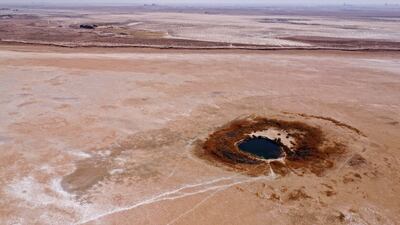
A remaining pond at the dried-up Sawa Lake on the edge of Iraq’s western desert. AFP -

A street sign for Sawa Lake. A sharp drop in rainfall –now only at 30 per cent of what used to be normal for the region – has lowered the underground water table, said a senior advisor at Iraq's water resources ministry. AFP -
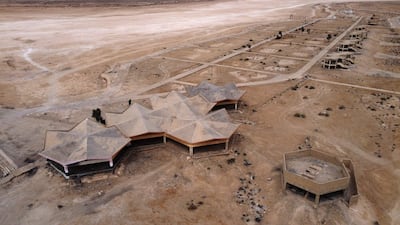
Hotels and tourist facilities near Sawa Lake have been abandoned. AFP -
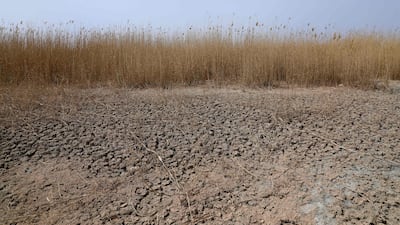
Dry, arid landscape remains. AFP -
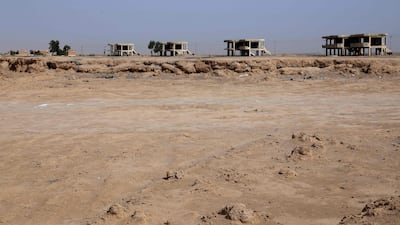
What's left of hotel accommodation. AFP -
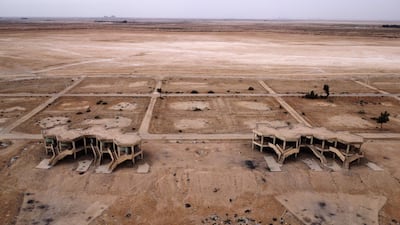
Iraq's Sawa Lake was once a popular tourist destination. AFP -
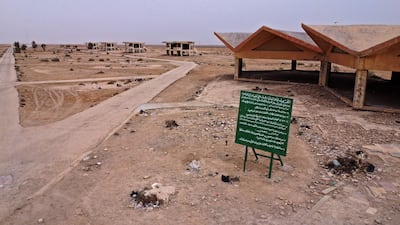
What was once a tourist hotspot now stands empty. AFP -
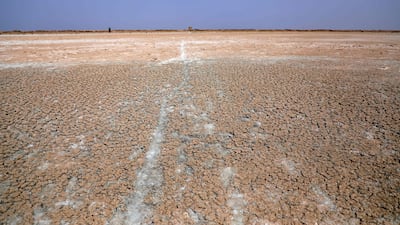
Parts of Sawa Lake are completely dry. AFP -
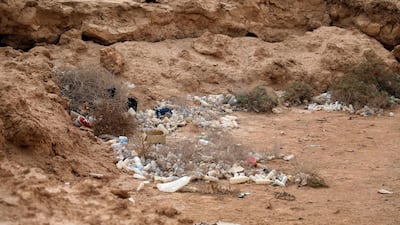
Bottles and plastic bags litter what was once a luscious lake. AFP -
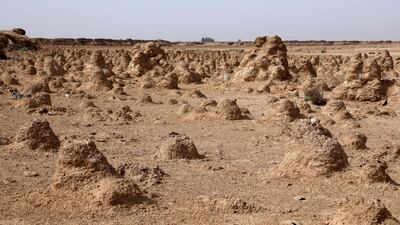
What was once a lake is now dry, arid landscape. AFP -
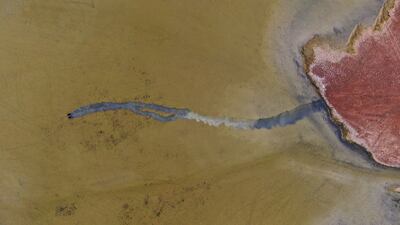
Lake Milh, also known as Razzaza Lake, in Iraq's central province of Karbala is also facing the perils of drought. AFP -

Dead fish litter Iraq's Lake Milh. AFP -
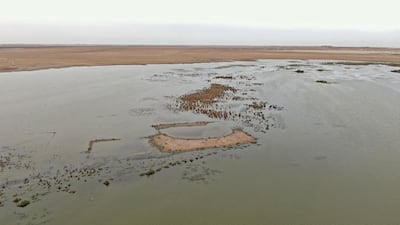
Human activity and climate change have combined to turn the site into a barren wasteland with piles of salt. AFP -
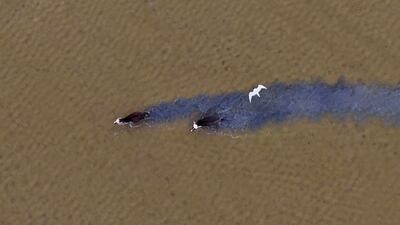
This aerial view shows horses running in Lake Milh. AFP -
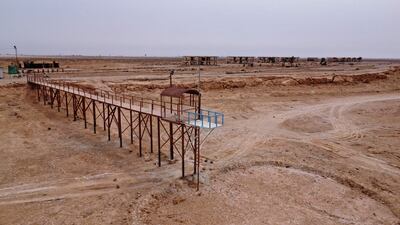
Sawa Lake is now dry due to years of drought. AFP



