


US President Joe Biden will focus on the continued global response to Russia's invasion of Ukraine and other international threats at the G7 Leaders' Summit on Saturday and the Nato conference in Madrid on Monday.
A senior administration official said there will be measures announced to increase "pressure on Russia" during the G7 event.
US officials also said Ukrainian President Volodymyr Zelenskyy will speak via video link at both summits.
The visit will be Mr Biden’s fourth to Europe since taking office. He last visited Brussels and Warsaw in late March for meetings addressing the conflict in Ukraine.
"The president has been very clear in the context of the Ukraine crisis that Nato must defend every inch of Nato territory," a senior US official said on Wednesday.
Secretary of State Antony Blinken will also travel to both summits.
Mr Biden also hopes to discuss democratic and economic challenges posed by China as well as climate change, food security and global health.
-
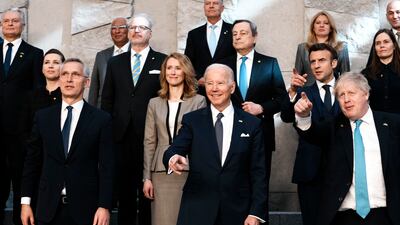
Nato Secretary General Jens Stoltenberg, front left, US President Joe Biden and British Prime Minister Boris Johnson pose for a photo during an extraordinary Nato summit in Brussels. AP Photo -
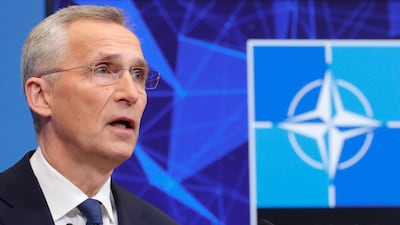
Jens Stoltenberg speaks at a press conference at the end of the summit in Brussels. EPA -
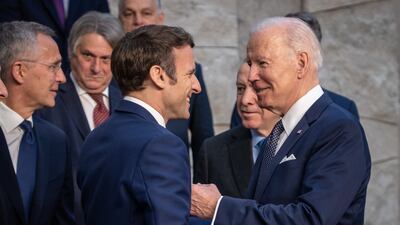
France's President Emmanuel Macron shakes hands with Mr Biden as they arrive at Nato headquarters. AFP -

The leaders gather for a photo in Brussels. AP Photo -
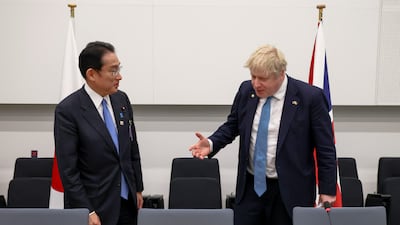
Japanese Prime Minister Fumio Kishida and Boris Johnson attend a bilateral meeting. Getty Images -
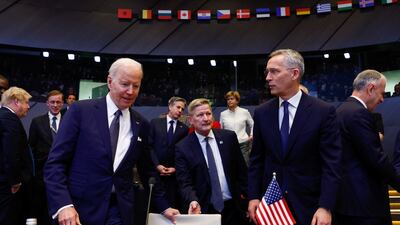
Joe Biden speaks with Jens Stoltenberg during the summit. Reuters -
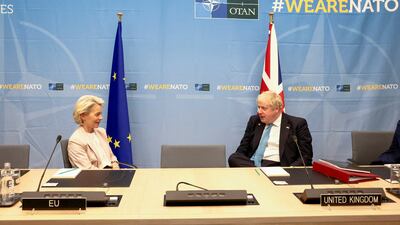
European Commission President Ursula von der Leyen and Boris Johnson. PA -
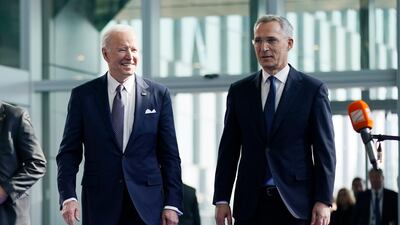
Mr Biden is greeted by Mr Stoltenberg as he arrives for meetings with Nato allies in the Belgian capital. AP Photo -
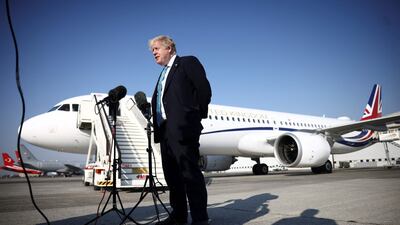
Mr Johnson addresses media representatives after he arrives in Brussels. AFP -
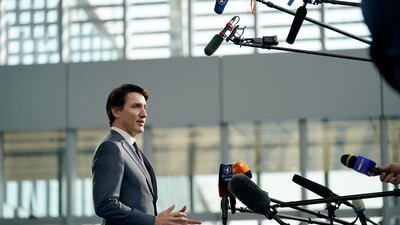
Canada's Prime Minister Justin Trudeau speaks to the press in Brussels. AFP -
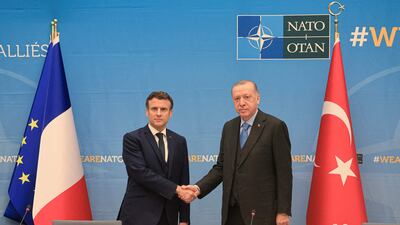
Mr Macron shakes hands with Turkish President Recep Tayyip Erdogan. AFP -
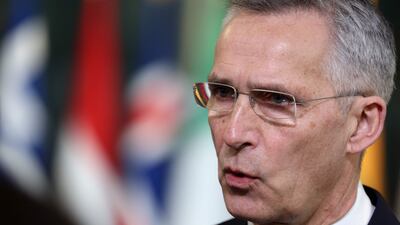
Mr Stoltenberg at Nato's headquarters in Brussels. AFP -
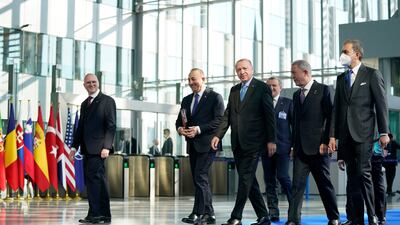
Mr Erdogan with officials including Turkey's Foreign Minister Mevlut Cavusoglu as he arrives in Brussels. AFP -
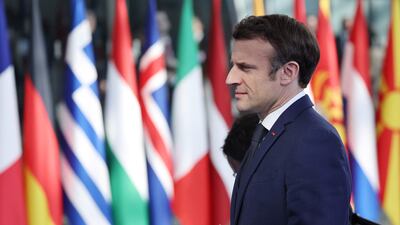
Mr Macron arriving at the summit. AFP


"Ukraine is not causing us to take our eye off the ball on on China," the official said.
"It's the democratic world on both Russia and China and President Biden has effectively linked our efforts in Europe and Asia."
Mr Biden and Vice President Kamala Harris met earlier this month with Nato Secretary General Jens Stoltenberg to prepare for the summit in Madrid.
"The leaders discussed the implications of Russia’s war on Ukraine for transatlantic security and the importance of strengthening Nato’s deterrence and defense, in addition to ensuring Nato is properly resourced to address a wide range of challenges, from cyber to climate change," a White House statement said.
Defence Secretary Lloyd Austin also met Mr Stoltenberg for preparations for the ministerial.
Mr Stoltenberg had been due to step down as secretary general at the summit, but given the Russian invasion of Ukraine, Nato leaders have requested that he stay on.
"In the face of Russia's unprovoked aggression against Ukraine, Nato has grown stronger and more united,” Mr Austin said during his meeting with Mr Stoltenberg.
"We couldn't have done what's been done … without your strong leadership."
Mr Biden will also travel to Israel, the West Bank and Saudi Arabia next month, where he will hold his first meeting with regional leaders. It will be his first visit to the Arab world as president.
The Middle East trip, which will take place from July 13 to 16, will “reinforce the United States’ ironclad commitment to Israel’s security and prosperity”, White House Press Secretary Karine Jean-Pierre said.
She added that Mr Biden will attend a summit of Gulf Co-operation Council countries plus Egypt, Iraq and Jordan, known as the GCC+3.
Additional reporting by Patrick deHahn

