

The US envoy for the Horn of Africa completed a two-day trip to Ethiopia this week in a bid to break the diplomatic deadlock between Addis Ababa and the Tigray People’s Liberation Front (TPLF).
A State Department official told The National that special envoy David Satterfield met with African Union (AU) Commissioner for Political Affairs, Peace and Security, Bankole Adeoye, and AU High Representative for the Horn of Africa, Olusegun Obasanjo.
Mr Satterfield’s trip concluded the day before the Senate Foreign Relations Committee held over an Ethiopia sanctions bill during a business meeting on Wednesday. The legislation partially mirrors a similar bill that the House Foreign Affairs Committee advanced last month.
The senior US diplomat also met in Addis Ababa with representatives from the United Nations and humanitarian organisations “to discuss the need for urgent and sustained delivery of humanitarian aid to those in need in Tigray".
In its latest report, the United Nations estimated nearly half a million children are lacking food in the Tigray region, and more than 115,000 are severely malnourished.
Last week, the head of the World Health Organisation, Tedros Adhanom Ghebreyesus, said “nowhere on earth” is suffering more food insecurity than Tigray.
In its January report, the World Food Programme estimated 80 per cent of Tigray’s population is food insecure.
Mr Satterfield was expected to meet Ethiopian government officials but the State Department did not disclose those meetings.
This is his third trip to Ethiopia since taking the position in January, and experts say the new envoy has pursued a quieter US approach in handling the conflict and US relations with Ethiopian Prime Minister Abiy Ahmed.
Cameron Hudson, a senior fellow at the Atlantic Council’s Africa Centre, sees a growing split between Congress and the Biden Administration on Ethiopia.
“There is a fairly wide divide between where Congress and the administration are on Ethiopia right now, which is not aided by the fact that the Administration appears to be taking a much more low key, private approach to its diplomacy,” Mr Hudson told The National.
“We are no longer seeing the very public and high level calls for access and accountability from the State Department, even though the situation on the ground has not measurably improved.”
The draft sanctions legislation in both the Senate and the House would impose sanctions on anyone who undermines a negotiated settlement to Ethiopia’s civil war or has committed human rights abuses in the conflict.
Additionally, it would sanction anyone who provides arms to any party in the war.
-

Thousands of Eritrean refugees have fled on foot through the harsh, rugged terrain of Ethiopia’s Afar region, to escape the latest outbreak of shelling and gunfire. All photos: AFP -
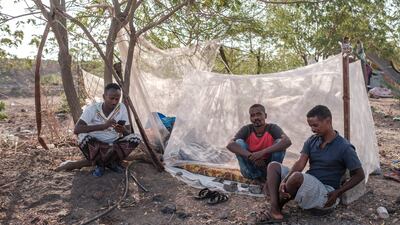
Civilians fleeing the violence gather at the compound of the Agda Hotel, in Semera. -
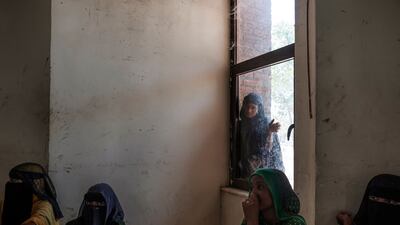
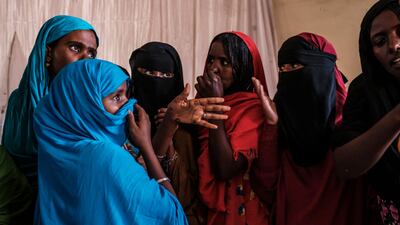
Women refugees wait at the hotel to be registered by the authorities. -
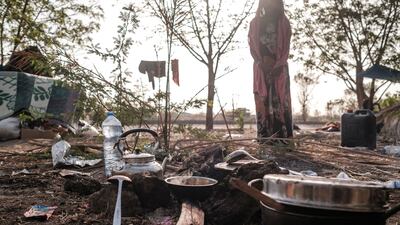
Those lucky enough to escape the latest violence are now scattered across Afar, facing uncertainty in a country they once regarded as a haven from their repressive homeland. -
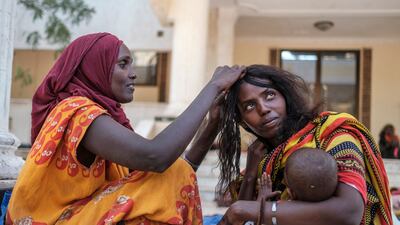
A woman gets her hair braided outside the Agda Hotel. -
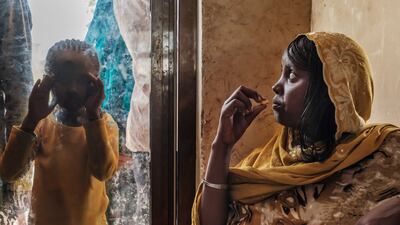
The fighting has renewed debate on how to accommodate one of the most vulnerable groups in Africa's second most populous country. -
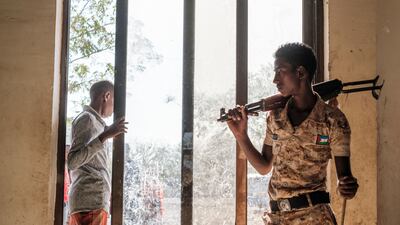
‘Ethiopia is no longer a safe place for Eritrean refugees – that's quite clear,’ said Sarah Miller of Refugees International. -
Refugee charities have highlighted the 'scale and scope' of abuse of Eritreans at every stage of the 15-month war in Ethiopia. -
Eritrean refugees have a long history in northern Ethiopia, first arriving in 2000 towards the end of a two-year border war. -
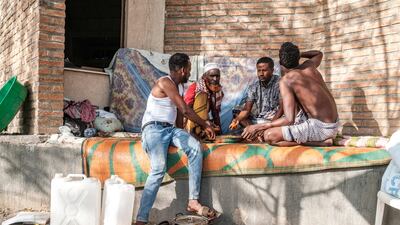
Before the current conflict, the UN said 113,000 Eritrean refugees were registered in Tigray and Afar. -
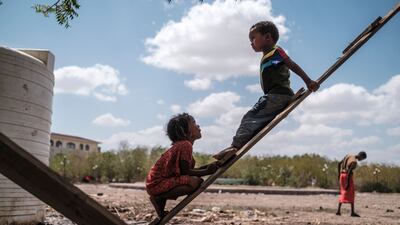
Most have fled from the authoritarian rule of President Isaias Afwerki, whose abysmal rights record has led Eritrea being nicknamed 'Africa's North Korea'. -
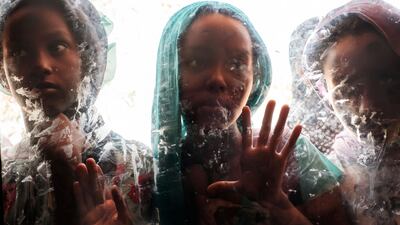
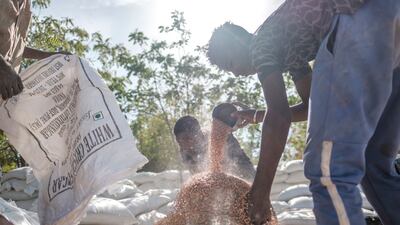
The refugees have faced extended cuts to food and medical aid. -
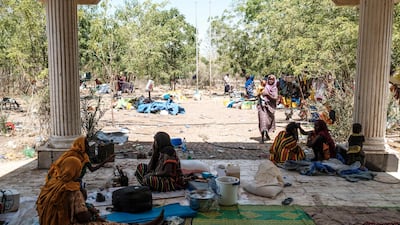
An attack on the Bahrale camp this month was part of a broader offensive in Afar that diplomats say represents the latest setback to the prospect of peace talks. -
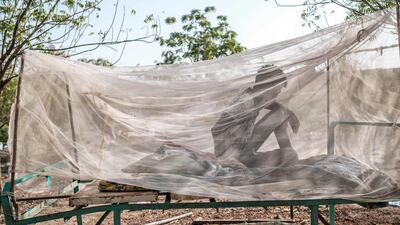
'They kidnapped some refugee women, we do not know where they are,' said one survivor, who became separated from her sister and 9-year-old son. -
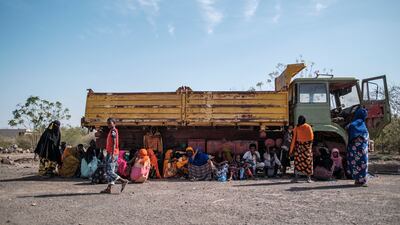
Hundreds of refugees from Bahrale have since sought shelter at the Agda Hotel, gathering under cardboard boxes or spindly trees in the courtyard to shield themselves from the sun.


It would also require the Joe Biden administration to use Washington’s influence at organisations such as the International Monetary Fund to block loans to Addis Ababa, and stop the US International Development Finance Corporation from funding projects in Ethiopia.
“The State Department clearly thinks a diplomatic solution is achievable…but Congress is of the view that our policy needs both carrots and sticks, not just the threat of sticks,” Mr Hudson said.
The State Department last year paused a legal review considering whether the Ethiopian government’s actions in Tigray amount to genocide as part of a bid to draw Mr Abiy to the negotiating table.
But the sanctions legislation advanced by the House last month would require Secretary of State Antony Blinken to determine whether actions by the Ethiopian government or TPLF constitute a genocide within three months after the bill becomes law.
Mr Biden issued an executive order last year paving the way for sanctions against Ethiopian and Eritrean officials backing Addis Ababa against the TPLF.
Although he has not yet imposed sanctions on Ethiopian or TPLF officials, he did place them on several Eritrean military leaders in November under the executive order.
The Biden administration has also removed Ethiopia from the African Growth and Opportunity Act – a key trade pact granting eligible participants in Sub-Saharan Africa duty-free access to the US market for thousands of products – over human rights breaches in Tigray.
Ethiopia has cut internet, phone and media access in Tigray since the conflict erupted in 2020, while reportedly complicating or halting the delivery of humanitarian aid to the war-torn region.
Witnesses have described widespread human rights abuses in Tigray, including the displacement and murder of civilians, gang rapes, the destruction of civilian infrastructure and the burning of crops.
Amnesty International has documented sexual violence and civilian casualties in Tigray at the hands of Ethiopian forces and their allies.
The human rights organisation has also documented similar human rights abuses against civilians in neighbouring Amhara at the hands of the TPLF.

