



Live updates: follow the latest news on Russia-Ukraine
For more than a day, the site of the world’s worst nuclear disaster was cut off from Ukraine’s power grid after Russian forces took control of Chernobyl.
The Russian Energy Minister, Nikolay Shulginov, now says power has been restored but concerns continue to mount.
In 1986, a planned safety test on Chernobyl’s reactor number four went horribly awry, leading to a core melting down.
The site remains shut off and is still one of the most radioactive places on earth.
The most recent Chernobyl scare came only days after Russian forces engaged in a firefight at Zaporizhzhia Nuclear Power Plant, Europe's largest atomic producer.
It has thrust nuclear power and plants back into the world’s consciousness.
Despite the risks and sometimes deadly consequences, many countries still rely on nuclear power.
In the US, there are 55 commercially operated nuclear power plants and 93 reactors spread across 28 states, making the US the largest producer of the energy in the world.
The vast majority of plants are located east of the Mississippi River with the highest concentration of plants occurring in Illinois. The state has six plants and 11 reactors.
Where are the biggest plants?
-
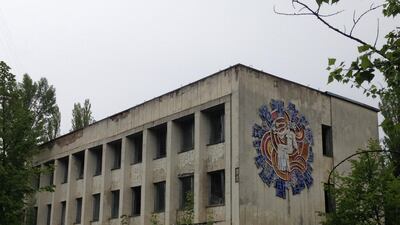
Pripyat is still a draw for visitors, not least for its Soviet-era architecture which has been frozen in time. All photos: Declan McVeigh / The National -
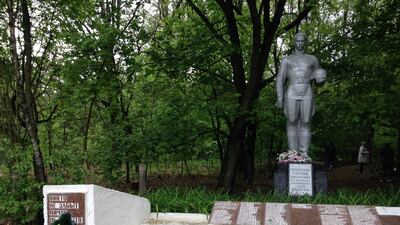
Like thousands of other Soviet towns, Pripyat had memorials to the dead of the 1941-1945 Great Patriotic War. This one is close to an abandoned nursery in the 30km 'dead zone' around Chernobyl. -
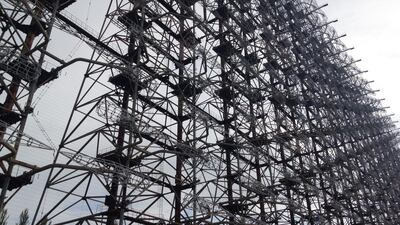
This enormous Duga-1 OTH radar array – AKA the 'Russian woodpecker' for the interference it caused on shortwave radio – dominates the skyline of this remote part of northern Ukraine near Chernobyl. -

Pripyat was once home to nearly 50,000 people; the city has been left to rot as Ukraine’s government still forbids people from living there. -

An abandoned funfair in Pripyat. -

Before the disaster more than 15,400 children lived in the city of Pripyat alone. -
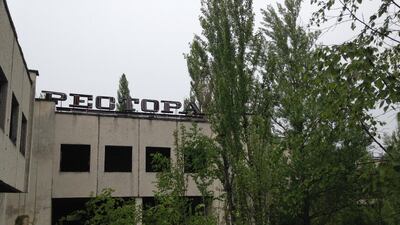
One of Pripyat’s 27 restaurants and cafes, left to the elements since 1986. -
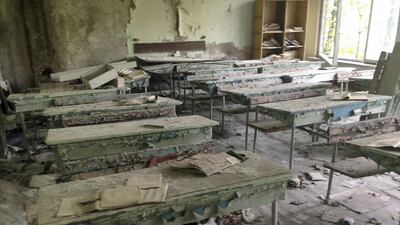
The UN says more than 6,000 cases of thyroid cancer were reported among children from Ukraine, Russia and Belarus up to 2005, 'most likely caused by radiation exposures shortly after the accident'. -
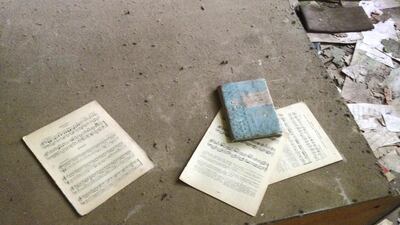
Classrooms were abandoned as the Soviet authorities ordered people to leave the Chernobyl area. Residents were told they would be leaving for three days, but officials later decided the area would remain empty. -
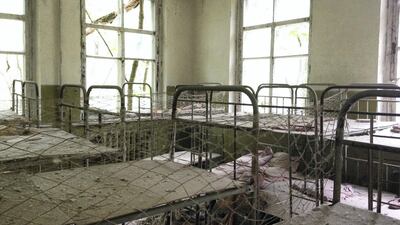
This nursery was one of 15 which educated almost 5,000 young children across the area. -
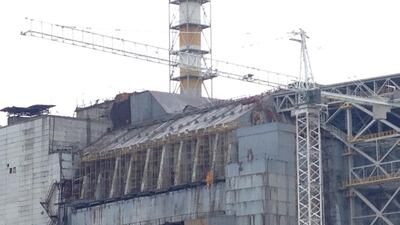
The sarcophagus over reactor number four at Chernobyl was designed and built in 1986 to keep in 740,000m3 of radioactive debris and contaminated soil. In November 2016 the sarcophagus itself was covered in the €1.5 billion ($1.49bn) Chernobyl New Safe Confinement project. -
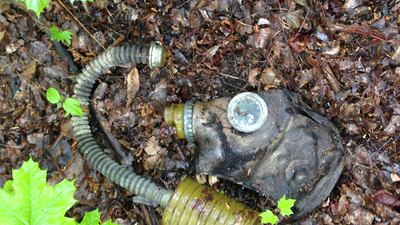
A gas mask once worn by one of thousands of Soviet 'liquidators' - a mix of civilian and military workers sent to Chernobyl after the reactor explosion. More than half a million people took part in the clean-up. -
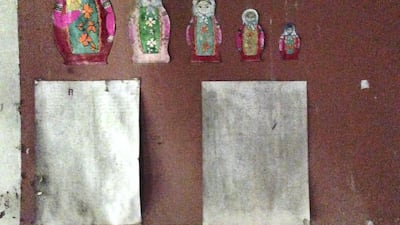
The 30km exclusion zone around the site of the blast is dotted with reminders that it was once home to thousands of people. This nursery was abandoned on April 27, 1986. -
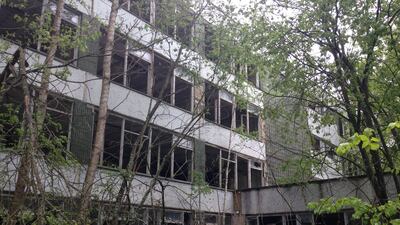
Abandoned buildings in Pripyat remain officially out of bounds, but some people – a mix of former residents, villagers, adventurers and mere loners – have returned to live inside the 30km 'dead zone'.


Palo Verde Generating Station
The biggest power plant in the US is in Arizona, only 82 kilometres from Phoenix, the fifth largest city in the country. The plant, which opened in 1986, sits on 1,600 hectares of land and consists of three reactors that produce 3.93 gigawatts of energy. Its power serves about 4 million people.
Browns Ferry Nuclear Plant
The Browns Ferry Nuclear Plant is on the Tennessee River almost 65 kilometres from Huntsville, Alabama, home of Nasa’s Marshall Space Centre. The plant was completed in 1974 and produces 3.4GW of energy, making it the second most powerful nuclear power plant in the US.
Peach Bottom Atomic Power Station
Just 47 kilometres due north of Baltimore, Maryland, lies the third most powerful nuclear plant in the US. Peach Bottom Atomic Power station was built over 12 years with the first reactor starting up in 1967, and the second and third units completed in1974. The plant produces 2.76GW of power.
South Texas Project Electric Generating Station
The fourth largest power plant in the US is 150 kilometres south-west of Houston, Texas, the fourth most populous city in the country. South Texas Project Electric Generating Station is on 4,900 hectares of land just north of the Gulf of Mexico. The station produces 2.7GW of energy and serves 2 million people.
Three Mile Island
On March 28, 1979, one of the reactors at Three Mile Island Nuclear power plant in Pennsylvania partly melted down in what is the worst nuclear accident in US history. The event is rated a level five on the seven-point International Nuclear Event Scale. It brought about sweeping safety changes to the industry.
Additional reporting by Steve LaBate in Los Angeles, California

