

Hank the Tank is actually a three-bear battalion.
DNA evidence has shown that the 230-kilogram black bear the public had nicknamed “Hank the Tank” is, in fact, at least three not-so-little bears who have damaged more than 30 properties around Lake Tahoe in recent months.
The California State Department of Fish and Wildlife said last week it would soon begin trapping bears in the South Lake Tahoe area to tag the animals and collect evidence for genetic analysis.
The bears will be released in a “suitable habitat” and the agency said no trapped animals will be euthanised as part of the project.
The bears are responsible for more than 150 incident reports in the region straddling Northern California and Nevada, including a break-in at a residence in the Tahoe Keys neighbourhood last week.
One of the Hanks smashed a window on Friday and squeezed into a house on Catalina Drive while the residents were at home, CBS Sacramento reported.
Police responded and banged on the outside of the house until Hank left through the back door and disappeared into the woods.
Also known as Jake, Yogi or simply Big Guy, the then-solo bear was what one wildlife official described as a “severely food-habituated bear” that has “lost all fear of people” and thinks of them as a food source.
“What's problematic about this bear is how large it is,” Peter Tira, a spokesman for the California Department of Fish and Wildlife, told SF Gate on Sunday.
“It's learnt to use that size and strength to break into a number of occupied residences, bursting through the garage door or front door.”
-
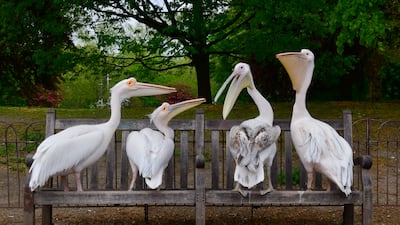
Pelicans in St James’s Park, central London. The birds were introduced to the park in the 16th century. Getty -
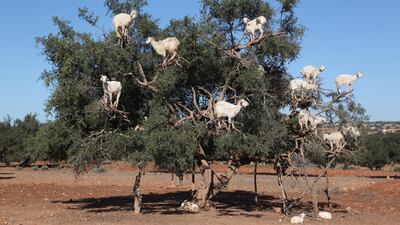
Tree-climbing goats feed on the leaves of an argan tree in Essaouira, Morocco. Getty -
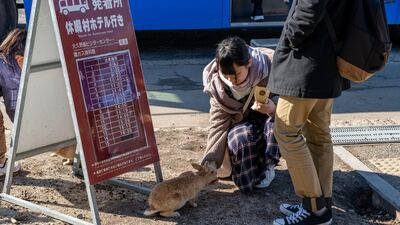
People feed wild rabbits on Okunoshima, also known as Rabbit Island, in Japan. In the 1920s the island housed to a chemical weapons plant. After the Second World War, Okunoshima was turned into a park and the bunnies were let loose. Alamy -
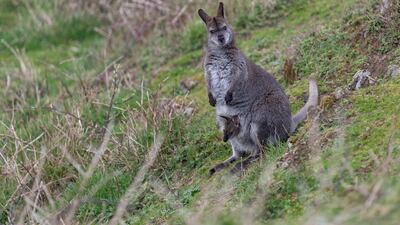
A wallaby on Lambay Island in the Irish Sea. The animals were introduced to the island in the 1950s, and more came to the island from Dublin Zoo in the 1980s. Wikimedia Commons -
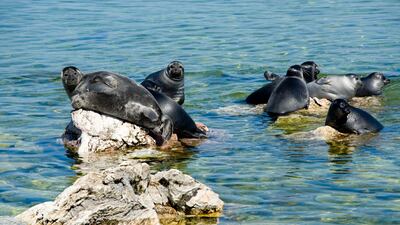
The Baikal seal lives exclusively Lake Baikal in Siberia, Russia. Alamy -

A pandemonium of parrots has lived in Telegraph Hill in San Francisco since the 1990s. Getty -
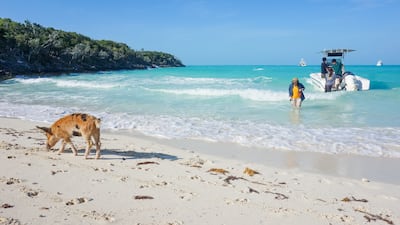
Pig Beach in the Bahamas, which feral hogs have made their home. Getty



