



Live updates: follow the latest news on Russia-Ukraine
Social media activists are attempting to circumvent Russian censorship by using Google Maps to call for an end to the violence amid the invasion of Ukraine.
Activists are using the platform to find Russian cafes and restaurants and leave reviews to deliver anti-war messages to Russian citizens.
“Five thousand Russian soldiers died in Ukraine … Your president deceived you. There was no genocide in Ukraine. It was a pretext for attacking a sovereign and democratic Ukraine,” reads one translated review of a Starbucks in Moscow.
“[President Vladimir] Putin lied to you!!! He sent young boys to the war, who did not know that they were going to die there … Russian people, wake up!!!”

One user, leaving a review for Maestrello, a pizzeria, wrote: “Russia attacked Ukraine. Your soldiers are bombing my city. My country!”
Another added: “The pizza is the bomb!! Due to military sanctions, this restaurant will soon be closed! What a pity!”
Twitter and Facebook have both been restricted in Russia as the country attempts to limit the flow of information, with Russians telling The National they are unable to communicate through Facebook's Messenger app.
The Russian rouble plummeted on Monday, falling to a record low against the dollar, after the US and European nations placed a series of harsh sanctions on Moscow in response to the assault.
“Your government lies, you are bombing innocent people. Nobody want to attack Russia, we want peace. Your president is [a] war criminal,” a review of Boston Seafood & Bar, a restaurant in Moscow, said.
Russia on Sunday for the first time stated that some of its forces had been killed or wounded in Ukraine, though it did not provide any numbers.
Ukraine's Ministry of Foreign Affairs on Monday claimed 4,500 Russian troops have been killed.
-
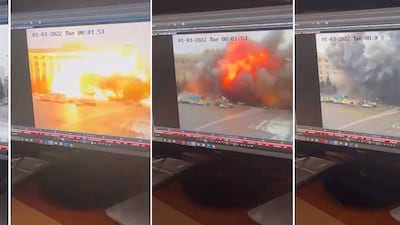
A monitor displays a projectile striking the regional state administration building in Kharkiv, as the Russian invasion continues. Reuters -
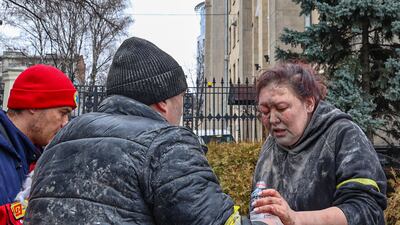
People help a wounded woman in the aftermath of Russian shelling in Kharkiv. EPA -

Ukrainian emergency service personnel carry the body of a victim following shelling in Kharkiv. AP -
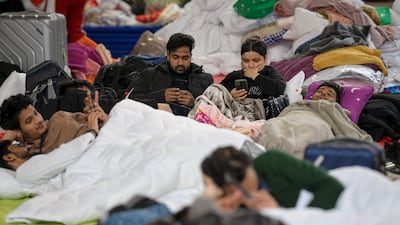
Students who fled the conflict rest in a refugee camp in Voluntari, Romania. AP -
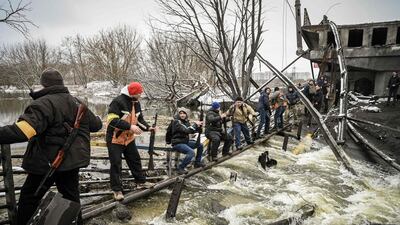
Members of an Ukrainian civil defence unit pass new assault rifles to the opposite side of a blown-up bridge on Kiev’s northern front. AFP -
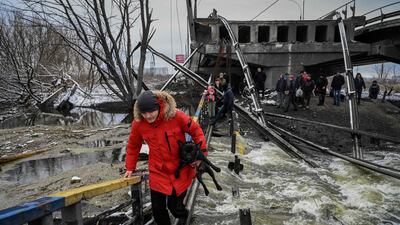
Civilians cross a river on Kiev's northern front. AFP -
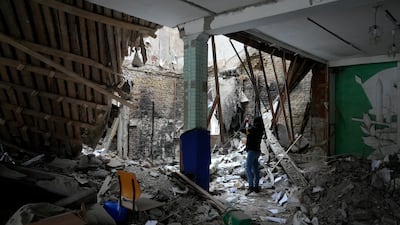
A woman takes photos of a destroyed accommodation building near a checkpoint in Brovary, outside Kiev. AP -
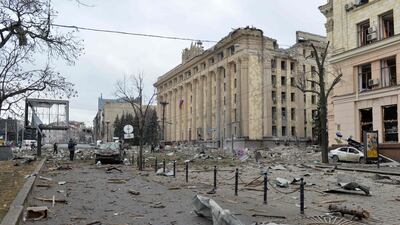
The city hall of Kharkiv, damaged by Russian shelling. AFP -
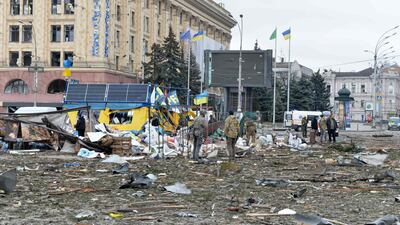
Debris litters the square outside the damaged Kharkiv city hall. AFP -
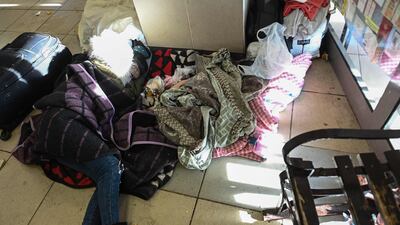
A Ukrainian woman sleeps on the floor of the railway station in Zahonyi close to the Hungary/Ukraine border. AFP -

A medical worker attends to wounded man at a hospital in Brovary, outside Kiev. AP -
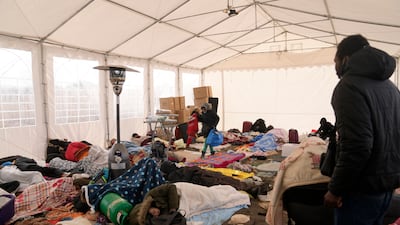
Refugees from Ukraine in a tent at the Medyka border crossing, Poland. AP -
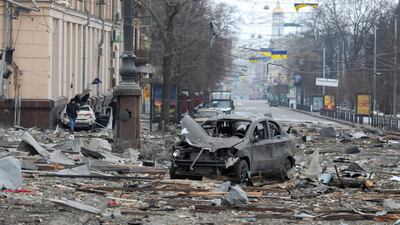
Debris outside the regional administration building, which city officials said was hit by a missile, in Kharkiv. Reuters -
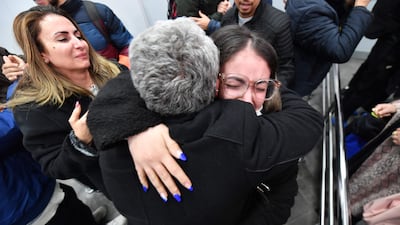
A student evacuated from Ukraine is embraced by her family after arriving at Tunis-Carthage International Airport in Tunisia. AFP -
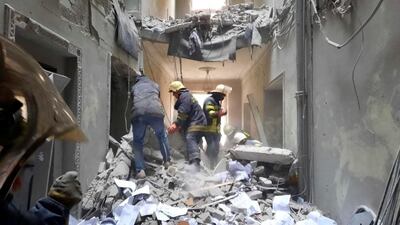
Rescuers in a building damaged by a missile in central Kharkiv. Reuters -
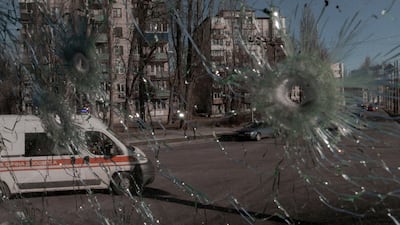
An ambulance is visible through the damaged window of a vehicle hit by bullets in Kiev, Ukraine. Reuters -
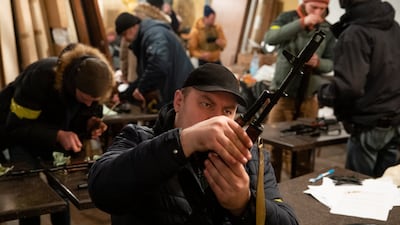
Territorial defence members prepare to head out on patrol in Kiev. EPA -
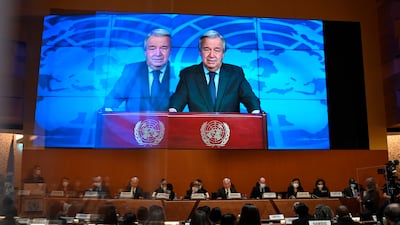
UN Secretary General Antonio Guterres delivers a speech on screen during the opening of the 49th session of the UN Human Rights Council in Geneva, Switzerland. AP -
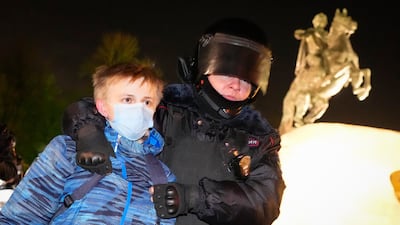
A policeman detains a young demonstrator during a protest against Russia's attack on Ukraine in St Petersburg, Russia. AP -
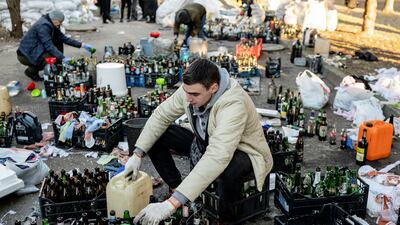
Local residents in Zhytomyr, Ukraine, prepare Molotov cocktails. Reuters -
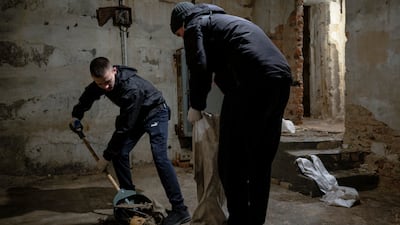
Residents clean a bomb shelter under an out-of-service cinema in central Zhytomyr. Reuters -
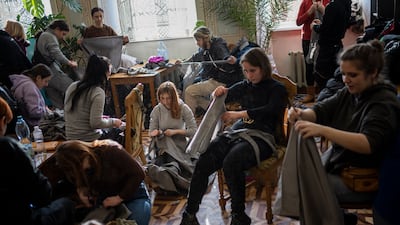
Ukrainian volunteers tear cloth into strips to make camouflage nets in Lviv, western Ukraine. AP -
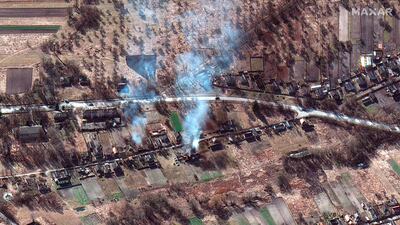
Part of the military convoy north-west of Invankiv, Ukraine. AP -
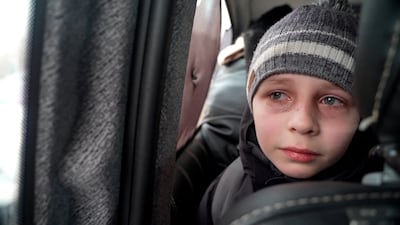
Mark Goncharuk, a young boy from Kiev, leaves his father behind as he travels with the rest of his family towards the border. Reuters -
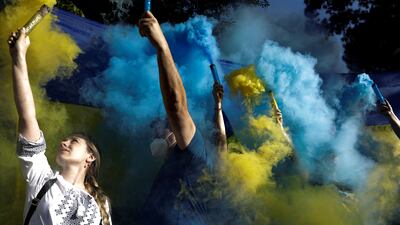
People hold an anti-war protest outside the Russian Embassy in Mexico City, Mexico. Reuters -
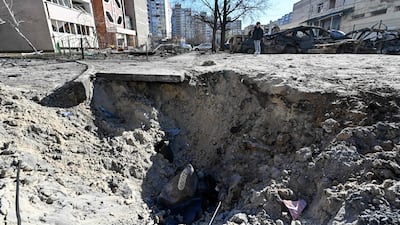
A crater caused by shelling on the outskirts of Kiev. AFP -
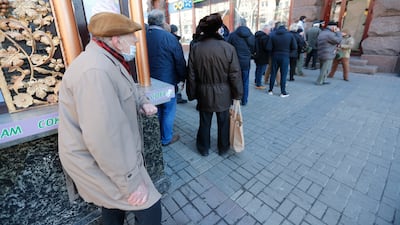
People queue outside a grocery store in the Ukrainian capital. EPA -

Ukrainian soldiers stand at Maidan Nezalezhnosti, or Independence Square, in Kiev. EPA -
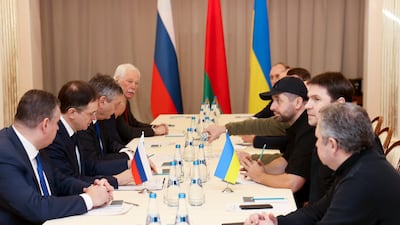
Vladimir Medinsky, the head of the Russian delegation, second left, and Davyd Arakhamia, faction leader of the Servant of the People party in the Ukrainian Parliament, third right, attend the peace talks in the Gomel region of Belarus. AP -
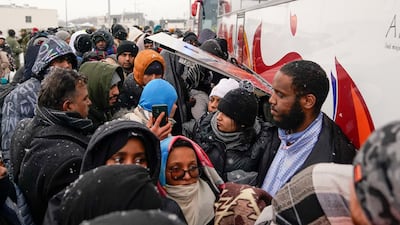
People who have fled the Russian invasion in Ukraine, clamour to board a bus bound for a refugee centre established in Przemysl, Poland. Reuters -
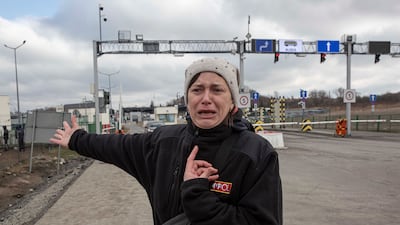
Hanna Pavlovna Lukasz, from Mirhord, Ukraine, said her sons, aged 12 and 8, and her 66-year-old mother had been waiting on the Ukrainian side of the border crossing with Medyka, Poland, for four days. AP -

A volunteer from Kiev prepares a rear post with trenches in the city. AFP -

A child being treated for cancer rests in the bomb shelter of the oncology ward at a hospital in Kiev. Getty -

Police officers check occupants of a suspicious car in Kiev, as Russia's invasion of Ukraine continues. Reuters -
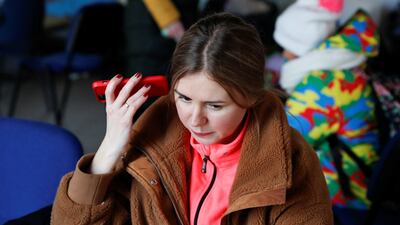
A woman from Ukraine uses a phone to listen to a speech by President Volodymyr Zelenskyy at a refugee shelter in Beregsurany, Hungary. Reuters -
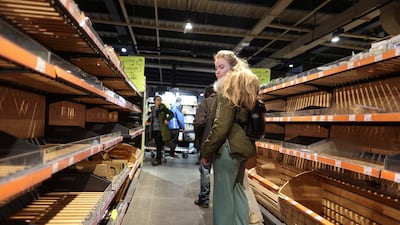
Shelves empty of bread after a curfew was lifted as Russia's invasion of Ukraine continues, in Kiev. Reuters -

Ukrainian Defence Minister Oleksii Reznikov, left, and President Zelenskyy. AFP -
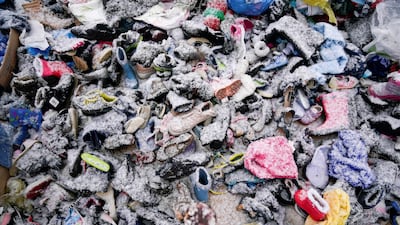
Snow-covered shoes donated for those fleeing the Russian invasion of Ukraine at the border crossing in Medyka, Poland. Reuters -
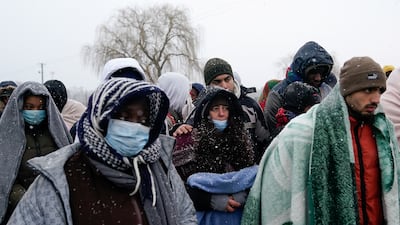
People who have fled Ukraine wait for a bus to transport them away from the border crossing in Medyka. Reuters -
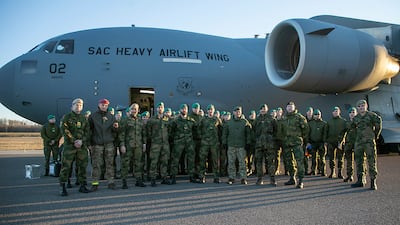
Norwegian soldiers of the Nato-enhanced forward presence battalion pose at a military plane as they arrive at an airport in Kaunas, Lithuania. AP -

A person fleeing Ukraine sits during snowfall at a temporary camp in Przemysl, Poland. Reuters -
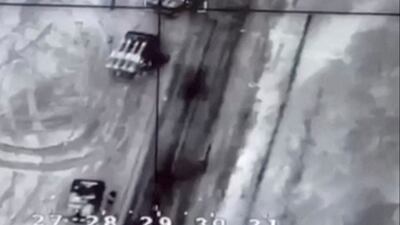
Footage reportedly of Russian Buk missile system vehicles on a road before a drone strike near Malyn, Ukraine. Reuters -
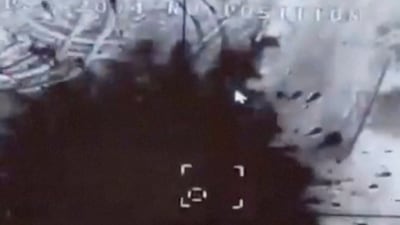
An explosion after what are said to be Russian Buk missile system vehicles on a road are struck by a drone. Reuters -
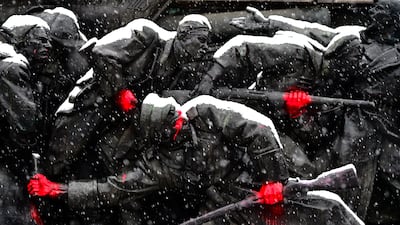
The monument to Russian troops from the Second World War, after the figures’ hands were painted red, at the Red Army memorial in Sofia, Bulgaria. EPA -
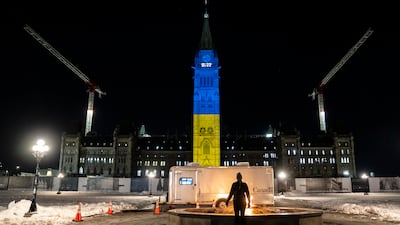
The Peace Tower on Parliament Hill in Ottawa, Canada, is lit up with the colours of Ukraine’s national flag in a show of support. AP -
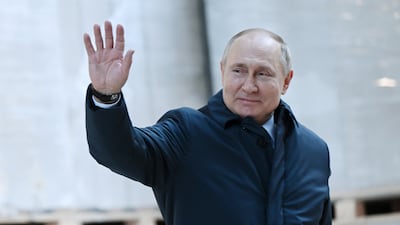
Russian President Vladimir Putin visits the construction site of the National Space Agency on the premises of the Khrunichev State Research and Production Space Centre, in Moscow. EPA -

A man looks out from a train, at the railway station in Lviv, Ukraine. The UN has estimated the conflict could produce as many as four million refugees. AP -
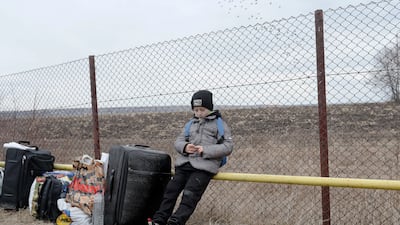
A Ukrainian boy waits for his mother after passing the border crossing point in Siret, northern Romania. EPA -

Russian policemen detain a demonstrator in St Petersburg, during a protest against the country's military actions in Ukraine. EPA -
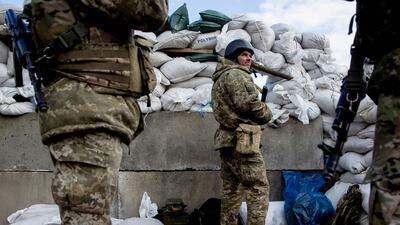
Ukrainian soldiers at a check point in the city of Zhytomyr. Reuters -
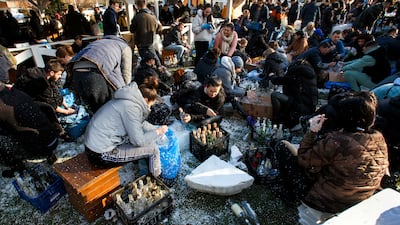
Residents prepare petrol bombs to defend the city, in Uzhhorod, Ukraine. Reuters -
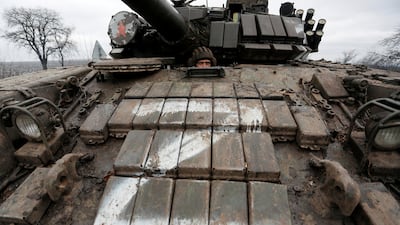
A pro-Russian fighter sits inside a tank in the separatist self-proclaimed Luhansk People's Republic, in the Luhansk region, Ukraine. Reuters -
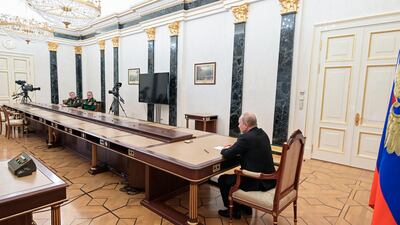
Russian President Vladimir Putin, right, speaks to Defence Minister Sergei Shoigu, second left, and Head of the General Staff of the Armed Forces and First Deputy Defence Minister Valery Gerasimov, left, during their meeting in Moscow. AP -
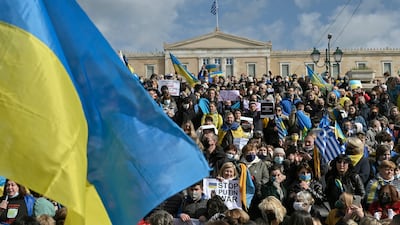
Ukrainians and supporters gather during a demonstration in front of the Greek Parliament in Athens against the Russian military's operation in Ukraine. AFP -
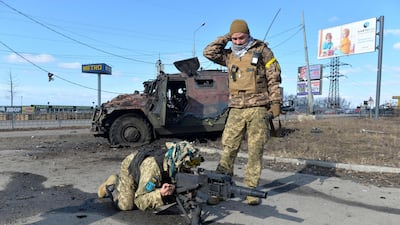
Ukrainian Territorial Defence fighters test an automatic grenade launcher taken from a destroyed Russian infantry mobility vehicla after a battle in Kharkiv. AFP



