

The Washington National Cathedral in the US rang its bell 900 times on Monday evening to recognise the 900,000 deaths from Covid-19 that have been registered in the country, a milestone that was reached last week.
“Our nation marks another tragic milestone — 900,000 American lives have been lost to Covid-19,” US President Joe Biden said in a statement on Saturday.
“They were beloved mothers and fathers, grandparents, children, brothers and sisters, neighbours and friends. Each soul is irreplaceable.
“We pray for the loved ones they have left behind and together we keep every family enduring this pain in our hearts.
“After nearly two years, I know that the emotional, physical and psychological weight of this pandemic has been incredibly difficult to bear.”
Each ring of the cathedral's 12-tonne bell represents 1,000 lives lost to Covid-19 in what has become a national expression of grief.
“This cathedral joins you in grieving the lives lost to the coronavirus pandemic and we share the pain of anxiety and loss in these uncertain times,” organisers said in a memorial hosted on the cathedral's website.
“As a house of prayer for all people, this cathedral aims to serve as a sacred space where the nation can come together at times of both joy and sorrow.”
The cathedral is officially known as the Protestant Episcopal Church of Saint Peter and Saint Paul in the City and Diocese of Washington.
The 57-acre cathedral often hosts funerals for national leaders, such as former senator Bob Dole and former US secretary of state Colin Powell.
You can watch the YouTube video stream of the bells here.
-
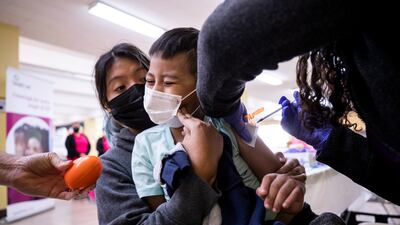
A 6-year-old receives a dose of the Pfizer Covid-19 vaccine at a vaccination clinic in Los Angeles. EPA -
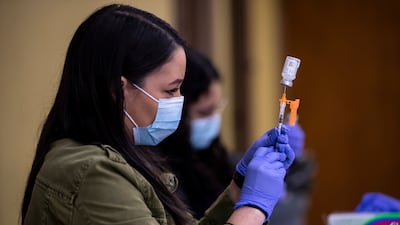
Nurses prepare doses of Covid-19 vaccine at a pop-up vaccination clinic in Los Angeles, California. EPA -
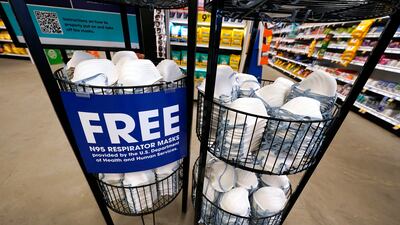
A product stall filled with free N95 respirator masks, provided by the US Department of Health and Human Services, sits outside the pharmacy at a Jackson, Mississippi, Kroger grocery store. AP -
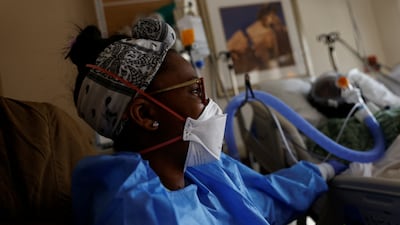
A hospital sitter provides companionship, observation and surveillance to assigned patients at St Mary Medical Centre in Apple Valley, California. Reuters -
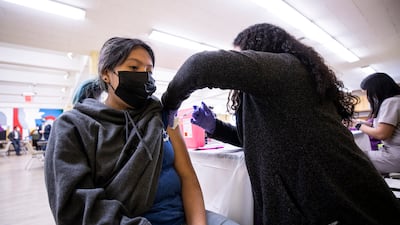
A 13-year old receives a dose of the Pfizer Covid-19 vaccine at a clinic in Los Angeles. EPA -
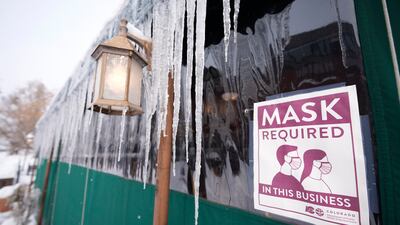
A sign advises patrons of a Covid-19 restriction while long icicles grow from an awning outside a restaurant in Denver, Colorado. AP -
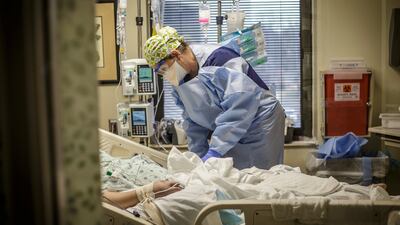
A registered nurse works with a Covid-19 patient inside the infectious disease unit (IDU) at Helen Keller Hospital in Sheffield, Alabama. AP -
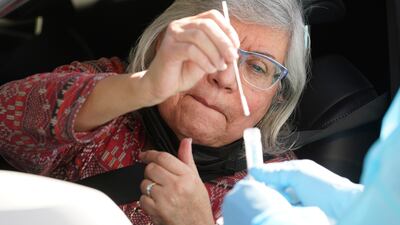
A person self-tests for Covid-19 at a free drive-through testing site in Whittier, California. AP -

Workers wear protective equipment at a Covid-19 testing site in the Boyle Heights section of Los Angeles. AP -
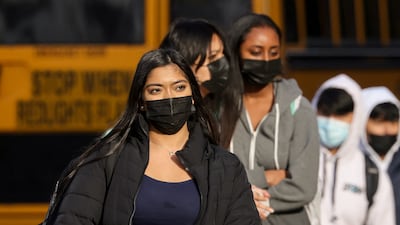
Pupils leave a high school in Arlington County, one of several school districts which sued to stop the mask-optional order by Governor Glenn Youngkin, in Arlington, Virginia. Reuters -

Protesters rally against Covid-19 vaccine mandates in front of the Lincoln Memorial in Washington. AP -
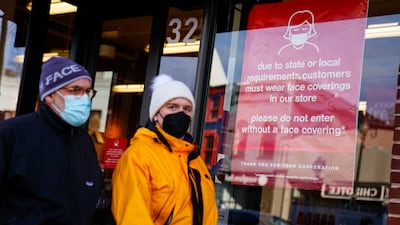
People wearing face masks walk past a business displaying a sign requiring face coverings in Washington. Reuters



