

Apple shook off supply shortages that have curtailed production of iPhones and other popular devices to deliver its most profitable holiday season yet.
The results posted on Thursday for the final three months of 2021 help illustrate why Apple is looking even stronger at the tail end of the pandemic than when the crisis began two years ago.
At that point, Apple’s iPhone sales had been struggling as consumers began holding on to their older devices for longer periods. But now the Cupertino, California-based company can’t seem to keep up with the steadily surging demand for a device that has become even more crucial in the burgeoning era of remote work.
Apple’s inability to fully satisfy the voracious appetite for iPhones stems from a pandemic-driven shortage of chips that’s affecting the production of everything from cars to medical devices.
But Apple so far has navigated the shortfalls better than most companies. That deft management enabled Apple to report iPhone sales of $71.6 billion for the October-December period, a 9 per cent increase from the same time in the previous year.
Those sales gains would have likely been even more robust if Apple could have secured all the chips and other components needed to make iPhones.
That problem plagued Apple’s July-September quarter when management estimated that supply shortages reduced its iPhone sales by about $6bn.
The company may address how supply shortages affected its performance in the most recent quarter during a conference call with analysts scheduled later on Thursday.
-

Shoppers flocked to the Apple store at Mall of the Emirates to pick up the new iPhone 13. All photos: Pawan Singh / The National -

Many customers got to the Mall of Emirates early to purchase a new phone. -
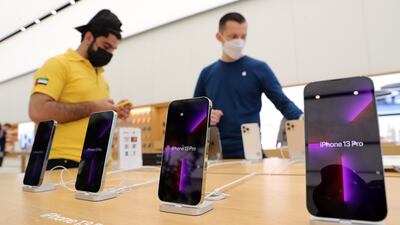
The iPhone 13 is set to be a big seller. -
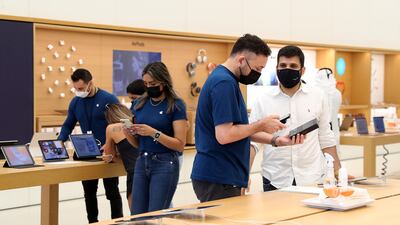
Customers check out the new range of phones from Apple. -
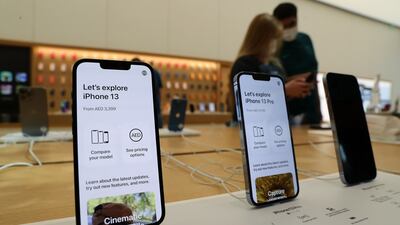
iPhone 13 phones on display at the Apple store in the Mall of the Emirates. -

Technology lovers get their hands on the Apple iPhone 13. -
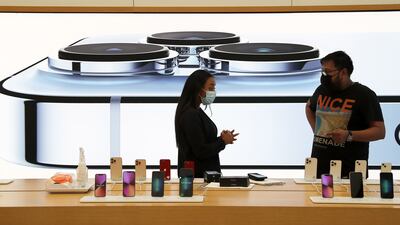
A staff member explains the latest upgrade available on the most recent iPhone offering. -
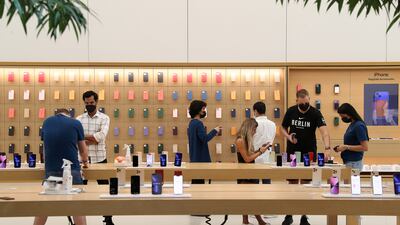
The launch of a new iPhone is always an eagerly awaited date on the calendar. -
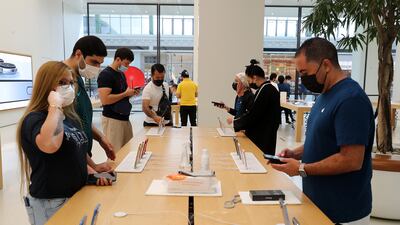
Friday was the first day of sales in the UAE for the new batch of iPhones. -
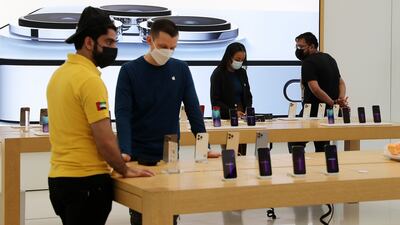
A trip to the Apple Store was etched in the diary for many phone fans.


Despite the drag the shortages caused, Apple still earned $34.63bn, or $2.10 per share, a 20 per cent increase from the same time in the previous year. Revenue climbed from the previous year by 11 per cent to $123.95bn.
Apple’s continued success helped push the company’s market value above $3 trillion for the first time this month.
But its stock price has tumbled 13 per cent since, hitting that peak amid worries about a projected rise in interest rates aimed at dampening the torrid pace of inflation that has been fuelled in part by supply shortages.
Its shares gained more than 3 per cent in Thursday’s extended trading after the Apple’s fiscal first-quarter numbers came out.
The supply issues looming around Apple’s devices have magnified the importance of the company’s services division, which is fuelled by commissions from digital transactions on iPhone apps, subscriptions to music and video streaming and repair plans.
The up to 30 per cent commissions collects from apps distributed through Apple’s App Store have become a focal point of a fierce legal battle that unfolded in a high-stakes trial year, as well as proposed reforms recently introduced in the US Senate that tear down the company’s barriers that prevent consumers from using alternative payment systems.
For now, though, the services division is still booming. Its revenue in the past quarter hit $19.52bn, a 24 per cent increase.
Apple is widely believed to be manoeuvreing towards another potentially big moneymaking opportunity with the introduction of an augmented reality headset that would project digital images and information while its users interact with other physical objects and people. True to its secretive form, the company has never said it is working on that kind of technology.
But Apple chief executive Tim Cook has openly shared his enthusiasm for the potential of augmented reality in public presentations, and analysts believe the long-rumoured headset could finally roll out later this year — unless it’s delayed by supply shortages.

