

One year after a violent insurrection shook America to its core, federal authorities have charged more than 700 people in connection to the riot at the Capitol building in Washington.
Prosecutors say the sprawling investigation is now the biggest probe in US history, both in terms of the number of defendants and the sheer quantity of evidence.
FBI Director Christopher Wray told a Senate judiciary committee in March that the Capitol attack amounted to “domestic terrorism".
On January 6, 2021, what started as a rally at the White House to protest Donald Trump's electoral defeat to Joe Biden devolved into a violent assault on the US Capitol and a frantic, last-minute mob attempt to overturn the election results.
At least five people died in the ensuing violence and its aftermath, including a Capitol Police officer, and more than $1.5 million in damage was inflicted on the seat of the US government.
The charges
In the year since, authorities have cast a wide net. Of the at least 725 people arrested, 225 have been charged with assault or resisting arrest.
At least 75 people have been charged with using a “dangerous or deadly weapon” against a police officer, with the Department of Justice reporting that more than 140 officers from the US Capitol Police and Washington Metropolitan Police Department were assaulted.
In addition to those charged with assaulting police officers, 10 people have been charged with assaulting members of the media.
The vast majority of those charged so far face counts of entering a restricted federal building. About 45 people have been charged with destruction of government property.
-
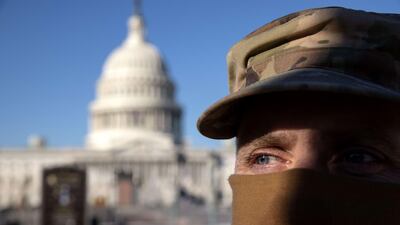
A member of the National Guard stands outside the east side of the US Capitol on January 7, 2021, in Washington. Getty Images/AFP -
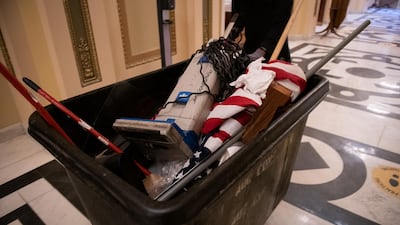
A worker pushes a trash bin at the US Capitol building in Washington. Bloomberg -

Workers clear trash from the East Front of the US Capitol building in Washington. Bloomberg -
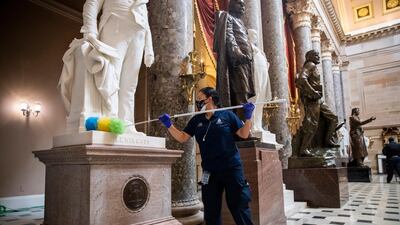
A cleaning crew dusts residue from the pedestals of the statues in Statuary Hall inside the US Capitol in Washington. EPA -
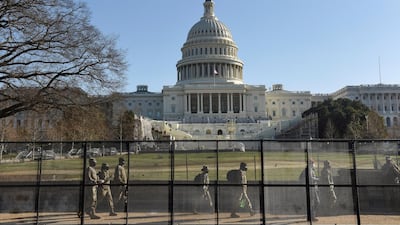
National Guard members walk behind a fence installed in front of the US Capitol, a day after supporters of Donald Trump stormed the building. Reuters -
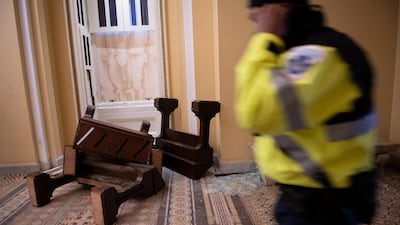
A US Capitol police officer passes in front broken furniture and shattered glass at the Capitol building. Bloomberg -
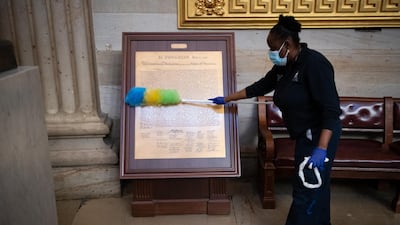
A worker cleans a copy of the Declaration of Independence at the US Capitol building. Bloomberg -
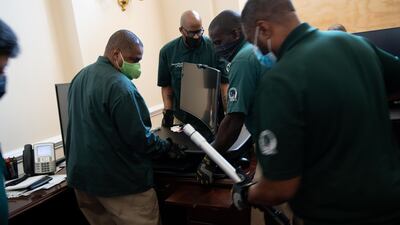
Workers clean an office at the US Capitol building. Bloomberg -
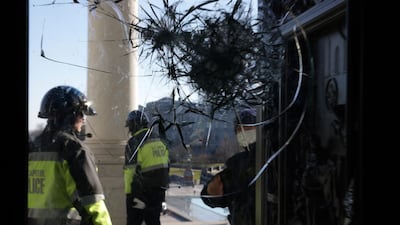
Members of US Capitol Police inspect a damaged entrance of the Capitol. Getty Images/AFP -
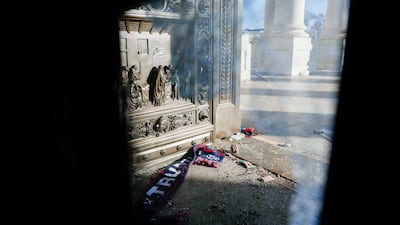
Shattered reinforced glass and debris litter the east steps in the US Capitol in Washington. EPA


“The amount of hours used to compile the individual cases must be overwhelming,” said Javed Ali, a former senior intelligence analyst at the FBI and an associate professor of practice at the Gerald R Ford School of Public Policy at the University of Michigan.
“Investigators are having to pour through tons of social media activity, cellphone activity, interviews with either witnesses, or family members, or people around potential defendants or folks who've been charged.”
As the cases wind through the legal system, about 165 plea deals have been struck, with roughly 145 people pleading guilty to misdemeanours and 20 pleading guilty to felonies. Of those 20, six have pleaded guilty to assaulting an officer.
Seventy people have been sentenced for their role in the events at the Capitol so far.
Last month, Robert Palmer, convicted of assaulting police officers during the riot, was sentenced to five years in prison — the harshest penalty to date.
The accused
Charges have been filed against people from almost every state and include business owners, current and former law enforcement officers and military veterans.
Even a former Olympian has been convicted of participating in the event. Five-time medallist Klete Keller pleaded guilty in September to a felony charge for his actions at the Capitol.
While at least four members of the far-right group the Proud Boys have been charged in connection to the events, the vast majority of the accused appear to be people who were swept up in the moment, said Mr Ali.
-
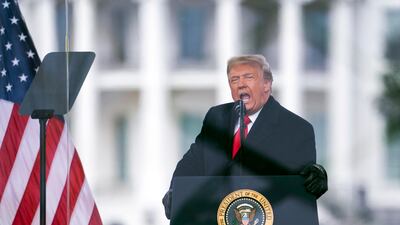
Donald Trump, the president at the time, speaks during a rally protesting the electoral college certification of Joe Biden as president in Washington on January 6, 2021. AP -
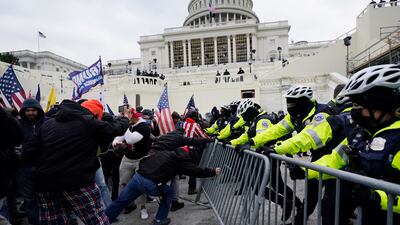
A mob loyal to Mr Trump tries to break through a police barrier at the Capitol. AP -
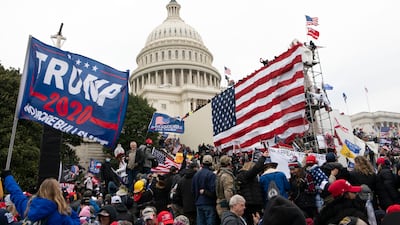
The mob waves pro-Trump flags in front of the Capitol building. AP -
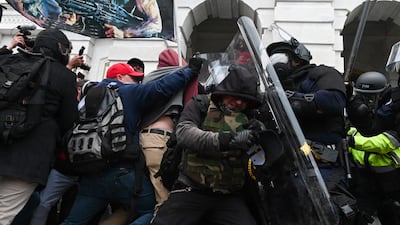
Riot police push back a crowd of rioters at the Capitol building. AFP -
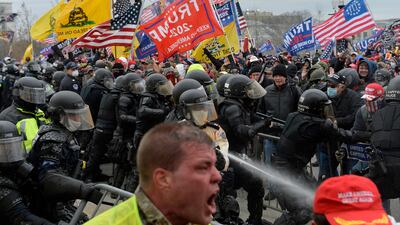
Trump supporters clash with police and security forces as people try to storm the US Capitol building. AFP -
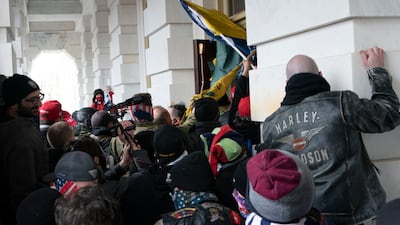
Insurrectionists loyal to Mr Trump try to open a door of the US Capitol building as they riot in Washington. AP -
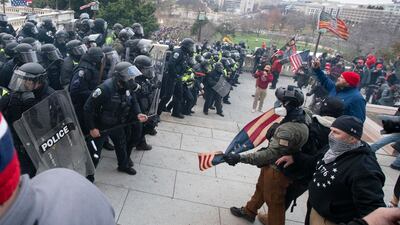
US Capitol Police push back rioters trying to enter the US Capitol. AP -
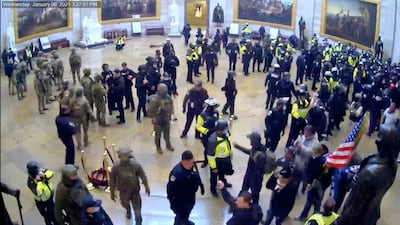
Police and rioters confront each other in the Rotunda of the Capitol. US Capitol Police via AP -
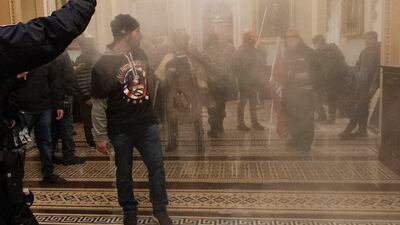
Smoke fills the hallway outside the Senate chamber of the Capitol. AP -
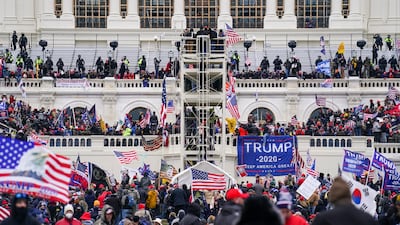
Insurrectionists loyal to Mr Trump breach the Capitol in Washington. AP -

Trump supporters, including Doug Jensen, centre, confront US Capitol Police in the hallway outside the Senate chamber at the Capitol. AP -
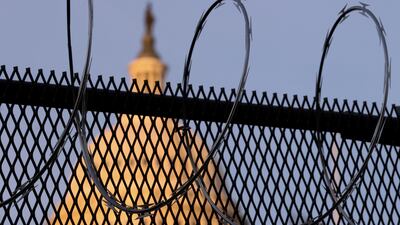
Newly installed razor wire tops the fence surrounding the US Capitol following the January 6 riot. Reuters -
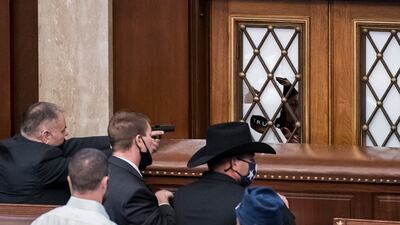
Security agents and members of Congress barricade the door to the House chamber as the violent mob breaches the Capitol. AP -
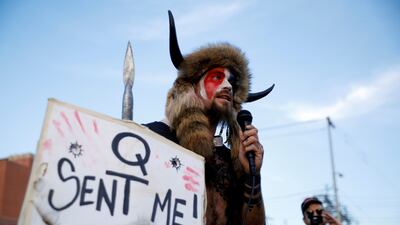
Rioter Jacob Chansley holds a sign referencing QAnon as supporters of Mr Trump gather to protest the early results of the 2020 presidential election. Reuters


“This was not what I would call a sophisticated, professional type of terrorism, plotting and planning that I saw in my days in government,” Mr Ali told The National.
For one thing, there was little attempt at subterfuge: many people bragged in tweets or posted live streams of their actions online — something that has made the Justice Department's job much easier.
Some have claimed they were only spurred to march to the Capitol following hearing Mr Trump's rhetoric at the rally, though the former president has denied his actions had any bearing on the riot.
One of the accused, Robert Bauer, came to Washington with his wife to attend Mr Trump's rally. NPR reported that Mr Bauer told the FBI that “people in the crowd were angry about paedophiles, the news cycle and losing their businesses during the lockdown” and headed to the Capitol “because President Trump said to do so".
The investigation continues
Authorities continue to file charges on a near-daily basis. The FBI is actively seeking information on more than 350 people suspected of committing violent acts on Capitol grounds and is calling on the public to identify those involved.
Perhaps no suspect is more wanted than the person who was captured on CCTV apparently placing pipe bombs outside the Democratic and Republican National Committee headquarters the night before the attack.
A year on, that person has not been caught.
Separately, a special commission in Congress is looking at January 6 and what role officials, including Mr Trump, had in the events of the day.

