

In the midst of the hustle and bustle of Lower Manhattan, underneath the glass towers of the One World Trade Centre and within earshot of honking yellow cabs, stands what is left of New York City’s forgotten Syrian Quarter.
Only three major buildings and a couple of smaller houses remain, covering less than half a block of America’s most populous city.
“It’s amazing these buildings survived when so many hundreds of other buildings and streets were totally wiped out,” said Joseph Svehlak, a local activist whose mother lived in the neighbourhood in the early 1900s.
“The story of immigrant heritage is represented in these buildings.”
Much of this part of New York was razed to make way for the Battery Tunnel in the mid-1940s, connecting traffic from Manhattan to Brooklyn, and then for the World Trade Centre Twin Towers in the second half of the 20th century.
“There has almost never been a development over time that has been so intentional and so violent as to what has happened here,” said Todd Fine, an activist and historian who studies Arab-American literature.
“It seems like the city’s intention is to demolish all of the history in Lower Manhattan and turn it into a wealthy fantasyland that is totally disconnected from the people of this city.
-
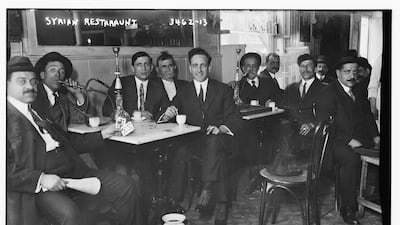
A group of men meets in Little Syria more than a century ago. Photo: Library of Congress -
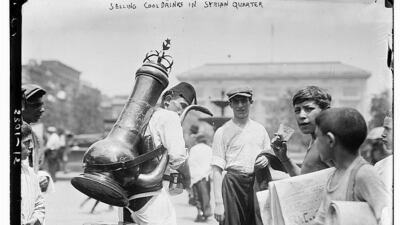
Peddlers work in Little Syria. Photo: Library of Congress -

Peddlers work in Little Syria on the streets of New York City. Photo: Library of Congress -
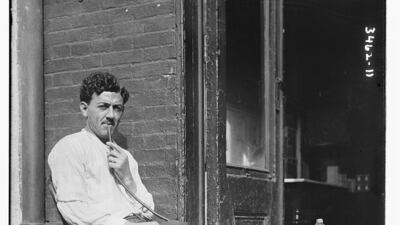
A man smokes a pipe on his porch in Little Syria more than a century ago. Photo: Library of Congress -
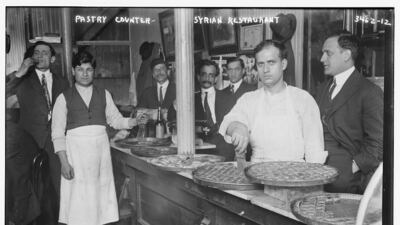
A local restaurant in Little Syria more than a century ago. Photo: Library of Congress -
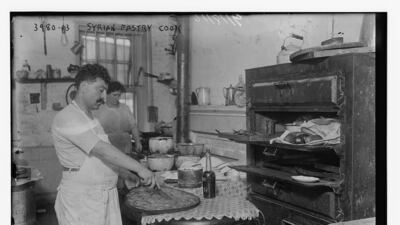
A worker cooks in Little Syria. Photo: Library of Congress -

A group of children in Little Syria. Photo: Library of Congress -
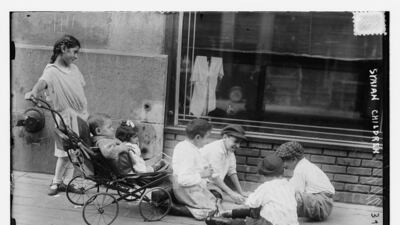
Children play on the pavement in Little Syria. Photo: Library of Congress -

Women catch up outside their homes in Little Syria more than a century ago. Photo: Library of Congress


“And it’s a tragedy for Arab Americans, who have been struggling to tell their story at a time when there’s a lot of discrimination and misunderstanding.”
On Washington Street, the heart of what was once Little Syria, the final remnants of this enclave have a questionable future. A for sale sign hangs from the neocolonial redbrick Downtown Community House, which opened in 1926 and was funded by Wall Street to serve the immigrant community's social, educational and medical needs.
“That could face demolition right now,” Mr Svehlak said, “depending on what the owner wants to do with it.”
And while the 19th century St George’s Syrian Catholic Church with its stunning whitewashed terracotta façade has won landmark status from the city, and thus protection from demolition, the space is currently being used as a Chinese restaurant by its next-door neighbour, a Holiday Inn.

Then there is the tenement building at 109 Washington Street, where people still reside.
Like the Downtown Community House, it does not have protected status and could also be levelled.
Local organisations such as Friends of the Lower West Side and the Washington Street Advocacy Group, with which Mr Svehlak and Mr Fine are affiliated, are appealing to New York City to save Little Syria's last historic buildings.

“This was the Syrian and Lebanese community’s founding mother colony. This is where they all first came and from here, they went all over the United States,” Mr Svehlak said.
“Would you tear down the last tenement in Chinatown, the last tenement in Little Italy? Why tear down the last tenement in Little Syria?”
Right off the boat
Unrecognisable today, New York’s Syrian Quarter was once a tough, working-class neighbourhood that was home to many nationalities, with Syrians, Lebanese, Palestinians, Armenians, Greeks and others living in hundreds of low-rise buildings.
Arab immigration to the enclave began in the 1880s, said Mr Fine, when the silk industry was challenged by the opening of the Suez Canal, bringing Chinese and European competition to the merchants of the Middle East.
These immigrants worked as import/exporters, and later, as street vendors peddling wares such as fake objects “from the Holy Land".
-
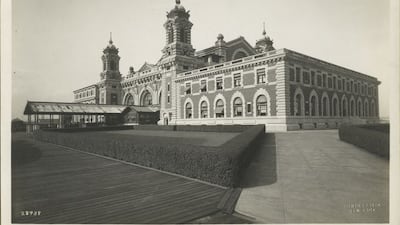
Ellis Island: Immigrants arriving in New York. Photo: New York Public Library -
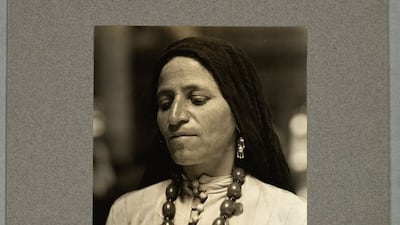
Ellis Island: Immigrants arriving in New York. Photo: New York Public Library -
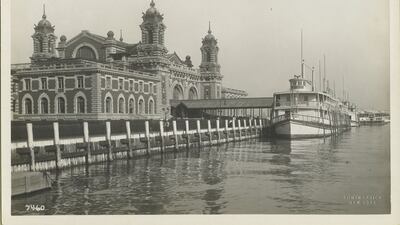
Ellis Island: Immigrants arriving in New York. Photo: New York Public Library -

Ellis Island: Immigrants arriving in New York. Photo: New York Public Library -
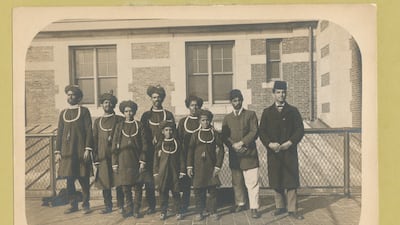
Ellis Island: Immigrants arriving in New York. Photo: New York Public Library -
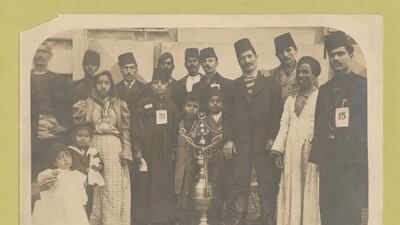
Ellis Island: Immigrants arriving in New York. Photo: New York Public Library -
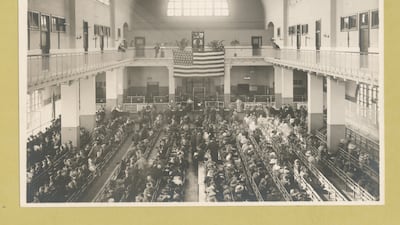
Ellis Island: Immigrants arriving in New York. Photo: New York Public Library -
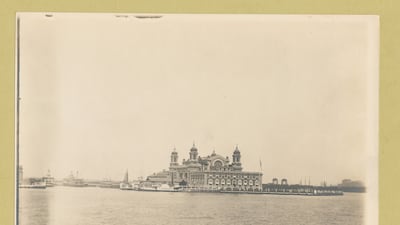
Ellis Island: Immigrants arriving in New York. Photo: New York Public Library -
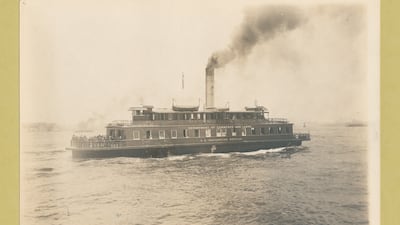
Ellis Island: Immigrants arriving in New York. Photo: New York Public Library -
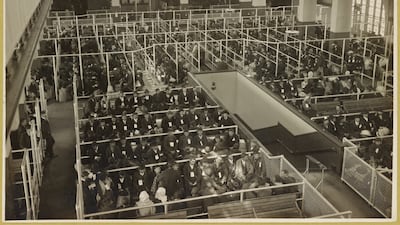
Ellis Island: Immigrants arriving in New York. Photo: New York Public Library


Most of those who settled in the city had to pass through Ellis Island, the busiest immigrant inspection station in the US during its time, located adjacent to the Statue of Liberty.
They brought with them anything and everything they could fit in their suitcases.
“The Thomas family came from what is now Lebanon,” said Stephen Lean, director of the American Family Immigration History Centre inside the National Immigration Museum on Ellis Island.
“They were in the textile business, so a lot of what they had was textile related.
He points to a set of tweezers brought by Syrian immigrant.
“It speaks to the Arab immigrant experience, because what people were bringing with them were often small objects … what are you actually going to be able to do during this very arduous journey? What can you fit in a single case?”
Once they entered New York, Little Syria was right off the boat and immigrants soon put down roots.

“The area was known for its linens, laces, silk goods and embroideries … also for pastries and wonderful sweets,” said Mr Svehlak. “People did not want to leave this neighbourhood.”
But decades later, it would be all but wiped off the map.
Those families who had to leave their homes are now dispersed across the city, many moving across the East River to Brooklyn.
One such story is that of Sahadi’s, a business established in 1895 by Lebanese immigrants. Its website quotes a New York Times article from 1899, describing “a wonderful shop, this of the merchant Sahadi, with native wines and liquors, American groceries, swords and lamps, glass bracelets of many colours".
Sahadi’s moved to Atlantic Avenue in 1948 due to the construction of the Battery Tunnel and the general migration of the community. Today, it is a thriving business with two locations.
History repeating itself?
Little Syria preservationists have a new problem: a plan for the empty plot of public land at 5 World Trade Centre, destroyed in the September 11 attacks, is to build a luxurious, 275-metre tower with more than 1,300 rental units.
Backed by real estate companies Silverstein Properties and Brookfield Properties, architecture firm Kohn Pedersen Fox has proposed a design for its two-storey masonry windows that “references the architectural heritage of the Little Syria neighbourhood".

While about 300 of the property’s apartments would be “permanently affordable”, working-class people are likely to be priced out in an area where rentals can cost between $2,500 to $6,000 per month.
This has left activists like Mr Fine concerned. He and prominent members of the Arab-American community have signed a joint letter to New York Governor Kathy Hochul calling for a cheaper building to be built instead, arguing that the proposed development is an “overzealous appropriation of the heritage of immigrants and their modest buildings into the design of a luxury product".
“We see this incentivisation of luxury construction after 9/11 of these high-rise buildings that further make it impossible for low income and middle-class people to live in this part of Lower Manhattan,” Mr Fine said.
Developers have defended the plans. In a statement to The National, a spokesman for the 5WTC Development Team said their project is expected to generate more than 1,900 permanent jobs and $1.9 billion in economic output.
“We are proud to work with our government partners to deliver an unprecedented 300 permanent, deeply affordable homes, with no public subsidy, in a community that badly needs them.”
The National reached out to the New York Governor’s Office and Kohn Pederson Fox for comment, but did not receive a response.

