

The US embassy in Addis Ababa has authorised the voluntary departure of some staff and family members as rebel forces in northern Ethiopia make advances towards the capital.
The decision came after the US said on Wednesday it was “gravely concerned” about the spreading hostilities and called for a halt to military operations in favour of ceasefire talks.
Prime Minister Abiy Ahmed's government has declared a state of emergency, with forces from the northern region of Tigray threatening to push forward to Addis Ababa.
The Tigrayan forces are currently in the town of Kemise in Amhara state, 325 kilometres from the capital, the spokesman for the Tigray People's Liberation Front (TPLF), Getachew Reda, said late on Wednesday.
The US embassy said that further escalation was probable and it is not safe to travel to Ethiopia.
-
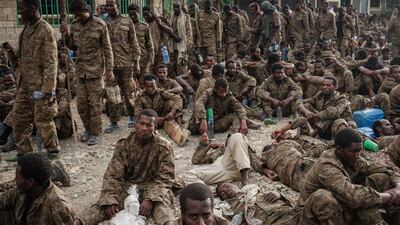
Captive Ethiopian soldiers arrive at the Mekele Rehabilitation Centre in Tigray, Ethiopia, after a four-day journey from Abdi Eshir. All photos: AFP -
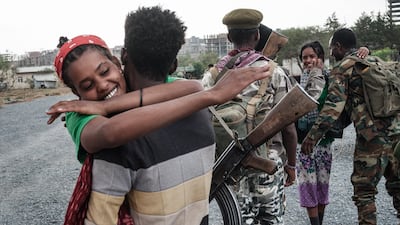
Women welcome Tigray People's Liberation Front fighters as they return to Mekele after seizing control of the city in June 2021. -
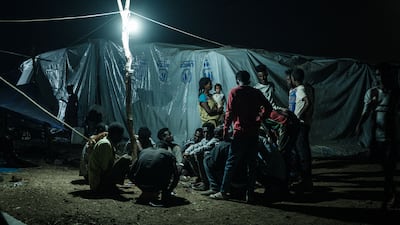
Ethiopians who fled the Tigray conflict wait to charge their phones at Um Raquba refugee camp in Gedaref, Sudan. -
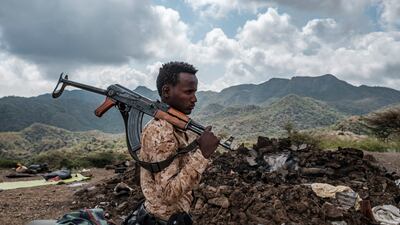
A member of the Afar Special Forces stands in front of the debris of a house on the outskirts of the village of Bisober in Tigray. -
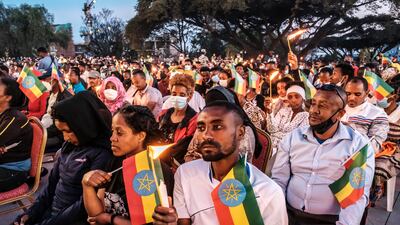
People hold candles and Ethiopian flags at a memorial service for the victims of the Tigray conflict in Addis Ababa. -

An Ethiopian refugee who fled fighting in Tigray waits behind a fence in a camp in Sudan. -
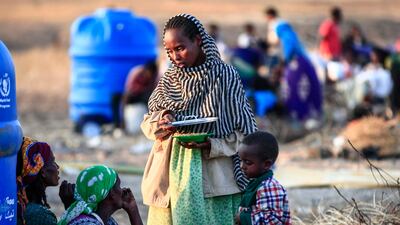
Refugees living in a camp in Sudan after fleeing violence in Tigray. -
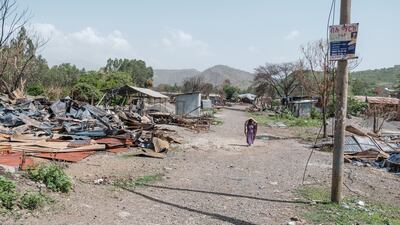
A woman walks among the remains of a destroyed factory in Ataye, Ethiopia, where more than 100 civilians died in a recent flare-up of violence. -
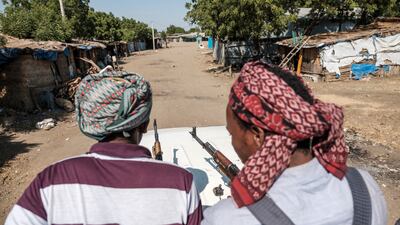
Two members of the Amhara militia ride in the back of a pick-up truck. Amharas and Tigrayans were uneasy neighbours before the current fighting, with tension over land sparking violent clashes. -

Militias from the Amhara region have been involved in the fighting in Tigray. -
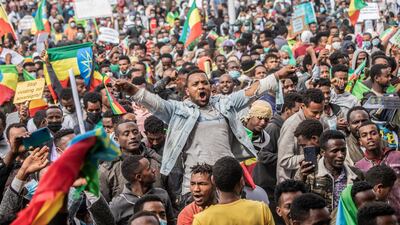
Tens of thousands of Ethiopians gather at a rally organised by the mayor of Addis Ababa to show support for the military's efforts in Tigray. -
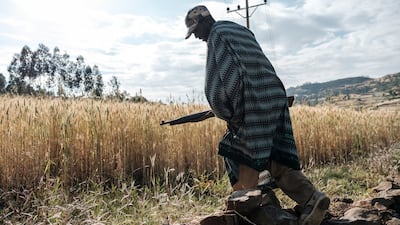
Zeleke Alabachew, farmer and militia fighter, tends to his land near the village of Tekeldengy, Ethiopia, Africa's second most populous nation. -
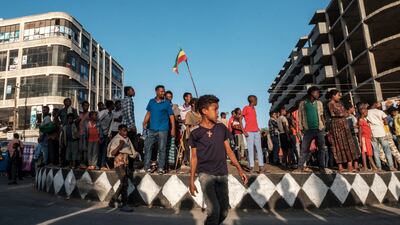
People celebrate the liberation of opposition leaders in the city of Alamata, Ethiopia. -
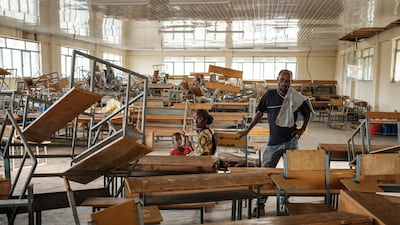
A family fleeing violence sit in a former classroom at May Weyni secondary school, now hosting 10,500 displaced people, in Mekele, capital of Tigray. -
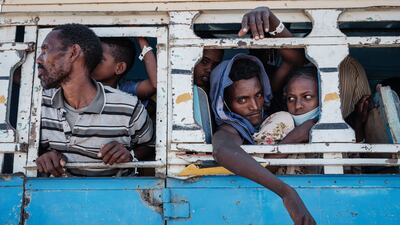
Ethiopian refugees travel to Sudan to escape violence in Tigray. -

Ethiopian refugees gather to celebrate the 46th anniversary of the Tigray People's Liberation Front at Um Raquba refugee camp in Gedaref, Sudan. The TPLF dominated Ethiopian politics before being ousted from their regional stronghold last year. -
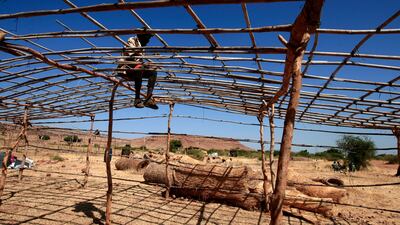
An Ethiopian refugee sets up a tent in a camp in the town of Gedaref, Sudan, after being transported from the border reception centre. -
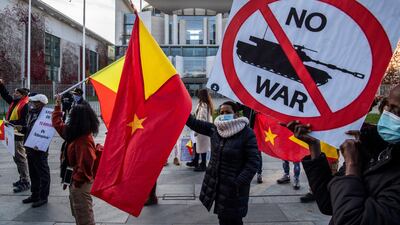
Pro-Tigrayan demonstrators display placards during a protest in front of the chancellery in Berlin. -
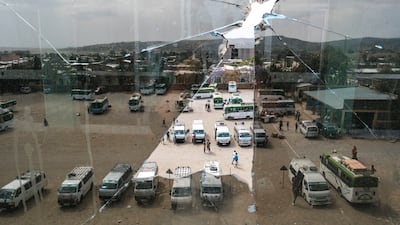
The aftermath of heavy shelling in Wukro, a city north of Mekele, in Ethiopia.


“The [State] Department authorised the voluntary departure of non-emergency US government employees and family members of emergency and non-emergency employees from Ethiopia due to armed conflict, civil unrest and possible supply shortages,” it said.
The government has previously restricted or shut down internet and phone services during civil unrest, it added.
The Ethiopian government's representative, Legesse Tulu, did not immediately respond to requests for comment.
In another sign of international alarm, Uganda announced on Thursday that President Yoweri Museveni has called an East African bloc leaders' meeting on November 16 to discuss the conflict in Ethiopia.
UN Secretary General Antonio Guterres said he had spoken to Mr Abiy on Wednesday “to offer my good offices to create the conditions for a dialogue so the fighting stops".
The US special envoy for the Horn of Africa, Jeffrey Feltman, is expected to arrive in Addis Ababa on Thursday to press for a halt to military operations in the north and to seek the start of ceasefire talks.
On Wednesday, Britain urged its citizens to review their need to stay in Ethiopia and consider leaving while commercial options were available.
The conflict started a year ago when forces loyal to the TPLF, including some soldiers, seized military bases in Tigray. In response, Mr Abiy sent more troops to the northern region.
The TPLF had dominated national politics for about three decades but lost much influence when Mr Abiy took office in 2018 following years of anti-government protests.
The group then accused him of centralising power at the expense of Ethiopia's regional states — an accusation Mr Abiy denies.
TPLF advance
The Tigrayan forces and their Oromo allies have made significant advances in the past week. Mr Getachew on Wednesday pledged to minimise casualties in their drive to take Addis Ababa.
“We don't intend to shoot at civilians and we don't want bloodshed. If possible, we would like the process to be peaceful,” he said.
A regional analyst, who spoke on condition of anonymity, said the TPLF was likely to hold off on any advance on Addis Ababa until they secured the motorway running from neighbouring Djibouti to the capital.
That requires seizing the town of Mille. Mr Getachew said on Tuesday that Tigrayan forces were closing in on Mille.
As Tigrayan and Oromo forces set their sights on Addis Ababa, Mr Abiy has pledged to bury his government's enemies “with our blood".
However, the statement posted on his Facebook page was removed by the platform for violating its policies against inciting and supporting violence, the company said.

