!['The window for negotiations to return to the [nuclear deal] will not be open forever,' Robert Malley said. Getty Images](https://www.thenationalnews.com/resizer/v2/WLRNYOCMF2LU7E6Q6QX3TINUB4.jpg?smart=true&auth=d4ab25e4f0bda526a55828f293a2f71d74fd83bfc2733d69e0ff7c31684497d1&width=812&height=456)


President Joe Biden’s special envoy for Iran, Robert Malley, said on Monday that the window for negotiations to revive the nuclear deal continues to narrow but also suggested that the US would continue diplomacy to reach a new accord should Tehran's advances render the original agreement obsolete.
“The window for negotiations to return to the [nuclear deal] will not be open forever,” Mr Malley told reporters following a visit to discuss the US Iran strategy with officials in the UAE, Saudi Arabia, Qatar and France.
“This is not a chronological clock; it’s a technological clock,” said Mr Malley.
“At some point, the [nuclear deal] will have been so eroded because Iran would have made advances that cannot be reversed.
“In which case, you can’t revive a dead corpse.”
However, he also said that the Biden administration would remain committed to diplomacy even if Iran makes advances that kill the original deal. Still, that would greatly complicate matters by necessitating the creation of a new deal.
-
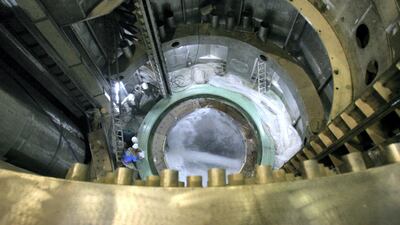
Russian contractors work at the Bushehr nuclear reactor site in 2007. The plant opened four years later. Bloomberg -
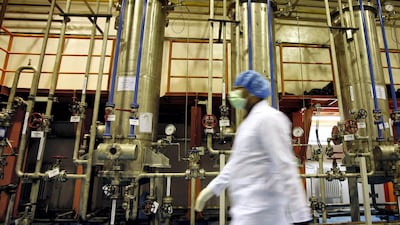
An Iranian technician at the International Atomic Energy Agency inspects the country's Isfahan plant in 2007. Tehran is no longer co-operating with the agency at nuclear sites across the country. EPA -

Workers wait to begin constructing a second reactor at the Bushehr nuclear power plant in 2019. AFP -
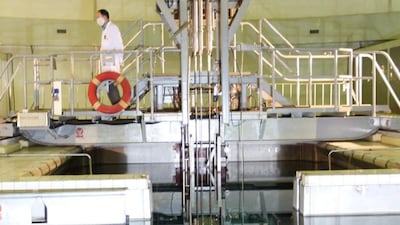
A metal-encased rod with 20 per cent enriched nuclear fuel is inserted into a reactor in Tehran in 2012. AFP -
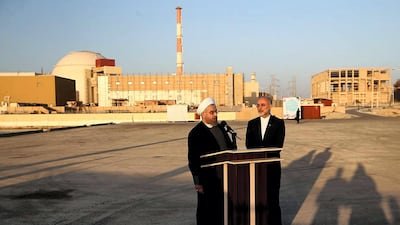
Fomer Iranian President Hassan Rouhani and the country's Atomic Energy Organisation chief Ali Akbar Salehi speak at the Bushehr nuclear site in 2015. AFP -
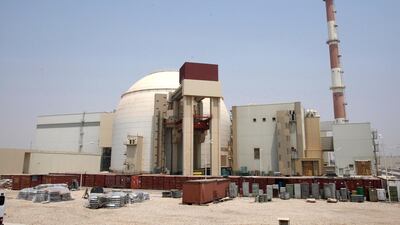
Iran's Bushehr nuclear plant has been restarted. EPA -
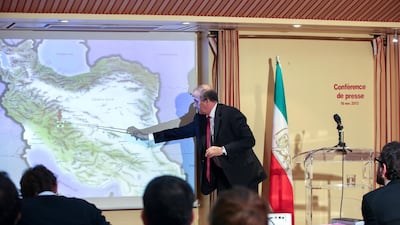
Mehdi Abrichamtchi, chairman of the Peace and Security Committee at the National Council of Resistance of Iran, shows journalists the location of a secret nuclear site in Iran in 2013. AFP -
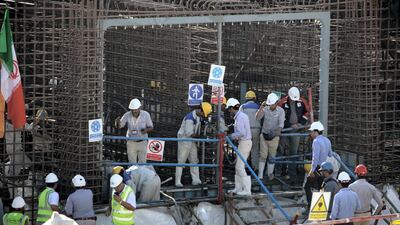
Workers prepare to begin the construction of a second reactor at the Bushehr site. AFP


“Even if we can’t arrive at the [nuclear deal] — and we hope to get to that point — it will be a different kind of diplomacy,” he said.
“There will have to be different steps, and of course the whole conference would be different at that point.
“But our goal would still be to resolve the issue diplomatically because that’s the best way to find a solution.”
Mr Malley stressed that the Biden administration still prefers a diplomatic solution to restore the nuclear deal but spent a substantial portion of his time in the Gulf discussing contingency plans should the clock run out on the stalled nuclear talks in Vienna.
National Security Adviser Jake Sullivan, Secretary of State Antony Blinken and other US officials have repeatedly said that Washington will turn to “other options” if Iran continues to scale up its nuclear activities in breach of the deal.
Mr Malley said that there would be “more intensive diplomacy” in “the coming days and weeks” focused on Iran’s refusal to resume negotiations, its gradual expansion of its nuclear programme and scaled-back access for inspectors from the International Atomic Energy Agency (IAEA).
Mr Blinken hosted IAEA chief Rafael Grossi in Washington last week to discuss the UN nuclear watchdog’s impasse with Iran on inspection access.
Most recently, Iran has blocked IAEA access to its TESA Karaj centrifuge component manufacturing workshop despite an agreement reached with the agency in September to resume video surveillance of its nuclear sites across the country.
A senior US official said this month that Iran’s breakout time to build a nuclear weapon had been reduced from a year to a few months after former president Donald Trump withdrew from the deal, prompting Tehran to increase its nuclear activities in breach of the accord.
But negotiations with Iran in Vienna have made little headway since the sixth round of nuclear talks concluded under former president Hassan Rouhani in June.
Under Mr Rouhani, the two sides agreed in principle that the US would scale back its sweeping sectoral sanctions on Iran in exchange for Tehran scaling back its nuclear accord breaches — though differences remained on the status of some additional sanctions instated under Mr Trump.
Iran has not agreed to resume indirect talks since hard-line cleric and nuclear deal sceptic Ebrahim Raisi took office in August.
-
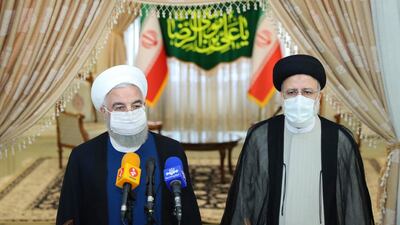
Hassan Rouhani, left, with Ebrahim Raisi, who succeeded Mr Rouhani as Iran's president in August. -
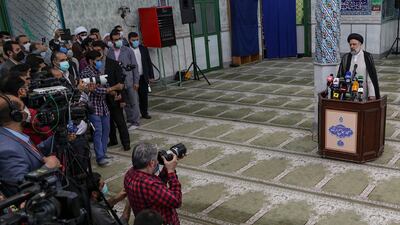
Ebrahim Raisi gives a news conference after voting in the presidential election, at a polling station in Tehran. -
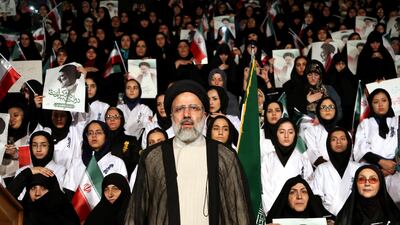
A conservative, Ebrahim Raisi was widely regarded as the front-runner in the June presidential election. -
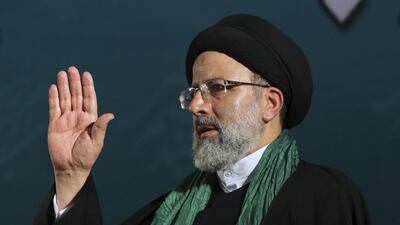
Mr Raisi waves to supporters at a campaign rally in Tehran during the 2017 presidential election. -
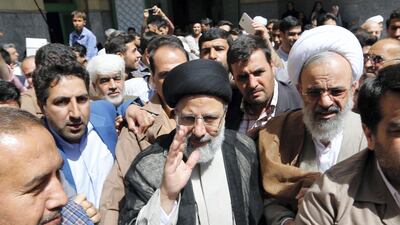
Mr Raisi won 38 per cent of votes in 2017. -
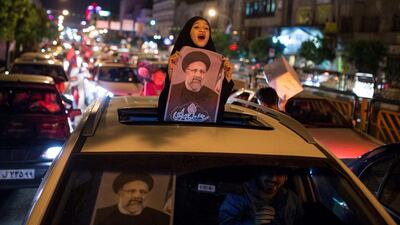
A girl holds a poster of Mr Raisi during a campaign rally in Tehran in 2017. -
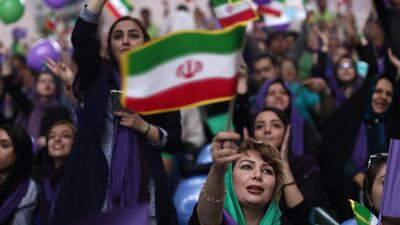
Supporters of Iranian President Hassan Rouhani chant slogans during a election rally in 2017. -
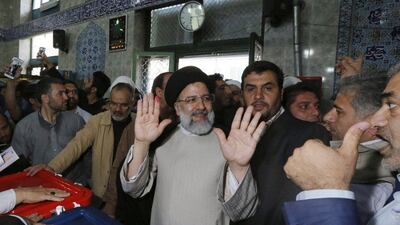
Ebrahim Raisi gained the support of prominent figures for this year's run. EPA -
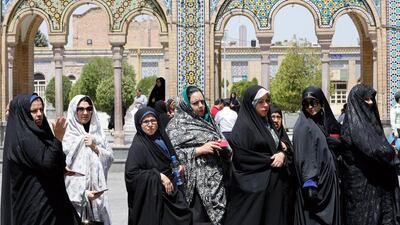
Women wait to cast their ballots during the 2017 presidential elections. -
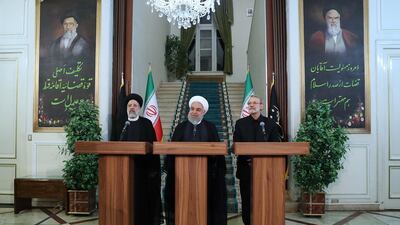
Hassan Rouhani, centre, Ebrahim Raisi, left, and former parliamentary Speaker Ali Larijani. -
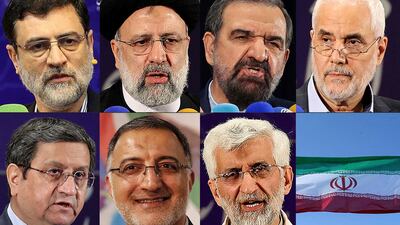
Presidential candidates Amirhossein Ghazizadeh Hashemi, Ebrahim Raisi, Mohsen Rezaei, Mohsen Mehralizadeh, Abdolnasser Hemmati, Alireza Zakani and Saeed Jalili. -
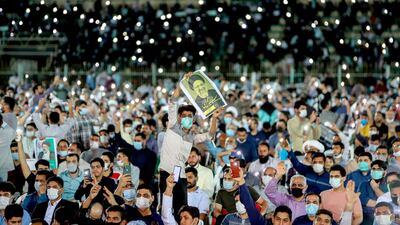
Supporters of Mr Raisi during a campaign rally on June 6. -
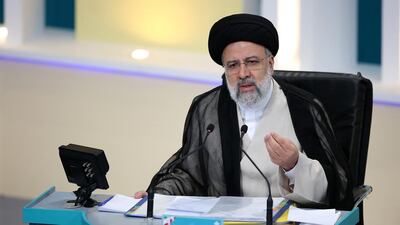
Mr Raisi was born into a religious family in the holy city of Mashhad in 1960. -
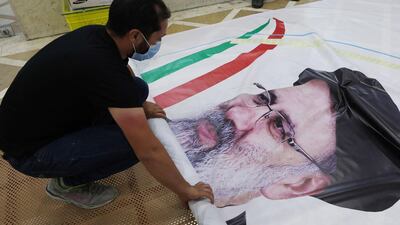
A worker prepares a banner for Mr Raisi's campaign in Tehran. -
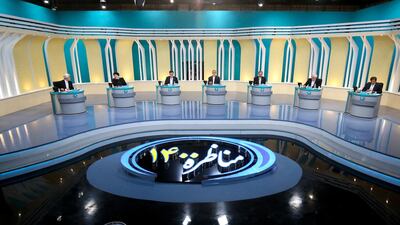
Seven presidential candidates during their first televised debate on June 5. -
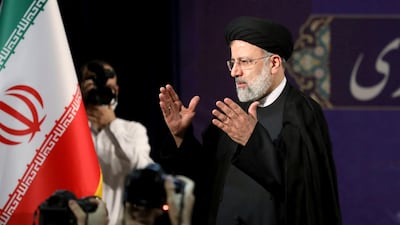
Mr Raisi addressing journalists on May 15 after registering his candidacy for the election.


“The official reasons given by Iran for why we’re in hiatus are wearing very thin,” Mr Malley said.
“We can understand some hiatus due to their transition — their election and transition — but at this point, it’s hard to find an innocent explanation for why they’re taking so long.”
He said officials in the Gulf and Europe have expressed a “shared impatience” with Iran’s continued refusal to return to Vienna for indirect talks with the US.
Mr Malley also said the Gulf states he visited indicated they would be open to deepening economic ties with Iran if US sanctions were lifted under a revived nuclear deal.
“They made clear that if this diplomatic path were pursued and should we reach an agreement, they wanted to engage with Iran more deeply on the economic front,” he said.
“But that could not be done if Iran were not in compliance with the [nuclear deal], because by definition, US sanctions remain on the books.”

