

UAE residents enrolled at US universities have welcomed the Trump administration's decision to rescind a rule that could cancel visas for foreign students during the coronavirus pandemic.
Last week, US authorities warned that students would be deported or asked to transfer to different institutes if their classes remained online in the autumn term.
At the time, UAE students who were enrolled at American colleges said they were concerned about the uncertainty about returning to the US.
The Trump administration faced federal lawsuits and opposition from hundreds of universities if it went ahead with the plans.
“Non-immigrant ... students attending schools operating entirely online may not take a full online course load and remain in the United States,” the US Immigration and Customs Enforcement agency said last week.
“Active students in the United States enrolled in such programmes must depart the country or take other measures, such as transferring to a school with in-person instruction to remain in lawful status."
But on Wednesday, federal immigration authorities retracted the July 6 directive and “returned to the status quo".
The move was welcomed by UAE students who are pursuing studies at US universities.
"I’m relieved and happy since this decision is directly in favour of all international students. I was joyous to hear it,” said Sakshi Chandak, 18, a second-year psychology student at Arizona State University and a Dubai resident.

"I was scared that if my university went fully online, according to the previous rules, I wouldn’t be allowed to enter the US. Now, I have the flexibility of choice to do as I please.
"A lot of people I know, who are close to me would’ve been affected by this decision since their universities went fully online for the fall semester, and they would not be allowed entry into the United States."
Sidhant Mathur, 20, from India, is excited to start his fourth year of study in economics at the University of California, Los Angeles.
He returned to the UAE after classes were cancelled because of the coronavirus outbreak and is unsure of returning to the campus in September.
"I am glad that this decision has been rescinded. The last few days were filled with uncertainty about what the next few months of my life would look like,” said Mr Mathur.
“It's great that we are now being offered the flexibility to take classes safely and remotely from wherever we desire.
-

First: Massachusetts Institute of Technology, US. All photos: Alamy unless otherwise stated -
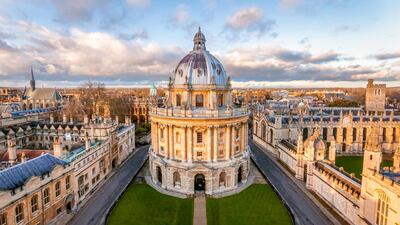
Second: University of Oxford, UK -

Equal third: Stanford University, US -

Equal third: University of Cambridge, UK. AFP -

Fifth: Harvard University, US -
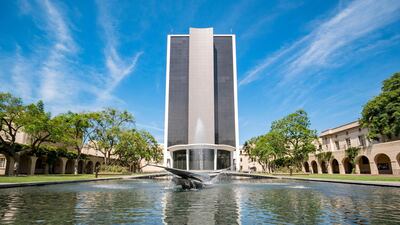
Sixth: California Institute of Technology (Caltech), US -

Seventh: Imperial College London, UK -

Equal eighth: ETH Zurich, Switzerland -
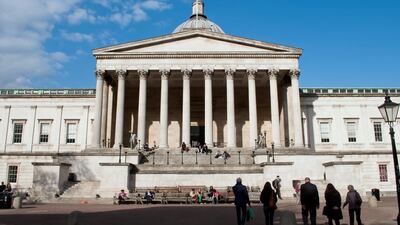
Equal eighth: UCL, London, UK -

10th: University of Chicago, US -

11th: National University of Singapore -

12th: Nanyang Technological University, Singapore -
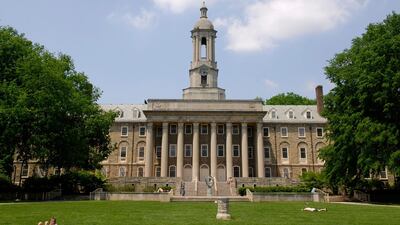
13th: University of Pennsylvania, US -

Equal 14th: EPFL, Switzerland. Photo: Reuters -

Equal 14th: Yale University, US -
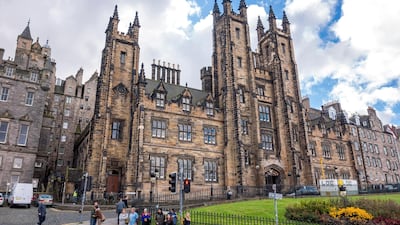
16th: University of Edinburgh, UK -

17th: Tsinghua University, China -

18th: Peking University, China. Photo: AP Photo -
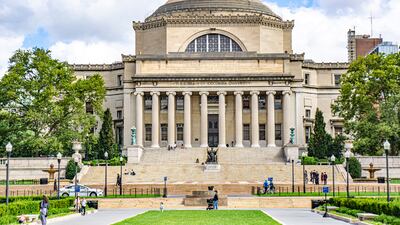
19th: Columbia University, US. Photo: Getty Images -

20th: Princeton University, US. Photo: Reuters


"I was not scared about the prospect of not entering the US as my university was in a hybrid model. I would be forced to return to the US if the new policy was still in place. This could have affected my visa and ability to work in the US."
The US is the top destination for international students.
Over one million people go to the country every year for higher studies, contributing $45 billion (Dh165.26bn) to the US economy.
"I am very happy that the decision to rescind this directive was made by the administration itself, demonstrating that the president backtracked on his initiative only days after his intention to implement it was announced – and months before it was intended to be implemented,” said Peter Davos, the founder of Hale Education Group, an education consultancy that helps UAE students go to US universities.
"Hale students have breathed a sigh of relief at this welcome news. I had conveyed to them and their parents through official communication just two days ago that I felt that this directive would never have been implemented."

