


Two strikes are converging to disrupt the lives of people in London in the days ahead, as the misery of key services going offline is compounded for millions in the city.
Transport for London (TfL) tube workers will begin a walkout in protest against a 5 per cent pay offer in the second significant period of strikes in the UK in a week, with junior doctors staging their own six-day strike in a long-standing wrangle over pay.
Britain has endured a series of strikes over the past year as members of several professions, including postal workers, teachers and bin men, have demanded pay rises to offset the soaring cost of living.
Some of those disputes have now been settled, and inflation, which reached 11.1 per cent in October 2022, has now slowed to 3.9 per cent.
However, it remains double the Bank of England target of 2 per cent and the interest rate is still sitting at 5.25 per cent, having been raised rapidly over the past year, from 0.25 per cent in January 2022.
Tube strikes
TfL has warned there will be little to no service between Sunday evening and Friday morning if the strikes by members of the Rail, Maritime and Transport union (RMT) go ahead.
Tube services will end earlier than normal on Sunday and from Monday to Thursday, with little to no service expected to run during the period.
Services will start later than normal on Friday, January 12.
More than 90 per cent of RMT members voted to take the action, which begins on January 5 and 6 with engineering and maintenance workers, with no rest day working or overtime until January 12.
London Underground control centre and power/control members are taking action over January 7 and 8, and fleet workers will walk out on January 8.
Signallers and service controller members will take action on January 9 and 12 while all fleet, stations and trains grades will walk out on January 10.
TfL said the 5 per cent pay rise offer was “full and final”.
Oxford Circus station during rush hour and during strike action
NHS strikes
Britain has endured a year of rolling strikes across the health sector in the past year as a result of the cost-of-living crisis, with staff seeking inflation-matching pay rises.
Nurses, ambulance crews and senior doctors have now reached deals with the government, but the union representing junior doctors in England has held out and negotiations have stalled.
Junior doctors have been on strike since Wednesday, resisting requests for them to return to work from hospital trusts, citing “extreme pressure” and safety fears.
Junior doctors stage six-day strike in England – in pictures
-
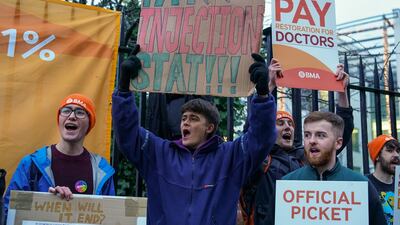
Junior doctors on a picket line outside the Royal Victoria Infirmary in Newcastle at the start of their six-day strike. Getty Images -
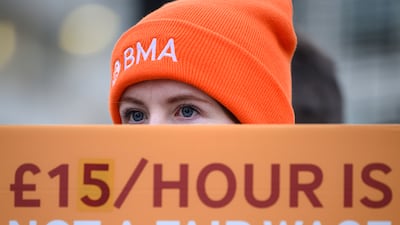
The junior doctors' strike, set to last until 7am on Tuesday, January 9, is the longest consecutive strike in NHS history. Getty Images -
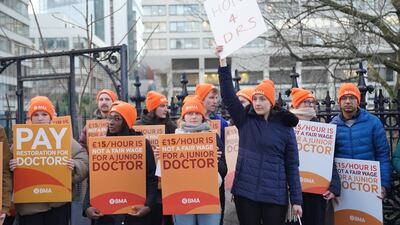
Junior doctors strike outside St Thomas' Hospital in London. PA -

Junior doctors outside Queen's Medical Centre, Nottingham. PA -

NHS bosses said the strike came on top of a host of seasonal pressures such as Covid, flu, and staff absences due to sickness. PA -

The strike is expected to have a significant impact on daily and planned surgeries as well as other appointments. PA -
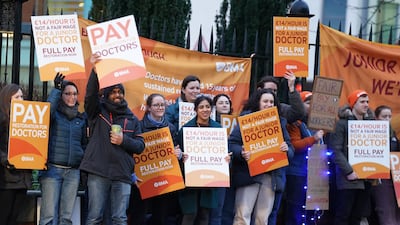
The strike amounts to 144 consecutive hours of industrial action. PA


The British Medical Association (BMA), the union that represents the bulk of the 75,000 or so striking doctors, had agreed with NHS managers on a system for so-called derogations, in which junior doctors return to work in the event of safety concerns about emergency care, with hospitals expected to show they have “exhausted” all other sources of staffing before recalling medics.
At the peak of the action junior doctors first took in December, 4,501 staff were not at work in London.
And 33,000 acute inpatient appointments were cancelled in the capital – with an additional 304,000 acute outpatient appointments rescheduled due to previous action over the past year.
In total across England and Wales, more than 1.2 million appointments have been cancelled since the walkouts began.
The NHS waiting list is currently sitting at a record 7.77 million.
Tens of thousands more scheduled hospital appointments and operations have been rescheduled as a result of the latest round of junior doctor strikes, which end on Tuesday at 9am.
Health Secretary Victoria Atkins has warned that the health service “cannot be switched on and off on whim” as she warned that the walkouts are having “very serious consequences” for patients and other NHS workers.
Speaking on a visit to London Ambulance Service on Thursday, when Ms Atkins sat with emergency call handlers and listened in on incoming calls in a 999 control room, she said she supported local health leaders who made calls for striking doctors to return to work amid patient safety fears.
She promised to start talks in 20 minutes if the strikes were called off.
“It is absolutely for NHS leaders to decide which services need to be protected,” she said. “I trust their medical judgment, their clinical judgment with these mitigations that they're seeking.
“I absolutely support them in seeking these mitigations, but it is for local health leaders who know their hospitals, know their patients and know their rotas, it is for them to make those decisions and I trust them and their judgment.”
The BMA said newly qualified doctors earn £15.53 pounds an hour – the minimum wage is a little more than £10 an hour – though salaries rise rapidly after the first year.
The union is seeking a 35 per cent rise, which it says is needed to cover the impact of inflation over several years.
It abandoned talks with the government after being offered a pay rise of 8 per cent to 10 per cent and held the December strikes.
The government has resisted rises, saying they would worsen inflation.

